An air conditioner may blow warm air because of an incorrect thermostat setting, a dirty filter, restricted airflow, an outdoor-unit problem, low refrigerant, frozen coils, or a failed electrical or mechanical component.
Start with the thermostat, filter, vents, and outdoor-unit area. If the air stays warm, the system cannot reach the set temperature, the breaker trips, ice appears, or the outdoor unit is not running, schedule professional AC service.
Start With the Simple Things
Safe Checks to Make Before Scheduling Service
Check the Thermostat Mode
Confirm the thermostat is set to Cool and the temperature is below the current indoor temperature.
Set the Fan to Auto
A fan set to On can circulate unconditioned air even when the outdoor unit is not cooling.
Inspect the Air Filter
Replace a visibly dirty filter with the correct size and type recommended for the system.
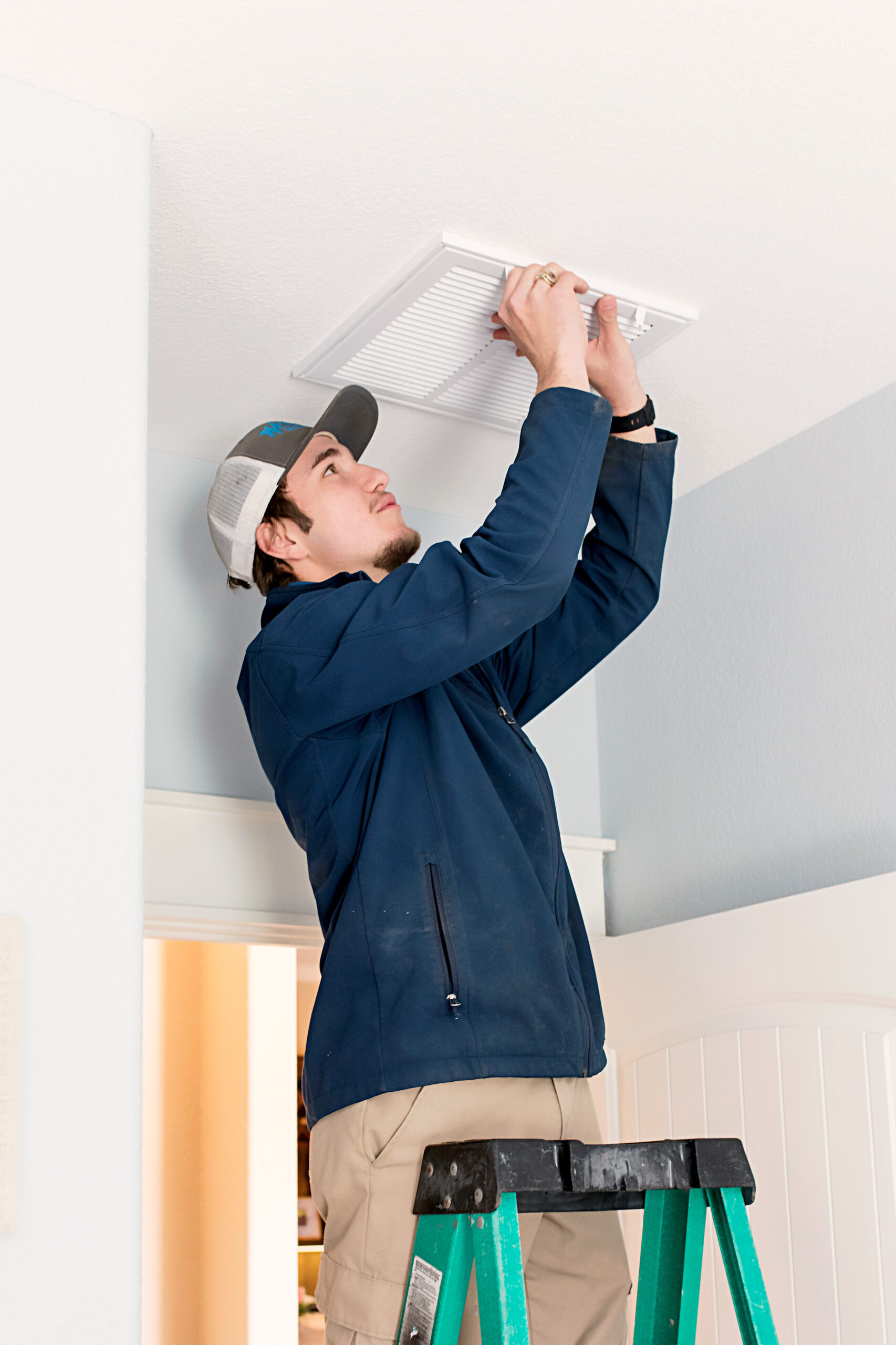
Check Vents and Returns
Make sure supply vents and return grilles are open and not blocked by furniture, rugs, or belongings.
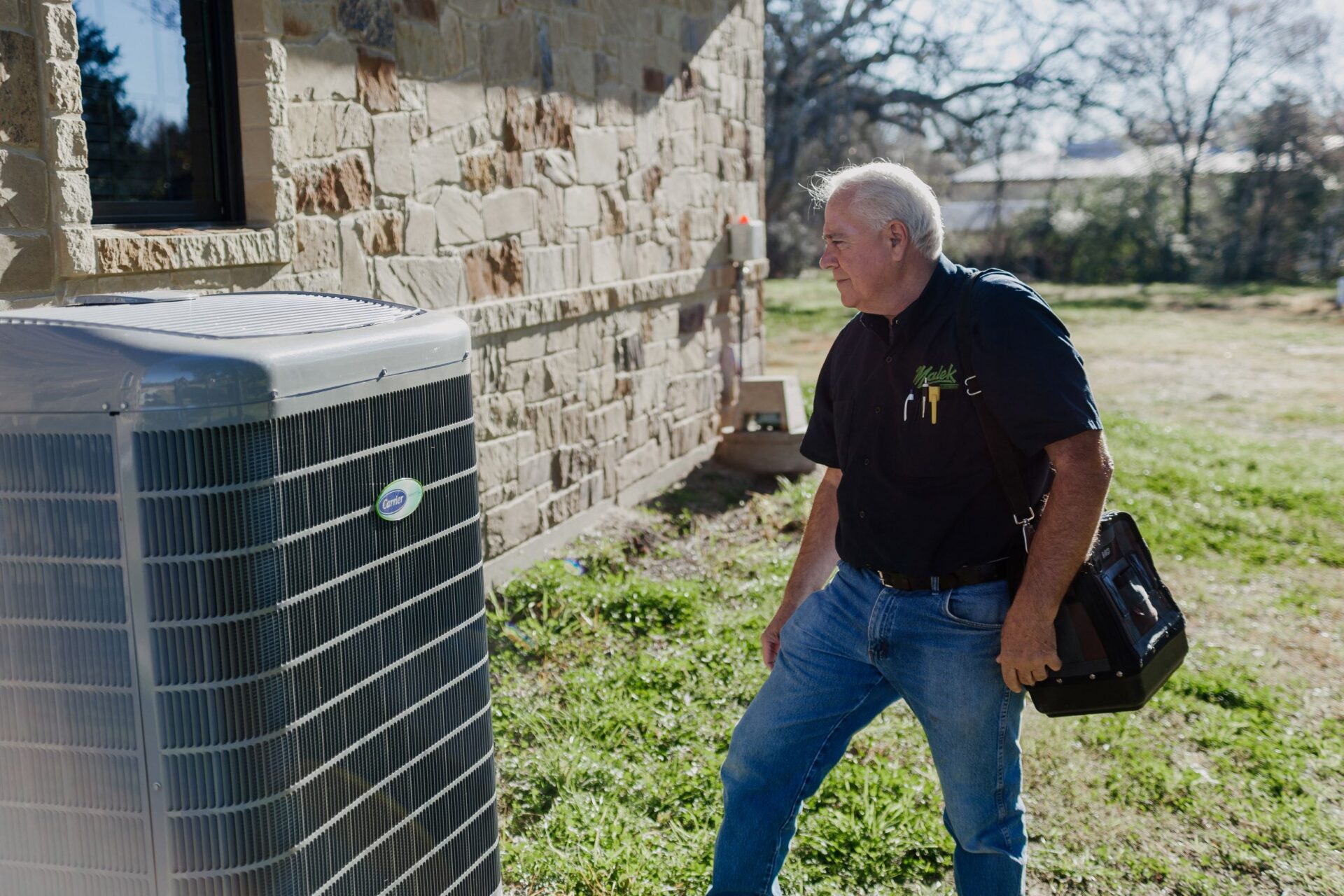
Look at the Outdoor Unit
Remove loose leaves or debris from around the cabinet without opening panels or touching electrical components.
Note What Else Is Happening
Look for ice, weak airflow, unusual noises, odors, water, or repeated breaker trips.
Common Causes
Why an Air Conditioner May Blow Warm Air
Incorrect Thermostat Setting
The system may be set to Heat, Off, or Fan On instead of Cool with the fan set to Auto.
Dirty Air Filter
A clogged filter can restrict airflow, reduce cooling, and contribute to coil icing.
Blocked or Restricted Airflow
Closed vents, blocked returns, duct restrictions, or blower issues can reduce the air moving through the system.
Outdoor Unit Is Not Running
The indoor blower may continue moving air while the condenser is off because of an electrical or mechanical problem.
Dirty Condenser Coil
A heavily restricted outdoor coil can make it harder for the system to release heat.
Low Refrigerant
A refrigerant leak can reduce cooling capacity and may cause long cycles, ice, or warm air from the vents.
Frozen Evaporator Coil
Restricted airflow, low refrigerant, or another system problem can cause the indoor coil to freeze.
Failed Electrical Component
Capacitors, contactors, wiring, controls, sensors, or circuit problems may prevent proper cooling operation.
Compressor or Motor Problem
A failing compressor, condenser fan motor, or blower motor can reduce or stop the cooling process.
Duct Leakage
Cooled air may be escaping into the attic or mixing with hot air before it reaches the rooms.
Use the Pattern
What the Warm-Air Symptom May Be Telling You
The Cooling Process May Not Be Starting
- Thermostat mode or fan setting
- Outdoor unit not running
- Electrical or control problem
- Compressor-related issue
Airflow May Be Restricted
- Dirty filter
- Frozen indoor coil
- Blower problem
- Duct restriction or leakage
Performance May Be Fading During Operation
- Coil beginning to freeze
- Outdoor unit shutting down
- Electrical component overheating
- Intermittent control problem
Avoid These Common AC Mistakes
Do not keep lowering the thermostat. It will not make a malfunctioning system cool faster.
Do not keep resetting a tripped breaker. Repeated trips can signal an electrical fault.
Do not add refrigerant without finding the leak. Air conditioners do not normally consume refrigerant.
Do not open equipment panels. Capacitors and other electrical components can remain hazardous.
When to Turn the System Off
Some Symptoms Mean the AC Should Not Keep Running
Ice Is Visible
Turn cooling off. Continued operation can worsen icing and reduce airflow further.
The Breaker Keeps Tripping
Do not repeatedly reset it. Electrical faults require professional diagnosis.
You Smell Burning
Turn the system off and schedule prompt service.
The Outdoor Unit Makes Severe Noises
Grinding, buzzing, screeching, or repeated clicking may indicate a failing component.
Water Is Leaking Around the Indoor Unit
Condensate or ice-related problems may be causing water damage.
The System Runs but the Home Keeps Heating Up
Continuing to operate may add wear without restoring comfort.
Professional Diagnosis
What a Technician Checks Before Recommending a Repair
The technician verifies the cooling call, settings, sensor accuracy, and communication with the equipment.
Filter condition, blower performance, vents, returns, and accessible ductwork are evaluated.
Dirty, restricted, or frozen coils can significantly reduce cooling performance.
System temperatures and pressures help identify a possible leak, restriction, or charging problem.
Capacitors, contactors, motors, controls, wiring, and compressor operation are tested as appropriate.
Duct leakage, airflow imbalance, insulation, and room-by-room symptoms may be considered.
Restore Cooling With a Clear Diagnosis
Find Out Why the AC Is Blowing Warm Air
Malek can evaluate the thermostat, airflow, refrigerant circuit, electrical components, and outdoor unit—then explain what failed and which repair makes sense.
Repair or Replace?
Warm Air Does Not Automatically Mean the System Needs Replacement
Repair May Make Sense When
- The problem is a specific repairable component
- The system has otherwise been dependable
- Cooling capacity still matches the home
- The repair restores safe and reliable operation
Replacement Deserves Comparison When
- Major repairs are becoming frequent
- The compressor or refrigerant circuit has significant failure
- The system no longer meets the home’s cooling needs
- Age-related deterioration is widespread
Frequently Asked Questions
AC Blowing Warm Air Questions
Why is my AC blowing warm air?
Common causes include thermostat settings, a dirty filter, restricted airflow, a frozen coil, an outdoor-unit problem, low refrigerant, or a failed electrical or mechanical component.
Why is the fan blowing but the outdoor AC unit is not running?
The indoor blower may continue operating because the fan is set to On or because the outdoor unit has an electrical, control, capacitor, motor, or compressor-related problem.
Can a dirty filter make the AC blow warm air?
Yes. A clogged filter can restrict airflow, reduce cooling, and contribute to a frozen evaporator coil.
Should I turn the AC off if the coil is frozen?
Yes. Turn cooling off and schedule service. Continuing to operate an iced system can worsen the condition and cause additional damage.
Does low refrigerant mean the system just needs a recharge?
Not necessarily. Low refrigerant usually means there is a leak or another system issue. The source should be identified before the system is recharged.
Why does the AC blow cool air at first and then warm air?
The indoor coil may be freezing, the outdoor unit may be shutting down, or an electrical component may be failing intermittently.
Does warm air mean I need a new AC?
No. Many warm-air problems are repairable. Replacement is considered when the system has major or repeated failures, poor capacity, or widespread age-related deterioration.
When should I call an HVAC technician?
Schedule service when warm air continues after basic checks, the outdoor unit is not running, ice appears, the breaker trips, airflow is weak, or the home cannot reach the thermostat setting.