
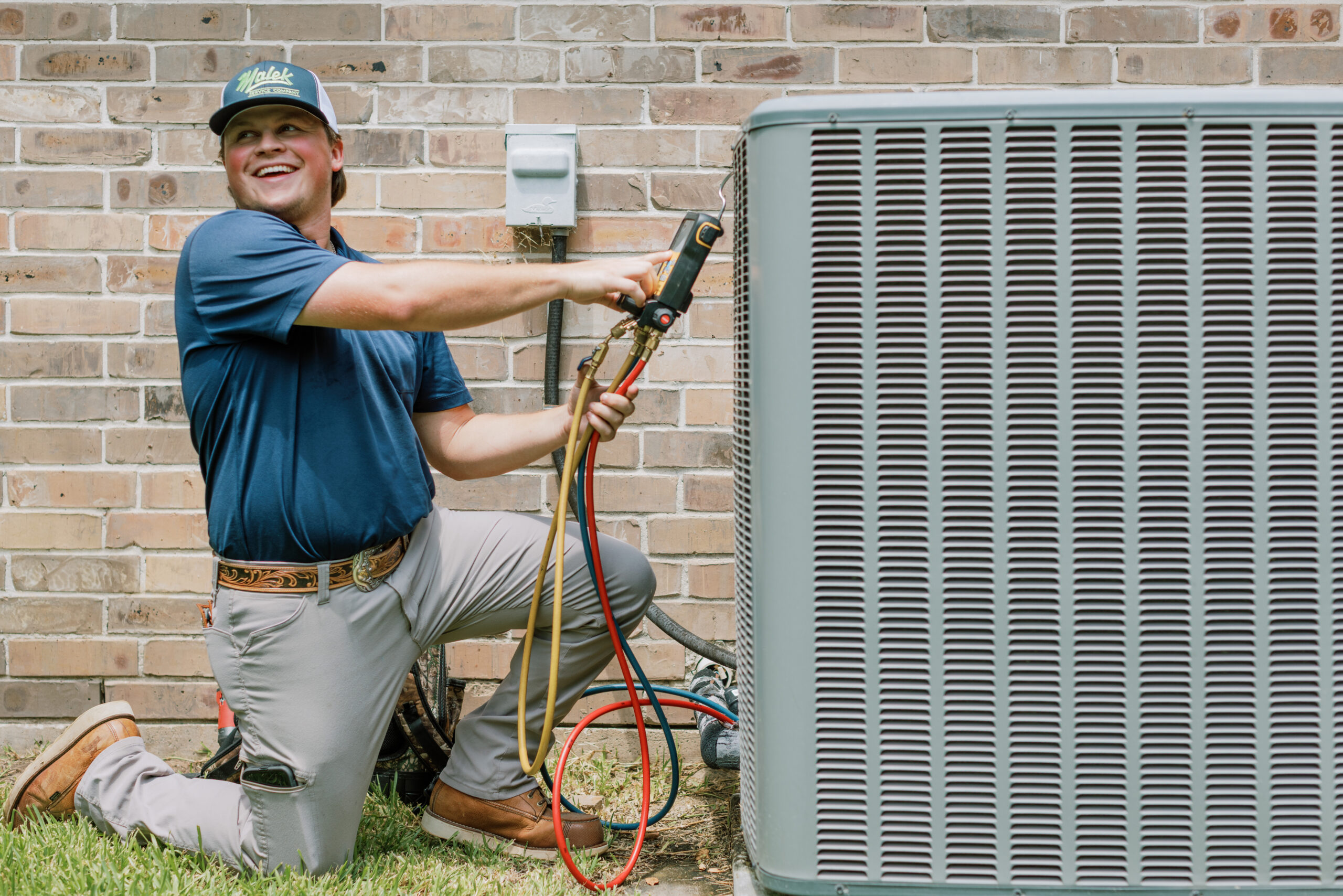
An air conditioner may run for long periods during extreme Texas heat, especially when it is still maintaining the thermostat setting and keeping the home comfortable.
Constant operation becomes more concerning when the home never reaches the set temperature, cooling has weakened, energy use rises unexpectedly, some rooms remain warm, ice forms, or the system develops unusual noises or odors.
Normal or a Problem?
Long Cooling Cycles Can Be Normal During Peak Heat
The Home Is Staying Comfortable
- The thermostat reaches or stays close to the set temperature
- Airflow feels steady and cool
- Indoor comfort remains consistent
- The longer runtime is limited to the hottest part of the day
The System Runs but Cannot Catch Up
- The indoor temperature keeps rising
- Airflow is weak or warm
- Humidity remains high
- The system runs nearly nonstop even in milder conditions
Common Causes
Why an Air Conditioner May Keep Running
Extreme Outdoor Heat
During the hottest Texas afternoons, the system may need long cycles to offset heat entering the home.
Thermostat Settings
A very low setting, incorrect schedule, sensor issue, or fan set to On can make the system appear to run constantly.
Dirty Air Filter
A clogged filter restricts airflow, reduces heat removal, and can force the system to run longer.
Blocked or Restricted Airflow
Closed vents, obstructed returns, duct restrictions, or blower problems can reduce the air reaching the rooms.
Dirty Evaporator or Condenser Coil
Dirt on either coil can interfere with heat transfer and reduce cooling performance.
Low Refrigerant
A refrigerant leak can reduce cooling capacity and may eventually contribute to coil icing or compressor damage.
Duct Leakage
Cooled air may be escaping into an attic, crawlspace, or wall cavity before it reaches the living space.
High Heat Gain
Poor insulation, air leaks, direct sunlight, and frequently opened exterior doors can add heat faster than the system removes it.
Incorrect System Size
An undersized system may run constantly and still struggle. An oversized system usually creates short cycles and humidity problems instead.
Aging or Failing Components
Blower, capacitor, compressor, control, or other mechanical problems can reduce system performance.
Safe Homeowner Checks
What You Can Check Before Scheduling Service
Verify the Thermostat Mode
Confirm the thermostat is set to Cool and the fan is set to Auto rather than On.
Compare the Set and Indoor Temperatures
Notice whether the home is maintaining the setting or continuing to get warmer.
Inspect the Air Filter
Replace a visibly dirty filter with the correct size and type recommended for the system.
Check Vents and Returns
Make sure supply vents and return grilles are open and not blocked by furniture, rugs, or belongings.
Look at the Outdoor Unit
Remove loose leaves or debris from around the cabinet without opening it or spraying electrical components.
Note Changes in Sound, Airflow, or Comfort
Document weak airflow, warm air, ice, water, odors, noises, or rooms that remain uncomfortable.
Avoid These Common AC Mistakes
Do not keep lowering the thermostat. It will not make the system cool faster.
Do not operate the system if the coil or refrigerant line is iced over. Turn cooling off and schedule service.
Do not add refrigerant without finding the leak. Air conditioners do not normally consume refrigerant.
Do not open electrical panels or equipment cabinets. Capacitors and other components can remain hazardous.
When to Schedule Service
Call an HVAC Technician When Constant Operation Comes With Poor Performance
The Home Never Reaches the Set Temperature
The system may have an airflow, refrigerant, mechanical, sizing, or heat-gain problem.
The Air Feels Warm or Barely Cool
Weak cooling can point to refrigerant, coil, compressor, thermostat, or airflow issues.
Ice Forms on the System
Icing may be caused by restricted airflow, low refrigerant, or another equipment problem.
Energy Use Rises Suddenly
A sharp unexplained increase can indicate that the system is running longer to produce less cooling.
Some Rooms Stay Uncomfortable
Duct leakage, airflow imbalance, insulation, zoning, or equipment performance may be involved.
You Hear or Smell Something Unusual
Grinding, buzzing, squealing, burning odors, or other new symptoms should be evaluated promptly.
Professional Diagnosis
What a Technician Checks Before Recommending a Repair
The technician verifies settings, sensor accuracy, call for cooling, and whether the system is responding correctly.
Static pressure, blower performance, vents, returns, filter, and accessible duct conditions may be evaluated.
Dirty or restricted coils can reduce heat transfer and lengthen cooling cycles.
System temperatures and pressures help identify a possible leak, restriction, or charging problem.
Capacitors, motors, compressor operation, controls, and other components are tested as appropriate.
Insulation, windows, duct leakage, additions, and equipment size may be considered when the system is operating but cannot keep up.
Find Out Why It Cannot Catch Up
Restore Cooling Without Guessing at the Cause
Malek can evaluate airflow, refrigerant performance, thermostat operation, electrical components, and the home’s cooling demand—then explain what is making the system run so long.
Repair or Replace?
Constant Runtime Alone Does Not Mean the AC Needs Replacement
Repair or Maintenance May Make Sense When
- The system has a correctable airflow or maintenance issue
- A specific component has failed
- The equipment otherwise meets the home’s cooling needs
- The repair restores safe and dependable operation
Replacement Deserves Comparison When
- The system is significantly undersized
- Major repairs are becoming frequent
- Cooling performance remains poor despite proper maintenance
- The equipment has widespread age-related deterioration
Frequently Asked Questions
AC Runtime Questions
Is it normal for my AC to run all day during extreme heat?
It can be normal for an air conditioner to run for extended periods during peak Texas heat when it is still maintaining the thermostat setting and keeping the home comfortable.
Why does my AC run constantly but not cool the house?
Possible causes include restricted airflow, low refrigerant, dirty coils, duct leakage, mechanical problems, excessive heat gain, or an undersized system.
Can a dirty filter make the AC run nonstop?
Yes. A clogged filter can reduce airflow and heat removal, forcing the system to operate longer.
Why is the indoor fan always running?
The thermostat fan may be set to On rather than Auto. If the fan continues running in Auto, a control or equipment issue may be involved.
Can low refrigerant cause long AC cycles?
Yes. Low refrigerant caused by a leak can reduce cooling capacity, lengthen cycles, and contribute to ice formation.
Should I turn the AC off if I see ice?
Yes. Turn cooling off and schedule service. Continuing to operate an iced system can worsen the condition and damage equipment.
Does constant runtime mean my AC is too small?
Not automatically. Extreme heat, airflow restrictions, refrigerant issues, duct leakage, and mechanical problems can produce similar symptoms. Proper sizing requires a professional load calculation.
When should I call an HVAC technician?
Schedule service when the system cannot reach the thermostat setting, airflow or cooling weakens, ice develops, energy use rises unexpectedly, or unusual noises and odors appear.
Cookie Consent
We use cookies to improve your experience on our site. By using our site, you consent to cookies.
Cookie Preferences
Manage your cookie preferences below:
Essential cookies enable basic functions and are necessary for the proper function of the website.
These cookies are needed for adding comments on this website.
Google reCAPTCHA helps protect websites from spam and abuse by verifying user interactions through challenges.
Google Tag Manager simplifies the management of marketing tags on your website without code changes.
Statistics cookies collect information anonymously. This information helps us understand how visitors use our website.
Google Analytics is a powerful tool that tracks and analyzes website traffic for informed marketing decisions.
Service URL: policies.google.com (opens in a new window)
Marketing cookies are used to follow visitors to websites. The intention is to show ads that are relevant and engaging to the individual user.
Google Maps is a web mapping service providing satellite imagery, real-time navigation, and location-based information.
Service URL: policies.google.com (opens in a new window)
You can find more information in our Cookie Policy and Privacy Policy.