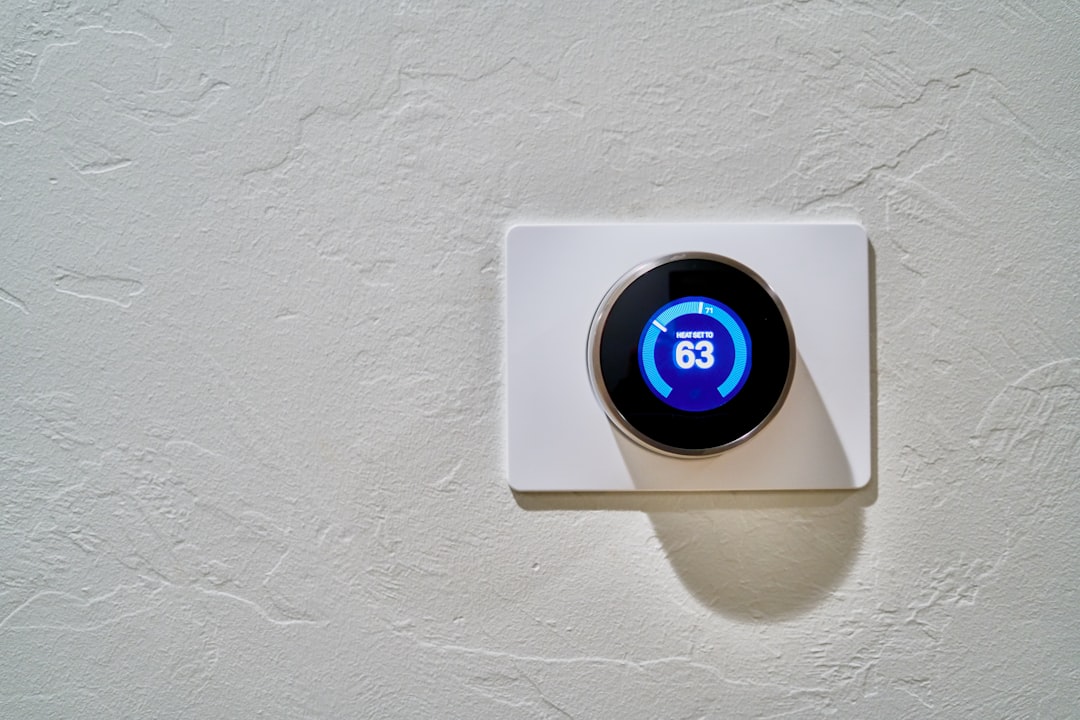
Why Smart Thermostats Without C Wires Are Game-Changers
Looking for a thermostat without C wire needed? Here are your top options:
- Emerson Sensi ST55 – Works on AA batteries, Energy Star certified
- Google Nest Thermostat – Power-stealing technology for most homes
- Honeywell T5 Smart – Includes C-wire adapter kit
- Amazon Smart Thermostat – Budget-friendly with Alexa integration
- Ecobee3 Lite – Remote sensor capability, no C-wire required
The smart home revolution has made controlling your comfort easier than ever. But there’s one big roadblock that stops many homeowners: the dreaded C-wire requirement.
Most older homes simply don’t have a C-wire. This thin wire provides constant 24-volt power to smart thermostats. Without it, many models won’t work – or they’ll drain batteries every few weeks.
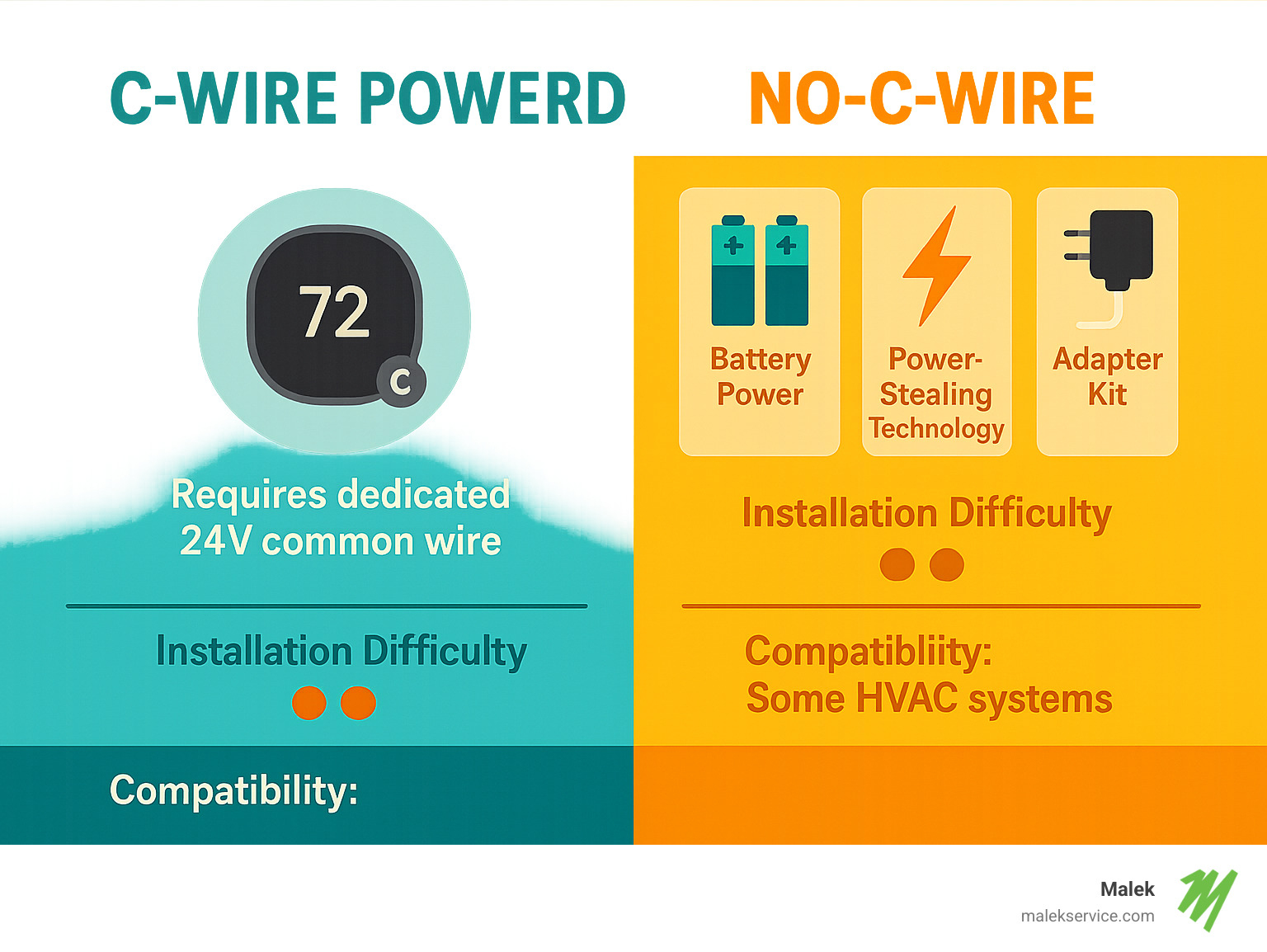
The good news? Modern thermostat without C wire needed models solve this problem completely. They use clever workarounds like power-stealing technology, long-life batteries, or included adapter kits.
Over 4,000 Sensi Smart Thermostats are sold monthly, with customers loving the no-C-wire installation. The Google Nest Thermostat has racked up over 8,300 reviews from homeowners who installed it without rewiring.
I’m Courtney Zalesak, Vice President at Malek Service Company, where I’ve spent over a decade helping Texas homeowners upgrade their HVAC systems for better comfort and efficiency. Through countless installations, I’ve seen how choosing the right thermostat without c wire needed can transform a home’s comfort without the hassle of rewiring.
Related content about thermostat without C wire needed:
– Thermostat wiring
– Thermostat wiring with C wire
How Do No-C-Wire Thermostats Actually Work?
Ever wondered how these smart devices manage to power themselves without that dedicated wire? After installing hundreds of these units across Texas, I can tell you it’s pretty clever engineering at work.
Power-stealing technology is the most neat solution we see. These thermostats act like tiny electrical vampires, “borrowing” small amounts of power from your heating and cooling control wires when your system isn’t running. The process is so sophisticated that it never interferes with your HVAC system’s operation.
Think of it like this: when your furnace or air conditioner is off, there’s still a small amount of voltage present on the control wires. Smart thermostats tap into this voltage, storing it in an internal battery. When your system kicks on, the thermostat stops drawing power and relies on its stored energy instead.
Internal battery systems offer the simplest installation experience. Models running on AA batteries can last up to two years before needing replacement. Our customers love these because installation is straightforward – just connect the same wires from your old thermostat and you’re done.
Wireless relay systems take a different approach entirely. These use a separate relay box installed near your HVAC equipment that communicates wirelessly with your thermostat. The relay handles the heavy lifting of system control while your thermostat focuses on user interface and scheduling.
24-volt adapters create an artificial C-wire by plugging into a standard wall outlet. A thin wire runs from the adapter to your thermostat, providing the continuous power it needs. This hybrid approach works well when other methods aren’t compatible with your system.
Millivolt systems are unique because they generate their own power. Found in some gas fireplaces and older heating systems, these produce about 750 millivolts of electricity – enough to power simple thermostats without any external power source.
Voltage sensing technology helps these thermostats determine when your system is running versus when it’s safe to steal power. This prevents any interference with your heating and cooling operation.
Scientific research on energy savings shows that smart thermostats can reduce heating and cooling costs by 10-15% regardless of their power source, making the C-wire question secondary to the energy savings potential.
What Is a C Wire and Why Do Some Thermostats Require It?
The common wire (C-wire) is like the return lane on a highway – it completes the electrical circuit that powers your thermostat. Your R-wire brings 24 volts from your HVAC control board, and the C-wire carries it back to complete the power loop.
Old-school mechanical thermostats were basically fancy switches. They’d open and close circuits to call for heat or cooling, but they didn’t need constant power to operate. A couple of AA batteries could run them for years.
Smart thermostats are different beasts entirely. They’re essentially small computers running Wi-Fi radios, color displays, and processing chips around the clock. All this technology needs continuous 24-volt power to function properly.
Your HVAC control board sends out this 24-volt signal through multiple wires – typically red for power, white for heat, yellow for cooling, and green for the fan. The C-wire should complete this circuit, but it’s often missing in older installations.
Without a proper power loop, smart thermostats either won’t work at all or will constantly drain batteries trying to maintain Wi-Fi connections and run their displays. That’s why so many manufacturers developed the clever workarounds we discussed above.
Why So Many Homes Lack a C Wire
Here’s the frustrating truth: the C-wire costs literally pennies to include, but builders have been skipping it for decades.
Older furnaces were designed when thermostats were simple mechanical devices. Builders used basic thermostat cable with just enough wires to handle heating, cooling, and fan control. The common wire seemed unnecessary since mechanical thermostats worked fine without it.
Two-wire heat systems are especially common in homes with boilers or baseboard heating. These systems only needed a “call for heat” wire and a “heat on” wire. Nobody anticipated that future thermostats would need continuous power.
Cost-cutting construction practices played a big role too. In tract housing developments, every dollar saved per home adds up quickly. Since code didn’t require a C-wire and mechanical thermostats worked without it, builders saw no reason to include the extra wire.
We encounter this situation regularly in older neighborhoods throughout our service area. Homes built before 2000 are missing C-wires about 60% of the time. The good news? Modern thermostat without C wire needed technology makes upgrades possible without opening walls or running expensive new cable through your home.
Top Picks: Thermostat Without C Wire Needed – 2024 Roundup
After years of installs across Texas, these are the no-C-wire models we see work again and again.
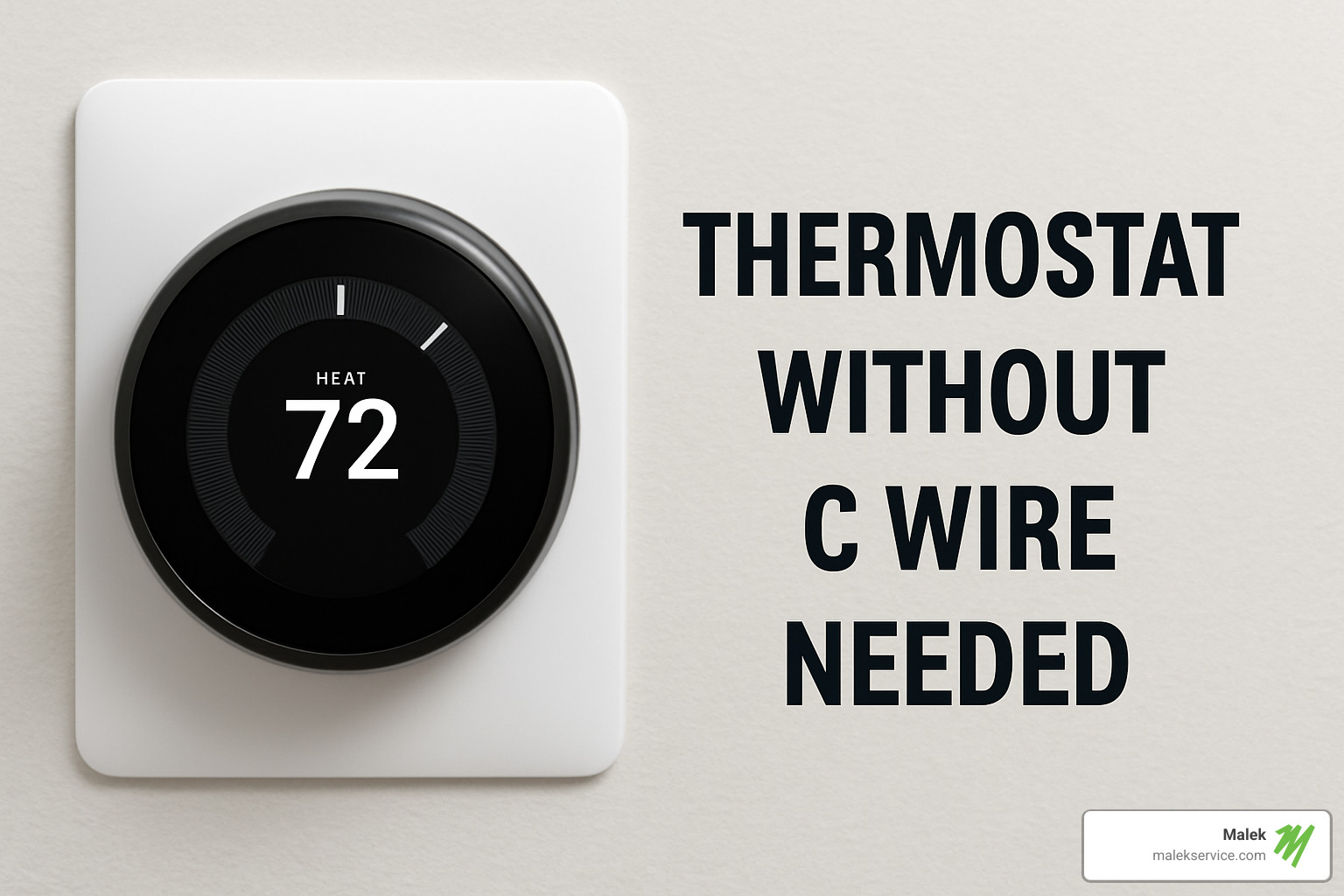
They land on this list because they solve the power problem in different ways—power-steal, long-life batteries, or an included adapter—while still earning ENERGY STAR® and staying DIY-friendly. Most households see heating-and-cooling bills drop 15-20% after replacing an old manual dial.
| Feature | C-Wire Adapter Kit | No-C-Wire Models | Typical Install Time |
|---|---|---|---|
| Power Source | Plugs into wall outlet | Battery or power-stealing | 30-60 min |
| Reliability | Excellent | Very good | Same |
| Added Cost | $15-30 extra | None | DIY vs. Pro |
| Warranty Impact | May void some warranties | Full warranty | None |
Best for Simple DIY Set-Up: “Pop-In & Go”
Battery-powered units keep wiring dead simple. Two AA batteries often last nearly two years, and the companion app covers scheduling, geofencing, and energy reports without hidden menus.
Best for Voice-Assistant Lovers
If you talk to Alexa, Google Assistant, or Siri every day, choose a power-stealing model with built-in Wi-Fi. The thermostat sips power when your HVAC is idle, then sleeps its radio to stretch the charge. Routine triggers (“Goodnight” or “I’m home”) fire instantly.
Budget-Friendly Choice Under $120
Rebates from many Texas utilities knock $50-75 off the sticker, making these entry-level smart stats almost free the first year. You still get app control, basic automation and Energy Star certification.
Premium Touchscreen Choice With Remote Sensors
Remote sensors even out hot and cold rooms by averaging temperatures around the house. Motion detection shifts focus to the rooms you’re actually using, and a bright touchscreen makes on-the-wall control as easy as the mobile app.
Installation, Compatibility & Troubleshooting
Upgrading to a thermostat without c wire needed is usually a one-hour project if you prep correctly.

- Kill power at the furnace switch and breaker.
- Snap a photo of your old thermostat wiring.
- Match terminals, not colors. Red wires sometimes run A/C, white wires heat—trust the letters, not the paint.
- Mount the new base, reconnect wires, restore power, and run the app-guided setup.
- Check firmware updates right away.
Can I Use a C-Wire Adapter Instead?
Yes. A plug-in adapter at the air-handler board creates a common wire without fishing new cable. It lets you pick any smart stat on the market but adds about two hours of work and you’ll be inside the furnace panel, so read warranty language first.
DIY or Call a Pro?
Battery models are true plug-and-play. Heat-pump, dual-fuel, or zoned systems deserve a professional touch—incorrect wiring can damage compressors or boards. Malek technicians cover College Station, Houston, and every town in between, so help is nearby if you need it.
Quick Fixes
- Power-cycle the HVAC breaker for 30 seconds—clears 80% of glitches.
- Improve Wi-Fi. Poor signal equals dropped connections—mesh extenders work wonders.
- Relocate if sun or drafts skew readings.
- Factory-reset only after other steps fail.
Most issues resolve in minutes, but our team is always on call for stubborn problems.
Understanding the C-Wire
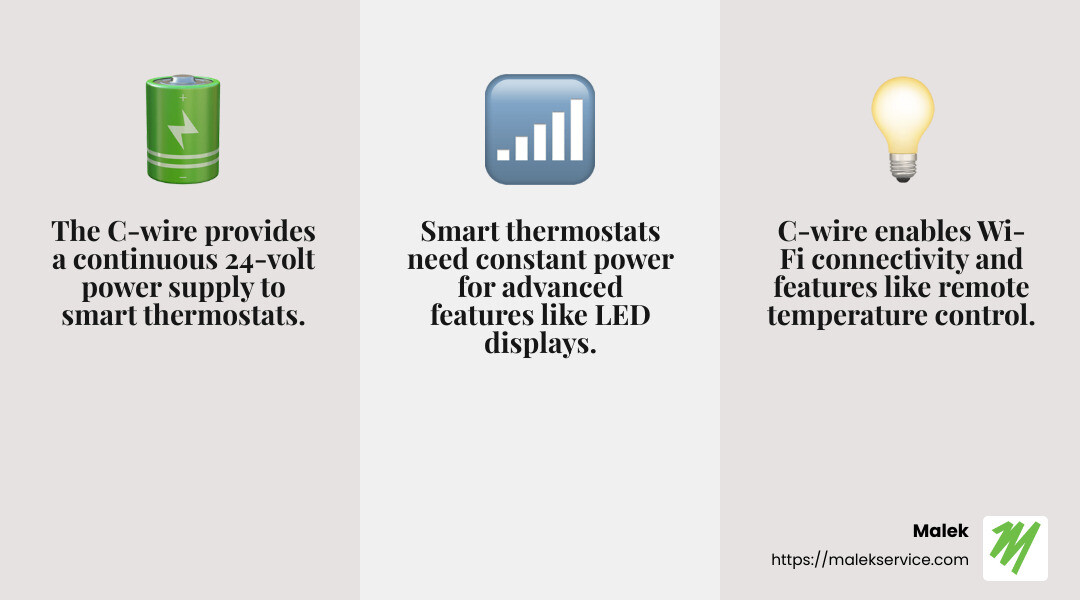
In thermostat wiring, the C-wire, or “common wire,” plays a crucial role. It’s the unsung hero that powers the advanced features of smart thermostats. Simply put, the C-wire delivers a continuous 24-volt power supply to the thermostat, enabling it to maintain Wi-Fi connectivity and support features like LED displays and voice control.
Why Smart Thermostats Need a C-Wire
Smart thermostats are a leap forward from their traditional counterparts. They offer conveniences such as remote temperature control, energy usage reports, and integration with other smart home devices. To function optimally, these thermostats require a steady power supply. That’s where the C-wire comes in. Unlike older models that relied on batteries, smart thermostats need constant power to keep their advanced features running smoothly.
C-Wire: The Power Bridge
Think of the C-wire as a bridge. It connects your thermostat to a continuous power source from your HVAC system. This connection ensures that your smart thermostat can perform its tasks without interruption. If your system doesn’t have a C-wire, you might experience issues like sporadic Wi-Fi connectivity or frequent power cycling of your HVAC system, which can be both annoying and inefficient.
The Color Code Myth
When dealing with thermostat wiring, it’s important to note that wire colors can be misleading. While the C-wire is often blue or black, this isn’t a universal rule. During repairs or installations, technicians might use wires of different colors due to availability. Therefore, always verify wire functions beyond just their color.
Understanding the importance of the C-wire is the first step in solving the thermostat wiring no C wire puzzle. With this knowledge, you can explore various solutions to ensure your smart thermostat operates efficiently. Whether you’re seeking a temporary fix or a permanent upgrade, knowing the role of the C-wire will guide your decision-making process.
Options for Installing Thermostats Without a C-Wire
Option 1: Do Nothing
For those who are content with basic thermostat functions, doing nothing might be an option. Some smart thermostats can operate without a C-wire by using power-stealing technology. However, this comes with limitations. You might notice features like Wi-Fi connectivity being spotty or your furnace cycling more frequently. If you’re okay with these trade-offs, this could be the easiest route.
Option 2: Look for a Hidden C-Wire
Sometimes, the solution is hiding in plain sight. Older thermostats often didn’t use a C-wire, leaving it tucked away behind the wall. To check if you have a hidden C-wire, turn off your HVAC system’s power and remove the thermostat’s front plate. Gently pull the wires forward and look for any wire wrapped around the sheath. If you find one, it could be your missing C-wire. Let a professional confirm this before making any changes.
Option 3: Use a G-Wire as a C-Wire
This temporary solution involves converting the G-wire, which controls the fan, into a C-wire. While this can power your smart thermostat, it means you lose the ability to run the fan independently. This option isn’t suitable for systems using electric heat or those with only two wires. If you choose this path, you’ll need a jumper cable to connect the now-empty G-terminal to the Y-terminal on your furnace circuit board.
Option 4: Purchase an Adapter
A C-wire adapter can be a lifesaver when you’re short on wires. These devices split the power from an existing wire to mimic a C-wire. Products like the Venstar Add-a-Wire or adapters included with certain thermostats can do the trick. While this seems straightforward, it’s best left to professionals to avoid any wiring mishaps.
Option 5: Install New Wires
For a permanent fix, consider installing new wiring. This solution involves adding a real C-wire, ensuring your smart thermostat has the power it needs without compromises. While this option may require professional installation and could be more expensive, it guarantees full functionality of all thermostat features. Plus, you won’t need to worry about compatibility issues or workarounds in the future.
Each of these options offers a way to tackle the thermostat wiring no C wire challenge. Whether you opt for a quick fix or a complete wiring upgrade, understanding your choices will help you make the best decision for your home and comfort.
Thermostat Wiring No C Wire: Product Solutions
When dealing with thermostat wiring no C wire, one practical solution is to explore product options that bypass this requirement. Here are some solutions to consider:
Battery-Powered Thermostats
Battery-powered thermostats are a straightforward option for those who want to avoid the hassle of dealing with wires. These thermostats run entirely on batteries, eliminating the need for a C-wire. While they may lack some advanced features, they are perfect for basic temperature control without the need for constant power.
Benefits:
- Easy Installation: No wiring changes needed.
- Portability: Can be easily moved or replaced.
- No Power Supply Issues: Operates independently of your home’s electrical system.
Smart Thermostat Compatibility
Some smart thermostats are designed to work without a C-wire by using power-stealing technology. These models draw small amounts of power from other wires, like the R-wire, to keep their advanced features running. However, be mindful of potential drawbacks, such as intermittent Wi-Fi connectivity or more frequent cycling of your HVAC system.
Compatible Models:
- Google Nest Thermostat: Known for its learning capabilities and sleek design, this model is designed to work with systems that lack a C-wire.
- Ecobee Smart Thermostat: Offers compatibility with systems without a C-wire and includes features like voice control and room sensors.
Considerations:
- Check Compatibility: Ensure the thermostat supports your HVAC system.
- Professional Advice: Seek expert help to confirm compatibility and avoid installation issues.
Exploring these product solutions can help you steer the thermostat wiring no C wire challenge with ease. Whether you choose a battery-powered model or a smart thermostat with power-stealing capabilities, these options provide flexibility and convenience for your home comfort needs.
Frequently Asked Questions About Thermostats Without a C Wire
These are the questions we hear most often from homeowners considering smart thermostat upgrades. After thousands of installations across Texas, we’ve learned what really matters to families making this decision.
Will a no-C-wire thermostat save me money?
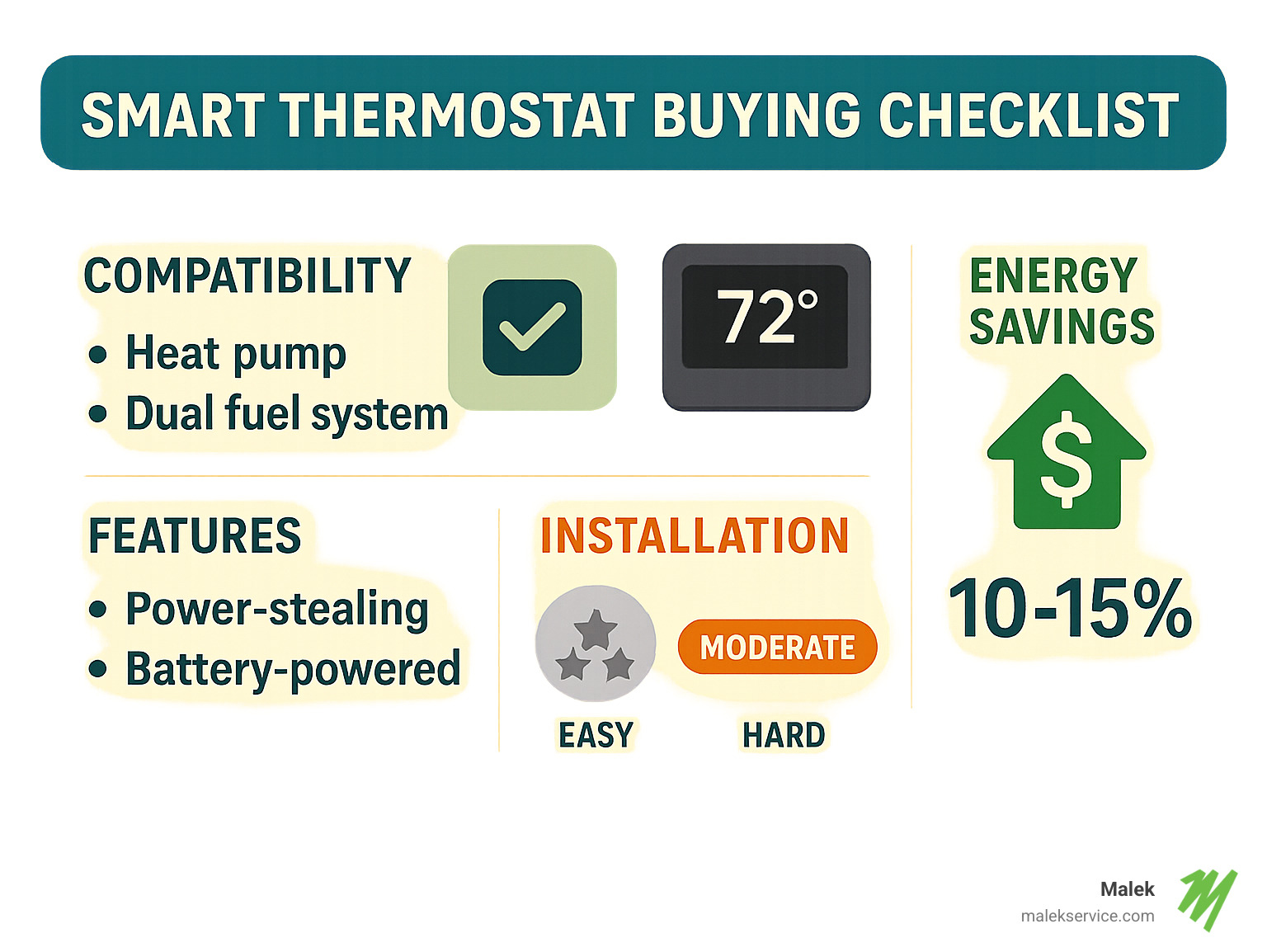
Yes, and the savings often surprise our customers. Energy Star certified smart thermostats typically reduce heating and cooling costs by 10-15%, regardless of whether they use a C-wire or alternative power sources. The magic happens through better scheduling, automatic adjustments when you’re away, and more precise temperature control than old manual or basic programmable units.
We’ve been tracking energy bills for customers throughout our service area who upgraded from basic thermostats. The typical household saves $150-200 annually, with larger homes often seeing even bigger reductions. That’s real money back in your pocket every month.
Utility rebates make the math even better. Many Texas utilities offer $50-75 rebates for Energy Star certified models, which means your thermostat without C wire needed often pays for itself within the first year. We help our customers steer these rebate programs to maximize their savings.
The energy savings come from features that just weren’t possible with old thermostats. Geofencing automatically adjusts temperature when everyone leaves for work. Smart scheduling learns your routine and avoids heating or cooling an empty house. Weather integration pre-adjusts your system based on forecast changes.
Are these models safe for heat-pump or dual-fuel systems?
This is where things get a bit more technical, but the short answer is yes – with the right model and proper installation. Heat pumps require specific control sequences for auxiliary heating that not all thermostats handle correctly, so compatibility checking becomes crucial.
Power-stealing technology can sometimes create issues with heat pump systems by sending unintended signals through the control wires. When we install these units on heat pump systems, we always test the heating and cooling cycles carefully to ensure everything operates as designed.
Battery-powered models like the Sensi ST55 generally work beautifully with heat pumps since they don’t interfere with control circuits. These units include the proper control logic for heat pump operation and clearly state heat pump compatibility in their specifications.
Dual-fuel systems – those with a heat pump and gas backup – represent the most complex installations. These systems need sophisticated control algorithms to switch between heating sources efficiently, and some budget thermostats simply don’t have this capability.
For any heat pump application, we strongly recommend professional installation and setup. The wrong control sequence can damage expensive equipment or create comfort problems that are frustrating to diagnose later.
How do they integrate with existing smart-home hubs?
Smart home integration varies dramatically between models, so this becomes an important selection criteria if you already have connected devices. Most thermostat without C wire needed models support the major platforms like Alexa, Google Assistant, and Apple HomeKit, but the depth of integration differs significantly.
Voice control responsiveness depends on both the thermostat’s Wi-Fi radio quality and your home network strength. Models with robust connectivity respond quickly to commands like “set temperature to 72” or “what’s the current temperature?” The best units feel as responsive as asking a person.
Advanced automation platforms like SmartThings and IFTTT open up really creative possibilities. You can create scenes that adjust temperature based on occupancy sensors, weather forecasts, or even time-of-day electricity pricing. Some customers have their thermostats automatically lower temperature when their security system arms for vacation mode.
Direct platform integration works more reliably than systems requiring separate hubs or bridges. When your thermostat connects directly to Alexa or Google, there are fewer potential failure points and troubleshooting becomes much simpler.
We regularly help customers throughout our service area integrate smart thermostats with existing home automation systems. The key is understanding what you want to accomplish before selecting a model, since retrofitting advanced integration can be challenging with some units.
What to do if the thermostat has no C wire?
If your thermostat lacks a C wire, don’t worry—there are still several options available to ensure your system functions effectively. One approach is to opt for programmable thermostats that don’t require a C wire. These thermostats allow you to set temperature schedules, offering energy savings without needing constant power.
Another possibility is using power-stealing technology, where the thermostat draws power from existing wires like the R-wire. However, this method might result in inconsistent Wi-Fi connectivity or increased cycling of your HVAC system.
Can I install a thermostat without a C wire?
Yes, you can install a thermostat without a C wire. Some smart thermostats, like the Nest Power Connector, are specifically designed to work without a C wire. The Nest Power Connector acts as an adapter, providing the necessary power to keep your thermostat’s advanced features running smoothly.
When choosing a thermostat, check its compatibility with your HVAC system. Some models are designed to work seamlessly without a C wire, ensuring you can enjoy all the benefits of a smart thermostat without additional wiring.
Why is a C-wire important for smart thermostats?
The C-wire is crucial for smart thermostats because it provides constant power. This continuous power supply is necessary for advanced features like Wi-Fi connectivity, which allows you to control your thermostat remotely via a smartphone app. Without a C-wire, these features may not function reliably, leading to connectivity issues or reduced performance.
Smart thermostats often rely on a stable power source to support their learning algorithms and connectivity features. Therefore, having a C-wire ensures your thermostat operates efficiently and maintains a consistent connection to your home network, providing the full range of smart capabilities.
Conclusion
Upgrading to a thermostat without C wire needed doesn’t have to be complicated or expensive. The technology has come so far that you can enjoy all the benefits of smart temperature control without tearing into your walls or hiring an electrician to run new wiring.
We’ve seen this change across hundreds of homes throughout Texas. Whether it’s a 1970s ranch in Anderson where we installed a simple battery-powered Sensi, or a sprawling home in Hockley where remote sensors solved persistent hot and cold spots, the right thermostat makes an immediate difference in comfort and energy bills.
The energy savings alone justify the upgrade. Our customers consistently report 10-15% reductions in heating and cooling costs, which translates to real money back in your pocket every month. Add in utility rebates that often cover half the purchase price, and you’re looking at a upgrade that practically pays for itself.
But honestly, the convenience factor is what keeps people happy long-term. Being able to adjust your temperature from bed when you’re too cozy to get up, or cooling down your house on the drive home from vacation – these little luxuries become part of daily life surprisingly quickly.
At Malek Service, we love helping homeowners steer these choices. Our technicians have installed everything from simple battery-powered units to sophisticated learning systems with multiple sensors. We stay current with the latest thermostat without C wire needed innovations through regular training, so we can recommend exactly what works best for your specific home and lifestyle.
The technology really has matured to where these systems are as reliable as traditional thermostats – often more so. No more dead batteries in your old programmable unit, no more schedules that reset themselves during power outages.
Whether you’re ready to tackle a DIY installation this weekend or you’d prefer to have our experienced technicians handle everything from selection to setup, we’re here to help. We serve customers throughout College Station, Houston, and communities across our Texas service area with the same attention to detail and commitment to your comfort.
Ready to step into the future of home comfort? Give us a call for a personalized consultation and energy savings audit. We’ll help you find the perfect thermostat without C wire needed solution and make sure it’s working perfectly from day one.