Possible signs of a gas line problem include a sulfur-like odor, hissing near a gas connection, unexplained dead vegetation, damaged piping, appliance performance changes, or symptoms that improve after leaving the home.
These signs do not confirm the exact location or cause of a problem. Gas may escape from an appliance connection, shutoff valve, fitting, flexible connector, branch line, buried line, or another part of the system. A suspected active leak requires immediate safety action rather than troubleshooting inside the home.
Know the Warning Signs
Gas Line Problems Can Create Odors, Sounds, Visible Changes, or Appliance Issues
Sulfur-Like or Rotten-Egg Odor
Fuel gas is commonly odorized so a leak may be easier to notice. A sulfur-like smell inside or near the home should be treated seriously.
Hissing Near a Line or Connection
A hissing, whistling, or blowing sound near a gas valve, appliance, meter, connector, or exposed pipe may indicate escaping gas.
Dead or Discolored Vegetation
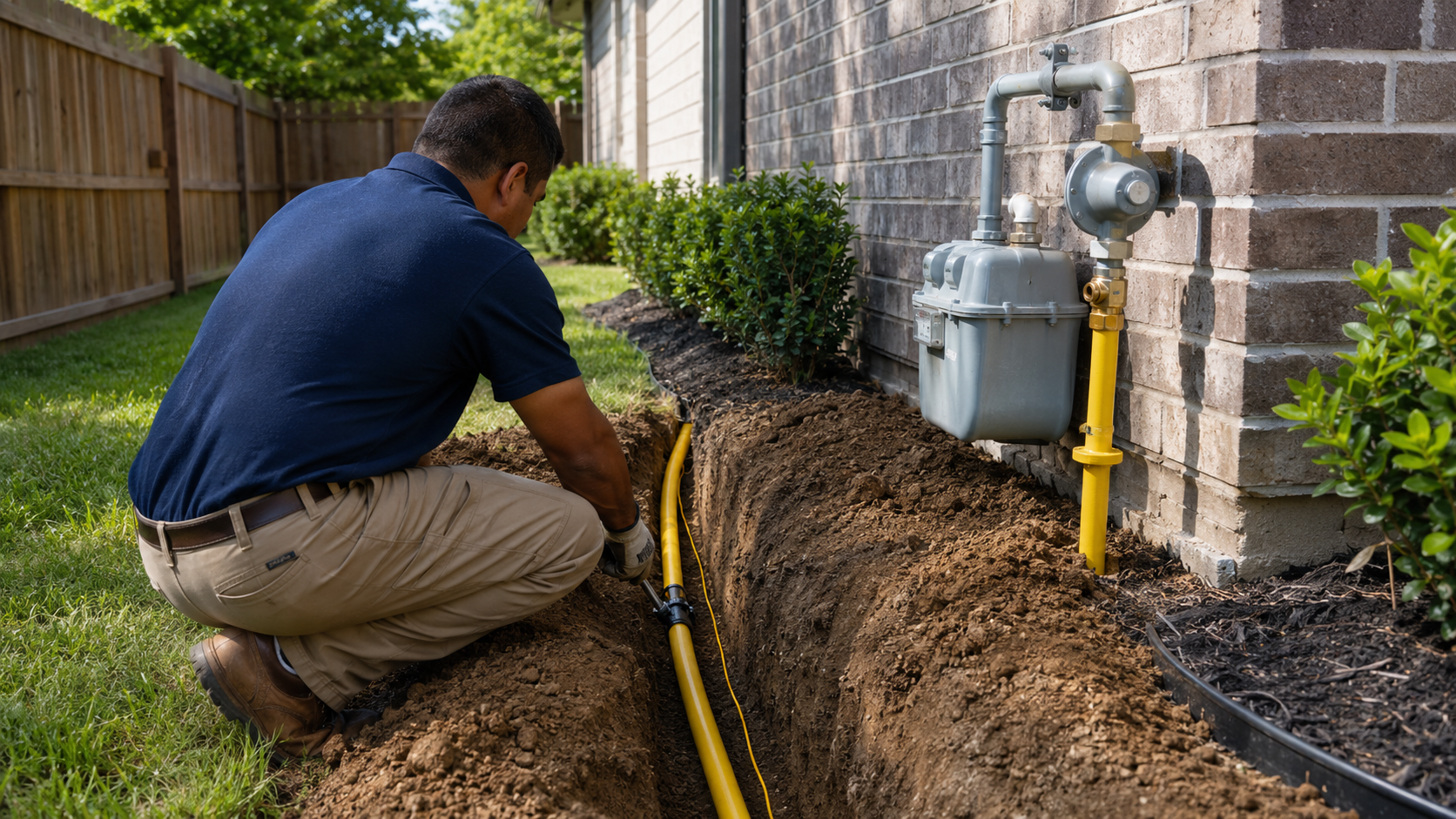
An unusual patch of dead grass, plants, or landscaping near a buried gas line may point toward a below-ground leak.
Unusual Appliance Behavior
Delayed ignition, repeated shutdowns, weak performance, or difficulty operating more than one gas appliance may require evaluation.
Visible Pipe or Connector Damage
Corrosion, dents, kinks, loose fittings, damaged flexible connectors, or disturbed buried lines can affect the safety of the gas system.
Unexplained Physical Symptoms
Headache, dizziness, nausea, weakness, or confusion can have many causes. Leave the area and seek appropriate help when symptoms occur near fuel-burning equipment or improve after going outside.
Follow the Location
Indoor and Outdoor Warning Signs Can Point Toward Different Parts of the System
Signs Inside the Home
- Odor near a range, furnace, dryer, fireplace, or water heater
- Hissing near an appliance shutoff or connector
- Damaged flexible appliance connection
- Repeated ignition or performance problems
- Symptoms that lessen after leaving the building
Signs Outside the Home
- Odor near the meter or exposed piping
- Hissing or blowing near a buried line
- Dead vegetation in a narrow or unusual pattern
- Bubbling in standing water or wet soil
- Line damage after digging, construction, or impact
Look at the Full Pattern
Additional Clues Help Narrow Where the Problem May Be
The appliance connector, shutoff valve, union, fitting, control, or appliance itself may require evaluation.
A supply, pressure, regulator, meter, or broader distribution issue may be involved rather than one appliance connection.
A disturbed line, incomplete connection, damaged fitting, improper support, or appliance hookup issue may need to be checked.
A buried service or branch line may have been damaged. Leave the area and contact the utility or emergency services if an active leak is suspected.
The appliance connection, burner system, venting, combustion process, or nearby gas piping may require professional evaluation.
Leave the home and follow the alarm manufacturer’s and emergency authority’s instructions. Carbon monoxide does not have the sulfur-like odor associated with odorized fuel gas.
What to Do When You Suspect a Gas Line Problem
Leave the affected area. Move everyone outside without delaying to investigate the source.
Avoid switches and electronics. Do not turn lights, appliances, fans, garage doors, or other electrical equipment on or off.
Do not use flames. Avoid matches, candles, cigarettes, lighters, or anything that could ignite gas.
Call from a safe location. Contact the gas utility or emergency services after you are outside and away from the building.
Keep others away. Do not allow anyone to enter the home or approach a suspected outdoor leak.
Wait for clearance. Do not return or attempt repairs until the appropriate authority says the area is safe.
When Immediate Action Matters
Leave Immediately When There Is a Possible Active Gas Leak
Leave and Call for Emergency Help When
- You smell a strong sulfur-like or rotten-egg odor
- You hear hissing near gas piping or an appliance
- A gas line has been struck, cut, or pulled loose
- Someone feels dizzy, weak, nauseated, or confused
- A carbon monoxide alarm sounds
Schedule Gas Line Service When
- Exposed piping shows corrosion or physical damage
- An appliance connection appears worn or improperly supported
- A gas appliance has repeated ignition or supply problems
- Plumbing or remodeling work may affect an existing gas line
- The utility has made the property safe but repairs are still needed
Why Diagnosis Matters
The Correct Repair Depends on the Leak Location, Pipe Condition, and System Layout
Gas piping may include the meter connection, regulator, main distribution piping, branch lines, shutoff valves, appliance connectors, unions, and buried sections. A proper evaluation identifies the affected section, confirms what work is required, and determines whether a focused repair, connector replacement, line replacement, or system modification is needed.
Exposed Gas Piping
Accessible pipe, fittings, supports, shutoff valves, unions, and visible connections are reviewed for damage, corrosion, movement, and leakage.
Appliance Connections
Connectors, shutoffs, fittings, routing, clearances, and connection condition are checked at gas-fired appliances.
Buried and Concealed Lines
The line route, recent digging, construction activity, pressure loss, and other evidence help determine whether concealed or underground piping may be involved.
System Capacity and Layout
Pipe sizing, appliance demand, branch configuration, regulator conditions, and planned equipment changes may affect the recommended work.
Know What Is Happening Before Work Begins
Get a Clear Evaluation of the Gas Piping Concern
After any immediate safety concern has been cleared, Malek can inspect accessible gas piping and connections, identify the affected section, and explain the repair or replacement options that make sense for the home.
Possible Solutions
The Right Work Depends on the Damaged Section and the Condition of the System
Gas Line Repair May Make Sense When
- The problem is limited to an accessible fitting or valve
- An appliance connector needs replacement
- A damaged section can be isolated and corrected
- The surrounding piping remains in dependable condition
- The repair can be completed and tested safely
Broader Work May Be Considered When
- Piping is corroded, damaged, or repeatedly leaking
- A concealed or buried section has failed
- The line is improperly routed or supported
- Existing pipe sizing does not match appliance demand
- Remodeling or new equipment requires a different layout
What a Professional Evaluates
A Good Evaluation Should Identify the Affected Section Before Recommending Work
The pattern of the concern helps narrow whether the issue is near an appliance, exposed connection, buried line, or broader supply system.
Visible piping, shutoffs, unions, supports, fittings, and appliance connections are checked for damage, corrosion, and movement.
Flexible connectors, shutoff valves, routing, attachment points, and nearby components are reviewed.
Digging, remodeling, appliance replacement, foundation movement, impact, and construction activity may help explain the problem.
Appropriate testing may be used to determine whether the gas piping can maintain pressure and whether additional sections require attention.
The recommendation should account for the affected section, access, piping condition, appliance demand, testing requirements, and expected reliability.
Frequently Asked Questions
Common Questions About Gas Line Problems
What should I do if I smell gas in my home?
Leave the building immediately without operating switches, appliances, phones, garage doors, matches, or anything that may create a spark. Call the gas utility or emergency services from a safe location outside.
What does a natural gas leak smell like?
Odorized fuel gas is commonly described as smelling sulfur-like or similar to rotten eggs. Treat an unexplained odor near gas piping or appliances seriously.
Can a gas leak happen without a noticeable smell?
Yes. Odor may be difficult to notice outdoors, with a small leak, after prolonged exposure, or when someone has a reduced sense of smell. Other signs should not be ignored.
Can a gas line leak underground?
Yes. Possible outdoor clues include dead vegetation, hissing, bubbling in wet soil or standing water, an unusual odor, or signs of damage after excavation.
Is a carbon monoxide problem the same as a gas leak?
No. Carbon monoxide is produced by incomplete combustion and does not have the sulfur-like odor added to fuel gas. Leave the home and follow emergency instructions whenever a carbon monoxide alarm sounds.
Can a damaged appliance connector cause a gas leak?
Yes. A loose, kinked, corroded, damaged, or improperly installed connector or fitting may allow gas to escape near an appliance.
Can I search for a gas leak myself?
Do not remain inside to locate an active leak. Leave the area, avoid anything that could create a spark, and contact the gas utility or emergency services from a safe location.
When should a gas line be replaced instead of repaired?
Replacement or broader modification may make more sense when piping is corroded, damaged, repeatedly leaking, improperly routed, inaccessible, or unable to support the required appliance demand.