
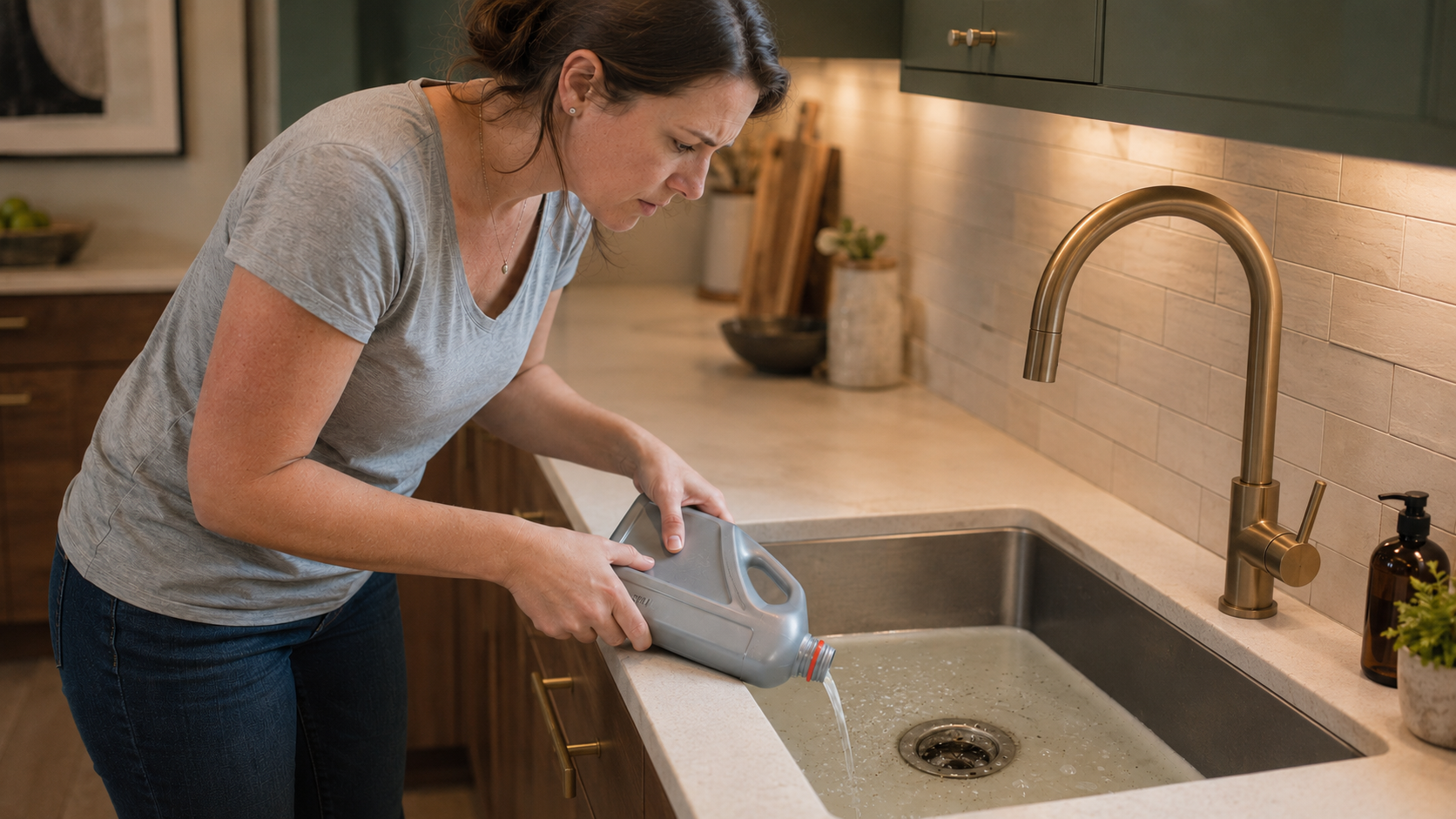
Chemical drain cleaners can sometimes break through a minor clog, but repeated use may damage vulnerable pipes, create hazardous fumes, and leave the real cause of the blockage unresolved.
These products are especially risky when the drain is completely blocked, the piping is old or already damaged, another cleaner has already been used, or the clog keeps returning. A plunger, basic drain-screen maintenance, or professional drain cleaning is usually a safer path.
How They Work
Chemical Cleaners Rely on Strong Reactions to Break Down a Clog
Different products use different ingredients, but most work by creating a chemical reaction that dissolves or softens organic material such as hair, grease, soap residue, and food buildup.
Caustic Cleaners
These products use strongly alkaline chemicals that can react with grease and other organic material while producing heat.
Oxidizing Cleaners
These products use oxidizing agents to break down organic matter and may also generate heat and gas during the reaction.
Acidic Cleaners
Highly corrosive acid-based products may be available for specialized use but carry significant handling and plumbing risks.
Enzyme or Bacterial Products
These work more slowly and are generally intended for maintenance rather than clearing a severe or complete blockage.
Pipe Damage
How Chemical Drain Cleaners Can Harm Plumbing
Heat Can Stress Plastic Pipe
Some chemical reactions generate significant heat, which may soften or deform vulnerable plastic piping and weaken joints.
Corrosive Chemicals Can Attack Metal
Older, thin, or already corroded metal piping may be more susceptible to damage from repeated chemical exposure.
Standing Chemicals Remain in a Blocked Drain
If the clog does not clear, concentrated cleaner may sit against the pipe, fittings, seals, and blockage for an extended period.
Existing Cracks Can Allow Chemicals to Escape
A damaged drain line may allow cleaner to leak into cabinets, wall cavities, flooring, soil, or other concealed areas.
Repeated Use Can Hide a Larger Problem
Temporary improvement may delay inspection of roots, corrosion, pipe damage, or a recurring main-line blockage.
Plumber Exposure Becomes More Dangerous
Chemicals left in the line can splash during plunging, drain removal, snaking, or professional service.
Temporary Relief vs. Real Resolution
A Drain That Opens Briefly May Still Have the Same Underlying Problem
The Drain Begins Moving Again
- Only part of the buildup may be dissolved
- The opening may remain narrow
- The blockage may reform quickly
- Pipe condition remains unknown
The Cause Is Identified and Corrected
- The full blockage is removed when possible
- The drain path is evaluated
- Recurring causes are identified
- Pipe damage is addressed when present
Safety Risks
The Risk Is Not Limited to the Pipe
Skin and Eye Burns
Splashes can cause serious chemical burns, especially when a drain backs up or a plunger is used afterward.
Fumes and Breathing Irritation
Strong vapors may irritate the eyes, nose, throat, and lungs, particularly in a small or poorly ventilated room.
Child and Pet Exposure
Open containers, spills, and product left near a drain can create an immediate poisoning or burn hazard.
Unexpected Chemical Reactions
Residue from another cleaner or household product may react dangerously with a new product.
Do Not Add More Product When the First Treatment Fails
Do not mix products. Different formulas may react violently or release dangerous gas.
Do not plunge a drain filled with chemicals. The product can splash onto skin, eyes, clothing, and nearby surfaces.
Do not disassemble the trap immediately. Corrosive liquid may still be sitting above the blockage.
Do not hide chemical use from the plumber. Tell the technician exactly what was used and when.
Safer First Steps
What to Try Instead for a Minor Drain Clog
Stop Using the Affected Fixture
Avoid adding more water when the drain is fully blocked or beginning to back up.
Remove Visible Debris
Clear accessible hair, food, or soap buildup from the drain opening without reaching deeply into the pipe.
Use the Correct Plunger
A basic fixture-level clog may respond to careful plunging when no chemical cleaner is present.
Clean the Stopper or Strainer
Hair and residue often collect around removable sink stoppers, tub strainers, and shower covers.
Check Whether Other Drains Are Affected
Multiple slow drains or gurgling fixtures suggest a deeper branch or main-line problem.
Call Before the Clog Becomes a Backup
Recurring, complete, or multi-fixture clogs are better handled with professional equipment and diagnosis.
When to Call a Plumber
Professional Service Is the Safer Choice When the Problem Is More Than a Simple Clog
Schedule Drain Service When
- The same drain keeps clogging
- Several fixtures drain slowly
- Water backs up into another fixture
- You hear repeated gurgling
- There are persistent sewer odors
- A chemical cleaner did not work
Tell the Plumber Before Service When
- Any chemical cleaner was poured into the drain
- More than one product was used
- The product is still standing in the fixture
- Anyone experienced a splash or exposure
- The drain line may be cracked or leaking
- You no longer have the product label
Professional Drain Cleaning
What a Plumber Can Do That a Chemical Cleaner Cannot
The plumber determines whether the problem is one fixture, a branch drain, or the main sewer line.
The equipment and approach are chosen for the drain size, location, blockage, and pipe condition.
Professional tools can physically clear hair, grease, debris, roots, and other material rather than only softening part of it.
Camera inspection may be recommended when roots, corrosion, pipe damage, sagging, or repeated blockage is suspected.
The plumber can avoid methods that are inappropriate for the age, material, or condition of the drain line.
The recommendation can be tailored to the actual cause instead of relying on repeated chemical treatment.
Clear the Drain Without Guessing
Find Out Why the Clog Keeps Coming Back
Malek can evaluate the affected drain, choose the appropriate cleaning method, and determine whether buildup, roots, or damaged piping is causing the problem.
Preventing Future Clogs
Good Drain Habits Work Better Than Repeated Chemical Treatment
Use Drain Screens
Catch hair, food, and debris before they enter sinks, tubs, and showers.
Keep Grease Out of the Sink
Allow cooking grease to cool and place it in the trash rather than rinsing it into the drain.
Flush Only Toilet Paper
Wipes, paper towels, hygiene products, and other materials can create serious drain and sewer blockages.
Address Slow Drains Early
A drain that gradually slows is easier to evaluate before it becomes completely blocked.
Frequently Asked Questions
Chemical Drain Cleaner Questions
Can chemical drain cleaners damage PVC pipes?
They can contribute to damage when strong reactions generate heat or when concentrated cleaner remains trapped in a blocked drain. Pipe age, condition, joints, and product use all matter.
Can drain cleaner damage metal pipes?
Repeated exposure to corrosive chemicals may worsen deterioration in older, thin, or already corroded metal piping.
Is it safe to use a plunger after drain cleaner?
No. Plunging can cause the chemical to splash from the drain. Avoid disturbing the fixture and tell the plumber what product was used.
Can I use a second drain cleaner if the first one did not work?
No. Never mix drain-cleaning products or add other household chemicals. The combination may create dangerous heat, splashing, or toxic gas.
What should I do if chemical cleaner is standing in the sink or tub?
Keep people and pets away, ventilate the area when safe, do not plunge or disassemble the drain, and contact an appropriate professional for guidance.
Why did the clog return after chemical drain cleaner?
The product may have opened only a narrow passage or failed to remove the full buildup. Roots, pipe damage, sagging, or a deeper blockage may also be involved.
Are enzyme drain cleaners safer?
Enzyme or bacterial products are generally slower and less corrosive, but they are intended more for maintenance than for clearing a severe or complete blockage.
When should I call a plumber for a clogged drain?
Call when the clog keeps returning, several fixtures are affected, water backs up elsewhere, chemical cleaner has failed, or you suspect roots or pipe damage.
Cookie Consent
We use cookies to improve your experience on our site. By using our site, you consent to cookies.
Cookie Preferences
Manage your cookie preferences below:
Essential cookies enable basic functions and are necessary for the proper function of the website.
These cookies are needed for adding comments on this website.
Google reCAPTCHA helps protect websites from spam and abuse by verifying user interactions through challenges.
Google Tag Manager simplifies the management of marketing tags on your website without code changes.
Statistics cookies collect information anonymously. This information helps us understand how visitors use our website.
Google Analytics is a powerful tool that tracks and analyzes website traffic for informed marketing decisions.
Service URL: policies.google.com (opens in a new window)
Marketing cookies are used to follow visitors to websites. The intention is to show ads that are relevant and engaging to the individual user.
Google Maps is a web mapping service providing satellite imagery, real-time navigation, and location-based information.
Service URL: policies.google.com (opens in a new window)
You can find more information in our Cookie Policy and Privacy Policy.