Whole-Home Generator Maintenance Guide
Generator Maintenance Checklist
A whole-home standby generator spends most of its life waiting for an outage, which makes regular maintenance easy to overlook. But the battery, engine, fluids, filters, controls, electrical connections, fuel system, and transfer equipment all need attention over time.
Homeowners can safely keep an eye on several basic readiness items, while engine service, electrical testing, fuel-system work, internal inspections, and transfer-equipment evaluation should be left to a qualified professional.
This checklist separates the things homeowners can safely observe from the maintenance tasks that belong in professional service, including what to review after long outage runtime.
The Quick Answer
Generator Maintenance Is a Mix of Simple Homeowner Checks and Professional Service
Watch the Generator Between Service Visits
Exercise history, warning lights, visible debris, unusual sounds, and changes in startup behavior can provide early clues that the system needs attention.
Follow the Specific Equipment Schedule
Maintenance intervals vary by generator model, manufacturer, operating hours, and outage runtime. There is no single schedule that applies to every standby generator.
Recheck Maintenance After Long Outages
Extended operation can add enough engine hours to move service forward even when the generator was recently maintained.
A generator that starts during an exercise cycle can still have maintenance needs. Exercise confirms certain operating functions, but it does not replace inspection, service, or load-related evaluation.
Homeowner Checklist
What You Can Safely Keep an Eye On Between Generator Service Visits
Confirm the Generator Is in Automatic Mode
A standby generator normally needs to remain in its correct automatic operating mode to respond when utility power is lost.
Review Exercise-Cycle History
Pay attention if the generator misses a scheduled exercise, takes longer to start, sounds different, or displays a warning.
Check for Visible Faults or Alerts
Look at the controller or status display for warning lights, fault messages, or other indications that the generator needs attention.
Keep the Area Around the Generator Clear
Remove loose debris, vegetation, stored items, and other obstructions while maintaining the equipment clearances required by the manufacturer.
Look for Obvious Leaks or Damage
Visible fluid leaks, corrosion, enclosure damage, pest activity, or storm damage should be evaluated before they become larger problems.
Track Outage Runtime
Record approximately how long the generator runs during major outages because service intervals may depend partly on operating hours.
Monitor Propane Level When Applicable
Propane-powered generators depend on adequate stored fuel. Homeowners can keep track of tank level when it is safe and practical to do so.
Keep Maintenance Records
Save service dates, battery replacements, repairs, runtime, and fault history so future maintenance decisions are based on the actual equipment history.
Homeowner maintenance should stay observational. Do not open energized electrical compartments, bypass safety controls, adjust gas regulators, work on fuel fittings, or service internal generator components unless you are qualified to do so.
Professional Maintenance
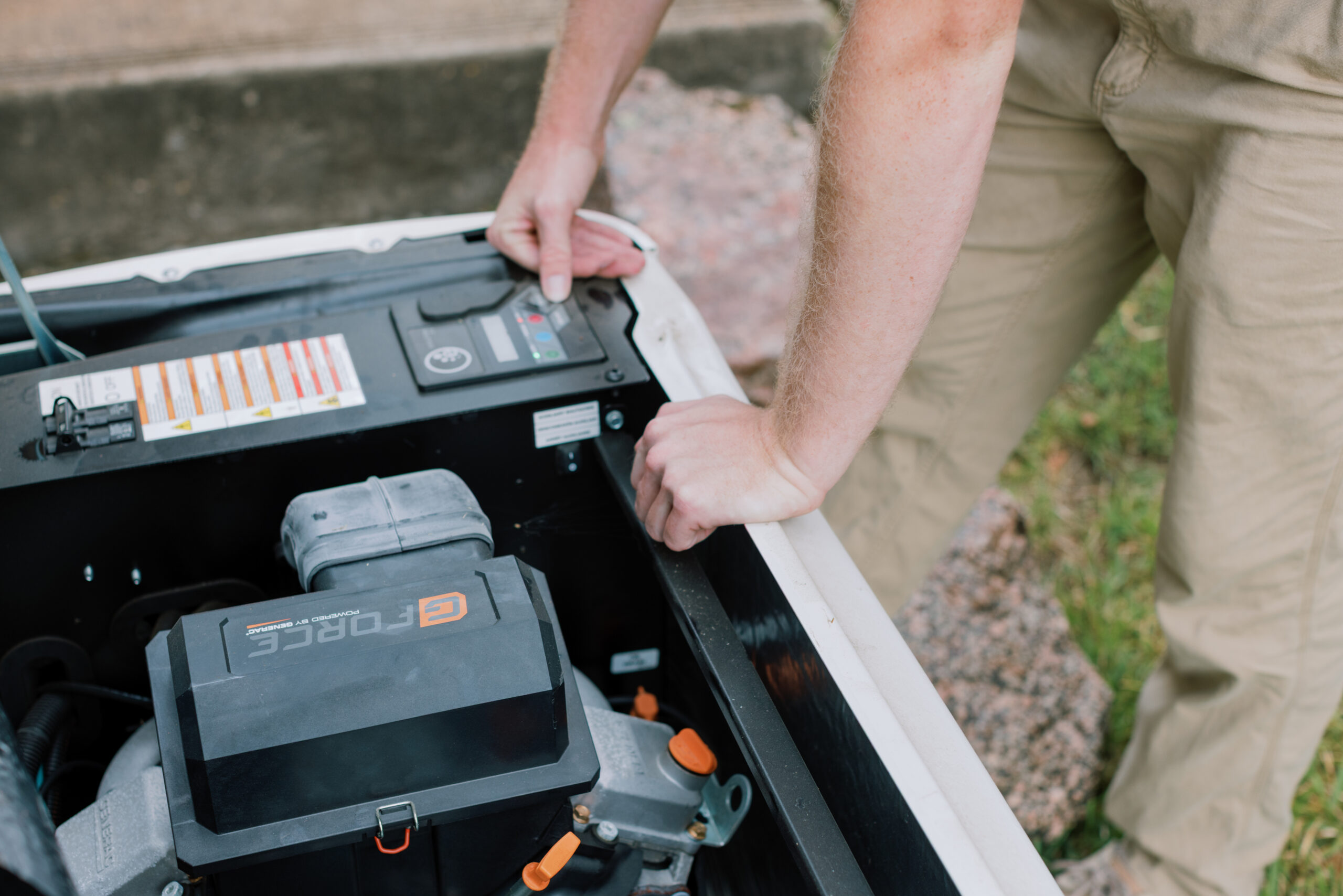
What a Professional Generator Maintenance Visit May Include
Review generator operating history and fault codes
Inspect and test the starting battery
Check charging-system operation
Service oil and filters when due
Inspect scheduled ignition components where applicable
Review visible wiring and electrical connections
Evaluate controls and operating condition
Review transfer-system operation as appropriate
The exact maintenance procedure depends on the generator model, manufacturer requirements, operating hours, service history, and equipment condition. Not every system requires the same tasks at every visit.
After an Outage
Long Generator Runtime Can Move Maintenance Forward
After a Short Outage
Confirm the System Returned to Normal Standby Operation
- ✓Check for visible warnings or faults
- ✓Confirm the system returned to standby mode
- ✓Note any unusual sounds or operation
- ✓Record approximate runtime
- ✓Continue the normal maintenance schedule if appropriate
After Extended Runtime
Review Whether Service Is Now Due Earlier Than Expected
- ✓Record total approximate operating hours
- ✓Review model-specific maintenance intervals
- ✓Check for faults, leaks, or operating changes
- ✓Evaluate battery and fuel conditions as appropriate
- ✓Schedule maintenance when runtime makes it due
Warning Signs
These Changes Are Worth Addressing Before the Next Outage
Missed exercise cycle
Slow or difficult starting
Recurring fault code
Weak or repeatedly discharged battery
New vibration or unusual noise
Visible oil or fluid leak
Corrosion or enclosure damage
Unexpected shutdown during operation
Routine maintenance and generator repair are not the same thing. If testing reveals a failed component, fuel concern, electrical problem, control fault, or mechanical issue, that condition may require separate repair rather than maintenance alone.
The Bottom Line
A Good Generator Checklist Helps You Catch Changes Before an Outage Does
Homeowners do not need to service the internal components of a standby generator themselves. What matters is knowing what to observe, keeping useful records, noticing changes in operation, and making sure scheduled professional maintenance does not get forgotten.
That becomes especially important after extended outage runtime, when the generator may reach its next service requirement much sooner than the calendar suggests.
We Don’t Just Fix It. We Explain It.
What Professional Maintenance Includes
Building the Maintenance Visit Around the Generator You Actually Have
A useful maintenance visit should consider the generator model, operating hours, service history, outage use, existing faults, and equipment condition instead of treating every standby system exactly the same.
History Review
Review Runtime, Faults, and Previous Service
Operating hours, recent outages, exercise history, previous maintenance, repairs, and recurring faults help determine what the generator currently needs.
Starting System
Evaluate the Battery and Charging Condition
Battery condition, charging operation, starting performance, controller status, and related connections are important parts of standby-generator readiness.
Scheduled Service
Complete Maintenance Items That Are Actually Due
Oil, filters, ignition components where applicable, and other scheduled items are serviced according to the specific equipment and operating history.
System Review
Review Controls, Connections, and Standby Operation
Generator controls, visible electrical conditions, operating behavior, and transfer-system function may be reviewed as appropriate for the maintenance scope.
Clear Findings
Separate Maintenance Needs From Repair Concerns
Malek explains what was serviced, what remains in good condition, and whether any separate repair issue was found during the evaluation.
Continue Learning
Continue Learning About Generator Maintenance
Generator Maintenance
Learn how Malek evaluates standby-generator maintenance needs, operating condition, batteries, service items, controls, and overall readiness.
→ Investment GuideGenerator Maintenance Investment Guide
Review typical planning ranges and the factors that can affect the cost of generator maintenance and related service.
→ ArticleWhy Won’t My Generator Start?
Learn how battery, fuel, charging, controls, maintenance, and mechanical problems can interrupt the starting sequence.
→ ArticlePreparing Your Generator for Hurricane Season
Review generator readiness before Gulf Coast storm season and what to check after extended outage runtime.
→Frequently Asked Questions
Generator Maintenance Checklist FAQs
These answers explain what homeowners can safely monitor, what professional generator maintenance may include, and how outage runtime can affect the service schedule.
What maintenance does a whole-home generator need? +
Maintenance can include battery evaluation, oil and filter service when due, scheduled ignition components where applicable, control checks, visible electrical inspection, operating review, and other items required for the specific generator.
How often should a whole-home generator be serviced? +
Service intervals depend on the generator model, manufacturer requirements, operating hours, maintenance history, and outage runtime. Follow the schedule for the specific equipment rather than relying on one universal interval.
What generator maintenance can homeowners do themselves? +
Homeowners can monitor status indicators, exercise history, visible faults, approximate outage runtime, propane level when applicable, and the condition of the area around the generator. Internal electrical, fuel, and mechanical service should be left to qualified professionals.
Does my generator need maintenance if it rarely runs? +
Yes. Batteries, fluids, filters, seals, electrical connections, controls, and other components can age even when outage runtime is limited.
Does a generator need maintenance after a long outage? +
It may. Extended operation adds engine hours and can move scheduled service forward. Review runtime and the maintenance requirements for the specific generator after significant use.
Is a generator exercise cycle the same as maintenance? +
No. An exercise cycle confirms certain starting and operating functions, but it does not replace scheduled service, inspection, battery evaluation, or other maintenance requirements.
Is generator repair included in routine maintenance? +
Not necessarily. Routine maintenance addresses scheduled service needs. If evaluation reveals a failed component, fuel problem, electrical issue, control fault, or mechanical failure, separate repair may be required.
What are signs my generator needs service? +
Missed exercise cycles, slow starting, recurring faults, battery problems, leaks, unusual noise or vibration, visible corrosion, or unexpected shutdowns are all reasons to have the system evaluated.
Keep Your Generator Ready
Make Generator Maintenance Part of Your Home’s Backup-Power Plan
Malek can review your generator's service history, operating hours, battery, controls, scheduled maintenance items, fault history, and overall operating condition before explaining what the system actually needs.