Schedule Service
Schedule Service

Whole-Home Dehumidifier Services

Remove Excess Moisture When Your Home Stays Humid

A whole-home dehumidifier helps remove excess moisture when indoor humidity remains high even while the HVAC system is operating. Malek evaluates indoor humidity, HVAC performance, system configuration, and conditions throughout the home before recommending whether additional dehumidification makes sense.

Indoor humidity evaluated

HVAC performance considered

Options explained clearly
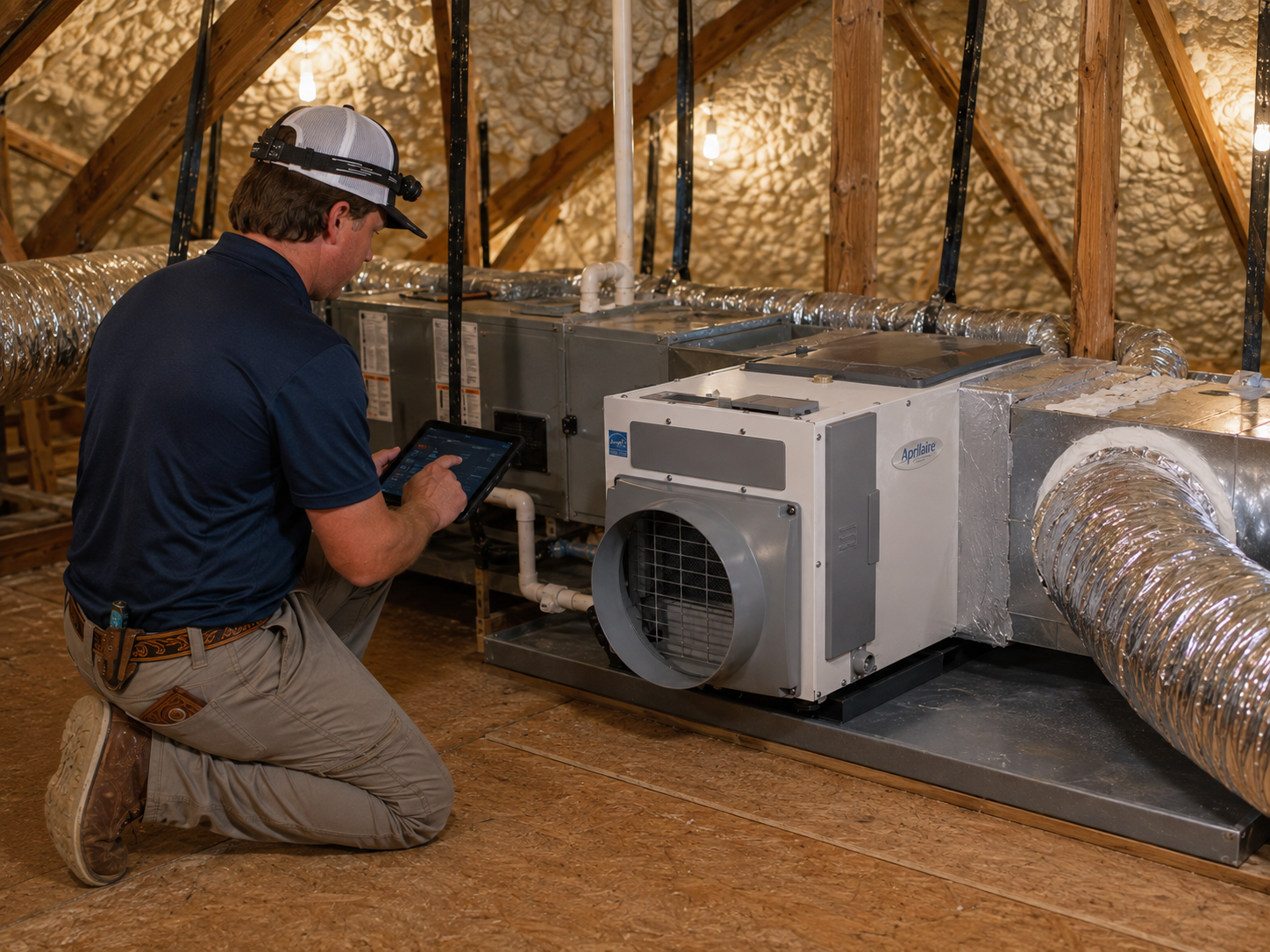
HVAC technician evaluating a whole-home dehumidifier installed with residential attic HVAC equipment
Dehumidification Should Start With Actual Indoor Conditions

A humid-feeling home does not automatically mean another piece of equipment is needed. The moisture condition and HVAC system should be evaluated together.

When Dehumidification May Be Worth Exploring
Indoor humidity stays consistently high The home feels sticky or clammy Cooling feels comfortable but moisture remains You want more consistent whole-home humidity control
Lower humidity is not always better. The goal is controlled moisture removal based on actual indoor conditions—not making the air as dry as possible.

Whole-Home Humidity Control

Dehumidification Should Match the Moisture Conditions Inside the Home

Whole-home dehumidifiers remove excess moisture from indoor air, but additional equipment should only be considered after understanding why humidity remains high. Malek evaluates indoor conditions, HVAC operation, installation requirements, and the broader indoor air quality picture before recommending a solution.

Part of our Indoor Air Quality Services
01

Humidity Evaluation

Confirm That Indoor Humidity Is Actually Staying Too High

We start by reviewing indoor humidity and the pattern you are experiencing rather than assuming that every sticky or uncomfortable home needs additional dehumidification equipment.

02

HVAC Performance

Understand How the Existing HVAC System Is Managing Moisture

Cooling operation, airflow, system runtime, equipment performance, and other HVAC conditions can affect indoor humidity and should be considered before adding separate moisture-control equipment.

03

Whole-Home Control

Remove Excess Moisture Across the Home

Whole-home dehumidification is designed to provide broader humidity control rather than relying on portable dehumidifiers in individual rooms.

04

Moisture Control

Reduce Excess Humidity Without Over-Drying the Home

The goal is controlled moisture removal. Dehumidification should respond to actual indoor conditions rather than simply making the air as dry as possible.

05

System Integration

Integrate Dehumidification With the Existing HVAC System

Equipment configuration, ductwork, drainage, available installation space, access, and HVAC layout all influence how a whole-home dehumidifier can be incorporated.

06

Ongoing Care

Understand Operation and Maintenance Expectations

Malek explains how the selected dehumidification setup operates, what ongoing maintenance may be required, and what indoor conditions homeowners should continue monitoring.

Dehumidification Is Different From Humidification

One removes moisture. The other adds it.

If indoor air is consistently too dry rather than humid, whole-home humidification addresses the opposite condition. The correct approach depends on the actual moisture level inside the home.

When Indoor Humidity May Be Too High

Look for a Consistent Moisture Pattern Before Adding Dehumidification

Texas homes can feel humid for different reasons. The important question is whether excess indoor moisture is persistent and whether the HVAC system is already managing it effectively.

01

Indoor Humidity Measures Consistently High

Repeated humidity readings provide better information than how the home feels during one particularly humid day.

02

The Home Feels Sticky or Clammy

A home can reach a comfortable temperature and still feel damp or heavy when moisture remains high.

03

Humidity Returns Quickly After Cooling Cycles

If the home feels more comfortable while the AC is running but humidity rises again quickly, the overall moisture pattern deserves evaluation.

04

Condensation Appears More Often Than Expected

Repeated condensation on cooler indoor surfaces can be one clue that moisture levels deserve a closer look, especially when it occurs alongside other humidity concerns.

05

Some Areas of the Home Stay More Humid Than Others

Differences between floors, rooms, or parts of the home can point toward HVAC, airflow, building, or moisture-control conditions that should be evaluated together.

06

You Want More Consistent Whole-Home Humidity Control

Whole-home dehumidification may be worth exploring when excess moisture affects the home broadly rather than one isolated space.

Humidity Is Only One Part of Indoor Air Quality

Moisture, particles, air treatment, and duct conditions should not all be treated the same way.

Particle concerns may point toward air filtration , while additional air treatment may involve air purification . If indoor air is actually too dry, humidification addresses the opposite moisture condition.

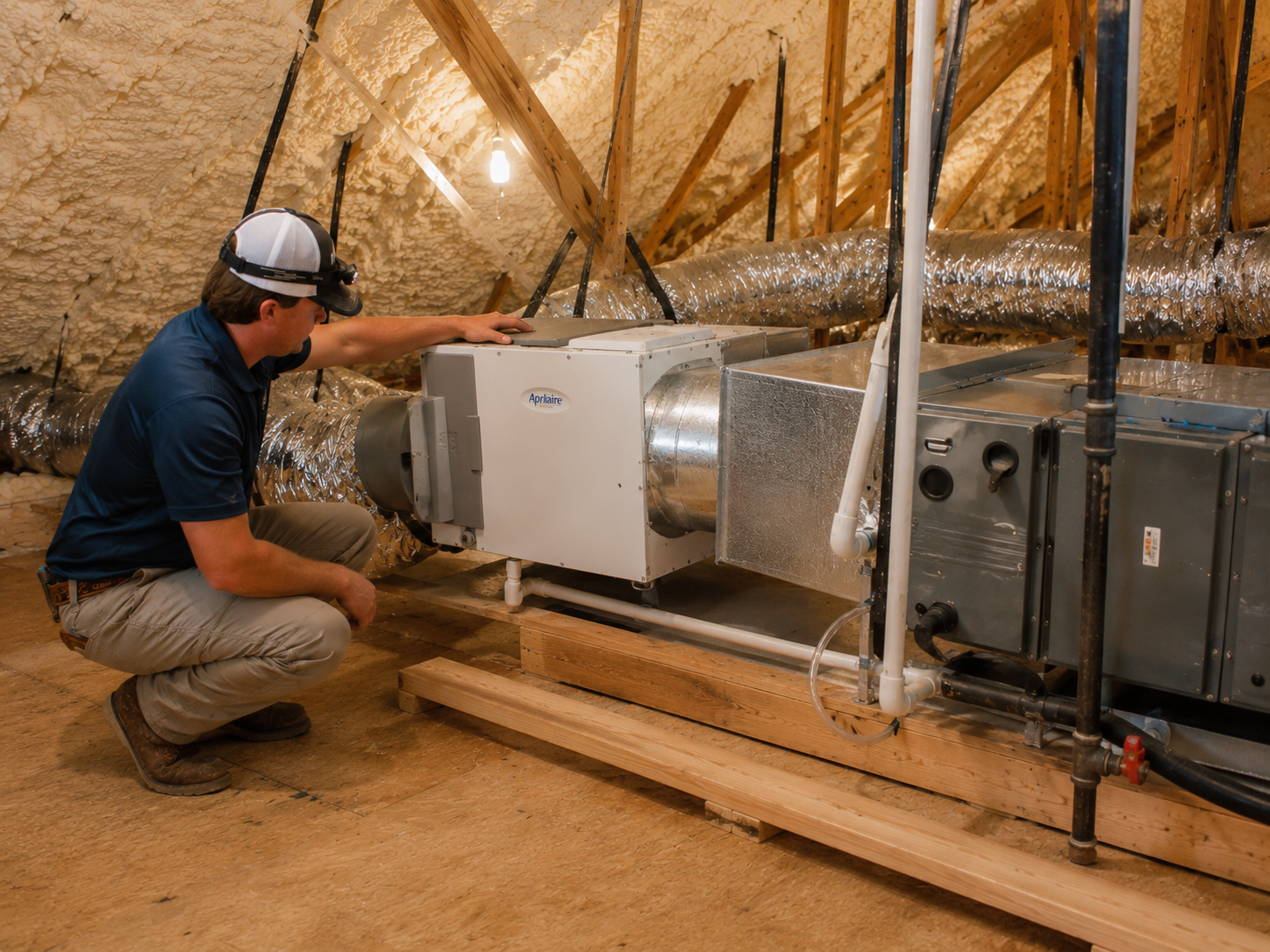
HVAC technician evaluating whole-home dehumidification equipment in a residential attic

Cooling and Humidity Control Work Together

A Cool Home Can Still Have Too Much Moisture

Air conditioning naturally removes some moisture while it runs, but temperature and humidity are not the same thing. Some homes can reach the thermostat setting while indoor humidity remains higher than desired. That is why Malek evaluates cooling performance and moisture conditions together before recommending additional dehumidification.

Malek looks at the broader indoor air quality picture before recommending equipment. If indoor air is actually too dry, humidification addresses the opposite condition. If airborne particles are the priority, air filtration may be the more relevant direction.

Choosing the Right Humidity Solution

Several Factors Determine Whether Whole-Home Dehumidification Makes Sense

Whole-home dehumidification should be based on more than a general feeling that the house seems humid. Actual indoor humidity, HVAC performance, household conditions, installation requirements, and the moisture pattern throughout the home all matter.

Malek evaluates the moisture condition and the HVAC system together before recommending additional equipment.

Humidity

Start With the Actual Moisture Level Inside the Home

Repeated indoor humidity readings help determine whether excess moisture is persistent enough to justify additional whole-home dehumidification.

Pattern

Whole-Home Problems Call for Whole-Home Solutions

Dehumidification becomes more relevant when excess moisture affects the home broadly rather than one isolated room or a short-lived weather event.

HVAC System

The Existing HVAC System Should Be Evaluated First

Cooling performance, airflow, equipment runtime, duct configuration, and system operation can all influence how well the home manages indoor moisture.

Control

Moisture Should Be Removed in a Controlled Way

The purpose of a dehumidifier is not to make the home as dry as possible. The system should respond to indoor conditions and remove excess moisture without unnecessarily over-drying the air.

Home Conditions

The Building Itself Influences Indoor Humidity

Outdoor weather, air leakage, HVAC runtime, home construction, ventilation, and everyday household activity can all influence how much moisture enters or remains inside the home.

Maintenance

Dehumidification Equipment Requires Ongoing Care

Whole-home dehumidifiers may require periodic filter service, drainage checks, inspection, cleaning, or other maintenance. Those expectations should be understood before installation.

What to Expect

What Happens During a Whole-Home Dehumidifier Evaluation

Whole-home dehumidification starts with confirming that excess indoor moisture is actually the problem. Malek reviews indoor humidity, HVAC operation, airflow, system configuration, and installation requirements before explaining whether a dehumidifier makes sense.

Understand the Concern

Start With the Humidity Pattern You Are Experiencing

We discuss when the home feels most humid, whether the condition affects multiple areas, any humidity readings you have, and what you want better moisture control to improve.

Evaluate Indoor Humidity

Confirm That Additional Moisture Removal Is Appropriate

Indoor moisture conditions are considered before recommending equipment so dehumidification is based on a real need rather than a general feeling that the home is humid.

Review the HVAC System

Understand How the Existing Equipment Is Managing Moisture

We review HVAC performance, airflow, equipment runtime, ductwork, available space, drainage, and other installation conditions that may affect both indoor humidity and dehumidifier options.

Explain the Options

Match the Dehumidification Approach to the Home

If additional moisture control is appropriate, Malek explains how the dehumidifier would work with the HVAC system and why the recommended approach makes sense for the conditions we found.

Review Operation and Care

Know What to Monitor After Installation

We explain how the dehumidifier operates, what ongoing maintenance may be needed, and what indoor conditions should be monitored so moisture remains controlled.

Start With the Indoor Humidity

Not Sure Whether Your Home Actually Needs a Dehumidifier?

Malek looks at indoor humidity, HVAC performance, airflow, system configuration, and the moisture pattern throughout the home before recommending whole-home dehumidification.

Schedule IAQ Service

Serving Bryan–College Station and Northwest Houston

Why Choose Malek

Dehumidifier Recommendations Based on the Home—not Just the Equipment

Whole-home dehumidification should solve a real moisture-control need. Malek considers indoor humidity, HVAC performance, airflow, installation requirements, and the conditions throughout the home before explaining whether a dehumidifier makes sense.

Malek HVAC professional evaluating a residential system
01

We Confirm the Moisture Problem Before Recommending Equipment

A humid-feeling home alone does not automatically mean another piece of equipment is needed. We look at actual indoor conditions and the broader moisture pattern first.
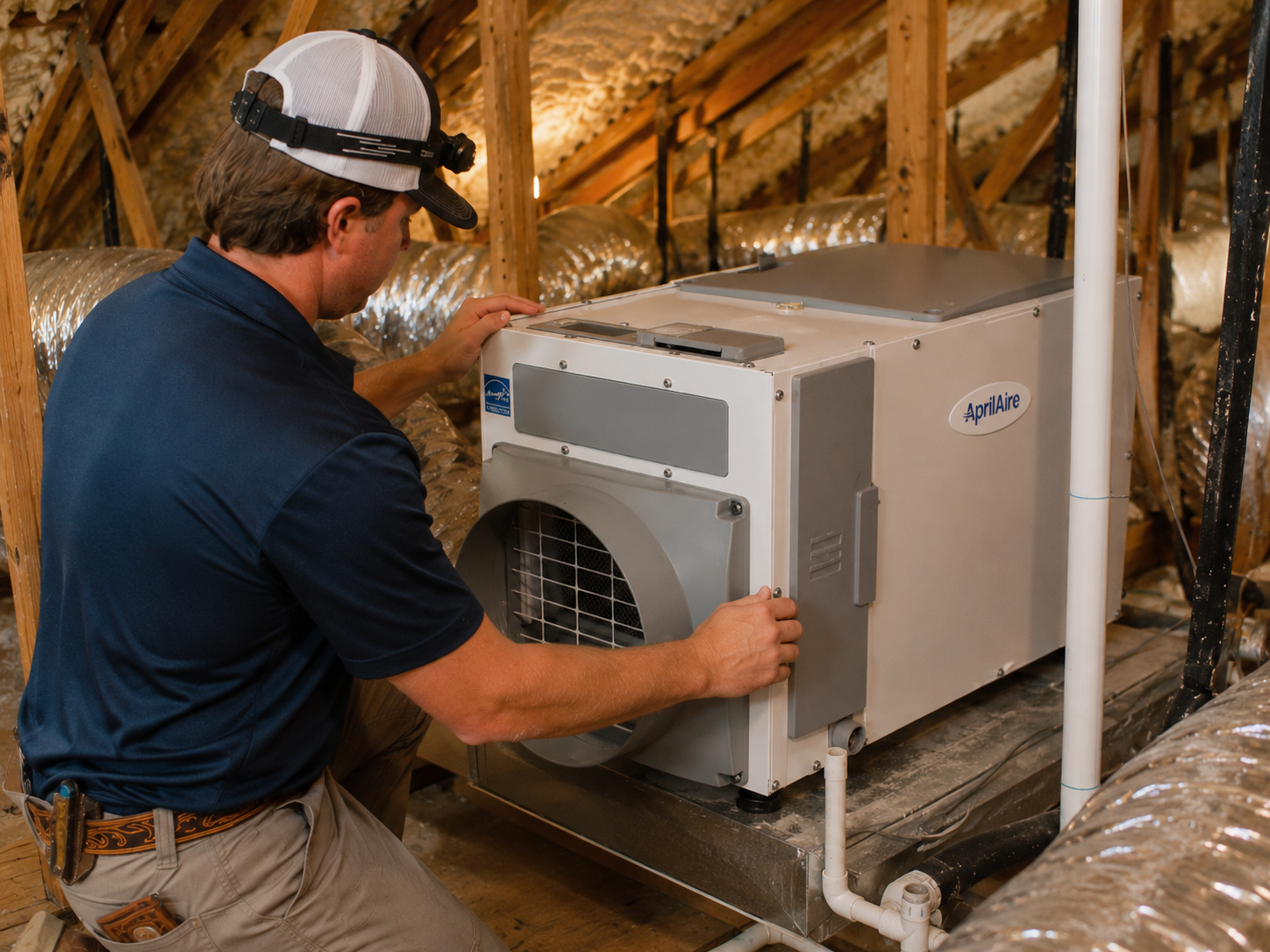
HVAC technician evaluating whole-home dehumidification equipment in a residential attic
02

We Look at the HVAC System Before Adding Dehumidification

Cooling performance, airflow, equipment operation, ductwork, installation space, drainage, and service access all matter when determining whether whole-home dehumidification is appropriate.

Malek HVAC professional discussing indoor air quality options with a homeowner
03

You Understand Why Dehumidification Does—or Does Not—Make Sense

We explain what the equipment is designed to do, how it would work with the HVAC system, what maintenance it may require, and when another IAQ solution addresses a different problem instead.

Beyond Dehumidification

Sometimes Excess Humidity Is Only One Part of the Indoor Air Quality Picture

Whole-home dehumidification removes excess moisture when indoor humidity remains too high, but it cannot solve particle, air-treatment, duct, or low-humidity concerns. The right solution depends on what is actually affecting the home.

Dehumidification should solve an excess-moisture problem. It should not be used as a substitute for humidification, filtration, air purification, or duct cleaning when one of those conditions is the actual concern.

Continue Learning

Understand Indoor Humidity Before Adding Equipment

Whole-home dehumidification should be based on actual indoor moisture conditions, HVAC performance, installation requirements, and the larger indoor air quality picture. These resources can help you understand the decision before choosing equipment.

02 Article

What Is the Ideal Indoor Humidity?

Learn why indoor humidity changes with weather, HVAC operation, household activity, and home conditions—and why moisture control should be based on more than a single number.

Read the Article
03 Decision Guide

Is a Whole-Home Dehumidifier Worth It?

Learn when whole-home dehumidification may make sense, what conditions should be evaluated first, and how it compares with relying on the HVAC system alone for moisture removal.

Read the Decision Guide
Whole-Home Dehumidifier FAQs

Questions Homeowners Ask About Whole-Home Dehumidification

Indoor humidity, cooling performance, dehumidifiers, humidifiers, and airflow are often discussed together even though they solve different problems. These answers can help clarify when whole-home dehumidification may make sense.

A whole-home dehumidifier removes excess moisture from indoor air when humidity remains higher than desired. It can work with the HVAC system to provide broader moisture control throughout the home rather than relying on portable units in individual rooms.

Customer Stories

Service People Remember.

Homeowners across Bryan–College Station and Northwest Houston trust Malek for clear explanations, careful diagnostics, and professionals who treat their homes with respect.

Protect Your Home. Understand What It Needs.

Stay ahead of unexpected HVAC, plumbing, and electrical problems with routine system checks, priority service, repair savings, and guidance from professionals who explain before they recommend.

Explore the Total Protection Plan

Get Clear Answers About Your Indoor Humidity

Find Out Whether Whole-Home Dehumidification Makes Sense for Your Home

Malek evaluates indoor humidity, HVAC performance, airflow, system configuration, and conditions throughout your home so you can understand whether additional moisture removal is the right next step.

Indoor humidity evaluated HVAC performance considered Dehumidification options explained clearly
electrical-upgrades-for-home​s