Whole-Home Humidifier Services
Add Moisture When the Air Inside Your Home Stays Too Dry
A whole-home humidifier works with the HVAC system to add controlled moisture when indoor air remains consistently dry. Malek evaluates indoor humidity, HVAC operation, equipment compatibility, and the conditions inside your home before recommending whether humidification makes sense.
Indoor humidity evaluated
HVAC compatibility considered
Options explained clearly
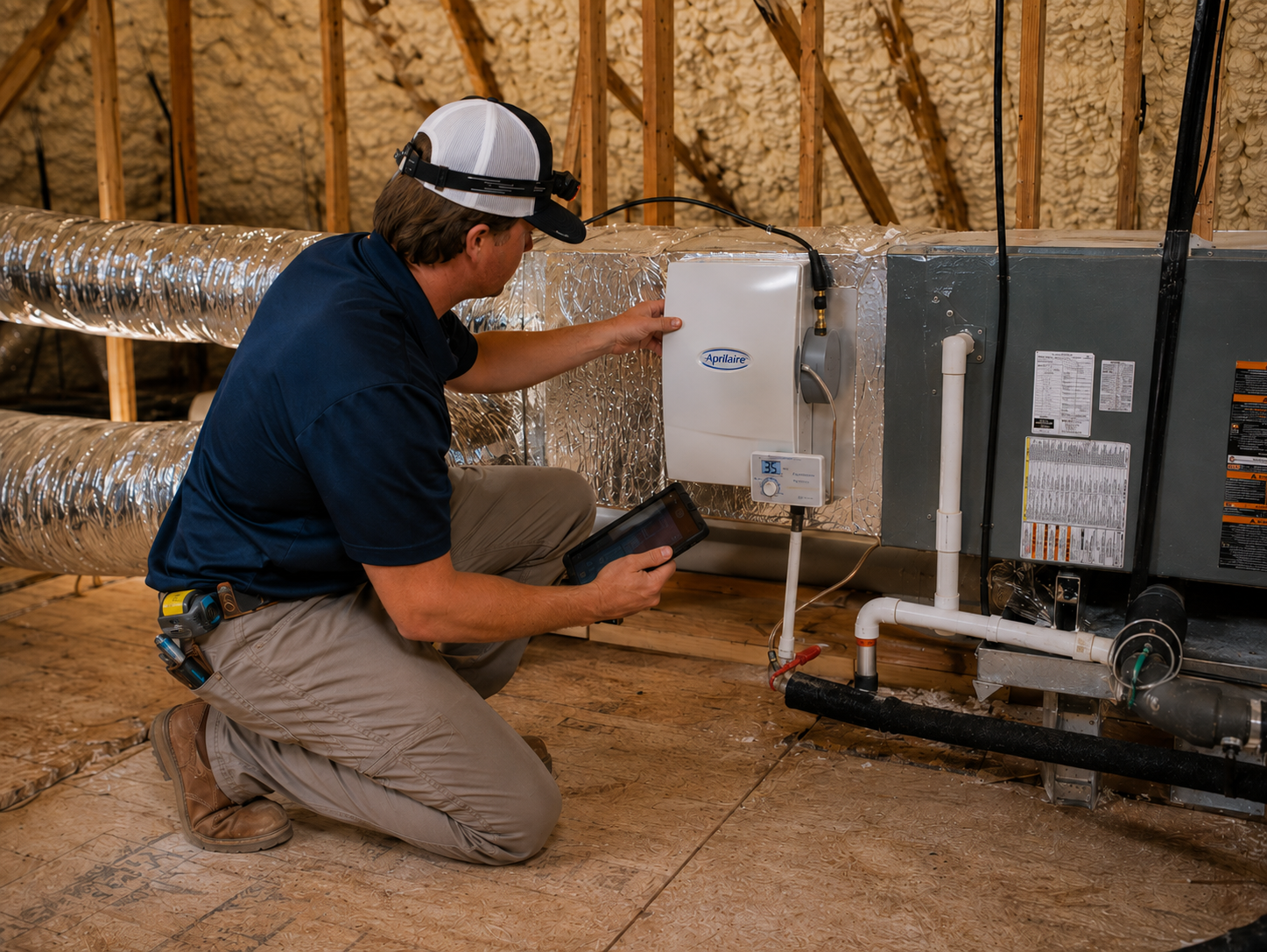
Not every home needs added moisture. Indoor humidity should be evaluated before adding equipment.
When Humidification May Be Worth Exploring
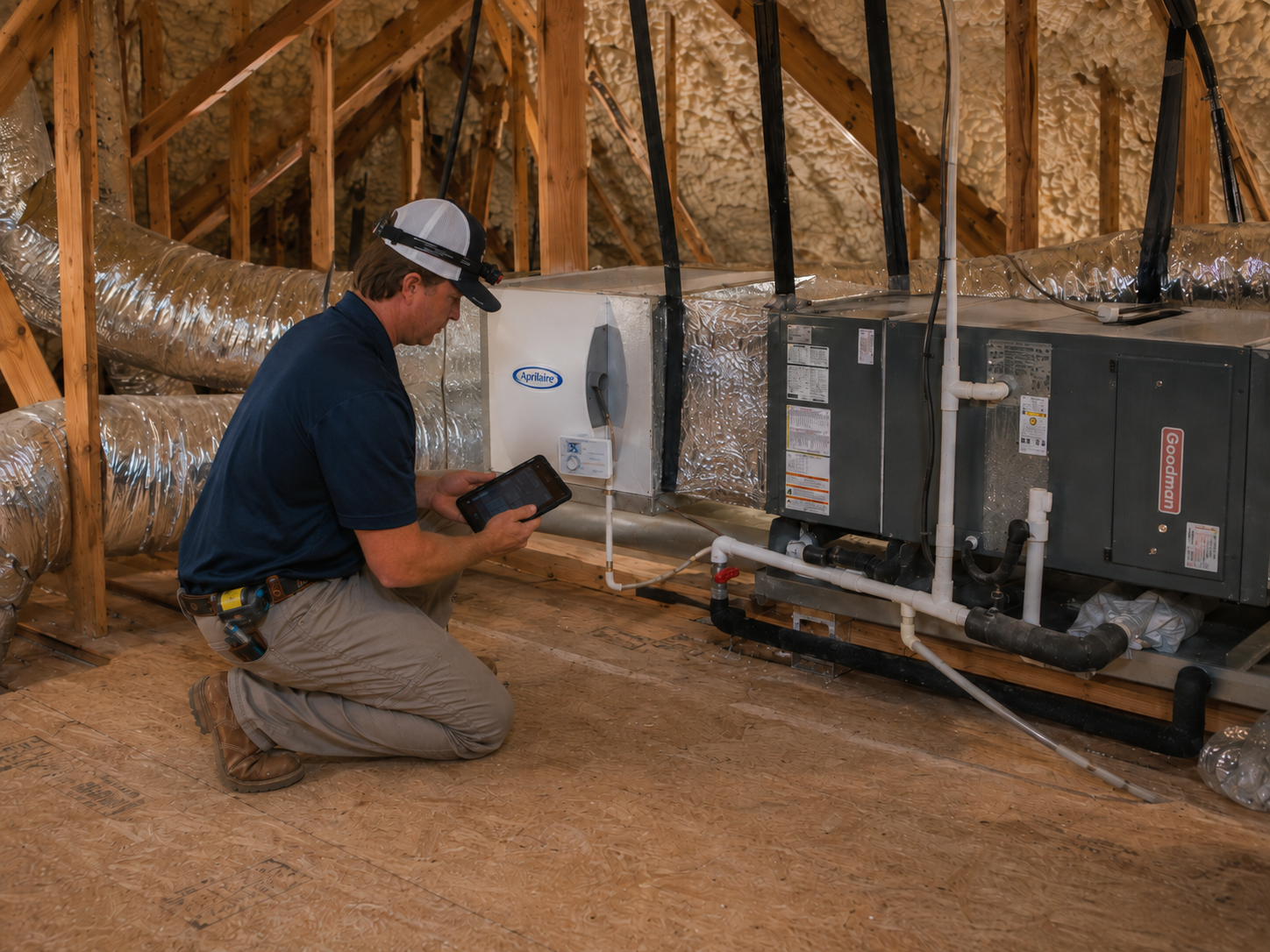
Whole-Home Humidity Control
Humidification Should Match the Conditions Inside the Home
Whole-home humidifiers add controlled moisture through the HVAC system, but the equipment should only be considered when indoor conditions actually justify it. Malek evaluates humidity, HVAC operation, installation requirements, and the broader indoor air quality picture before recommending a solution.
Part of our Indoor Air Quality Services →Humidity Evaluation
Confirm That Indoor Air Is Actually Too Dry
We start by reviewing indoor conditions and the pattern you are experiencing rather than assuming that every comfort complaint requires additional moisture.
HVAC Compatibility
Determine How Humidification Fits the Existing System
Equipment layout, duct configuration, available installation space, airflow, and access all influence whether a particular whole-home humidifier is a practical fit.
Whole-Home Control
Add Moisture Through the Central HVAC System
Whole-home humidification is designed to work with the HVAC system rather than relying on separate portable units throughout individual rooms.
Moisture Control
Add Humidity Without Overcorrecting the Problem
The goal is controlled moisture—not simply more moisture. Humidification should respond to indoor conditions without creating unnecessarily high humidity.
System Integration
Install the Equipment as Part of the HVAC System
A whole-home humidifier should be installed in a configuration appropriate for the HVAC equipment, ductwork, available service space, and moisture-control approach.
Ongoing Care
Understand Operation and Maintenance Expectations
Malek explains how the selected humidifier operates, what maintenance may be required, and what indoor conditions homeowners should continue monitoring.
Humidification Is Different From Dehumidification
One adds moisture. The other removes it.
If the home feels humid, sticky, or clammy rather than consistently dry, whole-home dehumidification may be the more appropriate direction. The two services address opposite moisture conditions.
When Indoor Air May Be Too Dry
Look for a Consistent Dry-Air Pattern Before Adding Moisture
Dry indoor air can feel different from home to home, and a single symptom does not automatically mean the house needs a humidifier. The broader indoor conditions should be evaluated first.
Indoor Humidity Measures Consistently Low
Repeatedly low indoor humidity readings provide more useful information than relying on how the air feels during a single day.
Dry Conditions Affect Several Areas of the Home
A whole-home solution makes more sense when dryness is occurring broadly rather than being limited to one isolated room.
Static Electricity Becomes More Noticeable During Dry Periods
Increased static can occur when indoor air becomes dry. It can be one clue worth considering alongside actual humidity measurements.
Wood Furnishings or Materials React to Dry Conditions
Wood can respond to changing moisture levels. Persistent dryness throughout the home may justify evaluating whether humidity is consistently below the desired range.
Portable Humidifiers Are Being Used Throughout the Home
If several rooms repeatedly need portable humidifiers, a whole-home approach may be worth comparing with the current setup.
You Want Centralized Humidity Control
Whole-home humidification may be worth exploring when the goal is controlled moisture through the central HVAC system rather than managing several individual devices.
Humidity Is Only One Part of Indoor Air Quality
Dust, odors, filtration, and dry air should not all be treated the same way.
Particle concerns may point toward air filtration , while additional air treatment may involve air purification . If the home is actually too humid rather than too dry, dehumidification addresses the opposite moisture condition.
Humidity Control Has to Match the Home
Adding Moisture Only Makes Sense When the Air Is Actually Too Dry
Whole-home humidifiers become part of the HVAC system and influence the moisture level throughout the home. Indoor humidity, equipment setup, airflow, duct configuration, installation space, and control strategy all matter when determining whether humidification is appropriate.
Malek evaluates the broader indoor air quality picture before recommending equipment. If excess moisture is actually the concern, dehumidification addresses the opposite condition. If dust or particle capture is the priority, air filtration may be more relevant.
Choosing the Right Humidity Solution
Several Factors Determine Whether Whole-Home Humidification Makes Sense
Whole-home humidification should be based on more than a general feeling that the air seems dry. Actual indoor humidity, HVAC configuration, household conditions, installation requirements, and control strategy all influence whether a humidifier is appropriate.
Malek evaluates the moisture condition and the HVAC system together before recommending additional equipment.
Start With the Actual Moisture Level Inside the Home
Repeated indoor humidity readings help determine whether the home is consistently dry enough to justify adding moisture through the HVAC system.
Whole-Home Problems Call for Whole-Home Solutions
Humidification is more relevant when low moisture affects the home broadly rather than one isolated room or a short-lived seasonal condition.
The Humidifier Has to Integrate With the Existing Equipment
HVAC layout, airflow, duct configuration, access, and available installation space can all influence which humidification approach is practical.
Moisture Should Be Added in a Controlled Way
The purpose of a humidifier is not to make the home as humid as possible. The system should respond to indoor conditions and avoid unnecessary over-humidification.
The Building Itself Influences Indoor Humidity
Outdoor weather, air leakage, HVAC runtime, home construction, and everyday household activity can all influence how dry the indoor environment becomes.
Humidification Equipment Requires Ongoing Care
The selected equipment may require periodic cleaning, inspection, replacement components, or other maintenance. Those expectations should be understood before installation.
What to Expect
What Happens During a Whole-Home Humidifier Evaluation
Whole-home humidification starts with confirming that low indoor moisture is actually the problem. Malek reviews indoor conditions, HVAC equipment, system configuration, and installation requirements before explaining whether a humidifier makes sense.
Understand the Concern
Start With the Dry-Air Pattern You Are Experiencing
We discuss when dryness is most noticeable, whether it affects multiple areas of the home, any humidity readings you have, and what you want a whole-home solution to improve.
Evaluate Indoor Humidity
Confirm That Additional Moisture Is Appropriate
Indoor moisture conditions are considered before recommending equipment so humidification is based on an actual need rather than a general assumption.
Review the HVAC System
Determine How Humidification Can Integrate With the Equipment
We review the HVAC configuration, ductwork, airflow, available space, access, and other installation conditions that may affect which humidifier options are practical.
Explain the Options
Match the Humidification Approach to the Home
If whole-home humidification is appropriate, Malek explains the available approach, how it works with the HVAC system, and why it makes sense for the conditions we found.
Review Operation and Care
Know What to Monitor After Installation
We explain how the humidifier operates, what ongoing maintenance may be needed, and what indoor conditions should be monitored so moisture remains controlled.
Start With the Indoor Humidity
Not Sure Whether Your Home Actually Needs a Humidifier?
Malek looks at indoor humidity, the pattern you are experiencing, existing HVAC equipment, airflow, system configuration, and available installation space before recommending whole-home humidification.
Serving Bryan–College Station and Northwest Houston
Why Choose Malek
Humidifier Recommendations Based on the Home—not Just the Equipment
Whole-home humidification should solve a real moisture-control need. Malek considers indoor humidity, HVAC configuration, airflow, installation requirements, and the conditions throughout the home before explaining whether a humidifier makes sense.

We Confirm the Moisture Problem Before Recommending Equipment
Dry-feeling air alone does not automatically mean the home needs a humidifier. We look at actual indoor conditions and the broader pattern first.
We Look at How the Humidifier Fits the HVAC System
Equipment configuration, ductwork, airflow, installation space, and service access all matter when determining which humidification options are practical.

You Understand Why Humidification Does—or Does Not—Make Sense
We explain what the equipment is designed to do, what maintenance it may require, and when filtration, purification, or dehumidification addresses a different problem instead.
Not Sure If Your Home Is Too Dry?
Start With the Indoor Conditions Before Adding Equipment
Malek can evaluate indoor humidity, HVAC configuration, airflow, and your comfort concerns so you understand whether whole-home humidification is the right next step.
Beyond Humidification
Sometimes Dry Air Is Only One Part of the Indoor Air Quality Picture
Whole-home humidification adds controlled moisture when indoor air is consistently too dry, but it does not solve particle, air-treatment, duct, or excess-humidity concerns. The right solution depends on what is actually affecting the home.
Humidification should solve a low-moisture problem. It should not be used as a substitute for filtration, air purification, duct service, or dehumidification when one of those conditions is the real issue.
Continue Learning
Understand Indoor Humidity Before Adding Equipment

Whole-home humidification should be based on actual indoor moisture conditions, HVAC compatibility, installation requirements, and the larger indoor air quality picture. These resources can help you understand the decision before choosing equipment.
What Does a Whole-Home Humidifier Cost?
Learn what can influence the investment in whole-home humidification, including equipment, installation requirements, HVAC configuration, controls, and system compatibility.
View the Investment Guide →What Is the Ideal Indoor Humidity?
Learn why indoor humidity can change with weather, HVAC operation, household activity, and home conditions—and why moisture control should be based on more than a single number.
Read the Article →Which Indoor Air Quality Solution Is Right?
Compare humidification, dehumidification, filtration, purification, duct cleaning, and other IAQ approaches based on the condition you are actually trying to address.
Read the Decision Guide →Looking for more guidance about indoor air quality and your HVAC system?
Explore the Learning Center →Whole-Home Humidifier FAQs
Questions Homeowners Ask About Whole-Home Humidification
Dry air, indoor humidity, HVAC operation, humidifiers, and dehumidifiers are often discussed together even though they solve different problems. These answers can help clarify when whole-home humidification may make sense.
A whole-home humidifier works with the HVAC system to add controlled moisture when indoor air is consistently too dry. The goal is to manage humidity across the home rather than relying on separate portable humidifiers in individual rooms.
A humidifier is more relevant when indoor humidity measures consistently low and dry conditions affect multiple areas of the home. A single dry-feeling room or short period of dry weather does not automatically mean whole-home equipment is needed.
A humidifier adds moisture when indoor air is too dry. A dehumidifier removes moisture when indoor air is too humid. They address opposite conditions, so indoor humidity should be evaluated before choosing either approach.
Humidification should be controlled rather than simply adding as much moisture as possible. Proper equipment selection, installation, controls, operation, and ongoing monitoring all matter when managing indoor humidity.
They serve different situations. Portable humidifiers may be useful for isolated rooms, while whole-home humidification is designed to work through the central HVAC system when low humidity affects the home more broadly.
Not every HVAC configuration is identical. Equipment layout, ductwork, airflow, available installation space, controls, and service access can all affect which humidification options are practical.
Whole-home humidification equipment may require periodic inspection, cleaning, replacement components, or other ongoing care depending on the system installed. Maintenance expectations should be reviewed when choosing the equipment.
No. A humidifier is designed to address low indoor moisture. Filtration addresses airborne particles, purification adds another form of air treatment, duct cleaning addresses existing buildup, and dehumidification addresses excess moisture.
Customer Stories
Service People Remember.
Homeowners across Bryan–College Station and Northwest Houston trust Malek for clear explanations, careful diagnostics, and professionals who treat their homes with respect.
Posted on Google margaret hallTrustindex verifies that the original source of the review is Google. He did a great job getting my heat back up running and explaining to me what I need to do with the new thermostat . No charge cause I have the maintenance agreement.Posted on Google Gary GardnerTrustindex verifies that the original source of the review is Google. Excellent service from Malek. Michael has been out before to both home and business and has always been very professional and helpful. Would definitely recommend in B/CS.Posted on Google Zachary HoffpauirTrustindex verifies that the original source of the review is Google. Daniel was great - willing to explain the situation and the options for fixing. Extremely kind and patient with us! Was able to come out same day and get the issue solved quickly. Highly revPosted on Google Sam RayTrustindex verifies that the original source of the review is Google. GreatPosted on Google Anthony HostetlerTrustindex verifies that the original source of the review is Google. Quick and professional. Didn’t leave a mess. Heating went out during cold snap. Came out the next day and fixed the problem quickly. Very satisfied.Posted on Google Calvin GreerTrustindex verifies that the original source of the review is Google. Marshall did a thorough job on maintenance inspection, explaining the findings, and providing the mitigating options.
Protect Your Home. Understand What It Needs.
Stay ahead of unexpected HVAC, plumbing, and electrical problems with routine system checks, priority service, repair savings, and guidance from professionals who explain before they recommend.
Explore the Total Protection Plan →Get Clear Answers About Your Indoor Humidity
Find Out Whether Whole-Home Humidification Makes Sense for Your Home
Malek evaluates indoor humidity, HVAC configuration, airflow, installation requirements, and the conditions throughout your home so you can understand whether adding controlled moisture is the right next step.