Professional Duct Design
Improve Airflow by Correcting How the Duct System Is Sized and Routed
Comfort problems are not always caused by damaged or leaking ductwork. Duct sizing, routing, supply placement, return-air pathways, restrictive transitions, and overall air distribution can all affect how well conditioned air reaches different areas of the home. Malek evaluates the duct system as a whole before explaining where design changes may improve performance.
Airflow distribution reviewed
Supply and return pathways considered
Design concerns explained clearly
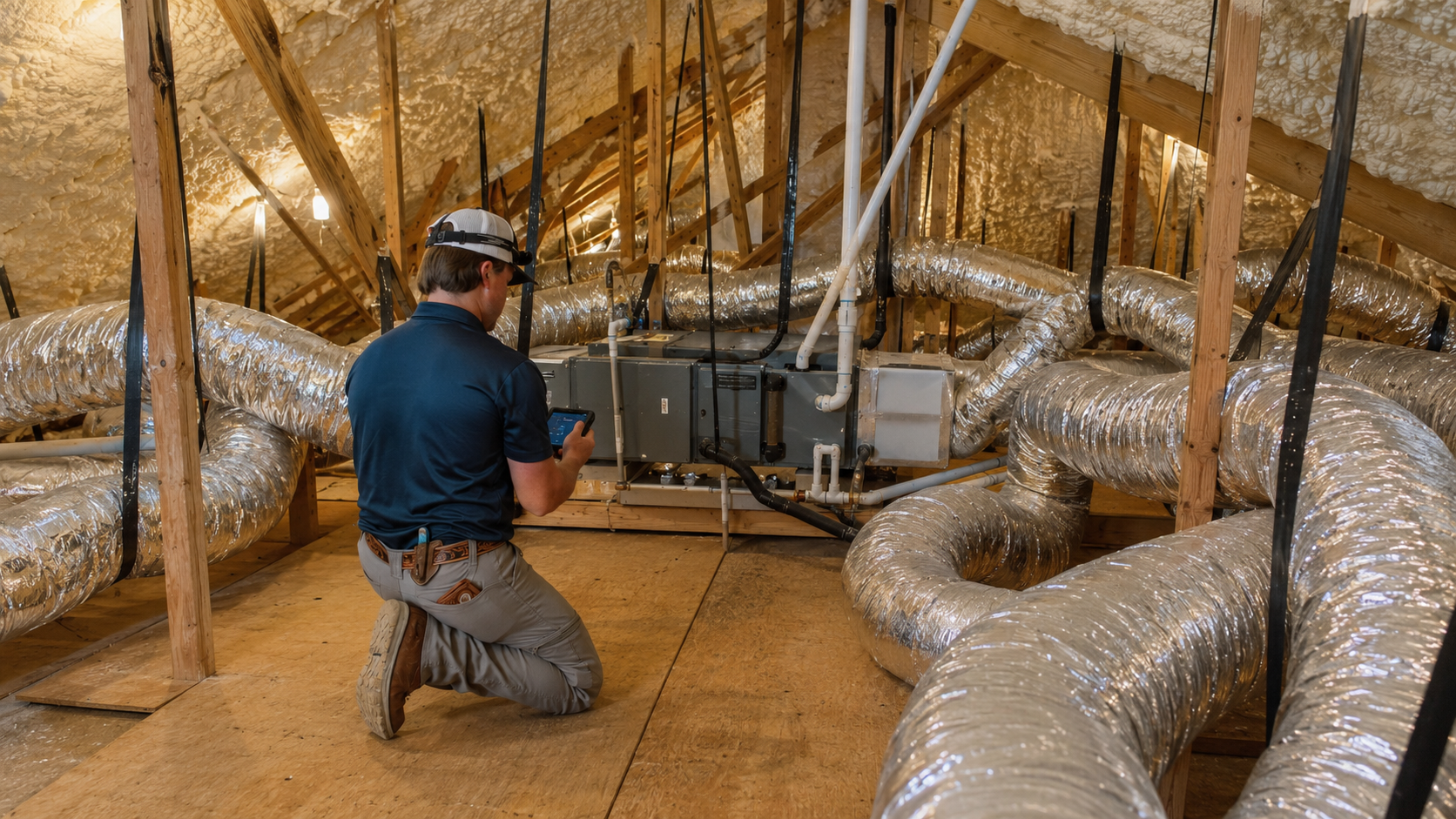
We look at sizing, routing, supply and return pathways, transitions, and how the system distributes air—not just the condition of the duct material.
When Duct Design May Need Attention
Professional Duct Design
Good Duct Design Starts With How the Home Needs Air to Move
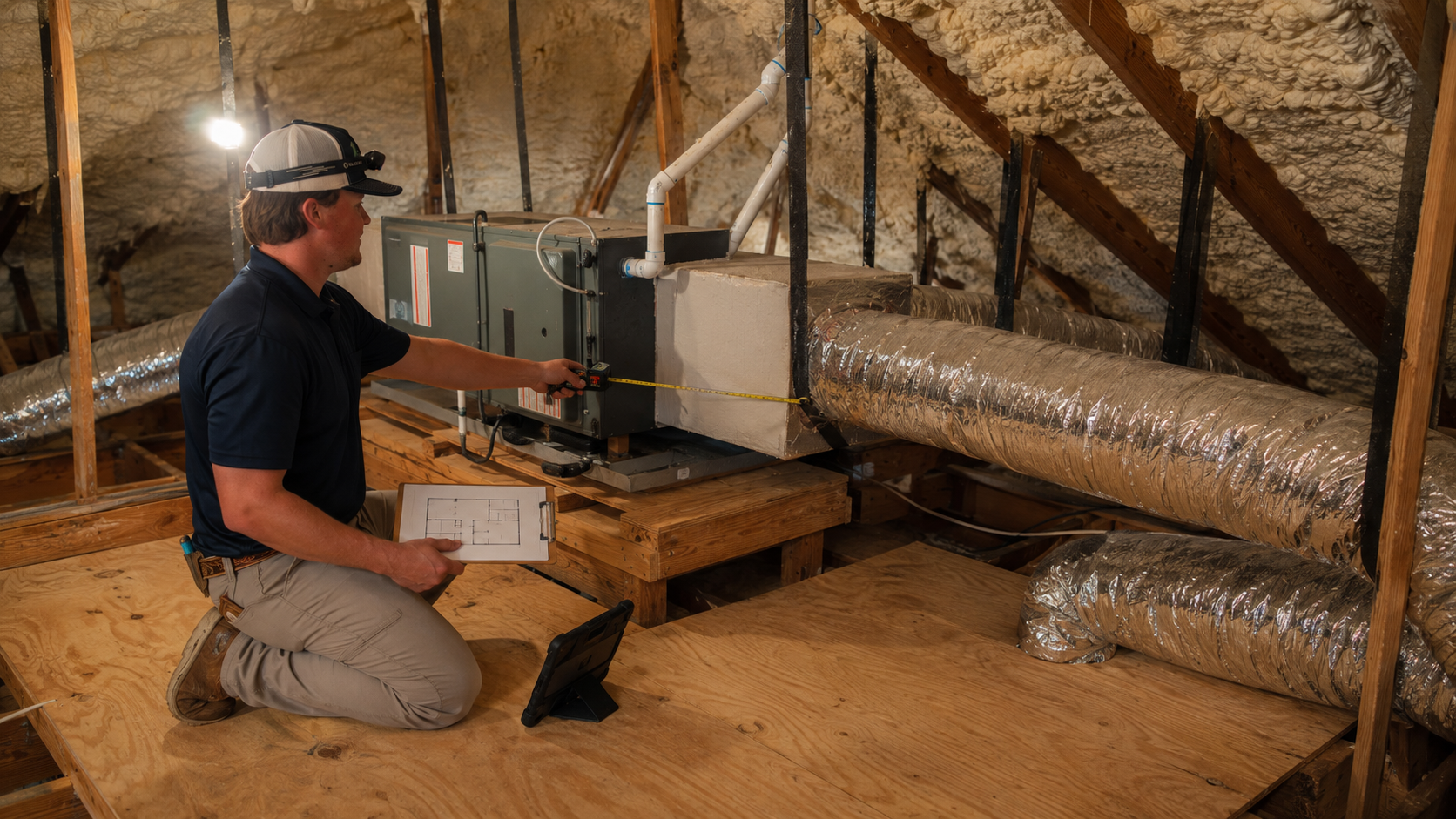
Duct design is about more than installing new duct runs. Malek looks at airflow distribution, supply and return pathways, routing, transitions, existing restrictions, and the way different areas of the home are being served before explaining what changes may improve the system.
Part of our Ductwork Services →Airflow Review
Room-to-Room Air Distribution Evaluation
We review where comfort or airflow differences occur and how the existing duct layout distributes conditioned air throughout the home.
Duct Sizing
Supply Duct Sizing Considerations
Duct runs that are too restrictive or poorly matched to the airflow they need to carry can contribute to weak delivery, noise, or uneven comfort.
Return Air
Return-Air Pathway Evaluation
The system needs an effective path for air to return to the HVAC equipment. Limited, restrictive, or poorly placed return pathways can affect overall system performance and room comfort.
Routing
Duct Routing & Transition Review
Sharp turns, compressed runs, restrictive fittings, unnecessary length, or poor transitions can interfere with airflow even when the duct material itself is in good condition.
Supply Placement
Register & Supply Location Considerations
Where conditioned air enters a room can influence how effectively that space is served. Supply placement is considered as part of the broader airflow strategy.
System Integration
Design Recommendations Based on the Existing HVAC System
Duct design should work with the equipment and home it serves. Recommendations are based on the existing system, airflow concerns, available space, and practical installation conditions.
Design Is Different From Repair
A physically intact duct system can still distribute air poorly.
If the primary concern is torn, crushed, disconnected, or otherwise damaged ductwork, professional duct repair may be the more appropriate starting point. Duct design focuses on how air is distributed through the system.
Signs of a Possible Airflow-Design Problem
Signs Your Comfort Problem May Involve Duct Design
Duct design becomes worth evaluating when comfort or airflow problems persist even though the ductwork is not obviously torn, disconnected, leaking, or deteriorated. The way the system distributes air may be part of the issue.
One Room Is Consistently Hotter or Colder
Persistent room-to-room temperature differences can sometimes point to how much conditioned air reaches the space and how effectively air returns from it.
Airflow Is Weak in Certain Areas
Weak airflow in specific rooms can involve restrictive routing, undersized runs, poor transitions, supply placement, or other distribution issues.
Closing a Door Changes the Room’s Comfort
Rooms without an adequate return-air pathway may behave differently when doors are closed because air cannot move back toward the HVAC system as effectively.
Some Rooms Receive Much More Air Than Others
Large differences in air delivery can indicate that the duct system is not distributing airflow evenly throughout the home.
Duct Runs Have Excessive Bends or Long Routes
Unnecessarily long runs, sharp turns, compressed pathways, or restrictive transitions can make it harder for air to reach certain parts of the home.
Comfort Problems Remain After Other Duct Issues Are Corrected
If damaged or leaking ductwork has already been addressed but airflow problems remain, the layout or distribution strategy may deserve a closer look.
Similar Symptoms Can Have Other Causes
Weak airflow does not automatically mean the duct system needs redesign.
Filters, equipment performance, physical duct damage, leakage, and other HVAC conditions can create similar symptoms. Design changes should follow an evaluation of the broader system.
When the Ductwork Is Intact but Comfort Still Falls Short
Sometimes the Problem Is How the Air Is Being Distributed
Ductwork can be physically intact and still struggle to serve the home evenly. Restrictive routing, poor transitions, limited return-air pathways, mismatched duct sizing, or supply placement can affect how much conditioned air reaches different rooms.
Duct design should address the airflow problem itself. Malek evaluates the broader duct system so changes are based on how air needs to move through the home—not simply on replacing or adding ductwork.
What Can Affect Air Distribution
Several Parts of the Duct Layout Can Influence How Air Reaches the Home
Duct design problems are not always obvious from looking at one run. Sizing, routing, supply placement, return-air pathways, restrictive transitions, and the relationship between different branches can all affect how evenly conditioned air is distributed.
The system should be evaluated as a connected airflow network rather than as a collection of individual ducts.
Restrictive Duct Sizing Can Limit Air Delivery
If a duct run cannot comfortably carry the airflow needed for the space it serves, the room may receive less conditioned air than intended even when the duct material itself is in good condition.
Long or Restrictive Routes Can Work Against Airflow
Excessive length, sharp turns, compressed pathways, unnecessary bends, or difficult transitions can increase resistance and reduce how effectively air moves through a branch.
Limited Return-Air Pathways Can Affect the Whole System
Supply air needs a practical path back to the HVAC equipment. Restrictive or poorly placed return pathways can affect pressure, airflow, and comfort throughout different parts of the home.
Where Air Enters a Room Can Influence Comfort
Supply location can affect how conditioned air mixes through the room. Poor placement may contribute to areas that feel less comfortable even when airflow is present.
Fittings and Transitions Can Create Unnecessary Resistance
Poorly configured transitions or abrupt changes in duct direction and size can interfere with airflow even when the surrounding duct runs remain intact.
One Branch Can Receive More Air While Another Receives Too Little
The duct system works as a network. Differences in branch size, routing, resistance, and return pathways can contribute to uneven airflow between different rooms or areas of the home.
What to Expect
What Happens During Professional Duct Design
Duct design starts by understanding where comfort or airflow problems occur and how the existing duct system distributes air throughout the home. Malek evaluates the current layout before explaining what design changes may improve the system.
Review the Comfort Problem
Start With the Rooms That Are Not Being Served Well
We review room-to-room temperature differences, weak airflow, areas that receive too much air, door-related comfort changes, previous ductwork work, and other concerns that help define where distribution problems may exist.
Evaluate the Existing Layout
Review Supply Runs, Return Pathways, Routing and Restrictions
Accessible duct runs, branches, transitions, supply locations, return-air pathways, routing, bends, and physical restrictions are reviewed to understand how air currently moves through the home.
Identify the Design Issue
Separate Distribution Problems From Damage or Leakage
Physical damage, duct leakage, equipment conditions, filters, and other HVAC issues can create similar symptoms. The goal is to determine whether sizing, routing, return air, or distribution is actually contributing to the problem.
Define the Recommended Changes
Develop a Practical Airflow Improvement Plan
Depending on the findings, recommendations may involve changes to duct sizing, routing, transitions, supply distribution, return-air pathways, or specific sections of the existing layout.
Review the Plan
Understand What Is Changing and Why
Malek explains the recommended design changes, what airflow or comfort problem each change is intended to address, and whether separate repair, sealing, or replacement work is also relevant.
Understand the Airflow Problem First
Not Sure Whether Your Duct Layout Is Part of the Comfort Problem?
Malek evaluates room-to-room airflow, duct sizing, routing, supply placement, return-air pathways, transitions, and existing restrictions so you can understand whether the duct system is distributing air the way your home needs.
Serving Bryan–College Station and Northwest Houston
Why Choose Malek
Duct Design Based on How Your Home Actually Needs Air to Move
Airflow problems can have several causes, so duct design should not begin with assumptions about what needs to be added or changed. Malek evaluates room-to-room comfort, supply and return pathways, routing, restrictions, existing duct condition, and the broader HVAC system before explaining where design changes may make practical sense.
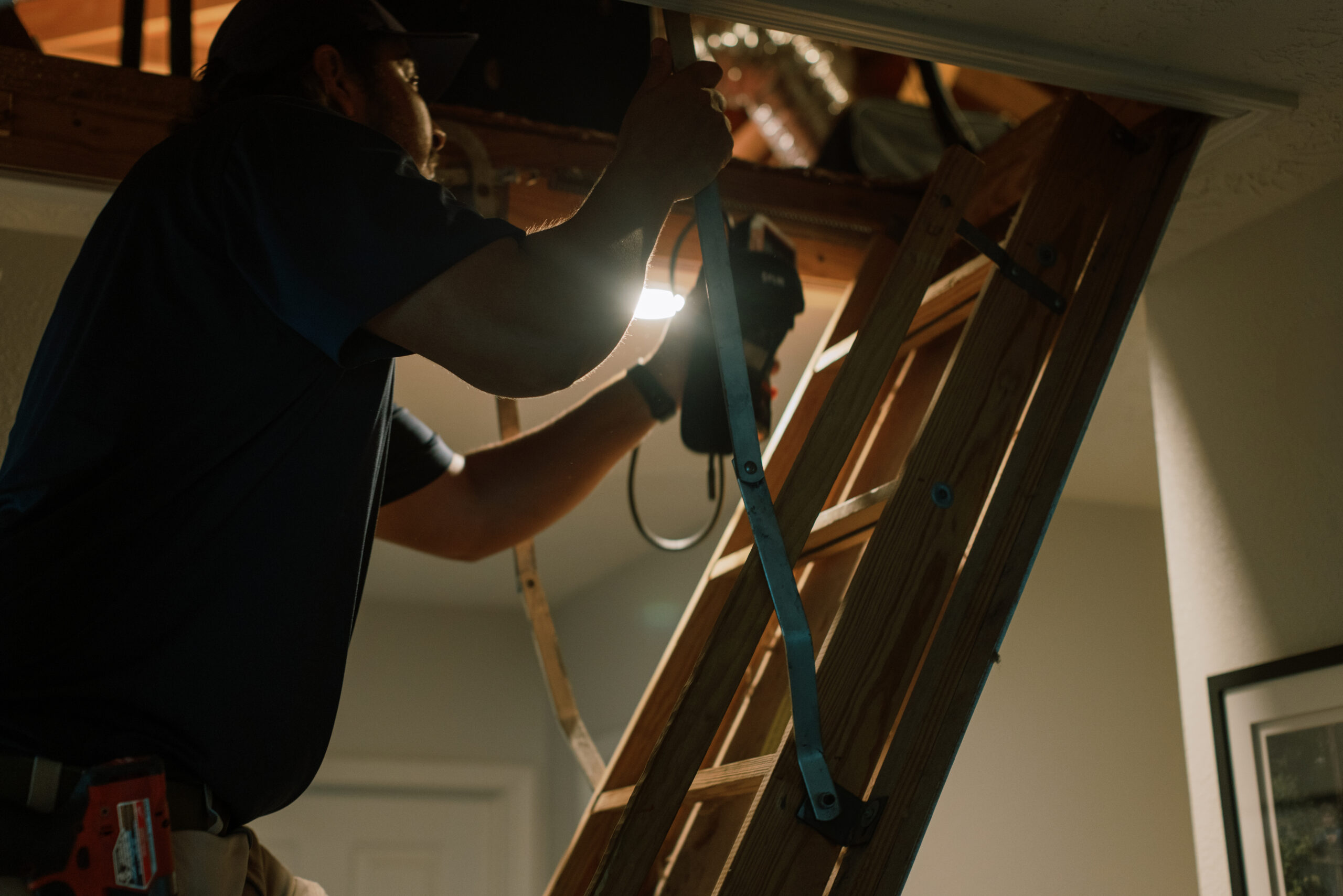
We Start With the Comfort and Airflow Problem
We look at which rooms are affected, how air is being delivered and returned, and what other HVAC conditions may be contributing before treating the duct layout as the cause.
We Look at the Duct System as a Connected Airflow Network
Supply runs, return pathways, sizing, routing, fittings, transitions, and room distribution affect one another. Recommendations should consider how those pieces work together rather than focusing on one duct in isolation.

You Understand What Should Change and Why
Malek explains which design concerns were identified, what each recommended change is intended to improve, and whether repair, sealing, or replacement should be handled separately.
Planning a Larger Ductwork Improvement?
Financing May Help Make a Larger Ductwork Project Easier to Plan
When improving the duct layout requires multiple new runs, return-air changes, rerouting, or other larger modifications, financing options may help spread the investment over time.
Beyond Duct Design
Sometimes the Airflow Problem Is Not a Design Problem
Duct design addresses how air is distributed through the home, but similar comfort symptoms can also come from physical duct damage, air leakage, or deteriorated materials. The right solution depends on what is actually limiting the system.
Changing the duct layout should solve a distribution problem—not replace repair, sealing, or replacement work that the duct system actually needs.
Continue Learning
Learn More About Airflow and Duct Distribution

Room-to-room comfort differences and weak airflow can come from duct design, physical restrictions, leakage, equipment conditions, or other HVAC issues. These resources can help you better understand what may be affecting airflow in your home.
Why Is One Room Hotter or Colder Than the Rest?
Learn why one room may consistently feel different from the rest of the home, including airflow distribution, duct restrictions, return-air limitations, insulation, and other possible causes.
Read the Article →Why Is Airflow Weak From My Vents?
Explore common reasons airflow may feel weak, including duct restrictions, sizing and routing concerns, damaged ductwork, filters, return-air limitations, and equipment conditions.
Read the Article →Duct Repair vs. Replacement
Understand how physical damage, deterioration, repair history, and overall duct condition affect whether an existing duct should be repaired or replaced instead of treating the problem as a design issue.
Read the Decision Guide →Looking for more guidance about ductwork, airflow, and home comfort?
Visit the Learning Center →Duct Design FAQs
Questions Homeowners Ask About Duct Design and Airflow
Homeowners often want to know whether uneven temperatures, weak airflow, return-air limitations, or existing duct layouts can be improved—and how duct design differs from repair, sealing, or replacement.
Duct design may help when comfort or airflow problems involve restrictive routing, poorly matched duct sizing, limited return-air pathways, supply placement, transitions, or uneven air distribution between different areas of the home.
It may, depending on the cause. A consistently uncomfortable room can involve supply airflow, return-air pathways, routing, duct sizing, insulation, equipment conditions, or other factors. The system should be evaluated before assuming the duct layout is responsible.
Duct design focuses on how the system is sized, routed, supplied, returned, and configured to distribute air throughout the home. Duct replacement addresses duct sections that are deteriorated, damaged, or no longer practical to keep in service.
Yes, restrictive duct sizing, long runs, sharp turns, poor transitions, inadequate return-air pathways, or other distribution issues can contribute to weak airflow. Damage, leakage, filters, and equipment conditions can produce similar symptoms, so the cause should be confirmed first.
The HVAC system needs a practical path for air to return from the home to the equipment. Limited or restrictive return-air pathways can affect pressure, airflow, and how consistently different rooms are served.
No. The recommended scope depends on what is creating the distribution problem. Some projects may involve rerouting, modifying transitions, adding or changing return-air pathways, or adjusting specific runs while other existing ductwork remains serviceable.
No. Malek provides duct design services for standard residential homes, but we do not currently provide these ductwork services for manufactured or mobile homes.
Yes. Malek provides residential duct design services throughout Bryan–College Station and Northwest Houston. Project scope and service availability may vary based on the home and the duct system involved.
Customer Stories
Service People Remember.
Homeowners across Bryan–College Station and Northwest Houston trust Malek for clear explanations, careful diagnostics, and professionals who treat their homes with respect.
Posted on Google margaret hallTrustindex verifies that the original source of the review is Google. He did a great job getting my heat back up running and explaining to me what I need to do with the new thermostat . No charge cause I have the maintenance agreement.Posted on Google Gary GardnerTrustindex verifies that the original source of the review is Google. Excellent service from Malek. Michael has been out before to both home and business and has always been very professional and helpful. Would definitely recommend in B/CS.Posted on Google Zachary HoffpauirTrustindex verifies that the original source of the review is Google. Daniel was great - willing to explain the situation and the options for fixing. Extremely kind and patient with us! Was able to come out same day and get the issue solved quickly. Highly revPosted on Google Sam RayTrustindex verifies that the original source of the review is Google. GreatPosted on Google Anthony HostetlerTrustindex verifies that the original source of the review is Google. Quick and professional. Didn’t leave a mess. Heating went out during cold snap. Came out the next day and fixed the problem quickly. Very satisfied.Posted on Google Calvin GreerTrustindex verifies that the original source of the review is Google. Marshall did a thorough job on maintenance inspection, explaining the findings, and providing the mitigating options.
Protect Your Home. Understand What It Needs.
Stay ahead of unexpected HVAC, plumbing, and electrical problems with routine system checks, priority service, repair savings, and guidance from professionals who explain before they recommend.
Explore the Total Protection Plan →Get Clear Answers About Airflow and Duct Layout
Find Out Whether the Duct System Is Distributing Air the Way Your Home Needs
Malek evaluates room-to-room airflow, duct sizing, routing, supply placement, return-air pathways, transitions, restrictions, and existing duct condition so you can understand whether duct design is contributing to the comfort problem.