Schedule Service
Schedule Service

Professional Duct Sealing

Seal Air Leaks Before Conditioned Air Escapes Into the Attic

Loose connections, gaps at fittings, unsealed seams, and leakage around boots or transitions can allow heated or cooled air to escape before it reaches the rooms in your home. Malek evaluates accessible duct connections and surrounding duct condition before explaining where sealing may improve the system and where another ductwork solution may be more appropriate.

Leak-prone connections reviewed

Duct condition evaluated first

Findings explained clearly
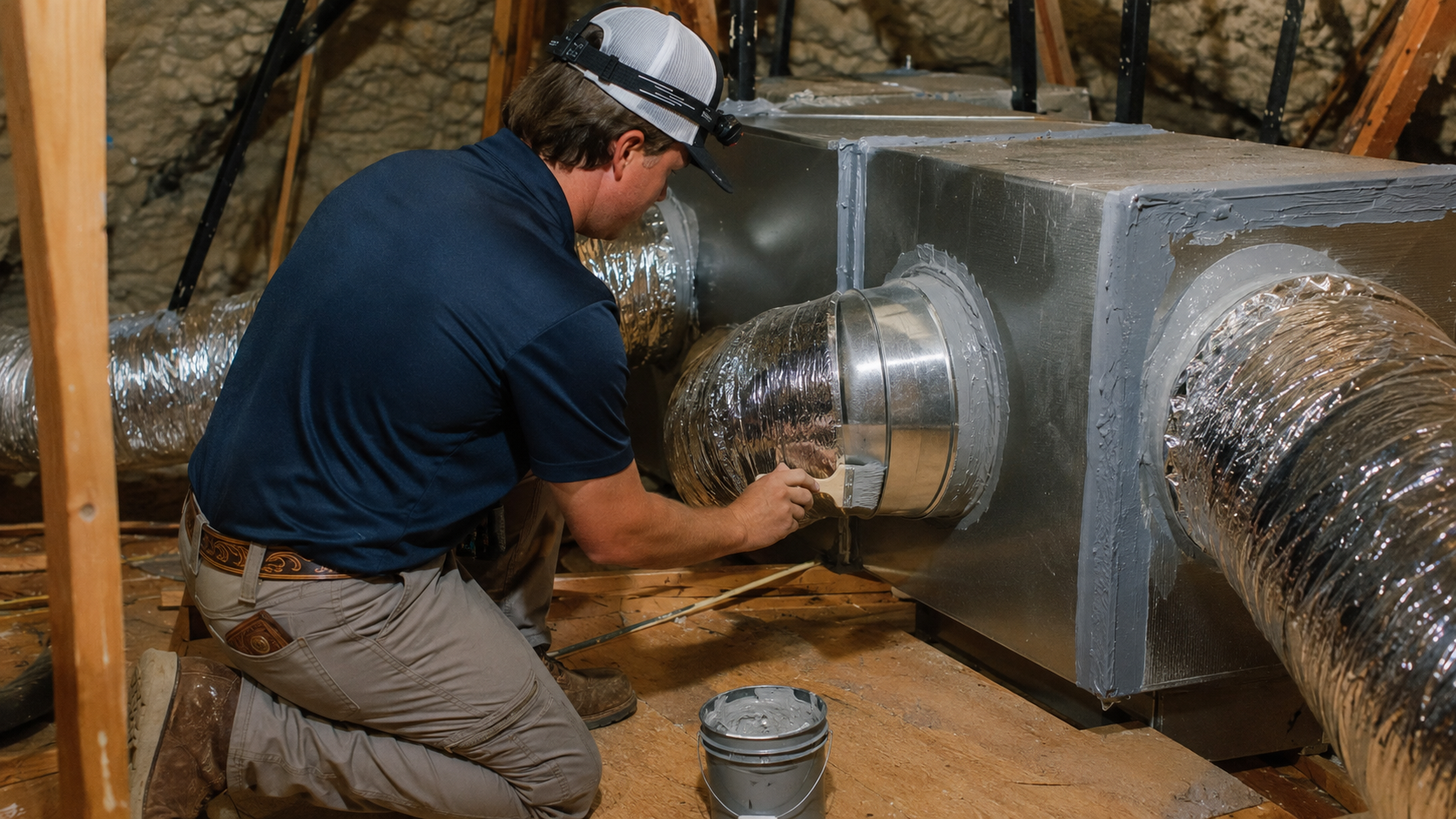
Residential attic ductwork being professionally sealed
Duct Sealing Is About Controlling Unwanted Air Leakage

The goal is to address leakage at seams, joints, fittings, transitions, and connections—not to treat physical duct damage as a sealing problem.

Where Duct Leakage Can Occur
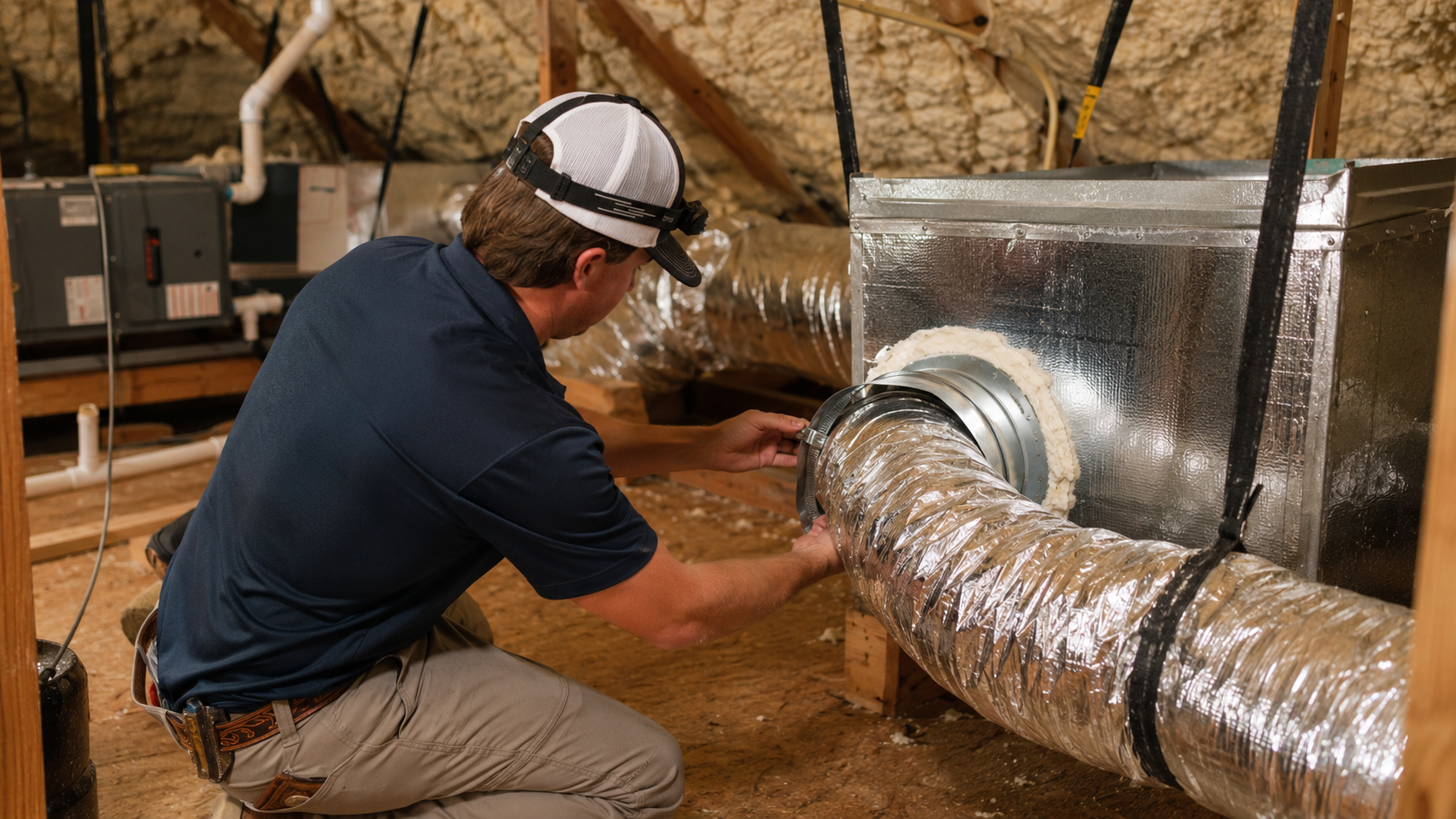
Loose duct connections Unsealed seams and joints Boot and register connections Fittings and transitions
Not every airflow problem is caused by duct leakage. The duct system and the rest of the HVAC system should be evaluated in context.

Professional Duct Sealing

The Right Sealing Approach Depends on Where Air Is Escaping

Duct leakage can occur at connections, seams, fittings, boots, transitions, and other points throughout the air-distribution system. Malek evaluates accessible ductwork and surrounding material condition before determining where sealing is appropriate and whether damaged sections require a different solution.

Part of our Ductwork Services
01

Connections

Duct Joint & Connection Sealing

Connections between duct runs, fittings, plenums, and transitions can develop gaps that allow conditioned air to escape before reaching the living space.

02

Seams

Accessible Seam Sealing

Accessible seams and connection points can be reviewed for visible gaps or incomplete sealing where unwanted air loss may occur.

03

Boots

Register & Boot Connection Sealing

Gaps where ductwork connects to boots or registers can allow air to escape around the connection rather than move efficiently into the room.

04

Transitions

Fitting & Transition Sealing

Elbows, transitions, fittings, and other connection points can be evaluated for gaps where air may be escaping from the intended pathway.

05

Condition Review

Confirm the Duct Material Is Worth Sealing

Sealing makes the most sense when the surrounding duct material remains serviceable. Torn, crushed, deteriorated, or badly damaged sections may require repair or replacement instead.

06

Final Review

Review the Sealed Areas & Airflow Concerns

After approved sealing work is completed, the addressed areas are reviewed and your technician explains what was sealed and whether any separate ductwork concerns were observed.

Sealing and Repair Solve Different Problems

A leaking joint is different from physically damaged ductwork.

Duct sealing addresses unwanted air leakage. Crushed, torn, disconnected, or deteriorated sections may need professional duct repair instead.

Signs of Possible Duct Leakage

Signs Your Home May Benefit From Professional Duct Sealing

Duct leakage can reduce how much conditioned air reaches the rooms in your home, but many of the symptoms overlap with other HVAC problems. The duct system should be evaluated before assuming sealing is the answer.

01

Visible Gaps at Duct Connections

Open seams or visible gaps around accessible fittings, transitions, or duct connections may allow conditioned air to escape.

02

Loose Connections Without Major Physical Damage

Some connection points remain structurally usable but are not sealed tightly enough to keep conditioned air inside the duct path.

03

Air Escaping Around Boots or Registers

Leakage around the connection between ductwork and a boot or register can allow air to escape into surrounding cavities instead of entering the room.

04

Comfort Problems Without Obvious Duct Damage

Uneven temperatures or weaker airflow can sometimes involve duct leakage when the duct material itself is still physically intact.

05

Previously Sealed Connections Have Opened

Aging or disturbed connections may lose their seal over time, especially around fittings or areas affected by attic work.

06

Conditioned Air Appears to Be Lost Before Reaching the Room

When accessible ductwork is intact but air delivery remains weaker than expected, leakage is one of several conditions worth evaluating.

Sealing Has a Practical Limit

Severely damaged or deteriorated ductwork should not simply be sealed over.

If the duct material is torn, crushed, disconnected, collapsing, or badly deteriorated, repair or replacement may be more appropriate than sealing alone.

Residential attic ductwork being evaluated for leakage and sealing

Seal Air Loss Without Replacing Good Ductwork

Leaky Ductwork Does Not Automatically Mean the Ducts Need to Be Replaced

A gap at a connection, unsealed seam, loose fitting, or leaking boot may allow conditioned air to escape even when the surrounding duct material remains in usable condition. In those situations, sealing the leakage can address the problem without replacing ductwork that is still structurally sound.

The key is separating leakage from physical damage. Malek evaluates the surrounding duct condition first so sealing is used where it makes practical sense—and repair or replacement is discussed only when the material itself requires it.

Where Duct Leakage Can Develop

Air Can Escape From Several Points Throughout a Duct System

Duct leakage often develops around connections rather than through the middle of an otherwise usable duct run. Seams, joints, boots, fittings, transitions, and previous connection points can all allow conditioned air to escape before it reaches the rooms in your home.

The surrounding duct material still needs to be in good enough condition for sealing to make practical sense.

Joints

Duct Connections Can Develop Gaps Over Time

Connections between duct runs, fittings, plenums, and transitions can loosen or lose their seal, allowing conditioned air to escape around the joint instead of continuing through the intended airflow path.

Seams

Unsealed or Incomplete Seams Can Leak Air

Accessible seams that were never completely sealed—or where the existing seal has deteriorated—can become unintended exit points for heated or cooled air.

Boots

Register and Boot Connections Can Lose Conditioned Air

Gaps where ductwork connects to a boot or register can allow air to move into surrounding attic, wall, or ceiling spaces instead of entering the room as intended.

Transitions

Fittings and Transitions Create Additional Leakage Points

Elbows, transitions, fittings, and changes in duct size or shape create additional joints where inadequate sealing can allow conditioned air to escape.

Previous Work

Attic or HVAC Work Can Disturb Existing Connections

Equipment service, construction, insulation work, storage activity, or other attic access can sometimes disturb duct connections or previously sealed areas and create new opportunities for leakage.

Material Condition

The Surrounding Ductwork Must Still Be Serviceable

Sealing works best when the underlying duct material remains in usable condition. Torn, crushed, disconnected, deteriorated, or badly damaged duct sections may require repair or replacement instead of additional sealing.

What to Expect

What Happens During Professional Duct Sealing

Duct sealing starts by determining whether unwanted air leakage is actually part of the comfort or airflow problem. Malek evaluates accessible duct connections and surrounding material condition before explaining which areas are appropriate to seal.

Review the Concern

Start With the Airflow or Comfort Problem

We review the rooms affected, where airflow feels weak or uneven, visible duct concerns, previous ductwork work, and other details that may help identify whether leakage deserves attention.

Inspect the Ductwork

Evaluate Accessible Seams, Joints, Boots and Connections

Accessible ductwork is reviewed for gaps, loose connections, incomplete sealing, disturbed joints, and surrounding material condition.

Confirm the Right Scope

Separate Leakage From Physical Duct Damage

Before sealing begins, the surrounding duct material is considered to make sure the problem is actually leakage. Torn, crushed, disconnected, or deteriorated sections may require repair or replacement instead.

Complete the Sealing

Address the Approved Leakage Points

Approved seams, joints, boots, fittings, transitions, and connections are sealed as appropriate so conditioned air has a more controlled pathway through the duct system.

Review the Results

Check the Sealed Areas and Explain What Was Completed

The addressed areas are reviewed and your technician explains what was sealed, what remained in place, and whether any separate repair, replacement, or duct-design concerns were observed.

Keep Conditioned Air Where It Belongs

Not Sure Whether Your Ductwork Is Actually Leaking?

Malek evaluates accessible seams, joints, boots, fittings, transitions, surrounding duct condition, and airflow concerns so you can understand whether unwanted air leakage is part of the problem and where sealing may make practical sense.

Schedule Duct Sealing

Serving Bryan–College Station and Northwest Houston

Why Choose Malek

Duct Sealing Based on the Source of the Air Loss

Duct sealing works best when the surrounding ductwork is still in usable condition and unwanted air leakage is actually part of the problem. Malek evaluates accessible connections, material condition, airflow concerns, and other possible causes before explaining where sealing makes sense.
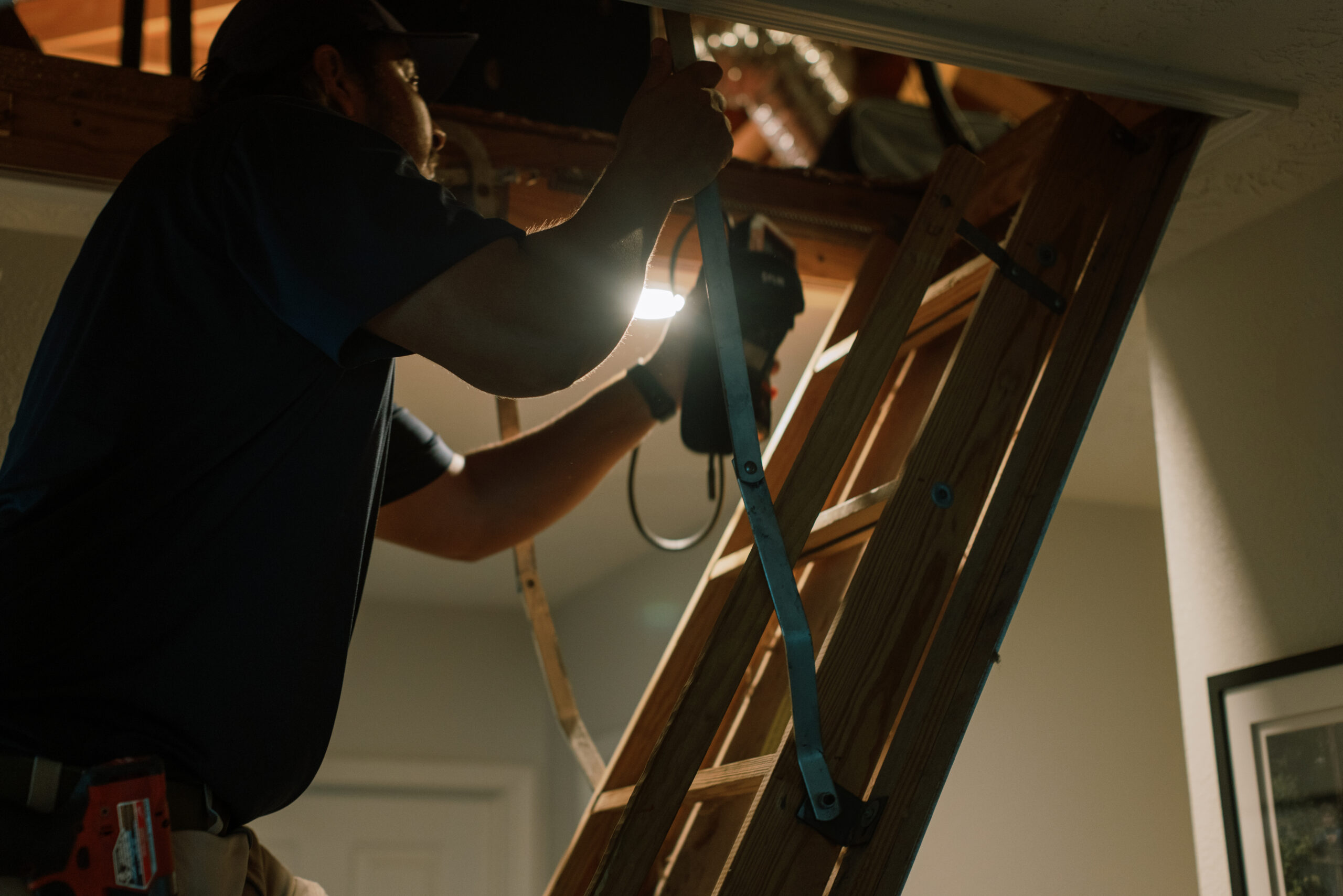
Malek HVAC technician evaluating residential ductwork
01

We Identify the Problem Before Sealing

Weak airflow or uneven comfort does not automatically mean the ducts are leaking. We evaluate the duct system in context before recommending sealing as the solution.

Residential duct connection being sealed
02

Sealing Is Used Where the Ductwork Is Still Serviceable

We do not treat torn, crushed, disconnected, or deteriorated ductwork as a sealing problem. Those conditions are explained separately so the service matches what the duct system actually needs.

Malek HVAC professional explaining ductwork findings to a homeowner
03

You Understand What Was Sealed and Why

Malek explains which connections or leakage points were addressed and whether any separate repair, replacement, or duct-design concerns deserve attention.

Continue Learning

Learn More Before Deciding Whether Your Ductwork Needs Sealing

Duct leakage can look similar to physical damage, airflow restrictions, or other HVAC problems. These resources can help you understand when sealing makes sense, when replacement may be worth considering, and what can influence project investment.

02 Investment Guide

Duct Repair & Sealing Investment Guide

Learn how accessibility, number of affected areas, duct condition, repair needs, sealing scope, and project complexity can influence the investment required for duct repair and sealing.

View the Investment Guide
03 Article

How Do I Know If My Air Ducts Are Leaking?

Learn what signs may point to duct leakage, which symptoms can have other HVAC causes, and why the condition of the ductwork matters before deciding on sealing.

Read the Article
Duct Sealing FAQs

Questions Homeowners Ask About Duct Sealing

Homeowners often want to know how to tell whether their ducts are leaking, what sealing can improve, and when repair or replacement makes more sense than sealing alone.

Possible signs include visible gaps at accessible joints, loose connections, leakage around boots or registers, or airflow concerns without obvious physical duct damage. Because similar symptoms can have other HVAC causes, the duct system should be evaluated before assuming leakage is the problem.

Customer Stories

Service People Remember.

Homeowners across Bryan–College Station and Northwest Houston trust Malek for clear explanations, careful diagnostics, and professionals who treat their homes with respect.

Protect Your Home. Understand What It Needs.

Stay ahead of unexpected HVAC, plumbing, and electrical problems with routine system checks, priority service, repair savings, and guidance from professionals who explain before they recommend.

Explore the Total Protection Plan

Get Clear Answers About Duct Leakage

Find Out Whether Duct Sealing Can Help Keep More Conditioned Air Inside the System

Malek evaluates accessible seams, joints, boots, fittings, transitions, surrounding duct condition, and airflow concerns so you can understand whether unwanted air leakage is part of the problem and where sealing may make practical sense.

Leakage points evaluated Duct condition reviewed Sealing options explained clearly
electrical-upgrades-for-home​s