Home Comfort Problem Guide
Why Is Airflow Weak From My Vents?
Weak airflow from one or more vents usually means conditioned air is being restricted, lost, or distributed unevenly somewhere between the HVAC equipment and the room.
The cause may be as simple as a blocked register or dirty filter, or it may involve a crushed or disconnected duct, leaking ductwork, restrictive routing, return-air limitations, closed dampers, blower performance, or duct sizing and design.
This guide explains the most common causes of weak vent airflow, what homeowners can safely check, how to tell whether the problem is isolated or affecting the whole system, and when a professional airflow or ductwork evaluation makes sense.
The Quick Answer
Weak Vent Airflow Can Come From the Duct System, the HVAC System, or Both
Air May Be Restricted Before It Reaches the Room
Crushed ductwork, sharp bends, closed dampers, blocked registers, restrictive duct sizing, or a dirty filter can reduce how much conditioned air moves through the system.
Air May Be Escaping Along the Duct Path
Leaking connections, torn ductwork, or disconnected runs can allow conditioned air to escape before it reaches the supply vent.
The HVAC System May Not Be Moving Enough Air
Blower performance, coil conditions, filter restriction, equipment settings, and return-air limitations can reduce airflow across multiple rooms.
Weak airflow does not automatically mean the ductwork needs repair or replacement. The pattern matters: one weak vent points toward a different set of possibilities than weak airflow throughout the entire home.
Common Causes
Several Different Conditions Can Reduce Airflow at Your Supply Vents
A Dirty or Restrictive Air Filter
A heavily loaded filter can restrict airflow through the HVAC system before conditioned air ever reaches the ductwork. When the restriction is significant, weak airflow may be noticeable at many vents rather than one isolated room.
A Closed or Blocked Supply Register
Furniture, rugs, curtains, or a partially closed register can restrict airflow into a room even when the duct system itself is functioning normally.
Crushed, Kinked, or Sagging Ductwork
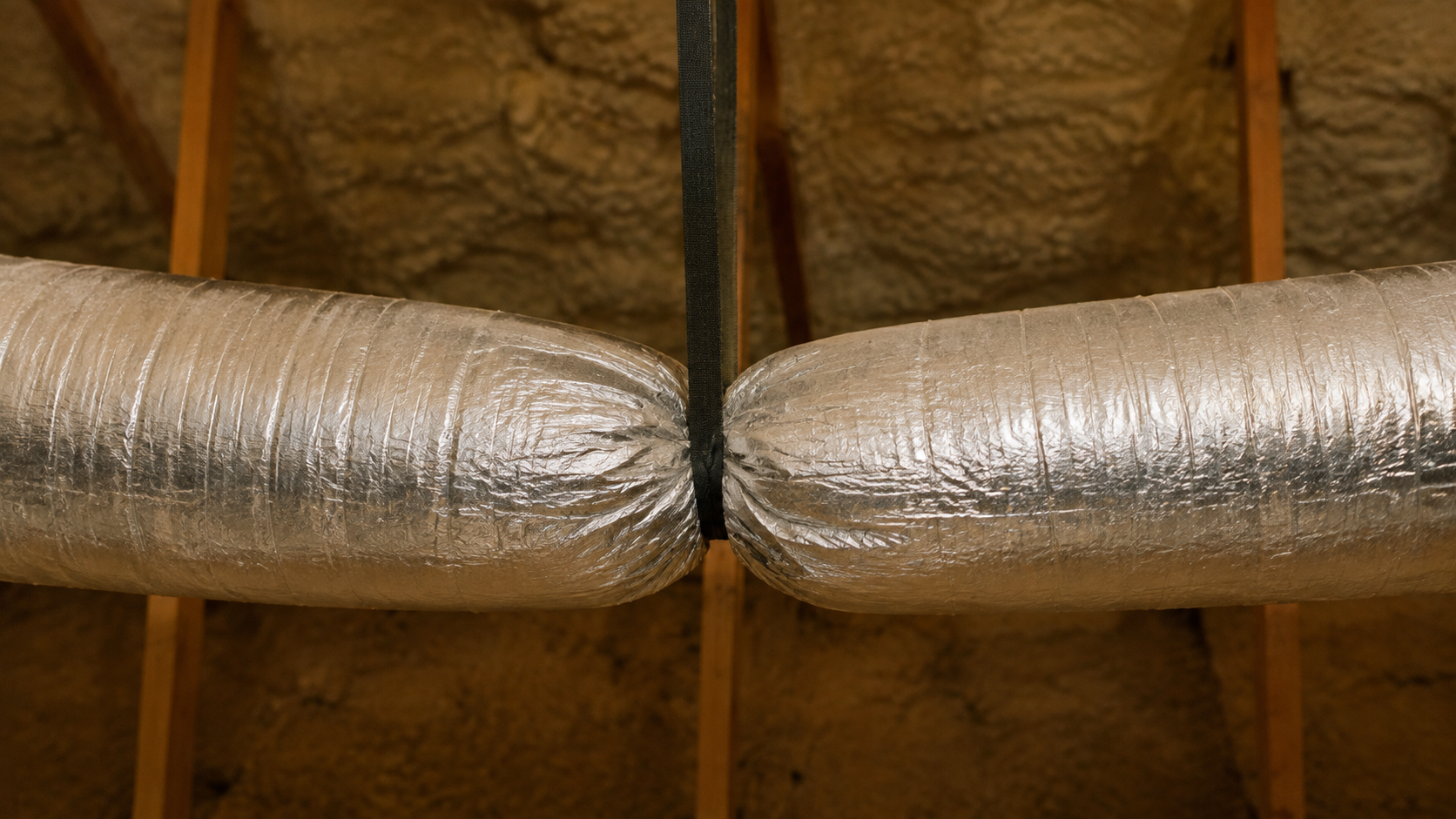
Flexible ductwork can lose airflow when it is compressed, sharply bent, poorly supported, or sagging enough to create resistance along the air path.
A Disconnected or Torn Duct Run
If a duct connection separates or the material is torn, conditioned air may be lost before it reaches the room. This can create very weak airflow at the affected register.
Leaking Duct Connections
Air leakage at seams, joints, fittings, boots, or transitions can reduce delivered airflow, especially when the leakage is significant or occurs along the run serving a particular room.
Return-Air Restrictions
The HVAC system must be able to pull air back as well as supply it. Blocked return grilles, inadequate return pathways, or room pressure imbalances can reduce effective circulation.
Duct Sizing or Layout Problems
A duct run that is too restrictive, unusually long, poorly routed, or not matched to the room's airflow needs may deliver less air even when the duct material itself is intact.
HVAC Blower or Equipment Conditions
If airflow is weak throughout the home, the issue may involve blower performance, coil conditions, equipment settings, or another HVAC-system condition rather than an isolated duct run.
One Vent vs. Many
The Number of Weak Vents Can Help Narrow Down Where the Problem May Be
One or Two Weak Vents
Start With the Branch Serving Those Rooms
- ✓ Register is partially closed or blocked
- ✓ Individual duct run is crushed or restricted
- ✓ Connection is leaking or disconnected
- ✓ Branch damper may be restricting airflow
- ✓ Duct sizing or routing may be specific to that room
Many Vents Are Weak
The Problem May Affect the HVAC System More Broadly
- ✓ Air filter is heavily restricted
- ✓ Return-air capacity or pathway is limited
- ✓ Blower performance needs evaluation
- ✓ Duct system has widespread restriction or leakage
- ✓ Broader design or equipment conditions are affecting airflow
What You Can Safely Observe
A Few Basic Checks Can Help Show Whether the Problem Is Localized or Widespread
Compare airflow at the weak vent with nearby rooms
Make sure the supply register is fully open
Move furniture, rugs, or curtains blocking the register
Check whether return grilles are blocked
Check the HVAC filter and replace it if appropriate
Notice whether airflow improves when an interior door is open
Note whether the problem affects one room, one area, or the whole house
Pay attention to when the weak airflow first became noticeable
Avoid climbing into an attic to squeeze, reroute, cut, disconnect, or modify ductwork in an attempt to improve airflow. Restrictive airflow can have several causes, and changing one duct run without understanding the system may create new comfort or distribution problems.
When to Investigate Further
Persistent Weak Airflow Usually Means Something in the Distribution Path Needs Attention
One vent has much less airflow than nearby vents
Several rooms have weak airflow at the same time
A room stays uncomfortable even during long HVAC cycles
Airflow became weak after attic, remodeling, or HVAC work
You hear whistling, rattling, or unusual air movement
Opening or closing a room door changes airflow significantly
The system runs longer while airflow and comfort decline
Normal filter and register checks do not improve the problem
Weak airflow is usually a comfort or performance concern rather than an emergency. If it occurs with burning odors, electrical issues, abnormal HVAC noises, visible equipment damage, or another potentially unsafe condition, stop using the affected equipment when appropriate and have it evaluated.
The Bottom Line
Weak Airflow Is a Symptom—not a Diagnosis
Reduced airflow at a vent can come from the register, duct branch, duct leakage, physical duct damage, return-air system, air filter, blower, equipment, or duct design.
The best next step is to identify where airflow is being restricted or lost before assuming the ductwork needs sealing, repair, or replacement.
We Don’t Just Fix It. We Explain It.
Professional Airflow Evaluation
Finding Out Where the Airflow Is Being Restricted or Lost
Weak airflow can come from more than one part of the HVAC system. A useful evaluation looks at the symptom pattern, supply path, return air, accessible duct condition, filters, equipment operation, and system design before recommending a correction.
Airflow Pattern
Identify Which Vents and Rooms Are Affected
One weak vent, several weak vents, or low airflow throughout the home each point toward different possible parts of the system.
Supply Path
Review Accessible Duct Routing and Condition
Crushed runs, restrictive bends, sagging ductwork, damaged sections, loose connections, and other accessible supply-path conditions can be evaluated.
Air Loss
Determine Whether Leakage Is Reducing Delivered Air
Accessible seams, joints, boots, fittings, and connections can be reviewed to determine whether conditioned air may be escaping before it reaches the room.
Return and Equipment
Look Beyond the Supply Ducts When the Problem Is Widespread
Return-air restrictions, filters, blower performance, coil conditions, equipment settings, and other HVAC factors may be relevant when airflow is low across several rooms.
Clear Recommendation
Match the Correction to the Actual Cause
Malek can explain whether the concern points toward duct repair, duct sealing, duct design, another airflow correction, or an HVAC-system issue before broader work is recommended.
Continue Learning
Continue Learning About Airflow and Ductwork Problems
How Do I Know If My Air Ducts Are Leaking?
Learn the common signs of duct leakage and why air loss should be separated from physical duct damage before corrective work begins.
→ Problem GuideWhy Is One Room Hotter or Colder Than the Rest?
Learn how airflow, ductwork, return-air pathways, insulation, windows, and room exposure can create uneven comfort.
→ ServiceDuct Design
Explore how duct sizing, routing, supply placement, return-air pathways, and distribution strategy can influence airflow throughout the home.
→ Service HubDuctwork Services
Explore duct repair, replacement, sealing, and design services along with homeowner guidance for common ductwork and airflow concerns.
→Malek Homeowner Learning Center
Looking for another HVAC or home-comfort question?
Explore decision guides, investment guides, homeowner articles, and FAQs designed to help you understand what is happening before you decide what to do next.
Frequently Asked Questions
Weak Airflow From Vents FAQs
These answers explain common reasons supply airflow becomes weak and how ductwork, filters, returns, equipment, and distribution can all affect how much conditioned air reaches a room.
Why is barely any air coming out of one vent? +
One weak vent may be caused by a blocked or closed register, a branch damper, crushed or restrictive ductwork, a loose or disconnected duct, leakage, or a sizing and routing issue along that individual supply path.
Why is airflow weak from all of my vents? +
Weak airflow throughout the home may involve a dirty or restrictive filter, return-air limitations, blower performance, coil conditions, equipment settings, widespread duct restrictions, or another whole-system airflow issue.
Can a dirty air filter cause weak airflow? +
Yes. A heavily loaded filter can restrict how much air moves through the HVAC system. When filter restriction is the primary issue, reduced airflow may be noticeable at many supply vents.
Can leaking ducts cause weak airflow? +
Yes. If conditioned air escapes through leaking seams, joints, fittings, boots, or other openings before it reaches the room, airflow at the register may be reduced.
Can crushed ductwork reduce airflow? +
Yes. Crushed, kinked, collapsed, or heavily sagging ductwork can increase resistance and limit how much air reaches the room. The appropriate correction depends on the type and extent of the physical damage.
Why does airflow improve when I open the bedroom door? +
Opening the door can improve the room's return-air pathway. If the room becomes pressurized when the door is closed, inadequate return or transfer-air pathways may be affecting circulation.
Does weak airflow mean I need new ductwork? +
No. Weak airflow has many possible causes. Duct replacement is generally more relevant when existing duct material is broadly deteriorated, physically damaged, or unsuitable to preserve. Localized restrictions or damage may require a smaller correction.
How does Malek diagnose weak airflow? +
Malek starts by identifying which rooms and vents are affected, then considers accessible duct condition, restrictions, leakage, return-air pathways, filter conditions, equipment operation, and broader duct design before explaining what type of correction makes sense.
Dealing With Weak Airflow?
Find Out Where the Airflow Is Being Restricted Before You Decide What to Fix
Malek can evaluate the airflow pattern, accessible duct condition, leakage concerns, supply and return-air pathways, and broader HVAC performance before explaining what correction deserves consideration.