Home Comfort Problem Guide
Why Is One Room Hotter or Colder Than the Rest?
One room that consistently feels warmer or colder than the rest of the house usually means that room is receiving, gaining, or losing heat differently from the spaces around it.
The cause may involve duct airflow, a damaged or leaking duct run, supply and return-air design, insulation, windows, sun exposure, room location, closed vents, pressure imbalances, or another part of the HVAC system. Sometimes more than one factor is contributing at the same time.
This guide explains the most common reasons one room feels different, what homeowners can safely check, how to tell whether the problem is isolated or part of a larger comfort issue, and when a professional airflow or ductwork evaluation makes sense.
The Quick Answer
Uneven Room Temperatures Usually Come Down to Airflow, Heat Gain or Loss, or How the Room Is Connected to the HVAC System
The Room May Not Be Getting Enough Conditioned Air
Restricted airflow, an undersized or damaged duct run, poor supply placement, a closed register, or another distribution issue can leave one room with less heating or cooling than the rest of the home.
The Room May Gain or Lose Heat Faster
Large windows, direct sun, exterior walls, attic exposure, insulation differences, air leakage, or room location can make one space harder to keep comfortable.
The Problem May Be With Air Returning From the Room
A room can receive conditioned air but still feel uncomfortable if air cannot return effectively to the HVAC system because of return-air limitations or pressure imbalance.
A temperature difference does not automatically mean the ductwork needs to be replaced. The first step is identifying whether the problem comes from airflow, duct condition, room characteristics, HVAC operation, or a combination of factors.
Common Causes
Several Different Problems Can Make One Room Feel Different From the Rest of the House
Weak Airflow to the Room
If less air reaches one room than nearby spaces, that room may struggle to maintain the same temperature. Restricted ductwork, poor routing, a crushed or damaged run, closed dampers, register conditions, or other airflow issues can contribute.
A Leaking or Damaged Duct Run
Conditioned air can be lost before it reaches the room if a duct connection leaks or a run is torn, disconnected, crushed, sagging, or otherwise damaged. The amount of impact depends on the location and severity of the problem.
Supply Duct Sizing or Layout
A room may not receive the airflow it needs if the supply run is too restrictive, poorly routed, unusually long, or not well matched to the room's heating and cooling load.
Return-Air Limitations
Conditioned air needs a path back toward the HVAC system. Bedrooms and other closed rooms can develop pressure differences if return-air pathways are inadequate, which can affect airflow and comfort.
Sun Exposure and Windows
Rooms with significant afternoon sun, large windows, skylights, or certain orientations can gain more heat than rooms elsewhere in the home, especially during Texas summers.
Insulation or Air-Sealing Differences
A room beneath an attic, above a garage, along several exterior walls, or near poorly sealed openings may gain or lose heat faster even when HVAC airflow is reasonably similar.
Closed or Blocked Registers
Furniture, rugs, curtains, or intentionally closed supply registers can reduce airflow into a room. A blocked return grille can also interfere with how air moves through the space.
A Broader HVAC Performance Problem
If several rooms are becoming uncomfortable rather than one isolated space, the issue may involve system airflow, filter restriction, blower performance, equipment operation, or another whole-home HVAC condition.
One Room vs. Whole Home
Whether the Problem Is Isolated or Widespread Is an Important Clue
One Room Is Different
Start With Conditions Specific to That Room
- ✓ Airflow from that room's supply vent feels noticeably different
- ✓ The room has unusual sun exposure or window area
- ✓ The room sits above a garage or below an attic
- ✓ The door position changes how comfortable the room feels
- ✓ Nearby rooms remain reasonably comfortable
Several Rooms Are Different
The Problem May Extend Beyond a Single Duct Run
- ✓ Multiple rooms have weak or inconsistent airflow
- ✓ One side or floor of the home is consistently uncomfortable
- ✓ Comfort problems appeared after HVAC or ductwork changes
- ✓ The system runs for long periods without balancing temperatures
- ✓ Airflow problems are noticeable at several registers
What You Can Safely Observe
A Few Simple Observations Can Help Narrow Down the Problem
Compare airflow at the uncomfortable room with nearby rooms
Make sure the supply register is open and not blocked
Check that return grilles are not blocked by furniture or belongings
Notice whether the room changes when the door is open or closed
Pay attention to direct afternoon sun or large areas of glass
Notice whether the room is above a garage, below an attic, or on an exterior corner
Check whether the HVAC filter is heavily restricted
Note whether the temperature problem is seasonal or present year-round
Avoid climbing through an attic to disconnect, cut, seal, reroute, or modify ductwork yourself. A visual comfort clue can help narrow the diagnosis, but duct condition and airflow should be evaluated without damaging the system or insulation.
When to Investigate Further
Persistent or Worsening Temperature Differences Usually Deserve a Closer Look
The room remains uncomfortable whenever the HVAC system runs
Airflow from one register is much weaker than nearby registers
The comfort problem became worse after ductwork or HVAC changes
Several rooms on the same branch or area of the home are affected
The room changes noticeably when its door is opened or closed
You can hear unusual whistling or air movement near ducts or registers
Heating or cooling cycles are long but room temperatures remain uneven
The issue is spreading to other rooms or becoming more noticeable
Uneven temperatures are usually a comfort or distribution issue rather than an emergency. If the symptom appears with electrical problems, burning odors, visible HVAC damage, or other potentially unsafe operation, stop using the affected equipment when appropriate and have it evaluated.
The Bottom Line
One Uncomfortable Room Does Not Automatically Mean You Need a Bigger HVAC System
A single room can feel hotter or colder because of airflow, ductwork, return-air pathways, insulation, windows, room exposure, or several smaller factors working together.
The better approach is to identify why that particular room behaves differently before changing equipment or replacing ductwork. Sometimes the solution is localized. Other times the room is revealing a broader distribution or design problem.
We Don’t Just Fix It. We Explain It.
Professional Comfort Evaluation
Finding Out Why the Room Is Different Instead of Guessing From the Temperature
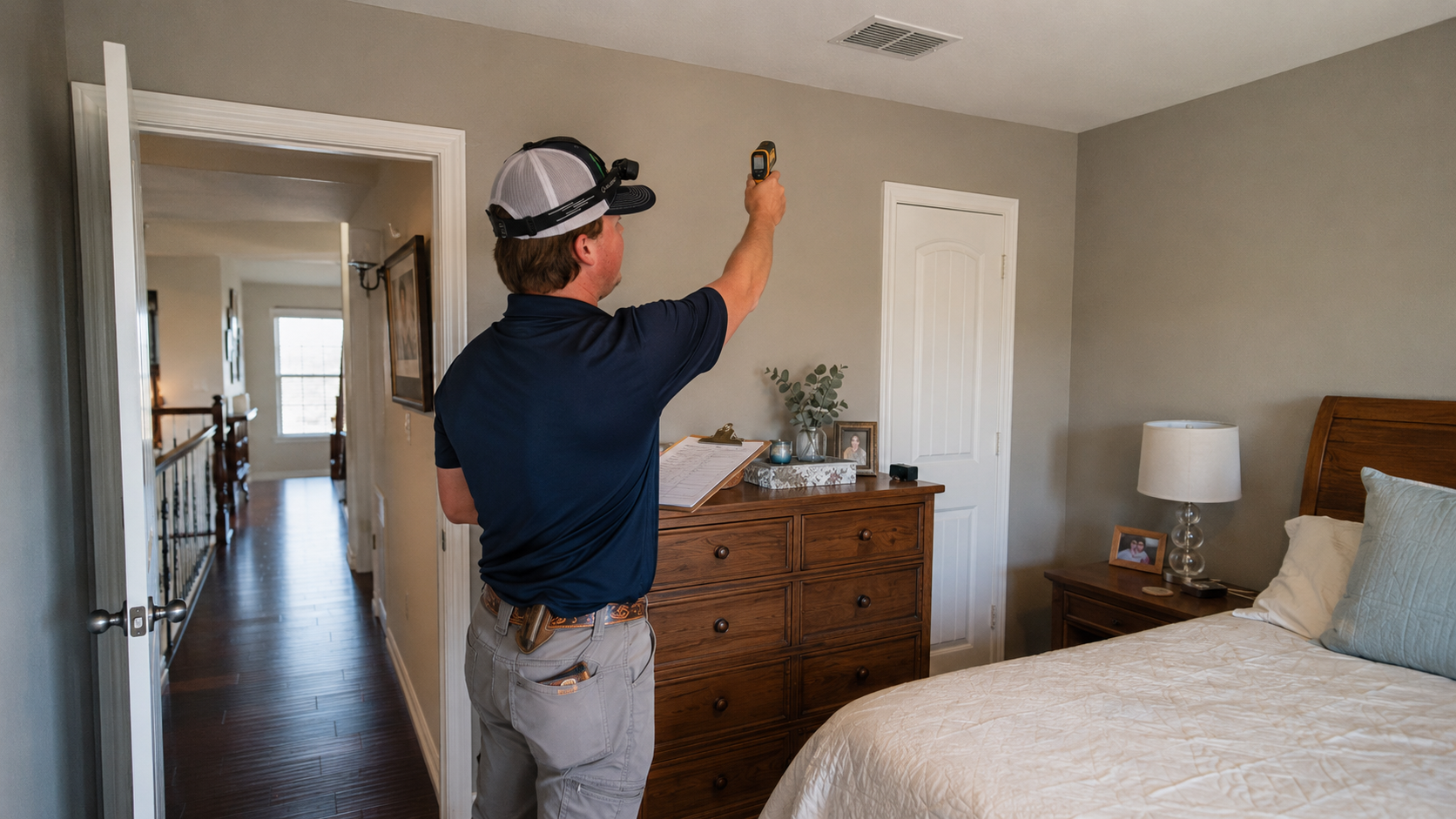
Uneven comfort can involve the room, the duct path serving it, the return-air pathway, or the HVAC system as a whole. A useful evaluation looks at how those pieces work together before recommending a correction.
Comfort Pattern
Identify When and Where the Temperature Difference Appears
Whether the room is uncomfortable during cooling, heating, certain times of day, or throughout the year helps narrow the conditions that may be contributing.
Airflow
Evaluate How Much Conditioned Air Reaches the Room
Supply airflow, register conditions, duct routing, restrictions, accessible damage, and other distribution factors can be reviewed when the room appears to receive less air than nearby spaces.
Return Air
Review How Air Leaves the Room
Return grilles, transfer pathways, door position, and pressure behavior can help determine whether conditioned air is having difficulty moving back toward the HVAC system.
Room Conditions
Consider Heat Gain, Heat Loss, and Exposure
Window area, solar exposure, attic or garage adjacency, exterior walls, insulation conditions, and room use can affect how much heating or cooling the space actually needs.
Clear Recommendation
Match the Solution to the Actual Cause
Malek can explain whether the concern points toward duct repair, duct sealing, duct design, another airflow correction, or a condition outside the duct system before broader work is recommended.
Continue Learning
Continue Learning About Airflow and Ductwork Problems
Why Is Airflow Weak From My Vents?
Learn what can cause weak supply airflow and how duct restrictions, equipment conditions, filters, and distribution problems may contribute.
→ Problem GuideHow Do I Know If My Air Ducts Are Leaking?
Learn which comfort, airflow, and efficiency symptoms may point to duct leakage and why the actual source should be confirmed before corrective work begins.
→ ServiceDuct Design
Explore how duct sizing, routing, supply placement, return-air pathways, and distribution strategy can influence airflow and room-to-room comfort.
→ Service HubDuctwork Services
Explore Malek's duct repair, replacement, sealing, and design services along with homeowner guidance for common ductwork and airflow concerns.
→Malek Homeowner Learning Center
Looking for another HVAC or home-comfort question?
Explore decision guides, investment guides, homeowner articles, and FAQs designed to help you understand what is happening before you decide what to do next.
Frequently Asked Questions
Uneven Room Temperature FAQs
These answers explain why one room may feel hotter or colder than the rest of the house and when airflow, ductwork, return air, or room conditions may deserve a closer look.
Why is one bedroom hotter than the rest of the house? +
A bedroom may be hotter because it receives less conditioned air, has more sun exposure, has more exterior wall or attic exposure, has limited return-air pathways, or is served by a duct run that is restricted, leaking, damaged, or poorly matched to the room.
Why is one room colder than the rest of the house in winter? +
A colder room may be losing heat faster or receiving less heated air than nearby spaces. Exterior exposure, windows, insulation, duct airflow, duct damage, supply placement, and return-air conditions can all contribute.
Can leaking ductwork make one room hotter or colder? +
Yes. If conditioned air is escaping from the duct run serving a particular room, less heating or cooling may reach that space. Leakage is only one possible cause, so the duct and airflow conditions should be evaluated rather than assumed.
Can a damaged duct cause uneven temperatures? +
Yes. A crushed, torn, disconnected, sagging, or otherwise damaged duct run can restrict or lose airflow before it reaches the room. The effect depends on where the damage is located and how much of the airflow path is affected.
Why does my bedroom get hotter when I close the door? +
Closing the door can change the room's pressure relationship with the rest of the home. If there is not an adequate return-air or transfer pathway, conditioned air may have more difficulty moving through the room as intended.
Does one hot room mean my AC is too small? +
Not necessarily. When most of the house is comfortable and one room is consistently different, the cause may be more localized to airflow, ductwork, return air, windows, insulation, or room exposure. HVAC capacity is only one part of the overall evaluation.
Can duct design help fix rooms that never stay comfortable? +
It can when the comfort problem is tied to supply sizing, restrictive routing, inadequate return-air pathways, poor distribution, or another design-related issue. Duct design is different from repairing physical damage or sealing leakage, so the underlying cause should be identified first.
When should I have uneven room temperatures professionally evaluated? +
An evaluation makes sense when the temperature difference is persistent, airflow is noticeably weaker, several rooms are affected, the problem is worsening, door position changes comfort significantly, or normal heating and cooling cycles do not bring the room closer to the rest of the home.
One Room Never Feels Comfortable?
Find Out Why That Room Is Different Before You Change the System
Malek can evaluate airflow, accessible duct condition, supply and return-air pathways, room comfort patterns, and broader HVAC performance to help identify what is creating the temperature difference.