Educational Planning Range
What Do Duct Repair and Sealing Typically Cost?
General Residential Planning Range
$300–$4,000+
Smaller duct repairs may involve one damaged run, failed connection, torn section, or limited area of concern. Broader duct sealing projects can involve numerous accessible seams, joints, boots, fittings, and transitions throughout a larger portion of the system.
This range is provided for general learning and planning purposes only. It is not a Malek quote or guarantee. Some isolated duct repairs may fall below this range, while larger sealing projects, difficult-access systems, extensive leakage, or repair work involving multiple sections can move the investment higher.
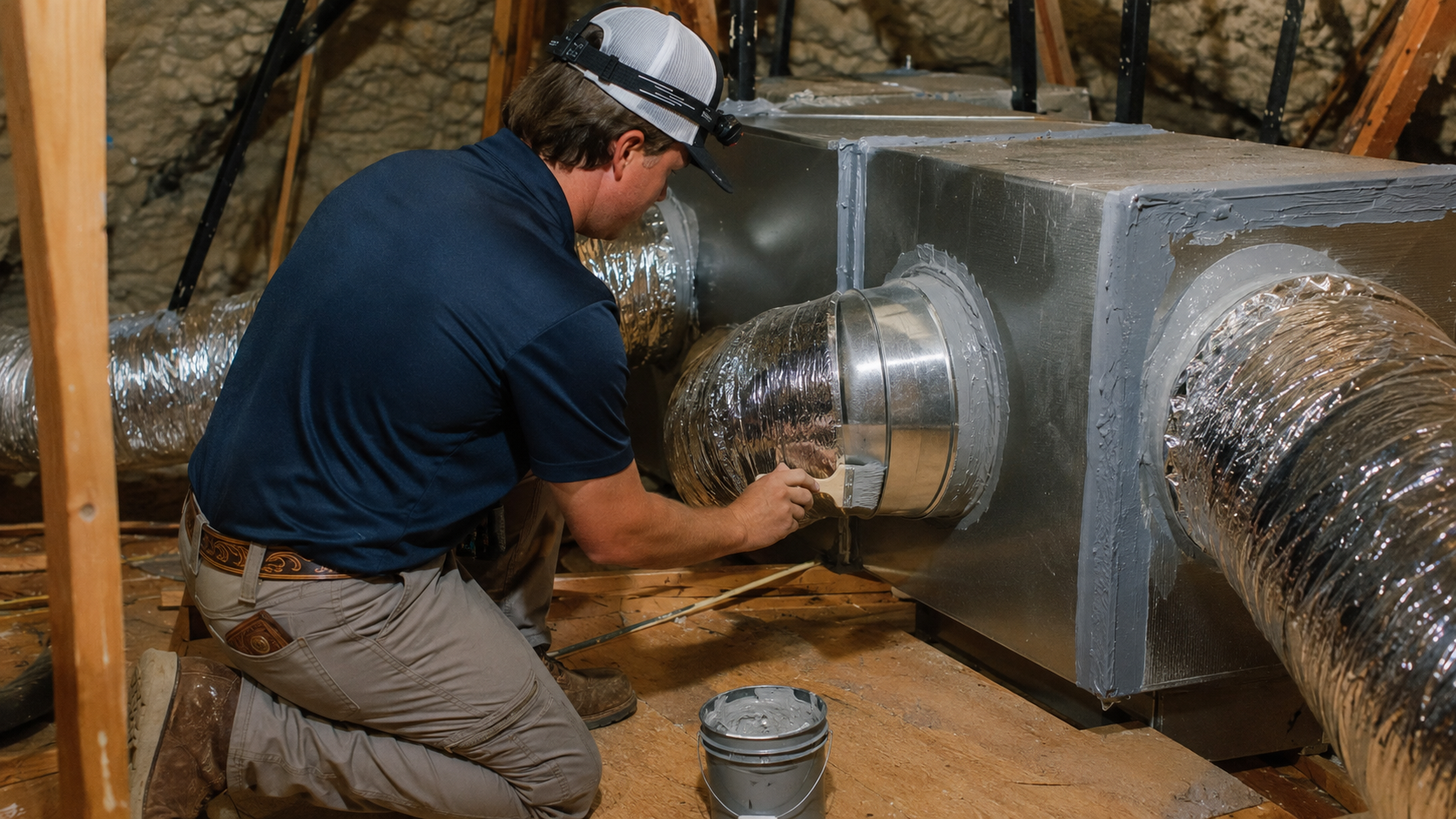
Duct repair and duct sealing should also be evaluated separately. Repair addresses physical damage such as crushed, torn, disconnected, sagging, or failed duct sections. Sealing addresses unwanted air leakage at serviceable seams, joints, fittings, boots, transitions, and connections.
Explore Ductwork Services →Compare the Scope
Why Duct Repair and Sealing Prices Can Vary So Much
Two homes can have similar comfort symptoms while requiring very different ductwork solutions. Weak airflow from one vent might involve a crushed or disconnected run. Air loss across several rooms might involve numerous leaking joints or fittings. Another home may have both physical damage and leakage.
The cost depends on what is actually wrong, how much of the duct system is affected, how accessible the problem areas are, and whether the surrounding ductwork remains serviceable.
Pricing Variables
What Shapes the Duct Repair or Sealing Investment?
The investment usually reflects the number of affected areas, the type of problem being corrected, accessibility, material condition, and the amount of work required to restore serviceable ductwork.
Type of Problem
A loose connection, torn flex duct, crushed run, failed support, or leaking seam can each require a different repair method and amount of labor.
Number of Affected Areas
Correcting one damaged run is different from repairing or sealing problems found across multiple branches, boots, fittings, returns, or transitions.
Duct Accessibility
Tight attics, low-clearance areas, wall cavities, finished ceilings, or difficult access can increase the labor required to reach and correct the affected ductwork.
Duct Material
Flexible duct, rigid metal components, duct board, boots, fittings, and transitions may require different repair or sealing approaches.
Extent of Damage
Minor localized damage may be repairable, while torn insulation, collapsed sections, widespread deterioration, or repeated failures can increase the scope.
Extent of Leakage
Sealing a few accessible connections is a different project from addressing leakage found across numerous joints, boots, fittings, and transitions.
Surrounding Duct Condition
A targeted repair makes more sense when the ductwork around the problem remains serviceable. Broader deterioration may change the recommendation.
Testing & Evaluation
Some projects may involve additional airflow evaluation, leakage testing, or system review depending on the symptoms and proposed scope.
Understanding the Scope
What May Be Included in Duct Repair or Duct Sealing?
The exact work depends on what the evaluation finds. Repair and sealing may occur during the same project, but they should still be explained as separate types of corrective work.
Duct Repair Evaluation
- Review of accessible damaged duct sections
- Identification of crushed, torn, or disconnected runs
- Review of supports and attachment points
- Assessment of surrounding duct condition
Targeted Physical Repairs
- Correction of selected damaged sections
- Reconnection of accessible failed connections
- Correction of applicable sagging or support concerns
- Repair of serviceable duct components where practical
Leakage Evaluation
- Review of accessible seams and joints
- Inspection of boots, fittings, and transitions
- Identification of visible connection leakage
- Review of surrounding duct condition
Duct Sealing
- Sealing of applicable accessible joints
- Sealing around serviceable fittings and transitions
- Attention to accessible boot or collar connections
- Correction of identified leakage within the project scope
Connection Review
- Review of repaired attachment points
- Inspection of applicable new seals
- Review of nearby duct supports
- Observation of related accessible duct conditions
Final Explanation
- Review of work completed
- Explanation of remaining concerns
- Identification of areas outside the project scope
- Discussion of broader recommendations if needed
Not every repair or sealing project includes every item above. The estimate should identify what areas are being corrected and whether the work is intended to repair physical damage, reduce leakage, or address both conditions.
Explore Duct Repair → Explore Duct Sealing →Know What Is Separate
What May Not Be Included in Standard Duct Repair or Sealing?
Repair and sealing are intended to correct specific physical damage or leakage within the agreed scope. Broader duct-system problems may require a different service.
Duct Replacement
Broad Deterioration May Require More Than Repair
If multiple runs are deteriorated, repeatedly failing, extensively damaged, or no longer practical to keep repairing, replacement may be a separate recommendation.
Duct Design
Distribution Problems May Require Layout Changes
Restrictive sizing, poor routing, limited return air, inadequate supply pathways, or other design conditions are different from repairing damage or sealing leaks.
HVAC Equipment Work
Airflow Symptoms Can Originate Outside the Ductwork
Filters, blowers, coils, equipment controls, system performance, and other HVAC conditions can affect airflow and comfort independently of duct leakage or physical duct damage.
Structural or Home Repairs
Other Conditions May Need Separate Attention
Roof leaks, plumbing leaks, moisture damage, drywall access, insulation problems, framing concerns, or other conditions outside the duct system may require separate work.
Compare More Than the Bottom Line
How to Compare Duct Repair and Sealing Estimates
Before comparing prices, make sure the estimates are addressing the same problem. One contractor may be proposing isolated physical repairs while another is proposing broader sealing across multiple sections of the duct system.
What problem was actually identified?
Ask whether the recommendation addresses physical damage, leakage, poor support, failed connections, or another specific condition.
Which areas are included?
Confirm which runs, joints, fittings, boots, transitions, or connections are included in the proposed work.
Is this repair, sealing, or both?
The estimate should distinguish physical repair from leakage sealing so you understand what each part of the project is intended to fix.
What ductwork will remain untouched?
A targeted project may leave serviceable sections in place. Knowing what is excluded helps clarify the limits of the proposed work.
Is the surrounding material still serviceable?
Repair and sealing provide better value when the remaining ductwork is in condition that makes continued use practical.
What happens if additional damage is found?
Ask how unexpected deterioration or inaccessible conditions will be handled if they become visible after the work begins.
A useful ductwork estimate should explain what is wrong, where the problem is located, what work will correct it, and whether the surrounding ductwork remains worth keeping.
Matching the Scope to the Problem
Targeted Duct Repair or Broader Duct Sealing?
The size of the project should reflect how widespread the underlying problem is. A localized physical failure usually calls for a different solution than leakage occurring throughout numerous accessible connections.
Targeted Repair May Fit When:
- One or several duct sections are torn or damaged
- A run has become crushed or restricted
- A connection has pulled apart
- Support failure has caused excessive sagging
- The surrounding ductwork remains serviceable
Broader Sealing May Fit When:
- Air leakage occurs across multiple connections
- Accessible seams and joints have failed seals
- Boots, fittings, or transitions are leaking
- The duct material itself remains serviceable
- Leakage is a larger system issue rather than one isolated failure
Some homes need both. A damaged run may need physical correction while other serviceable portions of the system need sealing at connections. The recommendation should explain each condition separately.
Read the Duct Sealing vs. Replacement Decision Guide →Looking Beyond the Repair
What Can Professional Duct Repair and Sealing Improve?
Repair and sealing cannot solve every HVAC performance problem, but correcting confirmed duct damage or leakage can help restore a more reliable pathway for conditioned air to move through the home.
Air Delivery
Repairing crushed, disconnected, or damaged sections can restore airflow that was being restricted or lost before reaching the room.
Conditioned Air Loss
Sealing confirmed leakage can reduce the amount of heated or cooled air escaping through serviceable duct connections.
Room Comfort
If duct damage or leakage is contributing to uneven temperatures, correcting the confirmed problem may improve comfort in affected areas.
Duct Stability
Addressing failed supports, disconnected sections, or related physical problems can help restore a more stable duct installation.
System Understanding
A professional evaluation can help separate duct-related airflow problems from equipment, filtration, insulation, or design concerns.
Future Planning
Understanding which areas remain serviceable can help homeowners plan future ductwork decisions instead of assuming the entire system needs replacement.
Start With the Actual Problem
Find out whether your ductwork needs repair, sealing, or something else.
Malek can evaluate accessible duct condition, physical damage, connections, leakage concerns, and relevant airflow symptoms before explaining which type of ductwork service makes practical sense.
What to Expect
What Happens During Duct Repair or Sealing?
Discuss the Comfort or Airflow Concern
The technician reviews weak airflow, room-to-room temperature differences, visible duct damage, previous repairs, or other symptoms that prompted the evaluation.
Inspect Accessible Ductwork
Accessible runs, supports, connections, seams, fittings, boots, transitions, and surrounding duct conditions are reviewed for relevant damage or leakage.
Separate Damage From Leakage
Physical failures are distinguished from leaking but otherwise serviceable connections so the proposed work matches the actual problem.
Complete the Defined Repair or Sealing Scope
The affected areas included in the project are repaired, resecured, reconnected, or sealed according to the condition identified.
Review the Corrected Areas
Applicable connections, repaired sections, supports, and nearby duct conditions are reviewed after the work is completed.
Explain Remaining Concerns
If other ductwork is deteriorated, airflow design needs attention, or an unrelated HVAC issue may be contributing to the symptoms, those findings can be explained separately.
When a Larger Scope May Be Better
When Might Duct Replacement Make More Sense Than Continued Repair or Sealing?
Repair and sealing provide the strongest value when the ductwork being preserved is still worth preserving. When deterioration becomes broad, repeated corrective work can eventually become less practical.
Isolated Problem
Repair May Still Be the Practical Choice
A limited damaged section can often be addressed without replacing surrounding ductwork that remains in reasonable condition.
Serviceable but Leaking
Sealing May Preserve Existing Ductwork
When duct material remains usable and the main concern is leakage at joints or connections, sealing may be more appropriate than replacement.
Widespread Deterioration
Replacement May Become More Practical
Multiple damaged runs, aging materials, repeated failures, or broad deterioration can make continued isolated repairs less useful.
Distribution Problem
Design May Need Attention Before Either Option
If the duct material is not the main problem, sizing, routing, supply placement, return-air pathways, or other distribution conditions may deserve evaluation instead.
The goal is to match the investment to the condition of the system. Repairing good ductwork makes sense. Repeatedly repairing a broadly deteriorated system may not.
Read the Duct Repair vs. Replacement Decision Guide →Fix the Confirmed Problem
Ductwork recommendations should start with what is actually damaged or leaking.
Malek evaluates accessible duct condition, explains whether the concern involves physical damage, air leakage, broader deterioration, or airflow design, and reviews the practical next step before work moves forward.
Duct Repair & Sealing Investment FAQs
Questions Homeowners Often Ask About Duct Repair and Sealing
These answers explain why ductwork costs vary, how repair differs from sealing, and when a larger duct replacement or design project may make more sense.
How much do duct repair and sealing typically cost?
A broad educational planning range for residential duct repair and sealing is approximately $300 to $4,000 or more. Smaller targeted repairs may fall below this range, while larger sealing projects, difficult access, extensive leakage, or multiple damaged sections can move the investment higher. This is general market information and is not a Malek quote or guarantee.
What is the difference between duct repair and duct sealing?
Duct repair addresses physical problems such as torn, crushed, disconnected, sagging, or otherwise damaged ductwork. Duct sealing addresses unwanted air leakage at otherwise serviceable seams, joints, fittings, boots, transitions, and connections.
Can the same duct system need both repair and sealing?
Yes. One section may have physical damage that requires repair while other serviceable areas have leaking joints or connections that may benefit from sealing. Each condition should be identified and explained separately.
Does duct sealing fix damaged ductwork?
Not necessarily. Sealing is intended to address air leakage at serviceable connections and surfaces. Crushed, torn, disconnected, collapsed, or broadly deteriorated ductwork may require repair or replacement instead.
How do I know whether damaged ducts should be repaired or replaced?
Repair may make sense when the damage is limited and the surrounding ductwork remains serviceable. Replacement becomes more relevant when deterioration, repeated failures, or damage affects multiple areas and continued isolated repairs are no longer practical.
Will duct repair or sealing fix weak airflow?
It can help when confirmed duct damage or leakage is contributing to the airflow problem. Weak airflow can also involve duct sizing, routing, return-air pathways, filters, HVAC equipment conditions, restrictions, or other factors.
Does Malek provide duct repair and sealing for manufactured or mobile homes?
No. Malek provides duct repair and duct sealing for standard residential homes, but we do not currently provide these ductwork services for manufactured or mobile homes.
How does Malek approach duct repair and sealing?
Malek evaluates accessible duct condition, physical damage, connections, leakage concerns, and relevant airflow symptoms before explaining whether repair, sealing, replacement, or a separate design evaluation makes practical sense.