You may benefit from a water softener if your home has recurring scale buildup, spots on dishes and fixtures, poor soap performance, or mineral deposits affecting water-using appliances.
Those symptoms can be associated with hard water, but they do not confirm it by themselves. Testing the water helps determine the hardness level and whether softening—or a different type of treatment—is the appropriate next step.
Start With What You Notice
Common Signs That May Point Toward Hard Water
White Scale on Fixtures
Chalky buildup around faucets, showerheads, and drains may be left behind as mineral-containing water evaporates.
Spots on Dishes and Glassware
Recurring spots or a cloudy film after washing can be associated with hardness minerals, although detergent use and dishwasher conditions may also contribute.
Soap Does Not Lather Well
Hardness minerals can react with soap, making it harder to build lather and leaving more soap film on tubs, showers, and sinks.
Dry-Feeling Skin or Hair
Some homeowners notice a different feel after bathing in hard water, but skin and hair symptoms alone are not enough to diagnose hardness.
Scale Around Water-Using Equipment
Mineral deposits may collect around supply connections, humidifiers, coffee makers, ice makers, and other equipment that regularly uses water.
Recurring Water-Heater Sediment
Hardness minerals can contribute to scale and sediment inside a water heater, although maintenance history and other water conditions also matter.
What Softening Is Designed to Do
A Water Softener Targets Hardness Minerals
Hard water contains elevated levels of dissolved calcium and magnesium. A traditional ion-exchange softener reduces those minerals before the water moves through the home.
Lower hardness can reduce the mineral deposits that collect on fixtures, plumbing components, and water-using equipment.
Soap and detergent generally lather and rinse more effectively when fewer hardness minerals are present.
Softening may reduce mineral residue on dishes, glassware, shower doors, sinks, and polished fixtures.
Reducing scale can help limit mineral accumulation in water heaters, valves, fixtures, and certain appliances.
Softened water often feels more slippery because soap reacts differently when calcium and magnesium levels are reduced.
Less scale and soap film can reduce the effort required to clean showers, sinks, fixtures, and glass surfaces.
Know the Limits
Some Water Problems Need Filtration or Another Treatment Method
Hardness-Related Concerns
- Calcium and magnesium hardness
- Scale buildup
- Soap scum and poor lather
- Mineral spotting
- Hardness-related equipment deposits
Taste, Odor, Sediment, and Drinking-Water Concerns
- Chlorine taste or odor
- Sediment or visible particles
- Metallic or sulfur-like taste and odor
- Specific substances identified through testing
- Point-of-use drinking-water treatment goals
What You Can Safely Check Before Scheduling an Evaluation
Look for a pattern. Check several fixtures rather than relying on one faucet or appliance.
Compare hot and cold water. A problem limited to the hot side may involve the water heater instead of the entire supply.
Clean one fixture. Remove existing scale, then watch how quickly it returns.
Review your water source. Note whether the home uses municipal water, a private well, or another source.
Check existing equipment. Look for a bypassed, unplugged, empty, or poorly maintained softener already installed in the home.
Write down your priorities. Decide whether the main concern is scale, cleaning, taste, odor, sediment, or drinking water.
Testing Before Equipment
Hardness Testing Helps Determine Whether a Softener Fits the Problem
A water-quality evaluation should begin with the homeowner’s concerns, water source, visible conditions, and an appropriate water test. The hardness result can then be considered alongside household size, water use, plumbing layout, and treatment goals.
Hardness Level
The measured hardness helps determine whether softening is warranted and how a system should be sized and programmed.
Water Source
Municipal and private-well water can present different treatment considerations, testing needs, and maintenance requirements.
Household Water Use
The number of occupants, fixtures, bathrooms, and daily water demand affect system sizing and regeneration frequency.
Other Water Concerns
Iron, sediment, taste, odor, chlorine, or drinking-water goals may require filtration or additional treatment instead of—or alongside—softening.
Know What Your Water Needs
Test the Water Before Choosing a Treatment System
Malek can review what you are noticing, evaluate the water source and plumbing conditions, and explain whether a softener, filtration system, reverse-osmosis system, or no treatment at all makes the most sense.
When Softening May Make Sense
The Right Recommendation Depends on the Test Results and Your Priorities
A Water Softener May Be Worth Considering When
- Testing confirms a meaningful hardness level
- Scale returns quickly after cleaning
- Spotting and soap film are recurring problems
- Mineral deposits affect fixtures or equipment
- The household wants whole-home hardness reduction
Another Solution May Be More Appropriate When
- The main concern is drinking-water taste
- Sediment or visible particles are present
- Odor changes by fixture or water temperature
- Testing identifies a concern unrelated to hardness
- The homeowner only wants treatment at one faucet
What a Professional Evaluates
A Water Quality Evaluation Should Match the System to the Actual Problem
The evaluation starts with where the problem appears, how long it has been happening, and what result matters most to the household.
Hardness and other relevant conditions are reviewed before equipment is recommended.
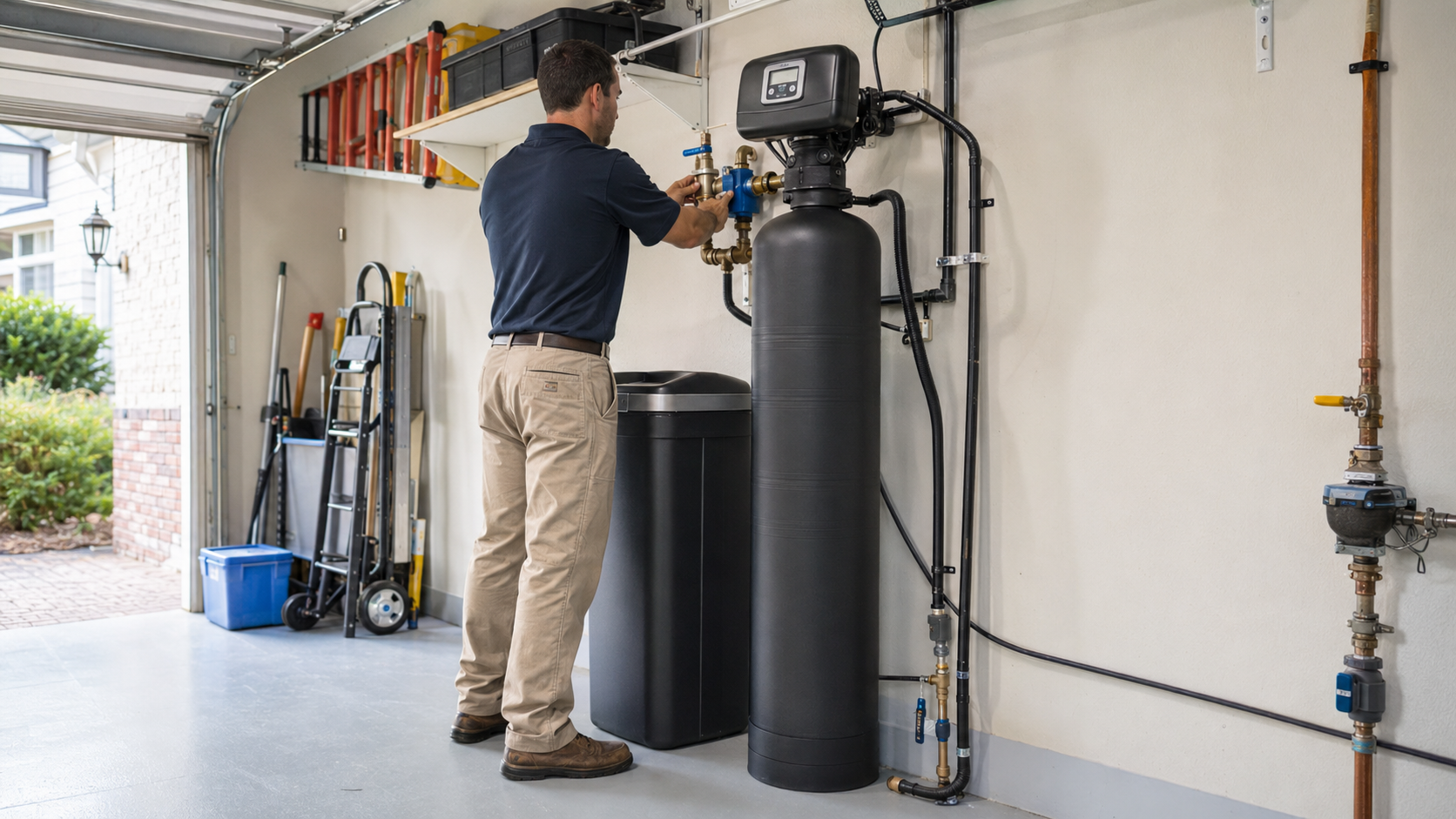
The main water line, drain access, electrical needs, bypass arrangement, and available equipment space are considered.
System capacity should match the number of occupants, bathrooms, fixtures, and normal water-use patterns.
An existing softener or filter may need maintenance, repair, reprogramming, media replacement, or replacement rather than an entirely new setup.
Salt use, regeneration, filter replacement, cleaning, and service requirements should be explained before a system is selected.
Frequently Asked Questions
Common Questions About Water Softeners
How can I tell whether I have hard water?
Recurring scale, spotting, soap film, and poor lather may point toward hard water, but testing is the best way to confirm the hardness level.
Is hard water unsafe to drink?
Hardness generally refers to dissolved calcium and magnesium and is usually treated as an aesthetic or household-performance concern rather than proof that water is unsafe. Separate testing is needed to evaluate drinking-water safety.
Does a water softener filter drinking water?
No. A softener primarily reduces hardness minerals. Filtration or reverse osmosis may be more appropriate for taste, odor, sediment, or specific drinking-water goals.
Can a water softener remove chlorine?
A standard water softener is not designed primarily for chlorine reduction. Whole-home filtration may be considered when chlorine taste or odor is the concern.
Will a water softener stop spots on dishes?
Softening can reduce mineral spotting when hardness is the cause, but detergent amount, rinse aid, water temperature, and permanent glass etching can also affect appearance.
Can I need both a water softener and a filter?
Yes. Some homes have both hardness concerns and separate taste, odor, sediment, or drinking-water goals. Testing helps determine whether one system or a combined treatment approach makes sense.
How is a water softener sized?
Sizing typically considers the measured hardness, household size, daily water use, peak flow, and any additional treatment conditions identified during the evaluation.
Should I replace an existing water softener that is not working well?
Not automatically. The system may need salt, cleaning, reprogramming, repair, or media service. Its age, condition, capacity, and repair needs should be evaluated before replacement is recommended.