Standby Generator Winter Guide
Preparing Your Standby Generator for a Texas Winter Freeze
By Malek Service Company · Serving Bryan–College Station & Northwest Houston
When a freeze is in the forecast, the question changes from “Will the generator start?” to “Will the house keep the heat and essential power it needs if utility service stops?” Those are related questions, but a brief exercise run does not answer both.
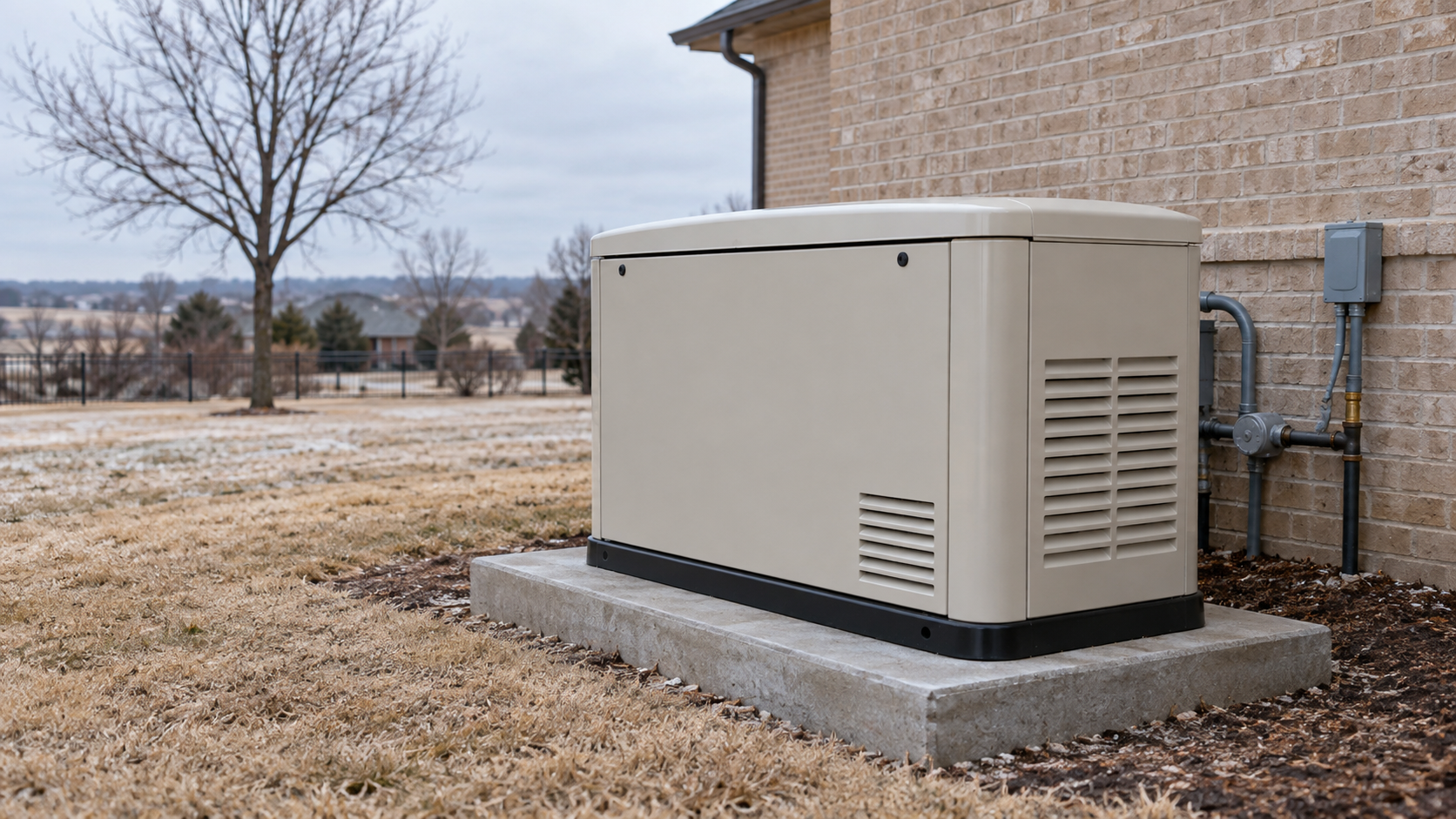
A permanently installed standby generator needs preparation matched to its model, fuel supply, installation, and the loads it is designed to serve. Cold-weather accessories, starting conditions, winter heating demand, and prolonged runtime deserve attention before the outage.
This guide is for home standby systems in Bryan–College Station and Northwest Houston. It adds winter-specific planning to our general maintenance checklist; it does not provide a universal winter kit, oil grade, or temperature threshold for every generator.
At Malek, we approach readiness as a system question: equipment condition, fuel, transfer operation, and the household loads that need power. Winter planning adds the heating requirements that a simple start check cannot establish.
The Quick Answer
Prepare for Cold Starting and the Power Your Heating System Needs
Check Model-Specific Requirements
Use the owner’s manual and manufacturer guidance to determine appropriate cold-weather service and accessories.
Review Heating Loads
Confirm which furnace, heat-pump, air-handler, and backup-heating loads the system actually supports.
Plan for Extended Runtime
Know the maintenance requirements and service arrangements before the roads or conditions make help harder to reach.
A successful exercise cycle is useful but does not prove the generator can support every winter household load or operate through a prolonged outage without scheduled attention.
Cold-Weather Readiness
Winter Preparation Should Match the Equipment, Not a Generic Shopping List
Identify the Generator and Fuel System
Keep the model, serial number, owner’s manual, fuel type, and service history available. These determine which guidance applies and help avoid incompatible accessories.
Review Approved Cold-Weather Accessories
Manufacturer-approved warming accessories vary by generator series and engine. A battery warmer or other heater is not automatically required for every Texas installation; confirm compatibility and need with a qualified service provider.
Review Starting and Lubrication Requirements
Have battery and charging condition evaluated and confirm scheduled oil service follows the manual. Do not choose a universal oil grade or accessory based only on another homeowner’s generator.
Understand the Supported Heating Equipment
A gas furnace still needs electricity for controls and the blower. Heat pumps and electric backup heat have different power requirements. Review the actual connected loads and load-management strategy.
Winter Planning Gaps
A Generator Can Start and Still Leave Important Questions Unanswered
Unknown Backup-Heat Coverage
A system may support a heat pump but manage or exclude some resistance heat. Verify the design before relying on that heat source.
Additional Portable Heaters
Adding electric heaters changes the outage load. Do not assume the generator was sized for them.
Unresolved Starting Alerts
Missed exercises or slow starts should be investigated before the freeze rather than dismissed because the unit eventually ran.
Limited Propane Planning
Stored fuel planning should account for the generator and any household loads using the same supply, with guidance from the fuel provider.
Blocked Equipment Area
Keep required ventilation, exhaust paths, and access clear. Do not wrap, cover, or build a temporary enclosure around the generator.
No Extended-Outage Service Plan
Runtime can bring maintenance due sooner than the calendar. Identify the model-specific requirements and who will perform the work.
Warning Signs
Changes That Deserve Attention
A recent exercise cycle was missed or unsuccessful
An active fault or low-battery warning is present
Starting has become slow or unreliable
Oil service or other required maintenance is overdue
Fuel supply or heating-load coverage is uncertain
Ice, debris, or damage obstructs the installation
Never warm the generator with an open flame, improvised heater, or blanket. Do not adjust gas regulators, bypass controls, or open energized equipment. If exhaust may be entering the home or a carbon-monoxide alarm sounds, leave and call emergency services. Do not approach equipment in unsafe icy, flooded, or storm-damaged conditions.
Before vs. During an Outage
Resolve Readiness Questions While Normal Power Is Available
Before the Freeze
Confirm the Winter Plan
- ✓Review manual and service history
- ✓Resolve faults and starting concerns
- ✓Confirm the connected heating loads
- ✓Plan fuel and runtime-based maintenance
During the Outage
Follow the Approved Operating Plan
- ✓Use loads within the system’s design
- ✓Monitor alerts without servicing running equipment
- ✓Keep ventilation and required clearances unobstructed
- ✓Contact service when faults or shutdowns occur
What You Can Check
A Practical Winter Readiness Review
Confirm the Correct Standby Mode
Check the status through the normal user interface according to the manual. Automatic response depends on the equipment being left in the appropriate operating mode.
Write Down the Heating Priorities
Identify essential heating, refrigeration, communications, and other supported loads. Ask what happens when several high-demand loads call at once.
Plan Fuel With the Provider
For propane, review tank level and expected demand with the supplier. Natural-gas systems depend on available utility fuel service and correct infrastructure; a generator does not guarantee uninterrupted gas supply.
Arrange Runtime-Based Attention
Clarify inspection and service intervals with your provider. Oil checks or service require the manufacturer’s shutdown and cooling procedure; do not service the unit while running or assume an exercise schedule replaces maintenance.
A Practical Next Step
Cold-Weather Readiness Is More Than a Start Button
The strongest winter plan connects equipment requirements with actual household heating needs. Resolve existing faults, verify cold-weather compatibility, confirm supported loads, and make a plan for prolonged operation. Those checks are more useful than buying an accessory without knowing whether your model needs it.
We Don’t Just Fix It. We Explain It.
Professional Generator Evaluation
Review the Generator and Winter Heating Plan Together
Malek can evaluate standby-generator readiness and explain maintenance or repair needs. Winter planning should also identify which heating loads are connected and how they are managed during an outage.
Equipment
Confirm the Model and Service Requirements
Use the specific generator documentation rather than a universal winter checklist.
Starting System
Evaluate Battery and Charging Condition
Investigate missed exercise cycles and changes in startup behavior.
Cold Weather
Review Approved Accessories and Conditions
Determine whether the installation calls for compatible manufacturer-approved warming equipment or other corrections.
Loads and Fuel
Review the Winter Backup Strategy
Clarify supported heating loads, fuel planning, and load management.
Runtime
Explain Maintenance During Long Outages
Identify what becomes due with extended operation and arrange a safe service plan.
Continue Learning
Related Guidance for Your Home
Generator Maintenance Checklist
Review routine observations and professional maintenance needs.
→Seasonal GuidePreparing Your Generator for Hurricane Season
Explore separate Gulf Coast storm-preparation concerns.
→Homeowner ArticleCan a Generator Power My Entire House?
Understand capacity and household load planning.
→ServiceGenerator Maintenance
Learn about professional standby-generator service.
→Malek Homeowner Learning Center
Have another home-system question?
Explore homeowner articles, decision guides, investment guides, and FAQs to understand your options before deciding what comes next.
Sources & Further Reading
For manufacturer explanations and safety guidance, see the resources below. Your equipment’s instructions determine the requirements for its use, installation, and service.
Frequently Asked Questions
Generator Questions, Answered
Clear answers to help you understand the concern, recognize warning signs, and choose a practical next step.
Does every standby generator need a cold-weather kit?+
No universal kit or temperature rule applies to every model. Follow the specific manufacturer guidance and have compatibility and installation conditions reviewed before adding accessories.
Can I cover my generator to keep it warm?+
Do not wrap or cover a standby generator or create a temporary enclosure that interferes with ventilation, exhaust, or required clearances. Follow the manufacturer’s installation and operation instructions.
Will my generator run my furnace?+
It depends on whether the furnace’s electrical loads are included in the backup design. A gas furnace still requires power for controls and the blower. Verify actual connected loads.
Will it run my heat pump and auxiliary heat?+
That depends on generator capacity, connected circuits, starting demand, and load management. Electric backup heating can add substantial demand and should be reviewed separately.
Does an exercise cycle prove winter readiness?+
No. It shows part of the operating sequence, but it does not replace maintenance, heating-load verification, or preparation for extended runtime.
What oil should I use before a freeze?+
Use the grade and service requirements specified for the actual generator model and operating conditions. Do not apply one recommendation to every standby system.
How should I plan propane for a winter outage?+
Review tank level and anticipated generator and household demand with the fuel provider. Consumption and available runtime depend on the equipment, loads, and fuel system.
Can I service the generator while it is running?+
No. Follow manufacturer shutdown, cooling, and safe-service procedures. Arrange qualified service for internal work and clarify runtime-based maintenance before an extended outage.
Get Clear Answers With Malek
Confirm Your Generator’s Winter Readiness Before the Freeze
Malek can help Bryan–College Station and Northwest Houston homeowners understand generator condition, required service, and the next step for dependable standby operation.