A garbage disposal that hums but does not grind is usually receiving power, but the motor or grinding mechanism cannot turn normally.
The disposal may be jammed by food, a utensil, broken material, or another object. A seized motor, damaged internal component, overheated unit, or failing disposal can create a similar symptom. Continued operation can overheat or damage the motor.
Start With the Symptom
Several Conditions Can Prevent the Disposal From Turning
Jammed Grinding Mechanism
Food, bones, utensils, glass, metal, or another object may prevent the internal grinding components from moving.
Seized Motor
Internal wear, overheating, corrosion, or long-term inactivity can leave the motor unable to rotate even though it still receives power.
Overheated Disposal
A prolonged jam or heavy use can cause the motor’s overload protection to trip. The unit may need time to cool before it can be reset.
Damaged Internal Components
Bearings, motor components, grinding parts, or other sealed internal pieces may be worn or damaged.
Foreign Object in the Disposal
A spoon, bottle cap, piece of glass, screw, or other item may block the mechanism or create unusual noise.
Electrical or Control Problem
A weak connection, failing switch, damaged cord, air-switch problem, or other electrical issue may affect how the disposal starts and runs.
Listen to the Pattern
Humming, Grinding, and Silence Point Toward Different Problems
The Disposal Hums but Does Not Grind
- Grinding mechanism may be jammed
- Motor may be seized or unable to turn
- An object may be blocking movement
- Internal components may be damaged
- Continued operation may overheat the motor
The Disposal Makes a Different Noise
- Rattling may indicate a loose object
- Grinding may indicate metal or hard debris
- Clicking may involve internal movement or obstruction
- Silence may point toward a power or reset issue
- Loud vibration may involve the mount or internal damage
Look Beyond the Sound
Other Symptoms Help Narrow the Disposal Problem
The mechanism may already be jammed or the motor may be unable to turn as soon as power is applied.
The unit may be overheating, overloaded, jammed, or affected by an internal motor or electrical problem.
Food buildup, a blocked disposal chamber, or a drain restriction may be present in addition to the mechanical problem.
The sink flange, dishwasher connection, discharge pipe, mount, or disposal housing may also be leaking.
A recurring jam, overload condition, weak motor, or internal failure may be causing repeated overheating.
Check the switch position, reset button, plug, receptacle, and breaker. A silent unit is different from one that hums.
What You Can Safely Check Before Scheduling Service
Turn off the disposal immediately. Do not continue operating a unit that hums without spinning.
Disconnect electrical power. Unplug the disposal or switch off the correct breaker before looking into the sink opening.
Use a flashlight. Look for visible utensils, glass, metal, bones, or other objects without placing your hand inside.
Allow the unit to cool. An overheated disposal may need time before the reset button will remain engaged.
Check the reset button after cooling. Restore power only after the unit has cooled and no visible obstruction remains.
Stop after one careful attempt. Repeatedly resetting or energizing a jammed unit can damage the motor or electrical components.
When to Leave It Off
Do Not Keep Testing a Disposal That Cannot Turn Normally
Keep the Disposal Off When
- The unit hums but does not spin
- The reset button trips repeatedly
- You smell overheating or burning
- Glass, metal, or another hard object may be inside
- The disposal or nearby wiring becomes hot
Schedule Plumbing Service When
- The visible obstruction cannot be safely removed
- The mechanism remains locked after power is disconnected
- The disposal leaks or drains poorly
- The motor repeatedly overheats or trips
- The unit has become noisy, unreliable, or difficult to reset
Why Diagnosis Matters
The Correct Repair Depends on Whether the Problem Is Mechanical, Electrical, or Plumbing-Related
A humming disposal often involves a jammed or seized mechanism, but the complete evaluation should also consider the motor, reset, electrical connection, mounting assembly, discharge piping, dishwasher connection, and overall condition of the unit.
Grinding Mechanism
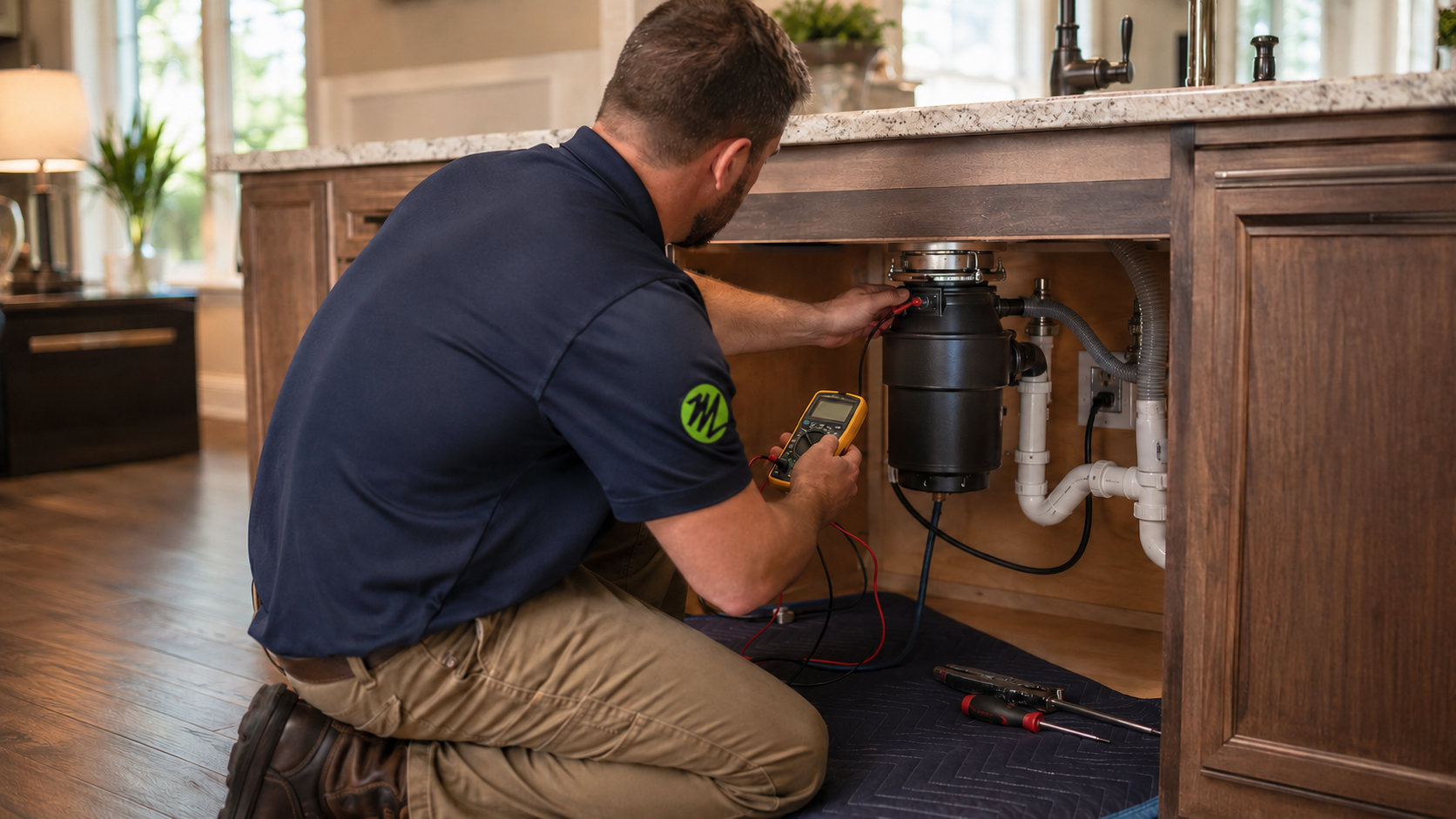
The disposal chamber and moving components are checked for foreign objects, food buildup, binding, and internal damage.
Motor and Reset
The motor response, overload protection, reset button, and signs of overheating or seizure are reviewed.
Electrical Supply
The switch, air switch, plug, cord, receptacle, wiring, and breaker may be checked when the disposal’s electrical response is inconsistent.
Drain and Mounting Connections
The sink flange, mount, discharge pipe, trap, and dishwasher connection are inspected for leakage, movement, or poor alignment.
Stop the Hum Before the Motor Is Damaged
Find Out Why the Garbage Disposal Will Not Turn
Malek can inspect the disposal, identify whether the mechanism is jammed or the unit has failed, review the connected plumbing and electrical components, and explain whether repair or replacement makes more sense.
Possible Solutions
The Right Path Depends on the Jam, Motor, and Overall Disposal Condition
Garbage Disposal Repair May Make Sense When
- A removable object is blocking the mechanism
- The unit overheated because of a temporary jam
- The reset or accessible connection needs correction
- The motor remains in dependable condition
- The disposal has not developed recurring problems
Garbage Disposal Replacement May Be Considered When
- The motor is seized or failing
- The disposal housing leaks
- Internal components are damaged
- The reset trips repeatedly
- The unit has become noisy, unreliable, or difficult to service
What a Professional Evaluates
A Good Evaluation Should Identify Why the Disposal Cannot Turn
The disposal chamber is checked for utensils, glass, metal, hard food, buildup, and other materials that may block movement.
The technician evaluates whether the mechanism is jammed, the motor is seized, or internal components have failed.
The reset button and overload response are checked for signs of overheating, repeated tripping, or motor strain.
The switch, cord, plug, receptacle, air switch, wiring, and breaker may be reviewed when electrical performance is uncertain.
The sink flange, mounting assembly, discharge pipe, trap, and dishwasher connection are inspected for leaks and alignment.
The recommendation should account for the failure, unit condition, repair history, reliability, connected work, and expected service life.
Frequently Asked Questions
Common Questions About Humming Garbage Disposals
Why does my garbage disposal hum but not spin?
The disposal is usually receiving power, but the grinding mechanism or motor cannot turn. A jammed chamber, foreign object, seized motor, overheating, or internal failure may be involved.
Should I keep running a garbage disposal that hums?
No. Turn the disposal off immediately. Allowing it to continue humming can overheat or damage the motor.
Can I put my hand inside the disposal if the switch is off?
No. Never place your hand inside a garbage disposal. Disconnect power at the plug or breaker and use a flashlight to inspect the chamber.
Why does the disposal reset button keep tripping?
Repeated tripping may indicate overheating, a jammed mechanism, motor strain, an electrical problem, or an internal disposal failure.
Why is my garbage disposal completely silent?
A silent disposal may not be receiving power. The switch, reset button, plug, receptacle, air switch, wiring, or breaker may be involved.
Can a jammed garbage disposal be repaired?
Sometimes. A removable obstruction or temporary overload may allow the unit to be restored. Replacement may be needed when the motor is seized, internal parts are damaged, or the disposal has become unreliable.
Why does my disposal hum and drain slowly?
A jammed chamber, food buildup, blocked discharge connection, or drain restriction may be present along with the mechanical problem.
When should I replace a humming garbage disposal?
Replacement may make more sense when the motor is seized, the housing leaks, internal components are damaged, the reset repeatedly trips, or the unit has developed recurring problems.