Electrical Problem Guide
Why Are My Lights Flickering?
Flickering lights can be as simple as a loose bulb or as complicated as a wiring, circuit, panel, equipment, or utility-supply problem. The important detail is not only that the light flickers. It is how often it happens, how many lights are affected, and what else is happening in the home at the same time.
A single lamp that flickers occasionally points in a different direction than several rooms dimming whenever the air conditioner starts. The symptom may look similar, but the electrical conditions behind it can be very different.
This guide explains what common flickering patterns may suggest, what homeowners can safely check, and when the problem should be evaluated by a licensed electrician.
The Quick Answer
Start by Paying Attention to Which Lights Flicker and When It Happens
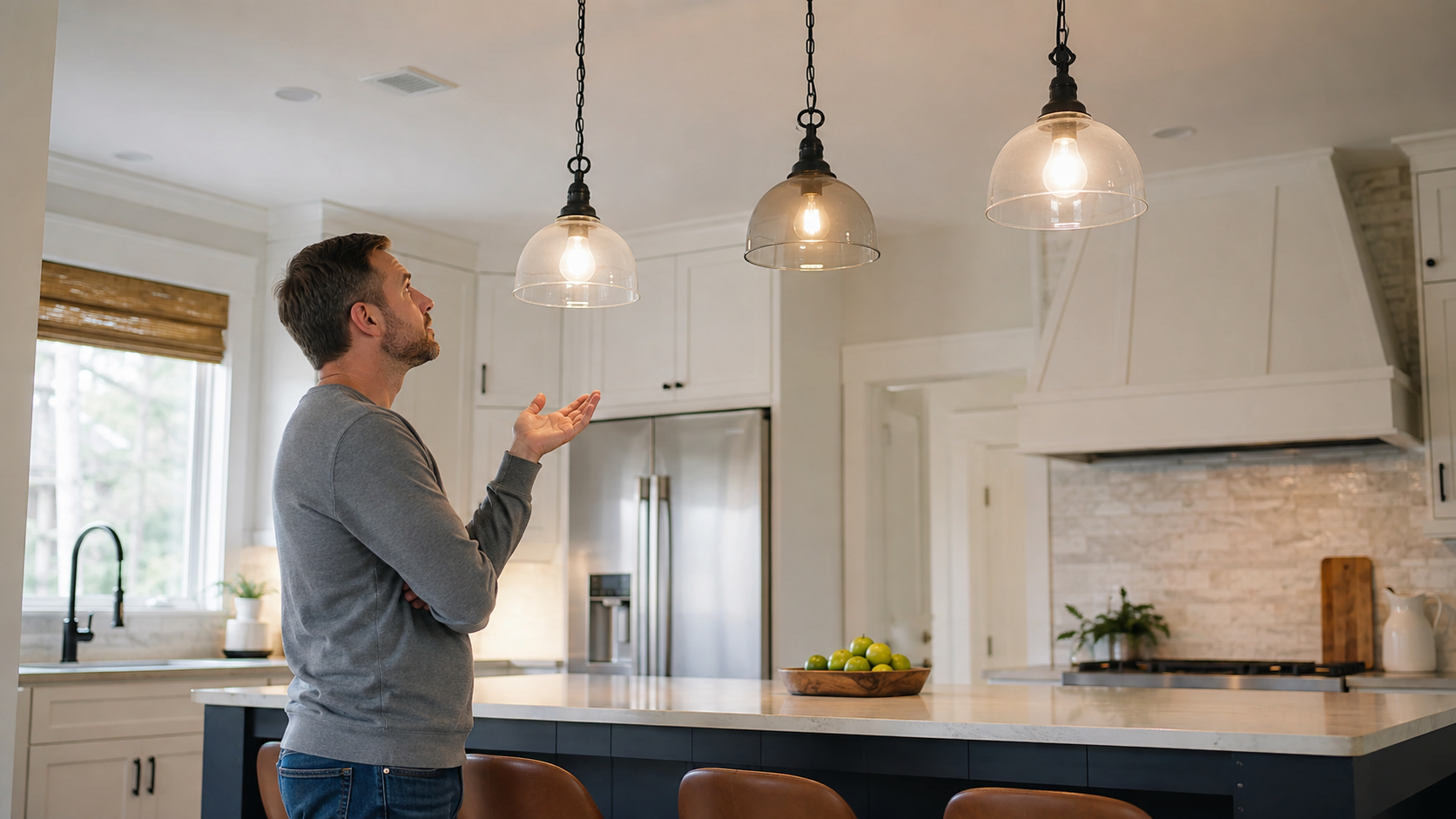
One Bulb or Fixture
Flickering limited to one light may involve a loose bulb, damaged socket, failing fixture, incompatible dimmer, loose switch connection, or a problem inside that fixture.
Several Lights on One Circuit
When multiple lights in the same area flicker together, the problem may involve a shared switch, circuit connection, breaker, junction, or wiring path.
Lights Throughout the Home
Widespread flickering or repeated whole-home dimming may involve a service connection, electrical panel, major equipment load, voltage fluctuation, or utility-supply condition.
A brief change when large equipment starts is different from repeated, severe, or unexplained flickering. Frequency, duration, and the number of affected areas all matter.
What the Pattern May Mean
The Way the Lights Flicker Can Help Narrow the Search
The Light Flickers When You Touch the Bulb or Fixture
The bulb may be loose, the socket may be worn, or the fixture may have an internal connection problem. Turn the light off before checking whether a replaceable bulb is seated properly.
The Light Flickers When Using a Dimmer
Some LED bulbs do not work correctly with every dimmer. The dimmer may be older, improperly matched to the bulb, installed incorrectly, or beginning to fail.
Lights Dim When the Air Conditioner or Appliance Starts
Large equipment briefly draws more power when starting. A slight, momentary change may occur in some homes, but strong or repeated dimming can point to equipment, circuit, connection, panel, or service-capacity concerns.
Several Lights Flicker in the Same Room
The lights may share a switch, circuit, junction, or wiring connection. A loose connection earlier in the circuit can affect several devices even when only one location appears damaged.
Lights Flicker During Wind, Rain, or Utility Activity
Weather, tree movement, utility work, transformers, or an exterior service connection may affect incoming power. That does not rule out a problem inside the home, but the timing is useful information.
Flickering Appears Throughout the Home
Widespread symptoms deserve closer attention. The source may involve the main electrical panel, service conductors, neutral connection, grounding, major equipment, or the utility supply.
Common Causes
What Can Make Residential Lights Flicker or Dim?
Loose or Failing Bulb
A bulb that is not seated correctly may lose contact intermittently. The bulb itself may also be failing.
Worn Light Socket
Heat, age, damage, or weakened internal contacts can prevent the bulb from maintaining a stable connection.
Incompatible Dimmer
LED bulbs and dimmer switches must be compatible. An incorrect combination may create flickering, limited dimming range, buzzing, or delayed operation.
Loose Switch or Fixture Connection
A loose terminal or splice may interrupt power to the fixture. The symptom may change when the switch is moved or the fixture vibrates.
Overloaded Circuit
Multiple devices drawing power from the same circuit can cause voltage changes, especially when larger appliances or equipment start operating.
Damaged or Aging Wiring
Deteriorated insulation, heat damage, corrosion, improper splices, pest damage, or previous modifications may create an unstable electrical connection.
Breaker or Panel Connection
A worn breaker, loose termination, damaged bus connection, or another panel condition may affect one circuit or several areas of the home.
Utility Voltage Fluctuation
The source may be outside the home. Utility equipment, service connections, nearby electrical demand, weather, or maintenance activity can affect incoming voltage.
Safe Homeowner Checks
What Can You Look At Without Opening Electrical Equipment?
Reasonable Observations
Information That Can Help Identify the Pattern
- ✓ Note whether one light, one room, or several rooms are affected.
- ✓ Write down what equipment is operating when the flicker occurs.
- ✓ Confirm whether the bulb is the correct type and wattage for the fixture.
- ✓ With the power off, confirm that a replaceable bulb is properly seated.
- ✓ Notice whether the symptom changes when using a switch or dimmer.
Leave This to an Electrician
Do Not Open or Adjust Energized Electrical Components
- ✓ Do not remove the electrical panel cover.
- ✓ Do not tighten breakers or wiring connections.
- ✓ Do not touch exposed wiring or damaged devices.
- ✓ Do not repeatedly reset a breaker that continues to trip.
- ✓ Do not continue using a device that is hot, sparking, or producing a burning odor.
Warning Signs
Flickering Lights Should Be Evaluated Promptly When Other Symptoms Appear
Burning or melted-plastic odor
Buzzing or crackling from a switch, fixture, outlet, or panel
Warm or discolored electrical devices
Sparks or visible arcing
Repeated breaker trips
Electrical shock or tingling sensation
Flickering affecting several rooms or the entire home
Lights becoming unusually bright before dimming
Stop using the affected fixture, switch, outlet, or equipment when it is hot, sparking, visibly damaged, producing a burning odor, or causing electrical shock. Avoid touching exposed components.
The Bottom Line
Flickering Is a Symptom—not a Diagnosis
Replacing the bulb may solve a simple fixture problem, but it will not correct a loose circuit connection, damaged wire, panel condition, equipment issue, or utility-supply problem.
The best next step depends on the pattern. Which lights are affected? What is running when it happens? Does the symptom stay in one room or move throughout the home? Those details help an electrician test the right parts of the system instead of guessing.
We Don’t Just Fix It. We Explain It.
What Professional Diagnosis Includes
Finding Out Whether the Problem Is the Bulb, Circuit, Panel, Equipment, or Incoming Power
Electrical troubleshooting follows the symptom through the system. The goal is to identify where the voltage or connection becomes unstable before recommending repair.
Symptom Review
Understand When and Where the Flickering Occurs
The electrician reviews which lights are affected, how long the symptom lasts, whether it is constant or intermittent, and which appliances or systems are running at the time.
Fixture and Device Check
Evaluate the Most Direct Components First
Bulbs, sockets, switches, dimmers, fixtures, accessible connections, and protective devices may be checked based on the location and pattern.
Circuit Testing
Trace the Electrical Path Beyond the Visible Light
Testing may evaluate voltage, load, continuity, grounding, shared devices, wiring connections, and breaker behavior.
Panel and Equipment Review
Look for a Broader Electrical Condition
When several areas are affected, the review may include the breaker, electrical panel, major equipment loads, service connections, or signs that the issue may involve incoming utility power.
Clear Next Steps
Explain What Was Found Before Recommending Work
Malek explains whether the concern appears limited to a bulb, fixture, switch, circuit, breaker, panel, equipment connection, or another electrical condition.
Frequently Asked Questions
Flickering Lights FAQs
These answers cover common flickering-light patterns, safe homeowner checks, and signs that the electrical system should be evaluated.
Is it normal for lights to flicker occasionally? +
A very brief change may occur when large equipment starts, but frequent, severe, prolonged, or unexplained flickering should not be ignored. The number of affected lights and the timing of the symptom help determine whether professional evaluation is needed.
Why does only one light flicker? +
One flickering light may involve a loose or failing bulb, worn socket, damaged fixture, incompatible dimmer, failing switch, or loose connection serving that specific light.
Why do my LED lights flicker? +
LED lights may flicker because of an incompatible dimmer, low-quality or failing bulb, loose connection, fixture problem, voltage fluctuation, or an issue elsewhere on the circuit.
Why do the lights dim when my air conditioner starts? +
Air-conditioning equipment draws additional power during startup. A slight momentary change may occur, but strong dimming, repeated flickering, breaker trips, or changes affecting several areas may indicate an equipment, circuit, panel, service, or voltage condition that should be evaluated.
Can a loose connection cause flickering lights? +
Yes. A loose terminal, splice, neutral, switch connection, fixture connection, breaker connection, or service connection can interrupt voltage and cause lights to flicker or change brightness.
Can flickering lights be caused by the utility company? +
Yes. Utility equipment, transformers, weather, nearby electrical demand, service connections, and maintenance activity can affect incoming voltage. An electrician may still need to evaluate the home to help determine whether the problem begins inside or outside the property.
When are flickering lights an urgent electrical concern? +
Prompt evaluation is appropriate when flickering occurs with burning odors, buzzing, crackling, sparks, warmth, discoloration, electrical shock, repeated breaker trips, unusually bright lights, or symptoms affecting several rooms.
Can I fix flickering lights myself? +
Homeowners may safely replace a compatible bulb or confirm that a bulb is seated properly after turning the light off. Opening panels, removing devices, tightening wiring, or working around exposed electrical components should be left to a licensed electrician.
Get Clear Answers About Flickering Lights
Find Out Whether the Problem Is the Fixture, Circuit, Panel, Equipment, or Incoming Power
Malek can evaluate the flickering pattern, affected lights, accessible devices, circuit, breaker, panel conditions, and connected equipment before explaining what testing identified and what should happen next.