Electrical Homeowner Guide
What Is a GFCI Outlet?
A GFCI outlet is designed to shut off power quickly when it detects that electrical current is traveling along an unintended path. That protection is especially important in areas where water, dampness, grounded surfaces, and electrical equipment may be close together.
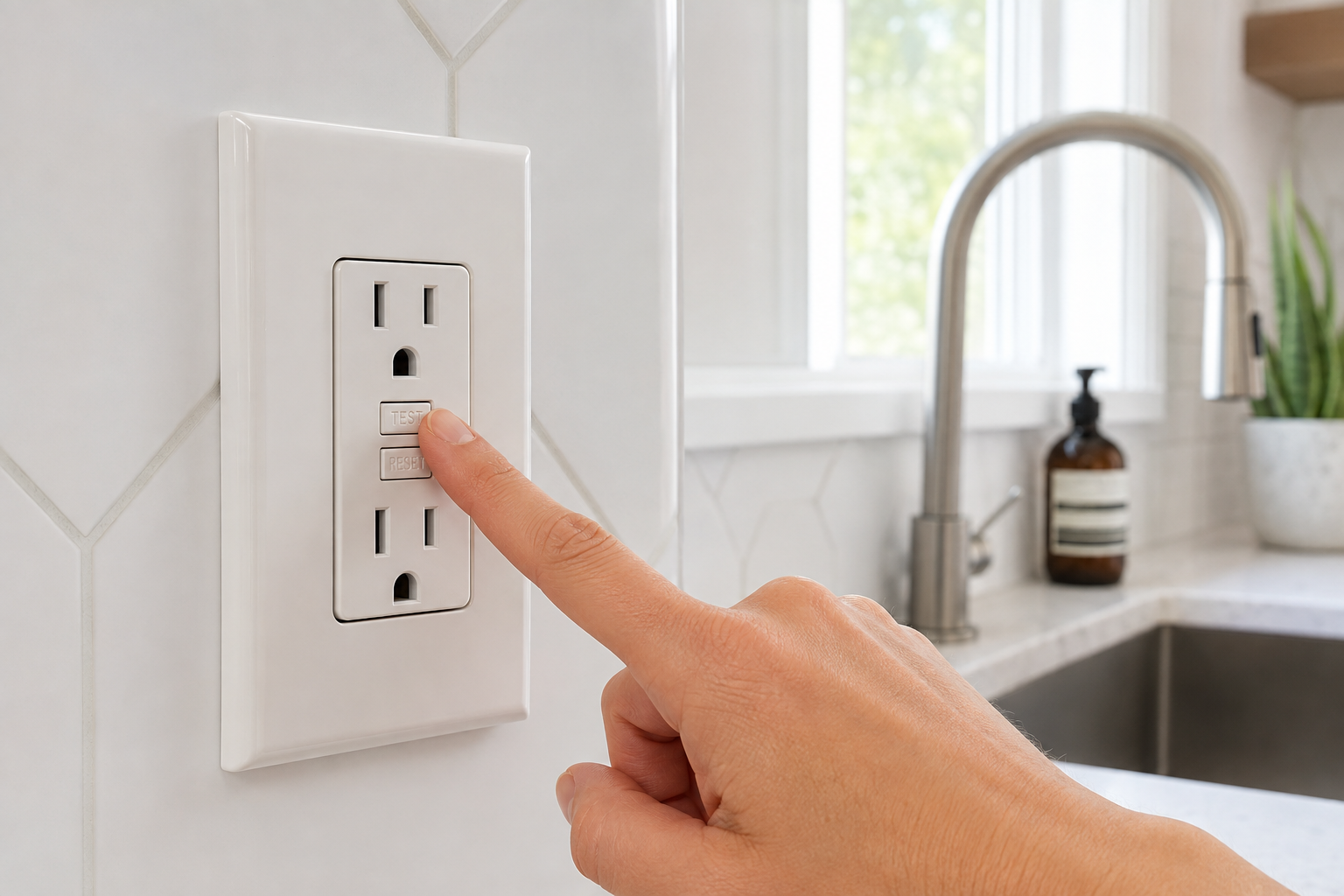
Most GFCI outlets are easy to recognize because they have TEST and RESET buttons on the front. However, one GFCI device may also protect several standard-looking outlets located farther along the same circuit.
This guide explains what GFCI protection does, where it is commonly used, how to test and reset it, and when a tripping or nonworking device needs professional electrical evaluation.
The Quick Answer
A GFCI Is Designed to Reduce the Risk of Electrical Shock
It Monitors Current
The device compares the electrical current leaving and returning through the circuit. A small imbalance may indicate that current is escaping through another path.
It Shuts Power Off Quickly
When the device detects an unsafe imbalance, it interrupts power to help reduce the risk of electrical shock.
It May Protect Other Outlets
One GFCI receptacle or breaker may protect additional outlets on the same circuit, even when those outlets do not have visible test and reset buttons.
A GFCI is not the same as a standard circuit breaker. A breaker primarily protects wiring from excessive current, while a GFCI responds to a current imbalance that may indicate a shock hazard.
How a GFCI Works
The Device Watches for Current Going Somewhere It Should Not
Current Travels Through the Circuit
Under normal conditions, the amount of current leaving the device should closely match the amount returning through the intended electrical path.
The GFCI Detects an Imbalance
If some current begins traveling through water, damaged equipment, a person, or another unintended path, the outgoing and returning current may no longer match.
Power Is Interrupted
The GFCI responds by opening the circuit and shutting off power. This can happen even when the amount of current is too small to trip a standard breaker.
The Cause Still Needs to Be Understood
Resetting the device may restore power, but repeated tripping can indicate moisture, damaged equipment, wiring problems, overloading, a failed GFCI, or another circuit condition.
Common Locations
Where Are GFCI Outlets Commonly Used in a Home?
Bathrooms
Bathroom receptacles are commonly protected because sinks, wet hands, damp surfaces, and grounded plumbing may be nearby.
Kitchens
GFCI protection is commonly used for countertop and other receptacles located near sinks, water sources, and food-preparation areas.
Garages
Garage outlets may serve tools, appliances, extension cords, and equipment used around concrete floors, vehicles, and damp conditions.
Exterior Areas
Outdoor outlets are exposed to weather, moisture, landscaping, extension cords, and equipment used around grounded surfaces.
Laundry Areas
Laundry rooms may combine receptacles with water connections, appliances, utility sinks, and damp conditions.
Basements and Crawlspaces
Dampness, unfinished surfaces, moisture intrusion, and grounded structural materials can increase electrical risk.
Pool and Spa Areas
Receptacles and equipment near pools, spas, fountains, and similar water features require careful electrical protection.
Other Required Locations
GFCI requirements depend on the location, equipment, circuit, current code, and local jurisdiction. A licensed electrician can confirm where protection is required.
Testing and Resetting
What Do the TEST and RESET Buttons Do?
Testing the Device
The TEST Button Checks Whether the GFCI Can Interrupt Power
- ✓ Plug in a small lamp or device you can easily observe.
- ✓ Press the TEST button on the GFCI receptacle.
- ✓ The power should shut off and the RESET button may release.
- ✓ Press RESET to restore normal operation.
- ✓ Follow the device manufacturer’s testing instructions.
When It Does Not Reset
A GFCI That Will Not Reset May Be Responding to a Real Problem
- ✓ Unplug connected equipment before trying the reset once.
- ✓ Do not repeatedly press RESET if the device trips again.
- ✓ Do not remove the outlet or inspect wiring yourself.
- ✓ Moisture, equipment failure, wiring faults, or device failure may be involved.
- ✓ Arrange professional evaluation when power will not stay on.
A GFCI may refuse to reset when it is not receiving power. The problem may be a tripped breaker, upstream GFCI, loose connection, damaged circuit, or another issue outside the device itself.
Common Problems
Why Does a GFCI Outlet Trip or Stop Working?
Moisture or Dampness
Water inside an outlet box, appliance, extension cord, exterior cover, or connected device may create the imbalance the GFCI is designed to detect.
Damaged Appliance or Equipment
A refrigerator, freezer, tool, pump, outdoor device, or other connected load may develop leakage current and repeatedly trip the protection.
Worn or Failed GFCI Device
GFCI receptacles can wear out, suffer internal damage, or stop responding correctly after years of service or electrical events.
Wiring Problem
Loose terminals, damaged insulation, improper installation, reversed connections, neutral problems, or contact with moisture can interfere with proper operation.
Too Many Protected Devices
Several outlets and pieces of equipment may share one GFCI device. The problem may be located downstream rather than at the outlet where the reset button appears.
Loss of Incoming Power
A tripped breaker, failed upstream device, loose connection, or circuit problem can leave the GFCI without power and unable to reset.
Warning Signs
A GFCI Problem Needs More Than a Reset When Electrical Damage Is Present
The device trips repeatedly with equipment unplugged
The outlet will not reset or will not stay reset
Burning or melted-plastic odor
Buzzing, crackling, or popping sounds
Warm or hot receptacle cover
Brown, black, or melted discoloration
Visible moisture inside or around the outlet
Electrical shock, tingling, sparks, or damaged wiring
Stop using a GFCI outlet that is hot, sparking, visibly damaged, wet, producing a burning odor, or causing electrical shock. Avoid touching exposed components or attempting to remove the device.
The Bottom Line
A GFCI Is Supposed to Trip—But It Should Not Be Ignored When It Keeps Happening
One trip may be caused by temporary moisture or a connected device. Repeated trips, failed testing, loss of power, or a device that will not reset can point to a damaged appliance, wiring problem, failed receptacle, upstream power loss, or another electrical condition.
Resetting the outlet restores power. It does not automatically explain why the protection opened the circuit. That distinction is what determines whether the device is working correctly or warning you about a larger problem.
We Don’t Just Fix It. We Explain It.
What Professional Evaluation Includes
Finding Out Whether the GFCI Is Tripping Because of the Device, Wiring, or Connected Equipment
GFCI troubleshooting looks beyond the reset button. The goal is to identify whether the device is operating correctly, whether the circuit has stable power, and whether another outlet or connected load is causing the problem.
Symptom Review
Understand When the Device Trips
The electrician reviews whether the trip occurs immediately, only with certain equipment, during wet weather, or without an obvious pattern.
Device Evaluation
Check the GFCI and Its Operation
The receptacle or breaker may be tested for proper operation, incoming power, correct installation, visible damage, and signs of wear or overheating.
Downstream Review
Identify Other Outlets Protected by the Device
Additional outlets, wiring, exterior receptacles, appliances, and equipment connected downstream may be evaluated when the GFCI protects more than one location.
Circuit Testing
Look for Moisture, Leakage Current, or Wiring Faults
Testing may evaluate voltage, grounding, polarity, wiring condition, neutral relationships, connected loads, and other conditions relevant to the repeated trip.
Clear Next Steps
Explain Whether the Device or the Circuit Needs Repair
Malek explains whether the GFCI needs replacement, whether a downstream outlet or appliance is involved, and whether wiring, moisture, breaker, or circuit work is appropriate.
Frequently Asked Questions
GFCI Outlet FAQs
These answers cover what GFCI protection does, why devices trip, and when a reset is not enough.
What does GFCI stand for? +
GFCI stands for ground-fault circuit interrupter. The device is designed to interrupt power when it detects an imbalance that may indicate electrical current is traveling through an unintended path.
What is the difference between a GFCI outlet and a regular outlet? +
A standard outlet supplies power but does not provide built-in ground-fault protection. A GFCI outlet monitors current and can shut the circuit off quickly when it detects an unsafe imbalance.
Can one GFCI outlet protect other outlets? +
Yes. One GFCI device may protect several downstream outlets on the same circuit. Those outlets may look like standard receptacles without visible test and reset buttons.
Why does my GFCI outlet keep tripping? +
Repeated trips may be caused by moisture, a damaged appliance, wiring problems, leakage current, an overloaded or shared circuit, incorrect installation, or a worn GFCI device.
Why will my GFCI outlet not reset? +
The device may not be receiving power, may still detect a fault, may be connected incorrectly, or may have failed internally. A tripped breaker or upstream GFCI may also be involved.
How often should a GFCI outlet be tested? +
Follow the manufacturer’s testing instructions printed on the device or included with the product. A GFCI that does not shut off power during testing or does not reset properly should be evaluated.
Does a GFCI outlet protect against electrical overloads? +
Ground-fault protection and overcurrent protection serve different purposes. A standard breaker primarily responds to excessive current, while a GFCI responds to an imbalance that may indicate a shock hazard.
When should a GFCI outlet be replaced? +
Replacement may be appropriate when the device fails testing, will not reset, trips without a confirmed external cause, has visible damage, overheats, no longer grips plugs securely, or has reached the end of dependable service.
Get Clear Answers About GFCI Protection
Find Out Why the GFCI Is Tripping, Not Resetting, or Leaving Other Outlets Without Power
Malek can evaluate the GFCI device, connected outlets, circuit, breaker, wiring, and equipment before explaining what testing identified and what should happen next.