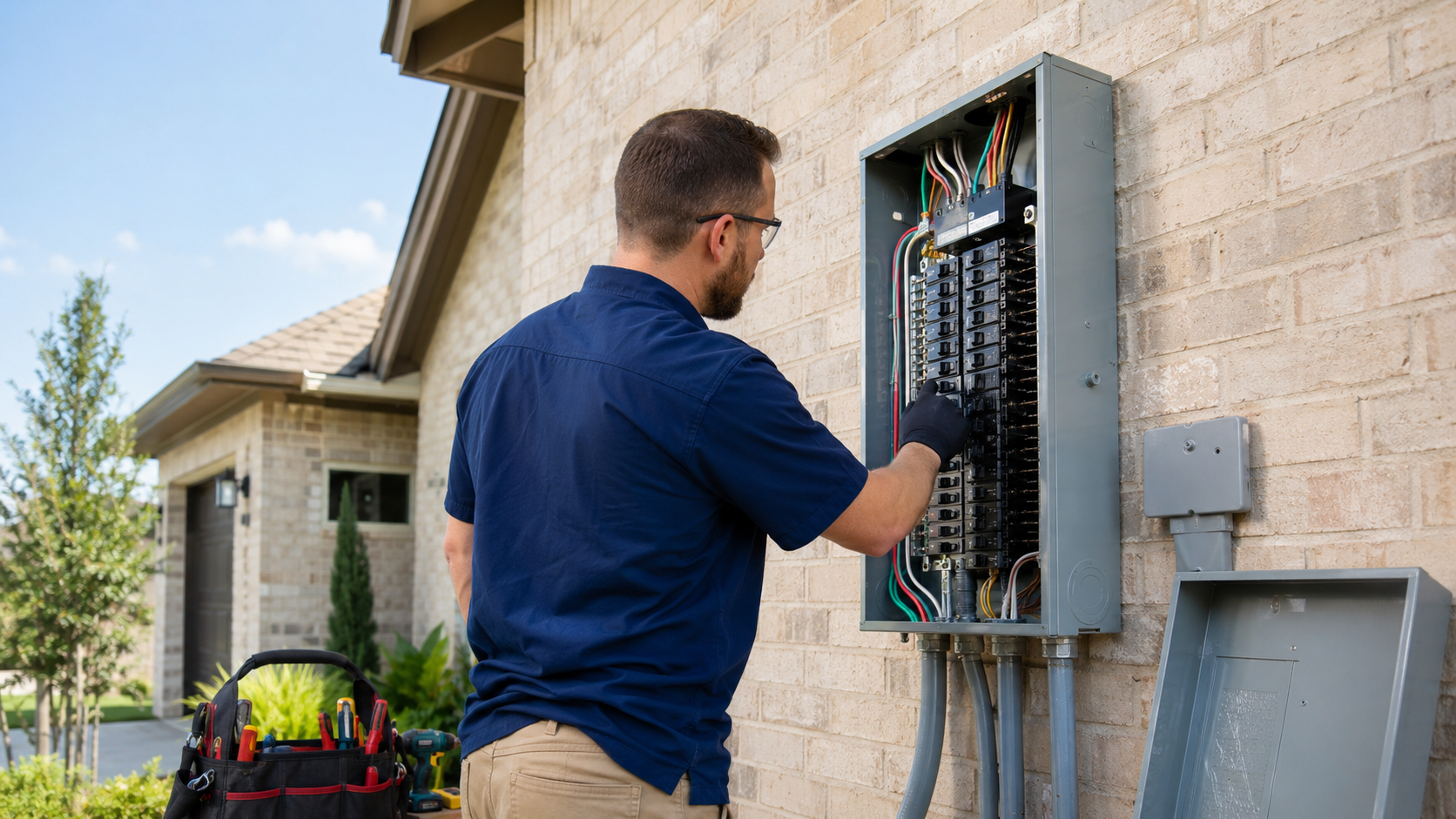
Educational Planning Range
What Does Electrical Panel Replacement Typically Cost?
Typical Starting Investment
$2,500+
Many standard residential electrical panel replacement projects begin around this level when the existing service size remains the same, the current conductors and related service equipment remain usable, and the installation does not require extensive electrical corrections.
This starting investment is provided for general learning and planning purposes only. It is not a quote or guarantee. The actual investment depends on the panel size, breaker requirements, existing service capacity, conductor condition, grounding and bonding, meter equipment, disconnects, accessibility, permits, inspections, and utility requirements.
The most reliable estimate begins with confirming why the panel needs to be replaced, whether the existing service size remains appropriate, and which related electrical components can safely remain in service.
Common Additions
What Can Be Added to the Starting Panel Replacement Investment?
Not every project includes these items. They are shown as broad educational planning additions so homeowners can understand why a complete panel estimate may be higher than the starting investment.
200-Amp Service Upgrade
+$1,000–$3,000+
Increasing the home’s electrical capacity may require larger service conductors, meter equipment, disconnects, load calculations, grounding changes, permits, inspections, and utility coordination.
Meter Base or Main Disconnect Replacement
+$600–$1,500+
Corrosion, damage, obsolete equipment, service changes, or local requirements may make it necessary to replace the meter base, disconnect, or combined meter-main equipment.
Grounding and Bonding Corrections
+$300–$1,200+
Missing, damaged, undersized, improperly connected, or outdated grounding and bonding components may need to be corrected during the panel project.
Circuit or Conductor Corrections
+$250–$1,000+
Damaged conductors, short wires, incorrect breakers, double-tapped terminals, improper modifications, heat damage, or other circuit concerns can increase the required work.
Specialty Breakers and Protective Devices
Varies
AFCI, GFCI, dual-function, specialty, equipment-specific, and surge-protective devices may cost more than standard breakers.
Permits, Inspections, and Utility Requirements
Varies
Permit fees, inspections, meter removal, utility scheduling, engineering review, reconnection requirements, and local processes vary by jurisdiction and service provider.
Start With the Electrical System
Why Electrical Panel Replacement Costs Can Vary So Much
Two homes can receive the same basic panel size and still have very different replacement estimates. One home may have usable conductors, accessible equipment, proper grounding, and a straightforward indoor installation. Another may have corrosion, heat damage, short conductors, obsolete meter equipment, limited working clearance, or a service that also needs to be increased.
The condition of the connected electrical system matters just as much as the new panel. Breakers, service conductors, branch-circuit wiring, grounding, bonding, meter equipment, disconnects, and previous modifications can all change what is required to complete the work properly.
Pricing Variables
What Shapes the Electrical Panel Replacement Investment?
The final investment usually reflects several connected conditions—not only the size or brand of the new electrical panel.
Panel Size and Configuration
The electrical rating, number of circuit spaces, breaker requirements, indoor or outdoor design, and overall panel configuration all influence material selection and installation complexity.
Existing Service Capacity and Conductors
Maintaining the home’s existing service size is generally less involved than increasing electrical capacity. Existing service conductors must also be evaluated for proper sizing, condition, compatibility, and whether they can safely remain in service.
Grounding and Bonding
Proper grounding and bonding are critical for safety and code compliance. Existing grounding electrodes, conductors, bonding connections, and neutral configuration may need to be updated during panel replacement.
Meter and Disconnect Equipment
Some homes require disconnect upgrades, meter equipment changes, or other service-equipment modifications as part of the overall project.
Existing Circuit Conditions
Damaged wiring, incorrect breakers, double-tapped terminals, short conductors, shared neutrals, or other existing electrical concerns may need to be corrected before the new panel can be safely completed.
Installation Location and Access
Panel accessibility, mounting location, finished walls, exterior obstructions, limited workspace, and difficult conductor routing can all influence labor and restoration requirements.
Permits, Inspections, and Utility Coordination
Electrical panel replacement often involves permits, inspections, service disconnects, meter removal, utility scheduling, and local approval requirements. These processes vary by jurisdiction and can influence both project timing and overall investment.
Understanding the Scope
Common Electrical Panel Replacement Project Scopes
These are not fixed packages or guaranteed price tiers. They explain why the condition of the existing equipment and the home’s electrical needs can create very different project investments.
Focused Replacement
Panel Replacement at the Existing Service Size
The existing panel is replaced while the home maintains its current electrical service capacity.
This is generally the most straightforward scope when the service conductors, meter equipment, disconnects, grounding, and connected circuits remain usable.
Corrective Replacement
Panel Replacement With Electrical Corrections
The panel is replaced along with required breaker, conductor, grounding, bonding, labeling, circuit, or service-equipment corrections.
The estimate should explain which corrections are required and why they are part of the project.
Added Capacity
Panel Replacement With a Service Upgrade
The project increases the home’s electrical capacity and may include larger conductors, meter equipment, disconnects, load calculations, grounding changes, and utility coordination.
This scope may be appropriate when the current service cannot support planned electrical demand.
Relocation or Reconfiguration
Panel Replacement With Location Changes
A panel may need to be relocated because of clearance, accessibility, moisture exposure, structural changes, service configuration, or remodeling.
Relocation can require longer conductor runs, wall work, service changes, additional equipment, and more extensive restoration.
Repair or Replacement
When Does Electrical Panel Replacement Make More Sense Than Repair?
Not every breaker trip, loose connection, buzzing sound, or damaged component requires complete panel replacement. Repair may still be the practical choice when the problem is isolated and the remaining equipment is dependable.
Repair Often Makes Sense When:
- The concern is limited to one breaker or connection
- The enclosure and internal components remain serviceable
- Compatible replacement components are available
- Heat or moisture damage is not widespread
- The panel has not developed repeated failures
- A focused repair is expected to provide a dependable result
Replacement May Be the Better Investment When:
- Corrosion, heat, arcing, or moisture affects multiple areas
- Compatible breakers or components are unavailable
- The equipment has developed recurring failures
- The bus, enclosure, or internal assembly is damaged
- Repair cost is becoming substantial compared with replacement
- The panel no longer supports the home’s electrical needs
The right recommendation should consider the entire panel—not only the component showing the current symptom. A lower-cost repair does not provide better value when the remaining equipment is likely to create another reliability problem.
Read the Repair or Replace Your Electrical Panel Decision Guide →Compare More Than the Total
How to Compare Electrical Panel Replacement Estimates
Two proposals may appear to describe the same project while including different panels, breaker types, conductor work, grounding corrections, permit responsibilities, utility coordination, warranties, and testing.
What panel is being installed?
Confirm the brand, electrical rating, number of circuit spaces, indoor or outdoor configuration, main-breaker arrangement, and equipment warranty.
Which breakers are included?
Ask whether the estimate includes standard, AFCI, GFCI, dual-function, specialty, or equipment-specific breakers and how many are included.
Is the service capacity changing?
Confirm whether the project maintains the current service size or includes a larger service, new conductors, meter equipment, disconnects, and utility coordination.
What electrical corrections are included?
The proposal should identify required grounding, bonding, conductor, circuit, breaker, service-equipment, or previous-installation corrections.
Are permits and inspections included?
Ask who obtains the permit, schedules inspections, coordinates service release, handles utility communication, and pays related fees.
What restoration is included?
Confirm whether drywall, siding, trim, paint, stucco, masonry, or other surface restoration is included or handled separately.
The strongest estimate explains the equipment, breakers, service scope, corrections, permits, inspections, and long-term reasoning behind the recommendation.
Protect the New System
How to Protect the Value of a New Electrical Panel
Keep the Panel Accessible
Avoid storing items directly in front of the electrical panel so future inspections, maintenance, and emergency access remain simple.
Watch for Moisture
Water intrusion, excessive humidity, and corrosion can shorten the life of electrical equipment. Address leaks promptly if they occur near the panel.
Plan New Electrical Loads
If you are considering an EV charger, hot tub, workshop equipment, HVAC changes, or a home addition, plan ahead so future electrical demand can be evaluated before installation.
Consider Whole-Home Surge Protection
Whole-home surge protection can help reduce exposure to voltage spikes that may affect appliances, electronics, and other connected electrical equipment while helping protect the new panel investment.
Need a Home-Specific Estimate?
Confirm the panel condition and complete project scope before comparing the price.
Malek can evaluate the existing panel, breakers, conductors, service equipment, grounding, bonding, repair history, and electrical demand before explaining whether panel replacement alone or a broader service upgrade makes practical sense.
What to Expect
How Electrical Panel Replacement Moves From Evaluation to Completion
Evaluate the Existing Panel
The electrician reviews the symptoms, panel condition, breakers, conductors, visible internal components, repair history, service equipment, grounding, and bonding.
Confirm the Electrical Load and Scope
The existing service size, current demand, planned equipment, available capacity, breaker space, and future electrical needs are considered.
Review the Estimate
The proposal should explain the panel, breakers, conductor work, grounding and bonding, service equipment, permits, inspections, utility coordination, and known conditions that may affect the project.
Coordinate Permits and Power Disconnection
Required permits, inspections, utility scheduling, meter access, service interruption, equipment delivery, and work-area preparation are coordinated.
Install the New Electrical Panel
The existing equipment is removed, the new panel and breakers are installed, conductors are terminated, required corrections are completed, and circuits are labeled.
Inspect, Energize, Test, and Review
The installation is inspected when required, power is restored, circuits and equipment are tested, and the completed work is reviewed with the homeowner.
Payment Planning
Financing May Be Available for Qualifying Electrical Panel Projects
Financing may be available for qualifying homeowners and electrical projects. Available programs, approval requirements, rates, terms, available credit, and payment amounts are provided by the lender and may vary.
It is generally helpful to understand whether the project involves panel replacement only, a service-capacity increase, related conductor work, meter equipment, grounding corrections, permits, inspections, or utility coordination before choosing a financing path.
Explore Financing Options →Electrical Panel Replacement Investment FAQs
Questions Homeowners Often Ask Before Replacing an Electrical Panel
These answers explain why panel replacement prices vary, what may be included, and how to compare the complete project scope.
Why can two electrical panel replacement estimates be so different?
The proposals may include different panel equipment, breaker types, service sizes, conductor work, grounding and bonding corrections, meter or disconnect equipment, permits, inspections, utility coordination, warranties, testing, and restoration.
Does every panel replacement start around $2,500?
No. The $2,500 figure is a broad educational starting point for planning. The actual investment may be lower or higher depending on the panel, breakers, conductors, service equipment, grounding, permits, inspections, access, and required corrections.
Is replacing the panel the same as upgrading to 200 amps?
No. A panel can be replaced while maintaining the existing service size. Increasing capacity may also require larger conductors, meter equipment, disconnects, load calculations, permits, inspections, and utility coordination.
Are circuit breakers included in panel replacement?
A complete estimate should identify which breakers are included. The number and type of standard, AFCI, GFCI, dual-function, specialty, or surge-protective devices can affect the investment.
Can the existing wiring be reused with the new panel?
Existing conductors may be reused when they are properly sized, in serviceable condition, compatible with the new equipment, and able to reach the required terminations. Damaged, overheated, corroded, short, undersized, or altered conductors may require correction.
Does panel replacement require permits and inspections?
Electrical panel replacement commonly requires permits and inspections. The process depends on the jurisdiction, service configuration, project scope, utility requirements, and whether the service capacity is changing.
Will the home lose power during panel replacement?
Yes. Power must be disconnected while the existing panel is removed and the new equipment is installed. The expected outage depends on project complexity, required corrections, inspection timing, and utility coordination.
Is financing available for electrical panel replacement?
Financing may be available for qualifying homeowners and projects. Applications, approval, rates, terms, available credit, and payment amounts are handled by the selected third-party lender.
Make the Decision With Clear Information
A panel replacement estimate should explain the equipment, electrical corrections, and long-term value.
Malek evaluates the panel, breakers, conductors, service equipment, grounding, bonding, repair history, electrical demand, and future needs before explaining the recommended scope and project-specific estimate.