Furnace Problem Guide
Why Does My Furnace Smell?
A furnace can produce different odors for very different reasons. Some smells may be temporary and relatively harmless, such as dust warming on equipment after months of inactivity. Others can point to overheating, electrical problems, combustion concerns, debris near the equipment, or another condition that deserves professional attention.
The most useful clues are what the odor smells like, how long it lasts, whether it appears every time the system runs, and whether other symptoms appear with it.
This guide explains common furnace odors, when a smell may simply be related to seasonal startup, which odors should not be ignored, what homeowners can safely observe, and when the furnace should be evaluated.
The Quick Answer
The Type and Duration of the Smell Matter
A Brief Dusty Smell Can Be Seasonal
When a furnace runs for the first time after months of inactivity, dust that settled on equipment may warm and create a temporary dusty or slightly burnt smell.
Persistent Burning Is Different
A strong burning, overheating, plastic, or electrical odor that continues while the furnace operates should not be treated as a normal seasonal smell.
Gas Odors Need Immediate Attention
If you suspect a natural-gas or fuel-gas odor, do not continue operating or troubleshooting the furnace. Leave the affected area as appropriate and contact the gas utility or appropriate emergency professional.
Carbon monoxide itself has no odor. A furnace smell cannot be used to determine whether carbon monoxide is present, which is why properly installed and functioning carbon monoxide alarms are important in homes with fuel-burning equipment.
Common Furnace Smells
What the Odor Resembles Can Help Narrow the Possibilities
Dusty or Slightly Burnt Smell
Dust can settle inside and around heating equipment during months when the furnace is not operating. When the heat first comes on, some of that dust can warm and create a temporary odor.
Electrical or Hot-Plastic Smell
An odor that resembles overheated wiring, hot plastic, or electrical components can indicate a motor, wiring, control, or other electrical problem and deserves prompt evaluation.
Strong Burning Smell
A strong or persistent burning odor may involve overheating, restricted airflow, a blower problem, debris near heated components, or another condition that should not be assumed to be normal.
Gas or Sulfur-Like Odor
Fuel gas is intentionally odorized so leaks can be detected. If you believe you smell gas, do not attempt to locate or repair the source yourself. Leave the area as appropriate and contact the gas utility or appropriate emergency professional.
Musty or Damp Odor
Musty odors may come from the HVAC system, ductwork, filter, nearby moisture, stored materials, or another part of the home. The odor source needs to be identified rather than assuming the furnace itself is responsible.
Chemical or Unfamiliar Odor
New or unexplained chemical odors near operating equipment may come from overheated materials, nearby household products, or another system condition. If the smell is strong or continues, stop using the equipment and have the source evaluated.
First Heating Cycle
A Seasonal Dust Smell Should Be Brief—not Something You Smell All Winter
More Likely Seasonal
The Smell Appears During the First Few Heating Cycles
- ✓ Odor resembles warm dust
- ✓ Furnace has been inactive for months
- ✓ Smell fades relatively quickly
- ✓ Heating operation otherwise appears normal
- ✓ Odor does not continue every time the furnace runs
Deserves Evaluation
The Odor Is Strong, Persistent, or Getting Worse
- ✓ Smell resembles hot plastic or electrical overheating
- ✓ Burning odor continues through multiple cycles
- ✓ Furnace shuts down or behaves abnormally
- ✓ Breakers trip or electrical symptoms appear
- ✓ You suspect a gas or fuel odor
If you cannot confidently distinguish a brief seasonal dust odor from a stronger burning or electrical smell, it is safer to stop using the furnace and have the source identified.
When to Take the Smell Seriously
Some Odors Should Not Be Explained Away as “Just the Heater”
You believe you smell natural gas or fuel gas
The odor resembles hot wiring or melting plastic
A strong burning smell continues while the furnace operates
A breaker trips when the furnace starts
Smoke or visible scorching is present
The blower or furnace repeatedly shuts down
The odor becomes stronger instead of fading
Carbon monoxide alarms activate
If a carbon monoxide alarm activates, follow the alarm manufacturer's emergency instructions and leave the home as appropriate. Do not rely on smell to confirm or rule out carbon monoxide.
What You Can Safely Observe
You Do Not Need to Open the Furnace to Gather Useful Information
Notice what the odor most closely resembles
Note whether it happens only at startup or throughout operation
Check whether the air filter is heavily restricted
Keep stored items and household products away from the furnace
Notice whether airflow seems unusually weak
Listen for unusual blower or equipment noises
Watch for breaker trips or repeated furnace shutdowns
Note whether the smell is becoming weaker or stronger
Do not remove combustion components, bypass safety controls, open gas piping, or attempt to diagnose internal electrical problems yourself. Those conditions require proper testing and professional evaluation.
The Bottom Line
A Brief Dusty Smell Can Be Normal. A Persistent or Unsafe-Smelling Odor Is Different.
Furnace odors should be judged by their type, duration, timing, and the other symptoms occurring with them. A mild dusty smell during the first seasonal heating cycle may fade normally as the equipment runs.
Gas odors, electrical smells, persistent burning odors, smoke, repeated shutdowns, and other abnormal symptoms deserve a different response. The safest approach is to stop using the equipment when appropriate and identify the actual source.
We Don’t Just Fix It. We Explain It.
Professional Furnace Evaluation
Identifying Where the Odor Is Actually Coming From
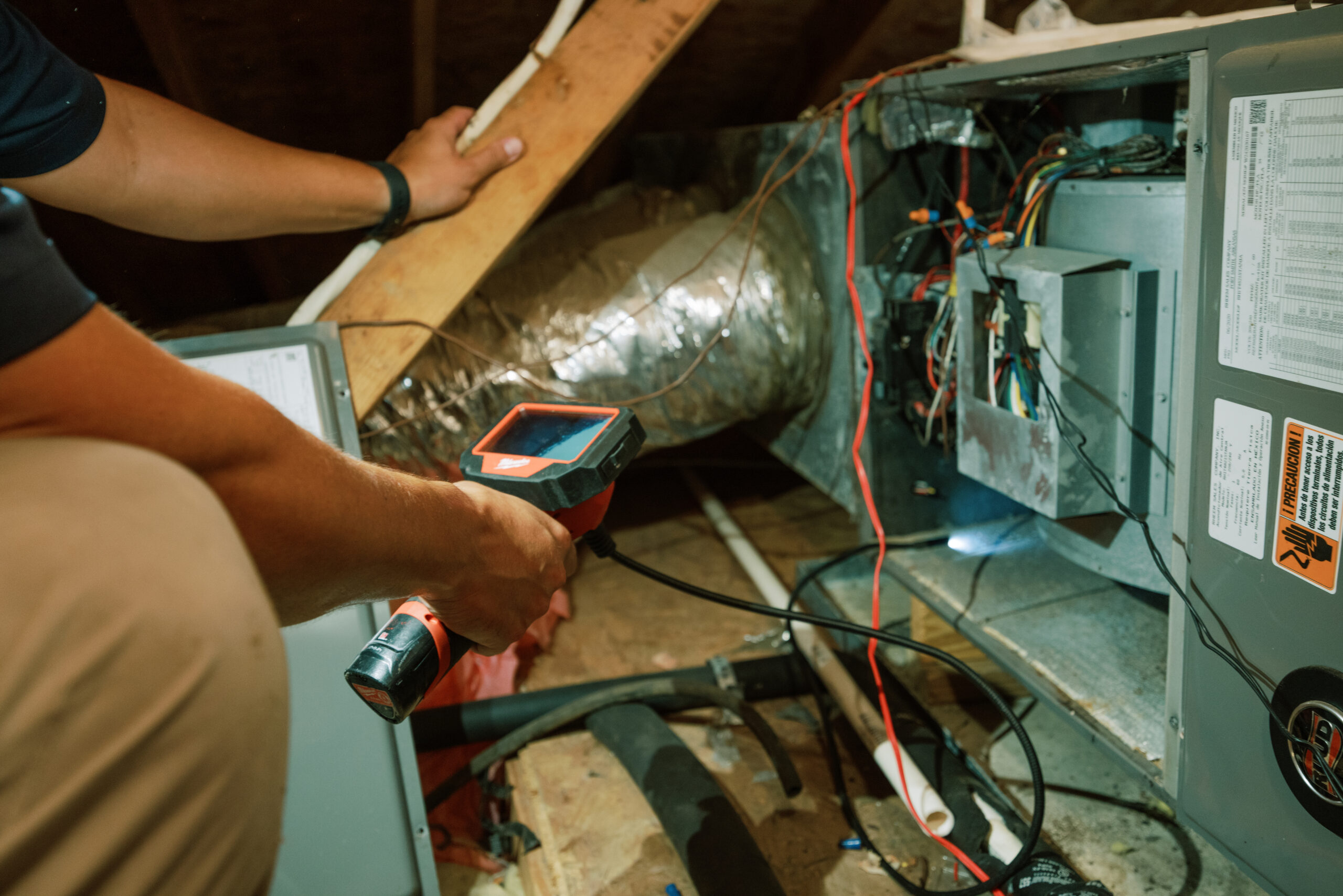
A furnace smell can involve airflow, electrical components, blower operation, combustion equipment, nearby materials, or another condition. Diagnosis should focus on finding the source rather than guessing from the odor alone.
Symptom History
Understand When and How the Smell Appears
Whether the odor occurs only at startup, during every heating cycle, after long runtime, or alongside other symptoms helps narrow the possible source.
Airflow
Check Conditions That May Be Affecting Heat and Air Movement
Filter condition, blower operation, accessible airflow conditions, and relevant equipment temperatures can help identify overheating or airflow-related concerns.
Electrical Components
Look for Signs of Electrical Overheating or Component Failure
Motors, wiring, controls, connections, and other relevant electrical components can be evaluated when the odor resembles hot plastic, wiring, or overheating equipment.
Furnace Operation
Evaluate the Heating Sequence and Relevant Safety Conditions
The furnace can be observed through normal operation while relevant ignition, combustion, venting, heating, airflow, and safety conditions are evaluated based on the equipment type.
Clear Explanation
Explain What Caused the Smell and What Needs Attention
Malek explains whether the odor appears consistent with normal seasonal operation, a maintenance concern, or a condition that requires repair before recommending what comes next.
Continue Learning
Continue Learning About Furnace Problems and Heating Care
No Heat? Common Causes and What to Do Next
Learn why a furnace or heat pump may stop heating, what homeowners can safely check, and which symptoms deserve professional attention.
→ Seasonal GuidePreparing Your Heating System for Winter
Learn what to check before colder weather, including filters, airflow, furnace startup, heat-pump preparation, and warning signs.
→ Investment GuideHeating Repair Investment Guide
Understand how diagnosis, failed components, equipment condition, accessibility, labor, and repair scope may influence heating repair cost.
→ ServiceHeating & Furnace Repair
Learn how Malek evaluates furnace problems, heating performance, airflow, controls, and system condition before explaining repair options.
→Malek Homeowner Learning Center
Looking for another heating or home-system question?
Explore decision guides, investment guides, homeowner articles, and FAQs designed to help you understand what is happening before you decide what to do next.
Frequently Asked Questions
Furnace Smell FAQs
These answers explain common furnace odors, when a seasonal smell may be normal, and which odors should be treated as a reason to stop using the equipment and seek professional help.
Why does my furnace smell when I first turn it on? +
Dust can collect on and around heating equipment while the furnace is inactive. When the system runs for the first time in months, that dust may warm and create a temporary dusty or slightly burnt odor. The smell should fade rather than continue through repeated heating cycles.
Is a burning smell from my furnace normal? +
A brief dusty smell during the first seasonal heating cycle can be normal. A strong or persistent burning odor, especially one that resembles hot wiring, plastic, or electrical overheating, is not something to assume is normal and should be evaluated.
What should I do if my furnace smells like gas? +
If you believe you smell natural gas or fuel gas, do not attempt to locate or repair the source yourself. Leave the affected area as appropriate and contact the gas utility or appropriate emergency professional.
Why does my furnace smell like electrical burning? +
An electrical or hot-plastic odor can be associated with overheated wiring, motors, controls, connections, or other electrical components. Stop operating the furnace when appropriate and have the system evaluated rather than repeatedly restarting it.
Why does my furnace smell musty? +
A musty odor may come from the filter, ductwork, nearby moisture, stored materials, or another part of the HVAC system or home. The source should be identified rather than assuming the furnace itself is causing the smell.
Can a dirty air filter cause a furnace smell? +
A heavily restricted filter can affect airflow and system operation. It may contribute to overheating conditions in some systems, but a strong burning or electrical odor should not be blamed on the filter without proper diagnosis.
Can you smell carbon monoxide from a furnace? +
No. Carbon monoxide is odorless. Furnace odors cannot confirm or rule out carbon monoxide, which is why properly installed and functioning carbon monoxide alarms are important around fuel-burning equipment.
Furnace Smell That Has Not Gone Away?
Find Out What Is Causing the Odor Before You Keep Running the System
Malek can evaluate furnace operation, airflow, electrical components, heating conditions, and relevant safety controls to help identify where an unusual furnace odor is coming from.