Educational Planning Range
What Does a Whole-Home Dehumidifier Typically Cost?
General Residential Planning Range
$1,500–$4,500+
The investment can vary based on dehumidifier capacity, HVAC integration, drainage requirements, duct configuration, installation location, controls, electrical needs, and whether dedicated ductwork or other modifications are required.
This range is provided for general learning and planning purposes only. It is not a Malek quote or guarantee. A relatively straightforward installation tied into an existing HVAC system may fall toward the lower end, while larger-capacity equipment, difficult access, dedicated ductwork, condensate management, electrical work, or more complex system integration can move the investment higher.
Capacity matters as well. A dehumidifier should be selected based on the moisture load and conditions inside the home rather than simply choosing the largest unit available. Oversizing the equipment does not automatically create a better solution.
Explore Whole-Home Dehumidifiers →Compare the Scope
Why Whole-Home Dehumidifier Prices Can Vary So Much
Two homes with similar humidity complaints can require very different solutions. One may have a straightforward installation near the existing air handler. Another may require new duct connections, a dedicated return, condensate pumping, electrical work, controls, or changes to the surrounding HVAC configuration.
The cost therefore depends on both the equipment and the work required to make it operate correctly with the home. The recommendation should also account for whether the humidity concern is truly a whole-home moisture problem or a symptom of another HVAC or building condition.
Pricing Variables
What Shapes the Whole-Home Dehumidifier Investment?
The investment usually reflects the capacity of the equipment, how it will be integrated with the HVAC system, drainage, controls, electrical requirements, access, and the amount of additional ductwork needed.
Equipment Capacity
Dehumidifiers are available in different moisture-removal capacities. Larger homes or heavier moisture loads may require higher-capacity equipment.
HVAC Integration
The installation may connect to the existing return and supply ductwork, use a dedicated return, or require another configuration depending on the system.
Ductwork Requirements
New duct connections, transitions, dedicated pathways, or other modifications can increase both material and labor requirements.
Installation Location
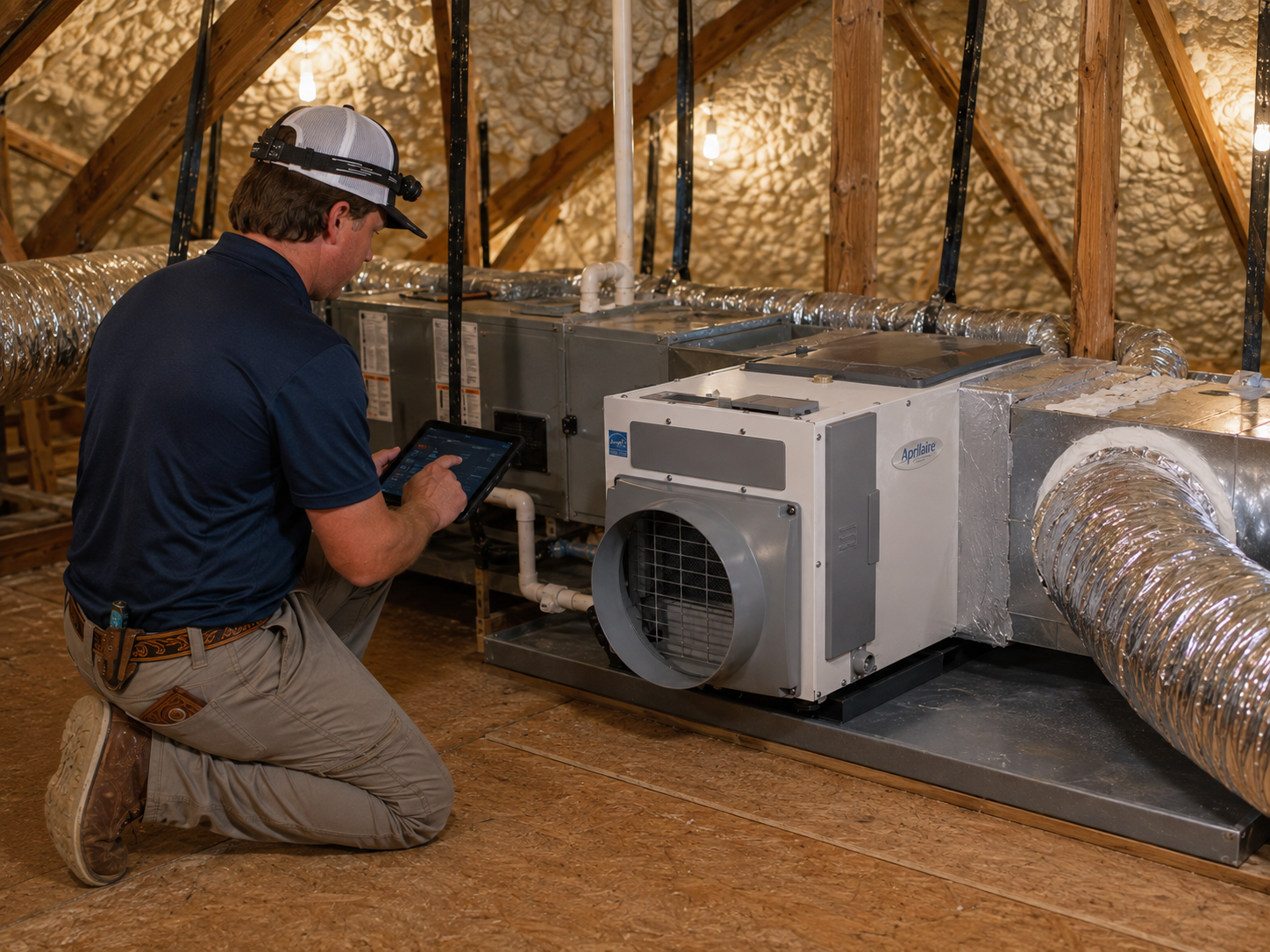
Equipment installed in an attic, mechanical closet, utility area, or other limited-access location may require different installation planning.
Drainage
Moisture removed from the air must be drained properly. Gravity drainage may be possible in some homes, while others may require a condensate pump or additional drain routing.
Electrical Requirements
Whole-home dehumidifiers require electrical power, and some installations may need additional wiring, circuitry, or controls.
Control Strategy
Humidistats, dedicated controls, thermostat integration, and other control options can affect how the equipment operates and how the installation is configured.
Number of HVAC Systems
Homes with multiple HVAC systems may require additional evaluation to determine whether one unit can address the intended area or whether more than one solution is needed.
Understanding the Scope
What May Be Included in a Whole-Home Dehumidifier Installation?
The exact installation depends on the selected equipment and existing HVAC configuration. The estimate should explain both the dehumidifier itself and what is required to integrate, drain, power, and control it.
Humidity Evaluation
- Discussion of indoor comfort concerns
- Review of measured or observed humidity conditions
- Review of existing HVAC operation
- Consideration of likely contributing conditions
Equipment Selection
- Selection of appropriate dehumidifier capacity
- Review of intended coverage area
- Evaluation of available installation space
- Review of maintenance requirements
Duct Integration
- Applicable return-air connection
- Applicable supply or discharge connection
- Required transitions or dedicated ducting
- Sealing of new accessible duct connections
Drainage
- Condensate drain connection
- Applicable drain routing
- Condensate pump when required
- Review of drainage operation
Electrical & Controls
- Applicable electrical connection
- Humidity controls or humidistat
- Applicable thermostat integration
- Verification of equipment operation
Homeowner Explanation
- Explanation of system operation
- Recommended humidity settings
- Filter and maintenance guidance
- Discussion of what the equipment does and does not address
Not every installation includes every item above. The estimate should identify the equipment, capacity, duct configuration, drainage, electrical requirements, controls, and any additional work that is included.
Explore Dehumidifier Installation →Know What Is Separate
What May Not Be Included in a Standard Dehumidifier Installation?
A whole-home dehumidifier removes moisture from indoor air. Conditions that are causing excess moisture or poor HVAC performance may require separate corrective work.
HVAC Corrections
Cooling-System Performance May Need Attention First
Improper airflow, equipment sizing, operating problems, thermostat settings, or other HVAC conditions can contribute to elevated humidity and may require separate service.
Ductwork
Leakage or Distribution Problems Are Separate Issues
Damaged ducts, air leakage, restrictive design, or return-air problems may need to be corrected independently of the dehumidifier.
Moisture Intrusion
Water Sources Should Be Corrected at the Source
Plumbing leaks, roof leaks, drainage problems, foundation moisture, or other water-entry conditions require correction rather than relying on a dehumidifier to manage the symptom.
Other IAQ Equipment
Dehumidification Does Not Replace Filtration or UV Treatment
Air purification, targeted UV treatment, and humidity control perform different jobs and may be recommended separately when another confirmed IAQ concern is present.
Compare More Than the Bottom Line
How to Compare Whole-Home Dehumidifier Estimates
Before comparing price, make sure each proposal is addressing the same humidity problem and includes a comparable installation scope. Equipment capacity and installation configuration can differ substantially between estimates.
What capacity is being recommended?
Ask how the selected dehumidifier was matched to the home, coverage area, and moisture conditions.
How will it connect to the HVAC system?
Confirm whether the system uses existing ductwork, a dedicated return, separate discharge ducting, or another configuration.
How will condensate be drained?
Determine whether the installation includes gravity drainage, a condensate pump, drain routing, and any related materials.
Are controls included?
Ask whether the proposal includes a humidistat, dedicated controller, thermostat integration, or another operating strategy.
What HVAC conditions were evaluated?
A recommendation should consider whether equipment performance, airflow, duct conditions, or another issue may be contributing to the humidity concern.
What is not included?
Confirm whether duct repairs, electrical upgrades, HVAC corrections, drainage changes, or moisture-source repairs would be separate.
A useful dehumidifier estimate should explain why the equipment is needed, what capacity is being proposed, how it will integrate with the HVAC system, and how the moisture it removes will be managed.
Matching the Scope to the Home
Straightforward Installation or More Complex Whole-Home Integration?
The dehumidifier itself may be similar from one project to another, while the installation requirements can be very different.
A More Straightforward Installation May Fit When:
- There is adequate space near the HVAC system
- Existing ductwork supports the proposed configuration
- A practical drain location is available
- Electrical access is straightforward
- Only limited duct modifications are required
A More Complex Installation May Be Needed When:
- Dedicated ductwork must be added
- Installation space is limited
- Drainage requires pumping or extended routing
- Electrical modifications are necessary
- The home has multiple HVAC systems or zones
The best estimate should show which of these installation conditions apply rather than presenting the equipment price alone.
Read Is a Whole-Home Dehumidifier Worth It? →Looking Beyond the Equipment
What Can Whole-Home Dehumidification Improve?
Dedicated dehumidification can provide meaningful value when excess indoor moisture is a confirmed problem and the HVAC system alone is not controlling it adequately.
Indoor Humidity Control
The system can remove moisture independently of the cooling cycle when indoor humidity remains above the desired level.
Comfort
Lower indoor humidity can make the home feel less damp or sticky when excess moisture is contributing to discomfort.
Whole-Home Coverage
HVAC-integrated equipment is designed to manage moisture across the intended conditioned area rather than only one room.
Humidity Control During Mild Weather
Dedicated dehumidification can operate when the home needs moisture removal but does not require as much cooling.
Better Understanding of Moisture Problems
An evaluation can help distinguish a true humidity-control need from HVAC, duct, ventilation, or water-intrusion issues.
Long-Term IAQ Planning
Understanding the role of humidity control makes it easier to separate moisture concerns from filtration, UV treatment, and other IAQ needs.
Measure Before You Add Equipment
Find out whether dedicated dehumidification actually makes sense for your home.
Malek can review indoor humidity, HVAC operation, airflow, duct conditions, installation requirements, and likely moisture sources before explaining whether a whole-home dehumidifier has a clear job to do.
What to Expect
What Happens During a Whole-Home Dehumidifier Evaluation and Installation?
Discuss the Humidity Concern
The technician reviews when the home feels humid, how widespread the concern is, and whether any previous moisture or HVAC issues have been identified.
Review Indoor Conditions and HVAC Operation
Humidity conditions, HVAC operation, airflow, accessible ductwork, and other relevant factors are reviewed before equipment is recommended.
Determine Whether Dedicated Dehumidification Is Appropriate
The goal is to confirm that a dehumidifier will address the identified problem rather than masking another correctable condition.
Select the Equipment and Installation Strategy
Capacity, duct integration, drainage, electrical needs, controls, and installation location are considered together.
Install and Review the System
The dehumidifier is connected, powered, drained, controlled, and reviewed according to the defined installation scope.
Explain Operation and Maintenance
The homeowner receives guidance on humidity settings, filter maintenance, normal operation, and any remaining HVAC or moisture concerns.
When Moisture Removal Is Not the Whole Answer
When Might Another Solution Make More Sense Than a Dehumidifier?
Whole-home dehumidification is valuable when dedicated moisture removal has a clear purpose. It should not automatically be the first answer to every humidity complaint.
HVAC Performance Issue
Correct the Cooling System First
If poor operation, airflow, controls, or another HVAC condition is contributing to excess humidity, correcting that issue may be the appropriate first step.
Moisture Intrusion
Fix the Water Source First
Plumbing leaks, roof leaks, drainage problems, or other water-entry issues should be corrected directly rather than relying on mechanical dehumidification.
Normal Humidity
Additional Equipment May Not Be Necessary
If indoor humidity is already being controlled appropriately, adding a dehumidifier may provide little practical benefit.
Multiple IAQ Concerns
A Broader IAQ Strategy May Be Better
If the home also has filtration, UV, duct, or other IAQ concerns, each issue should be evaluated separately rather than expecting one dehumidifier to address all of them.
The goal is not to add humidity-control equipment simply because Texas is humid. It is to determine whether excess indoor moisture is persistent, measurable, and significant enough that dedicated dehumidification has a clear purpose.
Read Is a Whole-Home Dehumidifier Worth It? →Control the Right Problem
A dehumidifier should solve a confirmed moisture problem—not simply add more equipment.
Malek evaluates indoor humidity, HVAC performance, airflow, duct conditions, likely moisture sources, and installation requirements before explaining whether whole-home dehumidification makes practical sense.
Whole-Home Dehumidifier Investment FAQs
Questions Homeowners Often Ask About Whole-Home Dehumidifier Cost
These answers explain why whole-home dehumidifier pricing varies, what installation may involve, and when dedicated moisture control makes sense.
How much does a whole-home dehumidifier typically cost?
A broad educational planning range for a professionally installed whole-home dehumidifier is approximately $1,500 to $4,500 or more. Equipment capacity, HVAC integration, ductwork, drainage, electrical requirements, controls, access, and installation complexity can all affect the final investment. This is general market information and is not a Malek quote or guarantee.
Why do whole-home dehumidifier prices vary?
Pricing can vary because homes require different equipment capacities and installation configurations. Dedicated ductwork, drainage, condensate pumps, electrical work, controls, difficult access, and multiple HVAC systems can all change the project scope.
Does every Texas home need a whole-home dehumidifier?
No. Texas has a humid climate, but that does not automatically mean every home needs dedicated dehumidification. Indoor humidity, cooling-system performance, airflow, duct conditions, ventilation, and possible moisture sources should be evaluated first.
Can my air conditioner control humidity without a dehumidifier?
Air conditioning removes some moisture as it cools the home. In many homes that may provide adequate humidity control. Dedicated dehumidification becomes more relevant when excess indoor humidity persists even though the HVAC system is operating appropriately.
Does a whole-home dehumidifier replace an air purifier?
No. A dehumidifier removes moisture from the air, while air purification primarily addresses particles moving through the HVAC system. The technologies perform different jobs.
Does a whole-home dehumidifier need a drain?
Yes. Moisture removed from indoor air becomes condensate that must be drained away. Some installations can use gravity drainage, while others may require a condensate pump or additional drain routing.
Can a dehumidifier fix a water leak or moisture intrusion?
No. A dehumidifier can remove moisture from indoor air, but plumbing leaks, roof leaks, drainage problems, foundation moisture, or other water-entry conditions should be corrected at the source.
How does Malek determine whether a dehumidifier makes sense?
Malek reviews indoor humidity, HVAC operation, airflow, accessible duct conditions, likely moisture sources, equipment compatibility, drainage, and installation requirements before explaining whether dedicated whole-home dehumidification may provide meaningful value.