Heat Pump Decision Guide
Auxiliary Heat vs. Emergency Heat: What’s the Difference?
By Malek Service Company · Serving Bryan–College Station & Northwest Houston
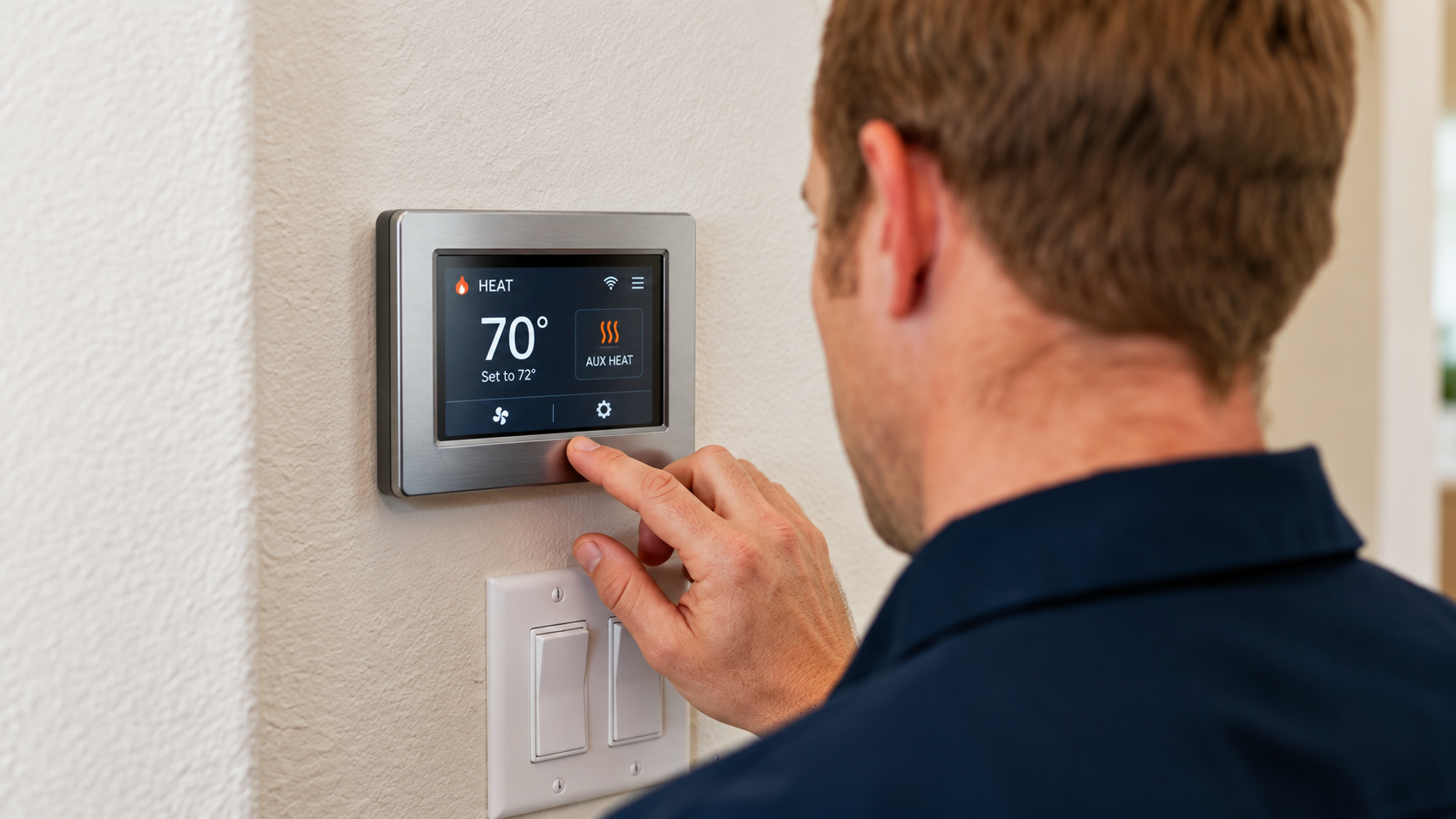
You look at the thermostat on a cold morning and see AUX. Or you notice an Emergency Heat setting and wonder whether you should switch it on. The names sound urgent, but they describe two different ways your heat-pump system can use backup heat.
Auxiliary heat is usually called automatically by the controls when additional heat is needed. Emergency Heat is typically a manually selected mode that takes the heat pump out of the heating sequence and uses the backup source. Your equipment and thermostat instructions determine the exact behavior.
For homeowners in Bryan–College Station and Northwest Houston, the useful question is not simply whether AUX appeared. It is whether the house is warming normally, what the weather is doing, and whether the system’s behavior has changed.
At Malek, we want to know whether the home is actually warming before treating an AUX message as a problem. A thermostat display is a clue; it does not replace checking the system that receives the command.
The Quick Answer
AUX Is Usually Automatic. Emergency Heat Is a Separate Operating Mode.
Auxiliary Heat
The system automatically calls for supplemental heat when its controls determine that the heat pump needs help.
Emergency Heat
The thermostat typically uses the backup source without normal heat-pump heating. It is not a routine setting for every cold day.
Same Source, Different Purpose
Electric heat strips may serve both functions. Some homes use a furnace as backup, with different control logic.
An AUX indicator alone does not identify a breakdown. There is no single outdoor temperature at which every heat pump must bring on backup heat.
How the Modes Work
Start With the Heating System You Actually Have
Heat Pump Heating
In normal heating mode, the outdoor unit and indoor equipment work together to move heat into the home. The outdoor unit is supposed to operate in winter; it is not just a summer appliance.
Automatic Supplemental Heat
Supplemental heat may be called during colder conditions, temperature recovery, or defrost, depending on the system. The thermostat’s settings and the equipment’s capacity matter.
Manual Emergency Heat
On many systems, choosing Emergency Heat disables compressor heating and relies on backup heat. Follow the specific equipment instructions and seek service when a heat-pump problem makes this mode necessary.
Dual-Fuel Systems
A system with a heat pump and gas furnace may switch between heat sources rather than run them together. Do not assume every AUX system contains electric strips or follows the same sequence.
What You May Notice
The Pattern Matters More Than One Thermostat Message
AUX Appears During a Cold Spell
Look at whether the home reaches its setting and whether the indicator changes as conditions improve.
AUX Appears After a Large Adjustment
A large temperature increase can call for backup heat on some controls. Repeatedly turning the thermostat up does not repair weak heating.
Backup Heat Runs in Mild Weather
An unexpected change, especially with poor comfort, warrants a controls and performance review.
The Outdoor Unit Seems Quiet
The fan may pause during defrost. One short observation does not prove the unit has failed.
The Electric Bill Increases
Electric resistance backup can raise consumption. The actual cost depends on runtime, capacity, and the electricity rate.
The House Keeps Getting Colder
Continuous loss of indoor temperature deserves diagnosis even if the thermostat displays AUX.
Warning Signs
Changes That Deserve Attention
The house cannot reach its usual thermostat setting
AUX use has increased sharply without an obvious weather change
The outdoor unit remains covered in heavy ice
The system repeatedly stops or trips a breaker
New grinding, buzzing, or burning odors appear
Emergency Heat is needed repeatedly to maintain comfort
Do not bypass controls or open electrical compartments to force either heat source on. For smoke, fire, a gas odor, or a carbon-monoxide alarm, leave the affected area and contact emergency services or your gas utility from a safe location.
Choosing the Next Step
When to Observe and When to Arrange Service
Often Expected
The Home Is Warming Normally
- ✓Brief AUX use during colder conditions
- ✓Temporary changes during a normal defrost cycle
- ✓Indoor temperature moves toward the setting
- ✓No persistent ice, faults, or unusual odors
Needs a Closer Look
Backup Heat Is Covering a Continuing Problem
- ✓Comfort is declining
- ✓Operation changed in similar weather
- ✓Emergency Heat is being used as a permanent workaround
- ✓The heat pump repeatedly shuts down
What You Can Check
Useful Details to Gather Before Calling
Record the Thermostat Display
Note the selected mode, AUX indicator, room temperature, and target temperature. A photo can help explain what you saw without changing installer settings.
Watch the Temperature Trend
A home that is slowly warming tells a different story from one losing temperature. Give the technician that trend, not just a description of cool vent air.
Compare With Recent Conditions
Mention a recent outage, thermostat replacement, large setpoint change, or unusually cold weather. Those details help narrow the sequence to evaluate.
Check Simple Airflow Conditions
Inspect an accessible filter and keep supply and return vents open. Stop at homeowner checks; component and refrigerant testing require a technician.
A Practical Next Step
Understand the Mode Before Changing It
Use normal Heat mode for everyday operation unless your system instructions direct otherwise. AUX can be normal; frequent unexplained backup heat or a home that keeps cooling calls for diagnosis. Emergency Heat is a temporary operating option on equipped systems, not a way to make a healthy heat pump work better.
We Don’t Just Fix It. We Explain It.
Professional Heat Pump Evaluation
Find Out Why the System Is Calling for Backup Heat
A useful evaluation checks how the thermostat, heat pump, airflow, and backup source work together. Malek can explain whether the observed sequence is expected or whether a fault is reducing heating performance.
Controls
Confirm the Mode and Configuration
Review thermostat compatibility, staging, and the commands sent to each heat source.
Airflow
Check the Indoor Air Path
Evaluate filter condition, blower operation, and airflow that can affect delivery of heat.
Outdoor Equipment
Review Heat-Pump Performance
Check outdoor operating condition and defrost behavior rather than assuming the AUX display identifies the cause.
Backup Source
Verify the Supplemental Heating Sequence
Evaluate the appropriate electrical or fuel-based backup components and their controls.
Recommendation
Explain What Needs Correction
Separate normal cold-weather operation from a control, maintenance, or repair concern.
Continue Learning
Related Guidance for Your Home
Why Is My Heat Pump Blowing Cold Air?
Understand indoor cold-air symptoms and temporary changes during defrost.
→Problem GuideWhy Is My Heat Pump Covered in Ice?
Compare light frost with persistent ice on outdoor equipment.
→Homeowner ArticleWhy Is My Heating Bill Suddenly Higher?
Separate heating use, rates, and equipment concerns.
→ServiceHeat Pump Services
Explore professional performance evaluation and repair.
→Malek Homeowner Learning Center
Have another home-system question?
Explore homeowner articles, decision guides, investment guides, and FAQs to understand your options before deciding what comes next.
Sources & Further Reading
For manufacturer explanations and safety guidance, see the resources below. Your equipment’s instructions determine the requirements for its use, installation, and service.
Frequently Asked Questions
Heat Pump Questions, Answered
Clear answers to help you understand the concern, recognize warning signs, and choose a practical next step.
Is auxiliary heat the same as Emergency Heat?+
No. Auxiliary heat is normally called automatically when supplemental heating is needed. Emergency Heat is typically a selected mode that uses backup heat without normal heat-pump heating. Exact operation depends on the system.
Does AUX mean my heat pump is broken?+
Not necessarily. AUX can appear during expected cold-weather operation, temperature recovery, or defrost. Poor heating or a sudden unexplained change makes an evaluation more useful.
Should I switch to Emergency Heat when it gets cold?+
Not simply because the temperature drops. Follow your equipment instructions. If the heat pump is malfunctioning, ask a qualified technician whether temporary Emergency Heat operation is appropriate.
Does auxiliary heat always use electric heat strips?+
No. Many systems use electric resistance heat, but dual-fuel systems may use a furnace. The equipment and controls determine how backup heat operates.
Why did AUX come on after I raised the thermostat?+
Some thermostats call for supplemental heat during a large temperature recovery. That behavior depends on staging and settings; it does not automatically indicate a fault.
Does Emergency Heat cost more?+
Electric resistance backup often uses more electricity than normal heat-pump operation. Cost depends on the backup source, runtime, equipment, and utility rates.
At what temperature should AUX turn on?+
There is no universal temperature for every home. Heat-pump capacity, household heating demand, thermostat setup, and equipment design affect when supplemental heat is called.
When should I schedule service for frequent AUX use?+
Schedule an evaluation when use changes unexpectedly, the home cannot maintain temperature, ice persists, the system faults, or Emergency Heat becomes a continuing workaround.
Get Clear Answers With Malek
Get Clear Answers About Your Heat-Pump Operation
Malek helps homeowners in Bryan–College Station and Northwest Houston understand changes in heating operation and choose the next step based on the actual system.