Outdoor Heat Pump Problem Guide
Why Is My Heat Pump Covered in Ice?
By Malek Service Company · Serving Bryan–College Station & Northwest Houston
A little white frost on the outdoor unit can look alarming when the heater is running. A solid shell of ice is a different concern. Before assuming either one means a failed heat pump, look at whether the buildup clears and whether the home is staying warm.
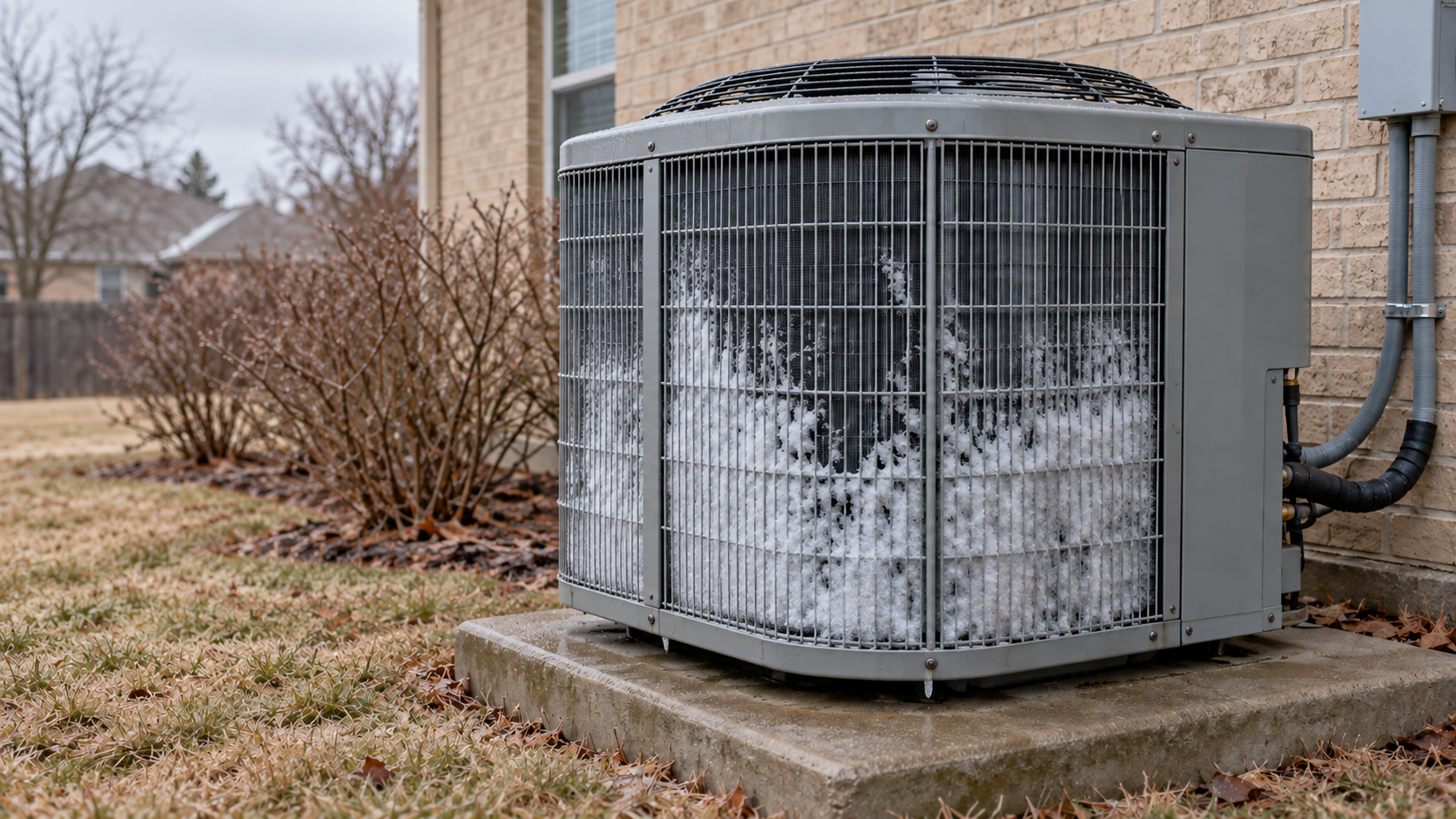
An air-source heat pump can develop outdoor-coil frost during heating and normally uses a defrost sequence to remove it. Persistent heavy ice can involve a defrost fault, restricted outdoor airflow, a fan or refrigerant problem, or water freezing onto the unit.
This guide focuses on the outdoor ice you can see. If the main concern is cold air at indoor vents, use our separate heat-pump cold-air guide. The two symptoms can occur together, but they are not the same question.
At Malek, we look at the ice pattern and the heating performance together. A photo helps, but whether the buildup clears and whether the fan can operate are important parts of the explanation.
The Quick Answer
Light Frost Can Be Normal. Ice That Remains Needs Attention.
Observe Whether It Clears
A temporary frost layer that clears during normal operation differs from ice that keeps building.
Look at Heating Performance
Room temperature, unusual sounds, and whether the unit can operate matter alongside the appearance of the coil.
Leave Ice Removal to the Right Process
Do not chip, scrape, heat, or force-defrost the equipment. A frozen unit needs the cause evaluated.
Do not diagnose the system by a photograph alone. Weather, where ice forms, whether it clears, and the equipment’s operating sequence all provide important context.
Normal Frost vs. Abnormal Ice
What the Outdoor Buildup Can Tell You
A Light Frost Layer Appears and Clears
Temporary coil frost can occur while the system heats. Defrost is part of the heating process, not proof that the unit has switched into a failure mode.
Vapor Appears During Defrost
A brief plume of water vapor and temporary changes in sound or fan operation may accompany defrost. Smoke, a burning odor, or electrical damage should not be treated as ordinary vapor.
Thick Ice Remains Around the Coil
A solid coating that persists or expands can interfere with airflow and heating. Continued heavy buildup warrants service even if some warm air still reaches the home.
Ice Collects Where Water Drips
A concentrated icy area beneath a gutter or roof edge may involve external runoff. Defrost cannot be assumed to solve an ongoing source of water freezing onto the equipment.
Possible Causes
Outdoor Ice Can Come From More Than One Problem
Defrost Controls or Sensors
A problem in the defrost sequence can keep frost from clearing as intended.
Outdoor Airflow Restrictions
Vegetation, debris, snow, or other obstructions can interfere with the airflow needed for heating.
Fan Problems
An outdoor fan or its controls may not be operating correctly. A fan pause during defrost is not the same as a continuing fan fault.
Refrigerant or Heat-Transfer Problems
Refrigeration-system conditions can reduce normal heating and defrost performance. Testing requires a qualified technician.
Water From Above
A gutter leak or runoff may create local ice even when other parts of the system are operating.
Drainage and Refreezing
Water leaving the coil can refreeze around the equipment. Its location and effect on operation need evaluation.
Warning Signs
Changes That Deserve Attention
Heavy ice does not clear during normal operation
Ice approaches or obstructs the outdoor fan
Grinding, scraping, or striking sounds appear
Indoor temperature falls while the system calls for heat
Breakers trip or shutdowns recur
Visible damage or burning odors accompany the ice
If heavy ice persists, the fan is obstructed, or abnormal sounds suggest contact with ice, turn the system off at the thermostat and arrange service. Do not chip ice from the coil, pour hot water on electrical equipment, use a torch, or bypass defrost controls. Ask about an appropriate temporary heating plan for your system.
What to Do Next
Keep Routine Observation Separate From Repair
Observe From a Safe Distance
When Frost Appears Temporary
- ✓The buildup clears
- ✓The house reaches its setting
- ✓No scraping, faults, or damage occur
- ✓The unit has clear surrounding space
Arrange Service
When Ice Persists or Affects Operation
- ✓Ice remains thick or keeps growing
- ✓The fan is blocked or striking ice
- ✓The home keeps losing heat
- ✓The system repeatedly shuts down
What You Can Check
Gather Details Without Touching the Coil
Take a Photo of the Pattern
Photograph the unit from a safe distance, including the side where ice is heaviest. Note whether buildup changed over time.
Look for an External Water Source
Observe roof edges, gutters, or nearby drainage. Do not climb an icy roof or enter unsafe conditions to investigate.
Check Space Around the Unit
Notice vegetation or loose debris without reaching into the fan area. Keep clearances consistent with the equipment instructions and do not cover the unit.
Watch Indoor Temperature
Share whether the home maintains its setting, loses temperature, or depends increasingly on backup heat. Those clues help connect outdoor conditions with heating performance.
A Practical Next Step
Persistent Ice Is a Reason to Investigate, Not a Reason to Guess
Light frost can be part of normal heating operation. Ice that remains, interferes with equipment, or accompanies poor heat deserves diagnosis. The correction should address the source of the ice, whether that is operating sequence, airflow, component condition, or water reaching the unit.
We Don’t Just Fix It. We Explain It.
Professional Heat Pump Evaluation
Identify Why the Outdoor Unit Is Not Clearing Ice
Malek can review the ice pattern alongside outdoor operation, defrost, indoor comfort, and system condition. That helps distinguish a repair concern from an external water or clearance issue.
Pattern
Review Where and When Ice Appears
Compare photos, weather conditions, and whether the buildup clears.
Outdoor Airflow
Evaluate Coil and Fan Conditions
Review obstructions, fan performance, and equipment condition.
Defrost
Check the Relevant Sequence and Controls
Evaluate sensors and controls against the specific equipment requirements.
System Performance
Review Heat Transfer and Heating Output
Use appropriate diagnostic checks to connect the outdoor symptom with overall operation.
Correction
Explain the Cause and Safe Next Step
Describe what requires repair or an environmental correction before recommending work.
Continue Learning
Related Guidance for Your Home
Why Is My Heat Pump Blowing Cold Air?
Understand indoor vent-air symptoms and heating performance.
→Decision GuideAuxiliary Heat vs. Emergency Heat
Learn what the backup heating modes mean.
→Homeowner ArticleShould I Cover My AC During Winter?
Understand why heat pumps need clear outdoor airflow.
→ServiceHeat Pump Services
Explore professional diagnosis and repair.
→Malek Homeowner Learning Center
Have another home-system question?
Explore homeowner articles, decision guides, investment guides, and FAQs to understand your options before deciding what comes next.
Sources & Further Reading
For manufacturer explanations and safety guidance, see the resources below. Your equipment’s instructions determine the requirements for its use, installation, and service.
Frequently Asked Questions
Heat Pump Questions, Answered
Clear answers to help you understand the concern, recognize warning signs, and choose a practical next step.
Is frost on a heat pump normal?+
A light frost layer can form during heating and should clear through the normal defrost process. Persistent heavy ice or ice affecting operation is different and needs evaluation.
Why is my heat pump covered in thick ice?+
Possible causes include defrost problems, outdoor airflow restrictions, a fan fault, refrigeration-system conditions, or water freezing onto the unit. The pattern and operation need diagnosis.
Should I turn off an iced-up heat pump?+
Turn it off at the thermostat and arrange service if heavy ice persists, the fan is obstructed, or abnormal noises or operating problems occur. Ask about a safe temporary heating option.
Can I chip ice off the outdoor coil?+
No. Chipping or scraping can damage the coil and other components. Do not use hot water, a torch, or forced control changes to clear the ice.
Why does my heat pump look like it is steaming?+
Water vapor can appear briefly during defrost. A burning odor, smoke, or visible electrical damage is not normal defrost behavior and requires safety action.
Can a gutter leak freeze my heat pump?+
Water dripping onto the outdoor equipment can freeze and create concentrated buildup. The runoff source may need correction as well as an evaluation of the unit.
Should I cover my heat pump in winter?+
No. A heat pump needs outdoor airflow while heating. Keep it unobstructed and follow manufacturer clearance instructions rather than wrapping or covering it.
Is outdoor winter frost the same as an indoor frozen cooling coil?+
No. They occur in different operating conditions and locations. Outdoor heating frost can be expected, while persistent heavy ice or indoor-coil icing requires separate evaluation.
Get Clear Answers With Malek
Find Out Why Ice Is Staying on Your Heat Pump
Malek can evaluate outdoor icing and heating performance for homeowners in Bryan–College Station and Northwest Houston, then explain the appropriate repair or correction.