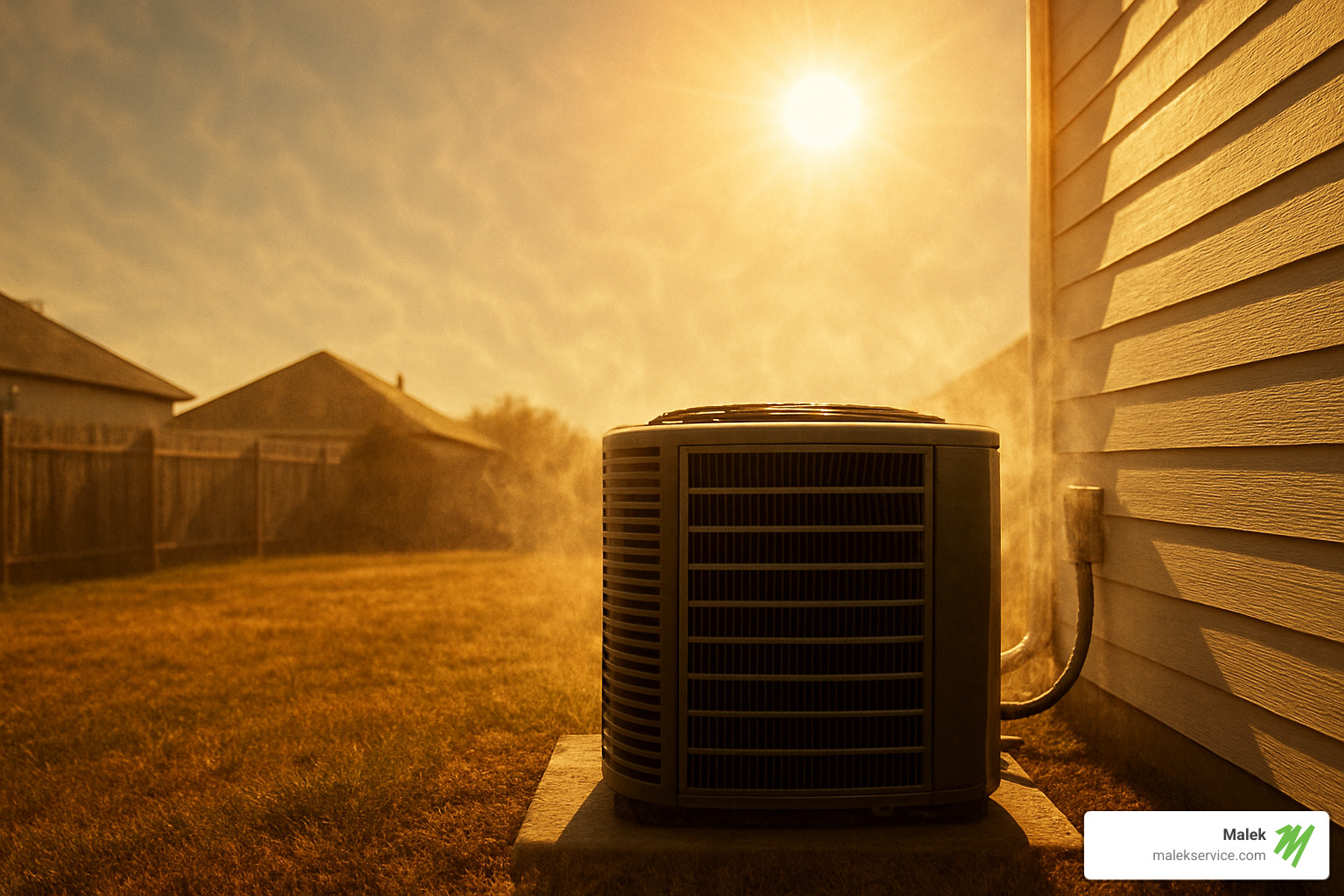
If your AC cannot keep up during extreme Texas heat, the cause may be normal peak-weather strain, a home that is gaining heat too quickly, or a mechanical problem reducing system capacity.
Start with the basics: check the filter, keep the outdoor unit clear, close blinds on sun-facing windows, and avoid adding unnecessary indoor heat. If airflow is weak, the air is not cool, the system is freezing, or the home keeps falling farther behind, schedule professional service.
Normal Limit or Service Problem?
How to Tell Whether Your AC Is Struggling With the Weather—or With a Fault
The System Runs Longer but Still Produces Cool Air
- The home is only a few degrees above the thermostat setting
- Airflow from the vents feels normal
- The supply air feels noticeably cooler than the room
- The temperature stabilizes after sunset
- No ice, burning odor, breaker trips, or unusual sounds are present
The System Is Losing Ground or Showing Warning Signs
- The indoor temperature continues rising for hours
- Airflow is weak or some rooms receive little air
- The air from the vents is warm or only slightly cool
- Ice appears on the refrigerant line or indoor coil
- The system cycles abnormally, trips a breaker, or makes new sounds
Common Causes
Why an AC May Run Constantly but Still Not Cool the House
Dirty or Restricted Air Filter
A clogged filter reduces airflow across the indoor coil. That can lower cooling performance, increase runtime, and contribute to coil freezing.
Dirty Indoor or Outdoor Coil
Dirt acts as an insulating layer and interferes with heat transfer. The system may run longer while removing less heat from the home.
Low Refrigerant From a Leak
Refrigerant does not get used up during normal operation. Low charge generally means a leak or another refrigerant-circuit problem that requires professional diagnosis.
Duct Leakage or Airflow Restriction
Leaky, undersized, disconnected, or poorly balanced ducts can lose conditioned air or prevent enough airflow from reaching the rooms that need it.
High Heat Gain Through the Home
Attic heat, insufficient insulation, air leakage, large sun-facing windows, and hot ductwork can add heat faster than the system removes it.
Improper System Sizing or Design
An undersized system may not meet the home’s actual cooling load. An oversized system can short-cycle, control humidity poorly, and still leave comfort problems.
Failing Mechanical or Electrical Components
Weak capacitors, blower problems, compressor issues, control faults, and other component failures can reduce capacity or disrupt normal operation.
Aging Equipment
Older systems may still run but deliver less reliable cooling because of accumulated wear, declining component performance, and repeated repairs.
Safe Homeowner Checks
What You Can Do Before Scheduling AC Service
Check the Thermostat
Confirm the mode is set to COOL, the fan is on AUTO, and the set temperature is below the current indoor temperature.
Inspect the Air Filter
Replace a visibly dirty filter with the correct size and type. Do not operate the system without a filter.
Check the Vents
Make sure supply registers and return grilles are open and not blocked by furniture, rugs, boxes, or curtains.
Look Around the Outdoor Unit
Remove loose leaves and keep vegetation from crowding the cabinet. Do not open the unit or spray electrical components.
Reduce Indoor Heat Gain
Close blinds on sun-facing windows, delay heat-producing chores, and use ceiling fans in occupied rooms.
Notice the Pattern
Record when the problem begins, which rooms are warm, whether airflow is weak, and whether conditions improve after sunset.
What Not to Do
Do not keep lowering the thermostat. A lower setting does not make the equipment cool faster.
Do not repeatedly reset a tripping breaker. Leave the system off and schedule service.
Do not add refrigerant without finding the cause. Low refrigerant indicates a problem that needs diagnosis.
Do not open electrical panels or the outdoor cabinet. HVAC equipment contains high voltage and stored electrical energy.
When to Call for Service
Schedule AC Repair When Cooling Problems Go Beyond Normal Heat-Wave Strain
The Air Is Not Cold
If the system runs but the air from the vents is warm or barely cool, capacity may be reduced by a mechanical, refrigerant, or airflow problem.
Airflow Is Weak
Low airflow can result from a restricted filter, blower problem, frozen coil, duct issue, or other obstruction.
Ice Is Forming
Turn the cooling system off. Ice can be associated with airflow problems, refrigerant issues, or coil conditions that require diagnosis.
The Breaker Trips
Do not keep resetting it. Repeated trips can indicate a serious electrical or mechanical fault.
The System Never Recovers
If the indoor temperature remains high overnight or during milder weather, extreme heat alone is less likely to be the full explanation.
Only Certain Rooms Stay Hot
Persistent room-to-room differences may point to duct leakage, poor balancing, insulation, solar gain, or system-design issues.
Get a Clear Answer
Find Out Whether the Problem Is the AC, the Ductwork, or the Home
Malek can measure system performance, airflow, temperatures, electrical operation, refrigerant conditions, and duct-related concerns—then explain what is limiting comfort and what should happen next.
Professional Diagnosis
What an HVAC Technician Should Evaluate
Return-air and supply-air temperatures help show whether the equipment is removing heat effectively.
Measurements can identify filter restriction, blower issues, duct limitations, and airflow imbalances.
Pressures, temperatures, superheat, subcooling, and signs of leakage help evaluate system capacity.
Coil cleanliness, condition, and airflow are checked because both sides must transfer heat properly.
Capacitors, motors, contactors, controls, compressor operation, and electrical connections are tested.
Duct leakage, insulation, attic heat, solar exposure, and room-by-room patterns may reveal a whole-home comfort problem.
Repair, Improve, or Replace?
The Right Solution Depends on What Is Actually Limiting Cooling
Repair May Be Enough When
- A failed component or maintenance issue is reducing capacity
- The refrigerant or airflow problem is repairable
- The system has otherwise been dependable
- Normal performance can be restored without major additional work
Home or Duct Improvements May Matter More When
- Specific rooms stay hot while the equipment tests normally
- Duct leakage or poor balancing is limiting delivery
- Attic heat, insulation, or air leakage is driving high heat gain
- The equipment is properly sized but the home load has changed
Replacement Deserves Comparison When
- The system is aging and major repairs are accumulating
- The compressor or another major component is failing
- The equipment is improperly sized for the home
- Comfort, humidity, reliability, and efficiency problems are ongoing
Ways to Help During Extreme Heat
How to Reduce Cooling Load Without Overworking the System
Block Direct Sun
Close blinds or curtains on sun-facing windows during the hottest part of the day.
Use Ceiling Fans Strategically
Fans can improve how occupants feel, but turn them off in empty rooms because they cool people, not the air.
Limit Indoor Heat Sources
Delay oven use, clothes drying, and other heat-producing activities when outdoor conditions are most severe.
Keep Up With Maintenance
Routine service helps protect airflow, heat transfer, electrical performance, and cooling reliability before peak summer conditions.
Frequently Asked Questions
AC Performance During Extreme Heat
Is it normal for my AC to run constantly during a heat wave?
It can be normal for the system to run for long periods during extreme heat, especially in the afternoon. It should still produce cool air and maintain a reasonably stable indoor temperature without ice, odors, breaker trips, or unusual sounds.
Why does my AC cool better at night?
Outdoor temperatures and solar heat gain fall after sunset, reducing the home’s cooling load. A system that recovers at night may be reaching its limit during peak heat, although mechanical or home-performance problems may still contribute.
Should I lower the thermostat to make the AC cool faster?
No. Lowering the set temperature does not increase the equipment’s cooling rate. It only asks the system to run longer.
Does a dirty filter really affect cooling that much?
Yes. A heavily restricted filter can reduce airflow, lower cooling capacity, increase runtime, and contribute to coil freezing or equipment strain.
How can I tell whether low refrigerant is the problem?
Possible signs include long runtimes, reduced cooling, ice, or hissing sounds, but these symptoms are not exclusive to refrigerant issues. A licensed technician must test the system to confirm the cause.
Would a larger AC solve the problem?
Not necessarily. Oversized equipment can short-cycle, control humidity poorly, and create uneven comfort. Correct sizing should be based on a load calculation and the home’s actual conditions.
Why are some rooms hotter than others?
Room-to-room differences can result from duct leakage, poor airflow balance, insulation, windows, solar exposure, closed doors, or equipment-design limitations.
When should I turn the AC off?
Turn it off if the system is freezing, a breaker repeatedly trips, you smell burning, the outdoor fan stops while the compressor runs, or the equipment makes severe new noises.