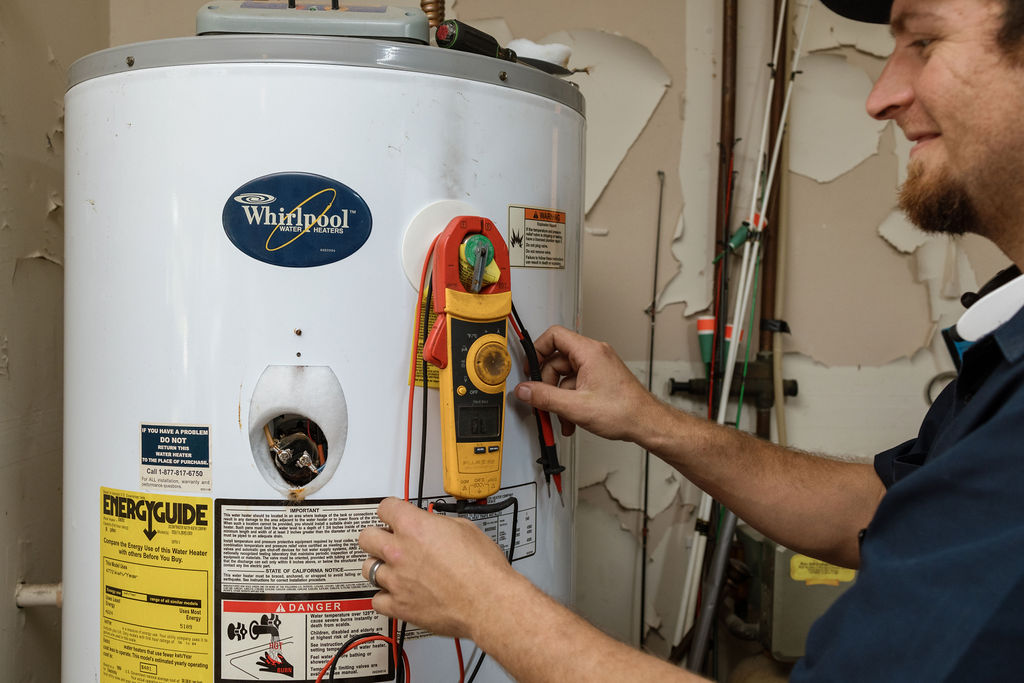
Common water heater problems include no hot water, slow recovery, inconsistent temperatures, unusual sounds, discolored or foul-smelling water, and visible leaks around the tank.
Some problems may come from a failed heating element, thermostat, igniter, gas-control component, sediment buildup, or a worn valve. Others—especially a leaking tank—may mean replacement is the safer and more practical option.
Start With the Symptom
What Your Water Heater Is Doing Can Help Narrow the Cause
No Hot Water
Possible causes include a tripped breaker, failed heating element, thermostat problem, pilot or ignition issue, gas-supply problem, or control failure.
Hot Water Runs Out Too Quickly
The tank may be undersized, sediment may be reducing usable capacity, a heating element may have failed, or household demand may have changed.
Water Is Too Hot or Inconsistent
Thermostat settings, control problems, failed components, or mixing issues can cause unstable temperatures.
Water Around the Unit
The source may be a valve, connection, drain, expansion issue, condensation, or a failing tank.
Popping, Rumbling, or Banging
Sediment buildup, scale, expansion, or burner-related issues may be causing abnormal sounds.
Rusty, Cloudy, or Smelly Water
Corrosion, sediment, bacterial activity, anode-rod condition, or the water supply itself may be involved.
No Hot Water
Why the Water Heater May Stop Heating
Electric Water Heater
Electric units may lose hot water because of a tripped breaker, failed heating element, defective thermostat, loose connection, or high-limit safety trip.
Gas Water Heater
Gas units may stop heating because of a failed igniter, pilot or flame-sensing problem, gas-control issue, venting problem, or interrupted gas supply.
Tankless Water Heater
Tankless systems may shut down because of ignition faults, scale buildup, low flow, venting or condensate problems, sensor errors, or gas- or electrical-supply issues.
Power or Utility Interruption
A utility outage, closed gas valve, electrical issue, or service interruption can sometimes mimic equipment failure.
Temperature and Recovery Problems
Why Hot Water May Be Lukewarm, Inconsistent, or Slow to Recover
An electric tank may still produce some hot water when one element fails, but recovery and usable capacity can drop significantly.
A failed or misconfigured control can cause water that is too cool, too hot, or inconsistent.
Minerals can collect in the tank, reduce usable volume, insulate heating surfaces, and contribute to noise or slow recovery.
A deteriorated dip tube can allow incoming cold water to mix near the top of the tank, shortening the available hot-water supply.
Back-to-back showers, laundry, dishwashing, or added occupants may exceed the system’s recovery rate or capacity.
A tank or tankless unit that is not matched to household demand may struggle even when it is operating normally.
Leaks and Moisture
Water Around the Heater Is Never Something to Ignore
The source of the moisture matters. Some leaks may be repairable, while others indicate that the tank has failed.
Connection, Valve, or Drain Leak
- Loose supply or hot-water connection
- Leaking drain valve
- Temperature-and-pressure relief valve discharge
- Condensation around a high-efficiency unit
- Expansion-related pressure problem
Water Coming From the Tank Body
- Corrosion near the bottom or seams
- Water appearing beneath the tank with no repairable source
- Rust streaks or visible tank deterioration
- Recurring leakage after fittings and valves are checked
What to Do if the Water Heater Is Leaking
Turn off the energy source. Use the breaker for an electric unit. For a gas unit, use the appliance shutoff only when it is safe and you know how.
Shut off the cold-water supply. The valve is typically located above the water heater.
Protect the surrounding area. Move belongings and avoid standing water near electrical equipment.
Schedule service promptly. A leaking tank can worsen quickly and cause significant property damage.
Sounds and Water Quality
What Unusual Noises, Odors, and Discoloration May Mean
Popping or Rumbling
Sediment or scale can trap water beneath mineral deposits, creating noise as the water heats.
Hissing or Sizzling
Moisture contacting hot components, scale around an element, or condensation may cause a hissing sound.
Rusty or Brown Hot Water
Corrosion inside the tank or deterioration of plumbing components may be involved, especially if only the hot water is affected.
Rotten-Egg Odor
Bacterial activity and the anode rod can sometimes contribute to odor in stored hot water. A gas odor is different and requires immediate action.
Cloudy Water
Air, mineral content, sediment, or scale may cause temporary cloudiness. Persistent changes should be evaluated.
Water Hammer or Pipe Noise
Pressure changes, thermal expansion, loose piping, or fast-closing valves can create noise around the water-heating system.
Get a Clear Diagnosis
Find Out Whether the Water Heater Needs Repair or Replacement
Malek can inspect the tank, controls, heating components, valves, venting, electrical or gas connections, and visible plumbing conditions—then explain what failed and which solution makes the most sense.
Repair or Replace?
The Best Choice Depends on the Failure, the Tank, and the Installation
Repair May Make Sense When
- The tank itself is not leaking
- The problem is limited to a replaceable component
- The unit has otherwise been dependable
- The repair restores safe and reliable operation
- The installation still meets current needs
Replacement Deserves Comparison When
- The tank is leaking or heavily corroded
- Major repairs are becoming frequent
- Capacity no longer meets household demand
- The system has ongoing efficiency or reliability problems
- Required repairs involve multiple aging components
When to Schedule Service
Call a Plumber When the Problem Affects Safety, Reliability, or the Tank Itself
The Tank Is Leaking
Water from the tank body often indicates internal corrosion and should be addressed promptly.
You Smell Gas
Leave the area and contact the gas utility or emergency services when appropriate. Do not operate switches or appliances nearby.
The Breaker Keeps Tripping
Do not repeatedly reset it. Electrical faults require professional diagnosis.
The Water Is Scalding or Unpredictable
Excessively hot or unstable water temperatures can create a burn risk and may indicate a control problem.
Rusty Water Comes Only From the Hot Side
This pattern may point to corrosion inside the water heater or hot-water piping.
The Unit Makes New or Severe Noises
Loud banging, rumbling, sizzling, or repeated ignition sounds should be inspected before the condition worsens.
What a Professional Checks
A Water Heater Inspection Should Identify the Source Before Recommending the Fix
Corrosion, moisture, valve condition, connections, drain, expansion, and relief-valve concerns are evaluated.
Elements, thermostats, ignition, gas control, sensors, and safety devices are tested as applicable.
Power, voltage, breaker condition, gas supply, combustion, and shutoff components are checked where relevant.
Gas systems require proper venting, draft, combustion air, and safe exhaust operation.
Water temperature, recovery performance, household demand, and system capacity are compared.
The unit’s condition, access, code-related needs, venting, drainage, fuel source, and replacement complexity are considered.
Frequently Asked Questions
Common Water Heater Questions
Why do I suddenly have no hot water?
Possible causes include a tripped breaker, failed heating element, thermostat problem, ignition or pilot issue, gas-control failure, loss of utility service, or a system fault.
Why does my hot water run out faster than it used to?
A failed heating element, sediment buildup, damaged dip tube, increased household demand, or an undersized system can reduce available hot water.
Why is my water heater making popping noises?
Popping or rumbling often points to sediment or scale buildup in a tank-style water heater, although other causes are possible.
Is a leaking water heater always a replacement?
No. A leak from a fitting, drain valve, or relief valve may be repairable. A leak from the tank body itself usually means replacement is necessary.
Why is only my hot water rusty?
Rusty water limited to the hot side may indicate corrosion inside the water heater, a deteriorated anode rod, or corrosion in the hot-water piping.
Can I flush the water heater myself?
Some homeowners perform routine flushing, but older tanks, damaged valves, gas appliances, and unfamiliar systems can create risks. Professional maintenance is safer when the condition of the unit is uncertain.
How do I know whether to repair or replace the water heater?
Consider the source of the failure, whether the tank is leaking, the unit’s overall condition, repair history, household demand, and the cost and scope of the proposed repair.
When is a water heater problem an emergency?
Active tank leaks, gas odors, standing water near electrical equipment, repeated breaker trips, severe overheating, and signs of unsafe venting or combustion require prompt attention.