Whole-Home Generator Homeowner Guide
How Does a Whole-Home Generator Work?
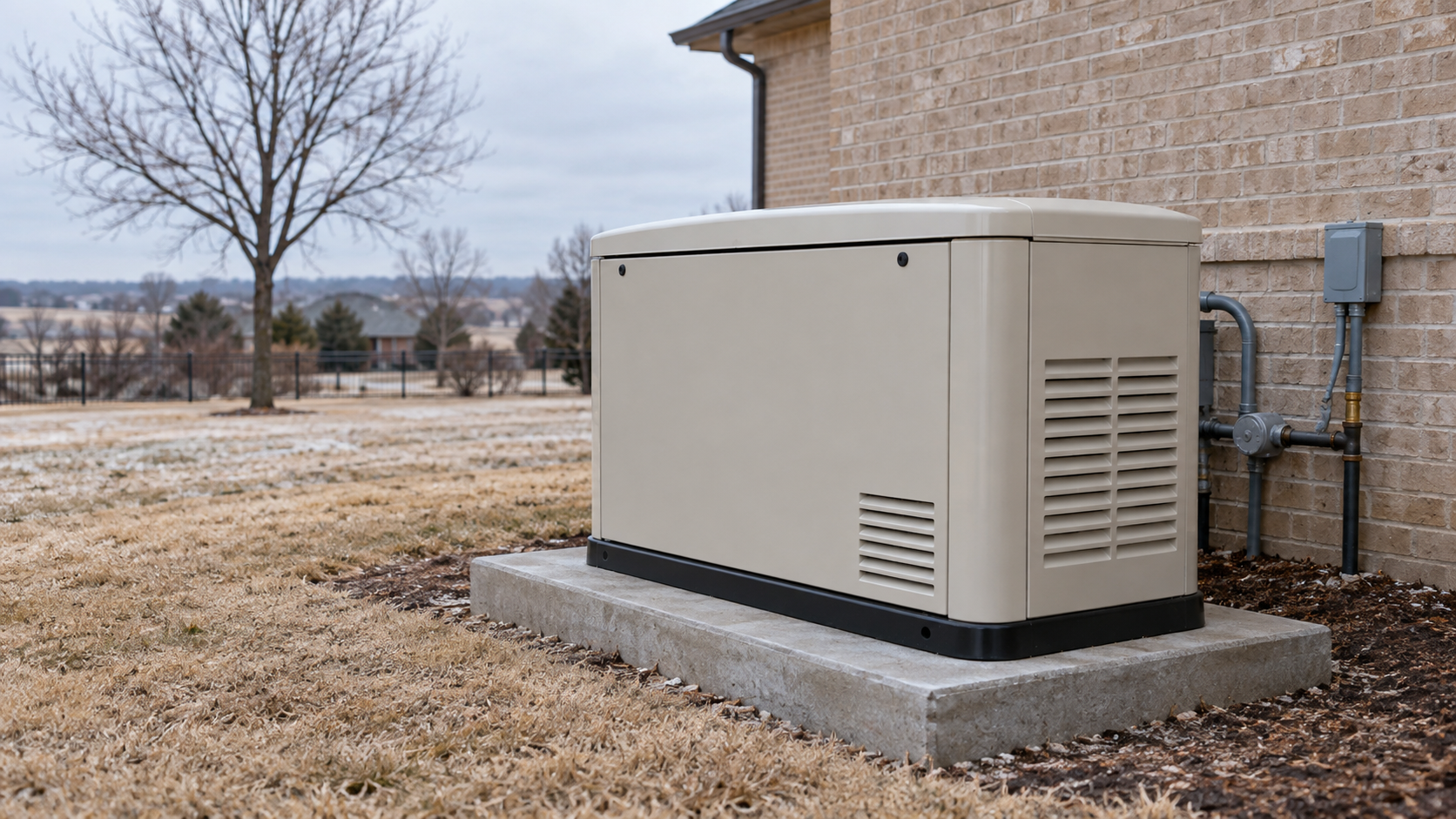
A whole-home standby generator is a permanently installed backup power system designed to respond automatically when utility power is lost. The generator works together with transfer equipment, the home's electrical system, and a fuel source to provide backup power to the circuits included in the system design.
The process is automatic under normal operating conditions. The system detects the utility outage, starts the generator, transfers selected electrical loads to generator power, and then returns the home to utility power when normal service is restored.
This guide explains how a whole-home generator detects an outage, how the automatic transfer switch works, what the generator can power, how fuel affects operation, and what homeowners should understand before installing a standby system.
The Quick Answer
A Whole-Home Generator Automatically Takes Over When Utility Power Is Lost
The System Detects the Outage
Transfer equipment monitors the incoming utility power. When utility service falls outside the expected operating range, the system begins the standby sequence.
The Generator Starts
The standby generator starts automatically and prepares to provide electrical power using the connected natural gas or propane supply.
Electrical Loads Transfer to Generator Power
Once generator power is ready, the transfer equipment connects the designated household loads to the generator until utility power returns.
"Whole-home" does not automatically mean every electrical load in the house will operate at the same time. Actual coverage depends on generator capacity, system design, electrical demand, and whether load-management controls are used.
From Outage to Backup Power
What Happens When the Utility Power Goes Out?
The System Monitors Utility Power
Automatic transfer equipment continually monitors the utility supply serving the home.
The Outage Is Detected
When utility power is lost or falls outside the system's acceptable operating range, the generator receives a start signal.
The Generator Engine Starts
The engine starts using its battery and fuel system, then begins producing electrical power.
The Generator Reaches Operating Conditions
The system allows the generator to stabilize before household loads are transferred.
The Transfer Switch Connects Backup Power
The automatic transfer switch isolates the home from the utility source and connects the designated electrical loads to the generator.
The Generator Carries the Planned Loads
The generator supplies power according to its available capacity and the way the home's backup system has been designed.
Utility Power Is Monitored for Return
The transfer equipment continues monitoring the utility source while the generator is operating.
The Home Returns to Utility Power
Once utility power is restored and stable, the system transfers the home back to utility service and the generator completes its shutdown sequence.
The Automatic Transfer Switch
The Transfer Switch Is What Connects the Generator to the Home Safely
Monitors incoming utility power
Signals the generator to start during an outage
Separates the home from the utility source
Transfers designated loads to generator power
Monitors for stable utility restoration
Transfers the home back to utility power
Coordinates with the home's electrical service
May work with load-management controls
The transfer system is a critical part of standby generator installation because it prevents the generator and utility supply from being connected to the home's electrical system at the same time under normal operation.
Backup Coverage
What Can a Whole-Home Generator Actually Power?
Air conditioning and heat-pump systems
Refrigerators and freezers
Lighting and general household circuits
Internet, security, and communication systems
Well, sump, or sewage pumps
Selected kitchen and laundry appliances
Medical or accessibility-related household equipment
Other loads included in the system design
Generator coverage depends on actual electrical demand. Large appliances, electric heat, HVAC equipment, pumps, EV charging, pool equipment, and other high-demand loads can significantly affect the generator capacity required.
Fuel and Operation
Natural Gas and Propane Supply the Engine That Produces Backup Power
Natural Gas
Utility-Supplied Fuel Without Onsite Tank Storage
- ✓Uses the home's natural gas service when available
- ✓Requires adequate meter, regulator, and piping capacity
- ✓Avoids maintaining an onsite propane tank
- ✓Availability depends on utility infrastructure
- ✓Generator output may vary by model and fuel configuration
Propane
Stored Fuel Available From an Onsite Tank
- ✓Uses fuel stored at the property
- ✓Requires properly sized tank and fuel infrastructure
- ✓Allows the homeowner to maintain a dedicated fuel supply
- ✓Runtime depends on tank size, fuel level, and electrical load
- ✓Generator output may differ from natural-gas operation
The Bottom Line
A Whole-Home Generator Is an Automatic Backup Power System—not Just a Generator Sitting Outside
The generator, automatic transfer equipment, electrical service, fuel system, and backup-load strategy all have to work together.
The quality of the system depends on proper sizing, safe electrical integration, adequate fuel supply, correct placement, and a clear plan for which household loads should remain available during an outage.
We Don’t Just Fix It. We Explain It.
What Professional Evaluation Includes
Designing a Generator System Around the Way You Want Your Home to Operate
A useful generator evaluation should connect your backup priorities with actual electrical demand, fuel availability, transfer equipment, property conditions, and installation requirements.
Backup Priorities
Identify What You Want Available During an Outage
The evaluation starts with HVAC, refrigeration, pumps, lighting, internet, appliances, and other household systems you consider important.
Electrical Load Review
Determine How Much Electrical Demand the Generator May Need to Support
Running demand, starting demand, HVAC equipment, larger appliances, pumps, and other loads are reviewed to establish a realistic generator strategy.
Fuel Review
Confirm Whether Natural Gas or Propane Can Support the System
Fuel availability, gas-system capacity, propane storage, piping, regulators, and generator specifications are considered.
Electrical Integration
Plan the Transfer Equipment and Load-Management Strategy
The electrical service, panels, transfer equipment, available capacity, and compatible load-management options are reviewed.
Clear Recommendation
Explain How the Proposed System Will Actually Work
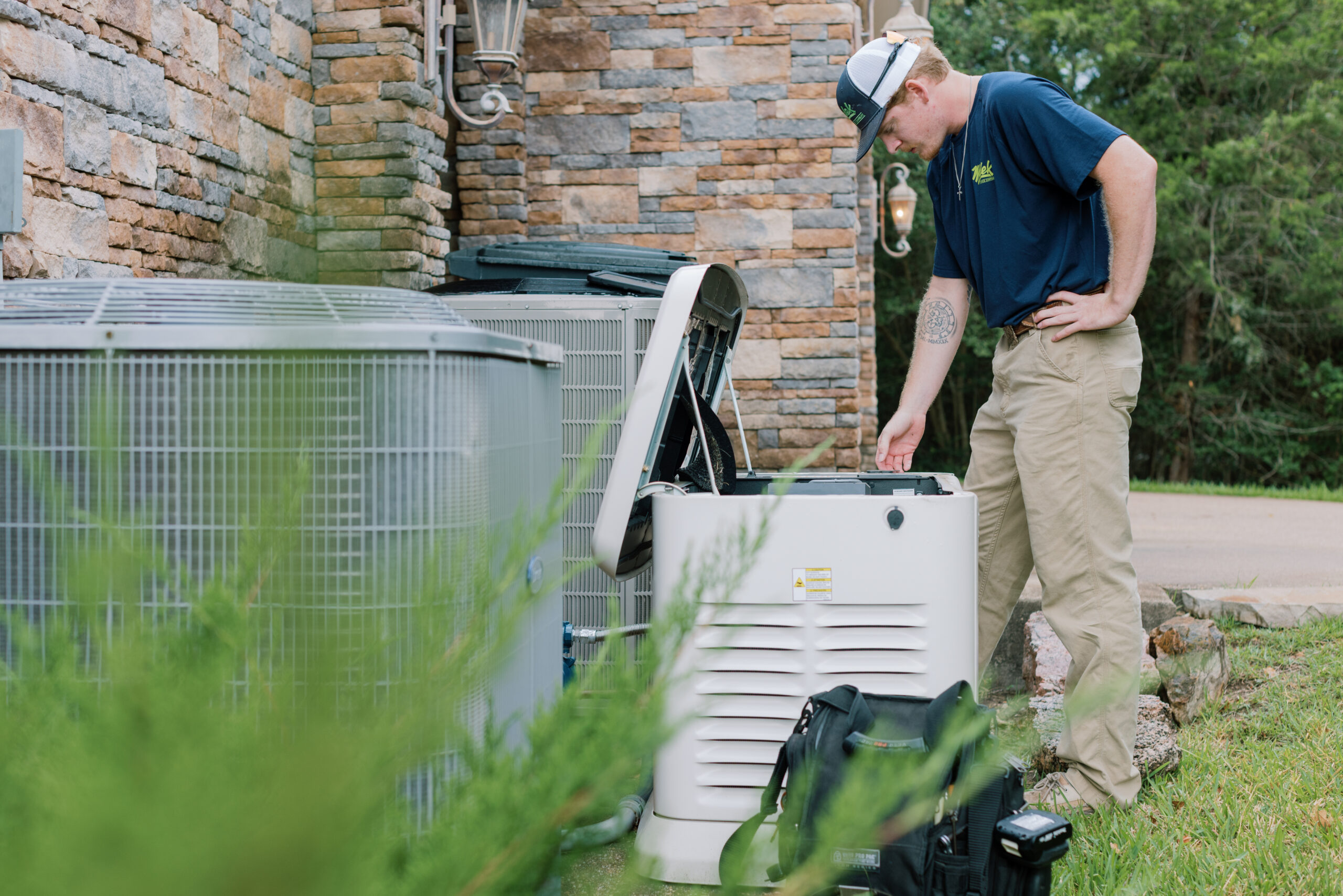
Malek explains what the generator is designed to power, how the automatic transfer process works, what limitations may apply, and why the recommended system fits the home's backup goals.
Continue Learning
Continue Learning About Whole-Home Generators
Whole-Home Generator Installation
Learn how generator sizing, transfer equipment, fuel planning, electrical integration, placement, permitting, and installation come together.
→ Decision GuideWhat Size Whole-Home Generator Do I Need?
Learn how HVAC equipment, starting demand, household loads, backup priorities, fuel, and load management affect generator capacity.
→ Decision GuideNatural Gas vs. Propane Generator
Compare fuel availability, storage, capacity, runtime planning, and installation requirements for standby generators.
→ Investment GuideWhole-Home Generator Cost Guide
Review typical planning ranges and the generator size, transfer equipment, fuel, electrical work, and site conditions that affect installed cost.
→Frequently Asked Questions
Whole-Home Generator Operation FAQs
These answers explain how standby generators start, transfer power, use fuel, and supply backup electricity to a home.
Does a whole-home generator turn on automatically? +
Yes. A properly installed standby system is designed to detect loss of utility power and start automatically under normal operating conditions.
How does a generator know when the power goes out? +
Automatic transfer equipment monitors the incoming utility supply. When utility power is lost or falls outside the expected operating range, the system initiates the generator-start sequence.
What does an automatic transfer switch do? +
The automatic transfer switch separates the home from the utility source and connects the designated household loads to generator power. When utility power returns and stabilizes, it transfers the home back.
Does a whole-home generator power the entire house? +
Not always. Coverage depends on generator capacity, electrical demand, transfer-system design, and load management. Some systems prioritize selected loads while others support broader household operation.
How long does it take for a standby generator to come on? +
The generator does not usually supply power instantly. The system detects the outage, starts the engine, allows generator output to stabilize, and then transfers the planned loads. Exact timing depends on the equipment and system settings.
What fuel does a whole-home generator use? +
Residential standby generators commonly operate on natural gas or propane. Fuel availability, system capacity, generator model, and property conditions help determine which option is appropriate.
What happens when utility power comes back on? +
The transfer equipment monitors the returning utility source. Once the utility supply is stable, the home transfers back to utility power and the generator completes its shutdown sequence.
Does a standby generator need maintenance even if it rarely runs? +
Yes. Standby generators have batteries, engine components, fluids, filters, controls, and electrical connections that require scheduled maintenance even when outage runtime is limited.
Considering a Whole-Home Generator?
Find Out How a Standby Generator Would Work for Your Home
Malek can evaluate your electrical loads, HVAC equipment, backup priorities, fuel options, transfer equipment, property conditions, and installation requirements before explaining how the proposed generator system would operate.