Ductwork Problem Guide
How Long Does Ductwork Last?
Residential ductwork can remain serviceable for many years, but there is no single age when every duct system should be replaced. Material type, installation quality, attic conditions, insulation, support, moisture exposure, physical damage, previous repairs, and system design all affect how long ductwork performs well.
Some older duct systems remain in good condition, while newer ductwork can develop problems earlier if it was poorly installed, exposed to harsh conditions, crushed, disconnected, or repeatedly disturbed.
This guide explains how ductwork ages, which conditions can shorten its useful life, what homeowners can safely observe, and why actual condition matters more than age alone when deciding whether ductwork should be repaired, sealed, or replaced.
The Quick Answer
Ductwork Does Not Have a Universal Expiration Date
Age Is Only One Part of the Picture
Older ductwork does not automatically need replacement. A system that remains properly supported, reasonably sealed, physically intact, and well matched to the home may continue performing well.
Installation and Environment Matter
Poor support, attic heat, moisture, pests, physical disturbance, damaged insulation, and restrictive routing can shorten the practical life of ductwork.
Condition Should Drive the Decision
Replacement becomes more relevant when deterioration is broad, multiple runs are failing, insulation is compromised, or repeated repairs leave significant problems elsewhere.
There is no single replacement age that applies to every home. Ductwork should be evaluated based on material condition, installation quality, performance, damage, and what would remain after any proposed repair.
What Affects Ductwork Lifespan
The Condition Around the Ductwork Can Matter as Much as the Material Itself
Duct Material
Flexible duct, sheet metal, fiberglass-lined components, duct board, insulation, fittings, and connections can age differently. The material used throughout the system influences how deterioration may appear over time.
Installation Quality
Proper support, reasonable routing, secure connections, correct sizing, and protected insulation all contribute to long-term performance. Poor installation can create stress and airflow problems much earlier.
Attic Heat
Texas attics can expose duct materials, insulation, adhesives, jackets, and connections to prolonged high temperatures. Repeated heat exposure can contribute to material aging over time.
Moisture Exposure
Roof leaks, condensation, high humidity, or other moisture conditions can damage insulation, duct materials, supports, and surrounding building materials.
Poor Support or Sagging
Flexible ductwork that is inadequately supported can sag, develop restrictive bends, place stress on connections, or become more vulnerable to physical damage.
Physical Disturbance
Attic access, storage, remodeling, electrical work, plumbing work, pest activity, or other activity near the duct system can crush, disconnect, tear, or shift ductwork.
Previous Repairs
One localized repair does not mean a duct system is failing. Repeated repairs across multiple runs, however, can indicate broader deterioration or aging material.
System Design
Even physically intact ductwork may perform poorly if sizing, routing, supply placement, or return-air pathways do not match the home's airflow needs.
Age vs. Condition
Older Ductwork Can Still Be Serviceable—and Newer Ductwork Can Still Have Problems
May Still Be Serviceable
The Ductwork Is Older but Remains in Good Condition
- ✓ Duct runs remain physically intact
- ✓ Connections remain secure
- ✓ Insulation is generally intact
- ✓ Support and routing remain reasonable
- ✓ Repeated repairs are not becoming common
Deserves Evaluation
The Material Is Showing Broader Signs of Deterioration
- ✓ Multiple runs are torn, crushed, sagging, or disconnected
- ✓ Outer jackets or insulation are deteriorating
- ✓ Repairs are becoming more frequent
- ✓ Leakage or physical failures appear across several areas
- ✓ Correcting one section would leave significant problems elsewhere
What You Can Safely Observe
Comfort and Airflow Changes Can Offer Clues About Duct Condition
Notice whether some rooms have become harder to heat or cool
Compare airflow at different supply registers
Listen for new whistling, rattling, or air movement near registers
Notice whether airflow problems are isolated or affecting several rooms
Pay attention to visible register or grille damage
Note whether duct repairs have become more frequent over time
Watch for comfort changes after attic, remodeling, or other home work
Notice whether heating or cooling runs longer while comfort becomes less consistent
Do not climb through an attic or disturb ductwork simply to check its age. Flexible ducts, insulation, supports, electrical wiring, framing, and attic surfaces can be damaged or unsafe to access.
Signs Ductwork May Be Aging
A Pattern of Problems Matters More Than a Single Symptom
Multiple rooms have developed weak or inconsistent airflow
Several duct sections have required repair over time
Visible accessible duct material appears damaged or deteriorated
Insulation or outer duct jackets are failing in several areas
Connections are repeatedly loosening or separating
Comfort problems are spreading beyond one isolated room
Air leakage and physical damage are appearing together
Repairing one area would leave substantial known problems elsewhere
Aging ductwork is usually a performance and comfort concern rather than an emergency. If duct damage is associated with electrical hazards, major moisture intrusion, visible structural damage, or another unsafe condition, avoid the affected area and contact the appropriate professional.
The Bottom Line
Replace Ductwork Because of Its Condition—not Simply Because of Its Birthday
Ductwork does not become unusable on a specific anniversary. Material condition, support, insulation, connections, airflow, leakage, physical damage, and repair history provide better information than age alone.
A localized problem may still support repair or sealing. Broad deterioration across multiple runs may make replacement more practical. The right scope depends on what the duct system actually looks like today.
We Don’t Just Fix It. We Explain It.
Professional Ductwork Evaluation
Evaluating What Condition the Ductwork Is Actually In
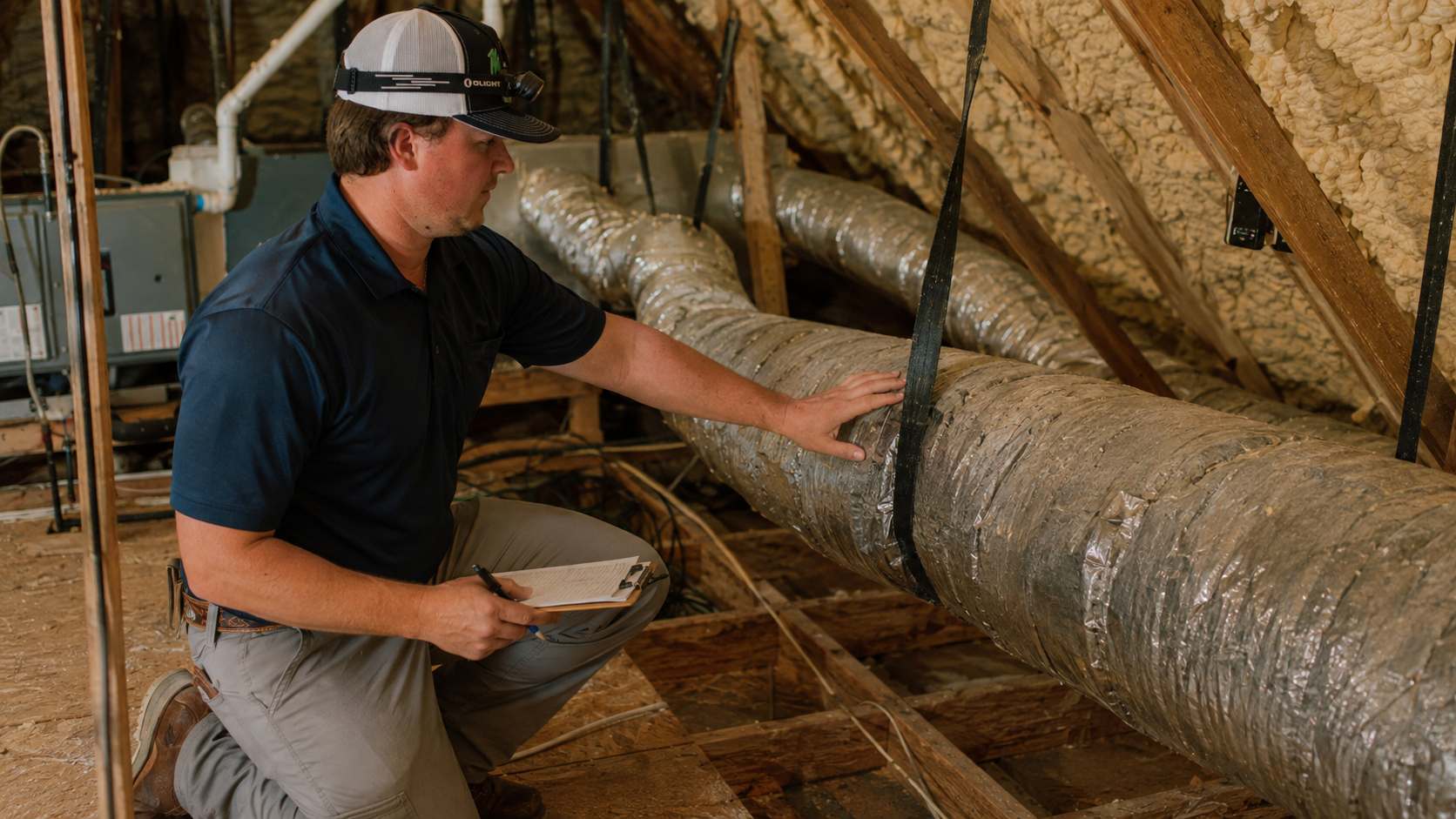
Age can provide context, but a useful duct evaluation focuses on accessible material condition, physical damage, insulation, connections, support, leakage concerns, airflow, and how much of the system is affected.
Material Condition
Review Accessible Duct Materials and Insulation
The condition of duct runs, outer jackets, insulation, fittings, boots, and accessible connections helps determine whether the existing material remains serviceable.
Physical Damage
Look for Damage Beyond Normal Aging
Crushed, torn, sagging, disconnected, collapsed, or otherwise damaged duct runs create a different problem from simple age or minor leakage.
Scope
Determine Whether Problems Are Localized or Widespread
One failed section may support targeted repair. Similar problems across multiple runs can indicate broader material deterioration that deserves comparison with replacement.
Airflow and Design
Separate Material Aging From Distribution Problems
Some comfort issues come from sizing, routing, supply placement, return-air pathways, or restrictions rather than aging duct material itself.
Clear Recommendation
Explain What Is Worth Preserving and What Is Not
Malek can explain whether the current duct condition supports repair, sealing, partial replacement, broader replacement, or additional design evaluation before the project scope is decided.
Continue Learning
Continue Learning About Duct Condition and Replacement
Duct Repair vs. Replacement
Compare physical damage, surrounding material condition, repair history, accessibility, airflow, and long-term practicality before deciding which scope makes more sense.
→ Investment GuideDuct Replacement Investment Guide
Learn how replacement scope, duct materials, attic access, insulation, routing, returns, and related design needs can influence project cost.
→ ServiceDuct Replacement
Explore how Malek evaluates broader duct deterioration and explains replacement options when existing material is no longer practical to preserve.
→ Service HubDuctwork Services
Explore duct repair, replacement, sealing, and design services along with homeowner guidance for common airflow and ductwork concerns.
→Malek Homeowner Learning Center
Looking for another HVAC or ductwork question?
Explore decision guides, investment guides, homeowner articles, and FAQs designed to help you understand what is happening before you decide what to do next.
Frequently Asked Questions
Ductwork Lifespan FAQs
These answers explain how ductwork ages, what can shorten its serviceable life, and why material condition matters more than age alone when deciding whether replacement is necessary.
How many years does ductwork usually last? +
There is no single lifespan that applies to every duct system. Material type, installation quality, attic conditions, moisture, support, insulation, physical damage, previous repairs, and system design all influence how long ductwork remains serviceable.
Does old ductwork automatically need to be replaced? +
No. Age is useful context, but actual condition matters more. Older ductwork may still be practical to keep when the material, insulation, connections, support, and airflow remain in good condition.
What causes ductwork to wear out faster? +
Poor installation, inadequate support, attic heat, moisture, physical disturbance, pest activity, damaged insulation, restrictive routing, and repeated repairs can all contribute to earlier duct deterioration.
How do I know if my ductwork is deteriorating? +
Signs can include repeated duct repairs, weak or inconsistent airflow, visible accessible damage, deteriorating insulation or outer jackets, loose connections, increasing leakage concerns, or comfort problems affecting several rooms.
Can old ductwork be repaired instead of replaced? +
Yes, when the damage is localized and the surrounding duct material remains serviceable. The decision should depend on what the repair solves and what condition remains afterward rather than duct age alone.
Can old ductwork still be sealed? +
It can when the duct material remains serviceable and the primary issue is leakage at seams, joints, fittings, boots, transitions, or other appropriate connection points. Sealing is less useful when the surrounding material itself is broadly deteriorated.
Should ductwork be replaced when the HVAC system is replaced? +
Not automatically. Replacing HVAC equipment does not by itself mean the duct system needs replacement. Duct condition, sizing, airflow, routing, returns, leakage, and compatibility with the new system should be evaluated separately.
When should duct replacement be considered? +
Replacement deserves consideration when deterioration is broad, multiple runs are physically damaged, insulation or materials are failing across several areas, repairs are becoming frequent, or repairing individual sections would leave significant known problems elsewhere.
Concerned About Aging Ductwork?
Find Out What Condition Your Duct System Is Actually In
Malek can evaluate accessible duct material, insulation, connections, physical damage, airflow concerns, and broader system condition before explaining whether repair, sealing, replacement, or another ductwork solution deserves consideration.