Educational Planning Range
What Does Water Line Replacement Typically Cost?
General Residential Planning Range
$2,500–$10,000+
Many residential water line replacement projects fall somewhere within this broad range. A short, accessible line with limited excavation may remain near the lower end, while longer runs, deeper piping, difficult soil, limited equipment access, or lines beneath driveways and other structures can move the investment above it.
This range is provided for general learning and planning purposes only. It is not a quote or guarantee. The actual investment depends on the line’s length, depth, material, route, accessibility, installation method, permit requirements, and the amount of property restoration required.
The most reliable estimate begins with confirming which line is damaged, how much of it needs to be replaced, and which route and installation method make the most sense for the property.
Start With the Property
Why Water Line Replacement Costs Can Vary So Much
Two homes can need a similar length of new pipe and still receive very different estimates. One line may run through an open lawn with simple access. Another may pass beneath mature landscaping, irrigation, sidewalks, concrete, or areas where equipment access is limited.
The condition of the existing pipe also matters. One home may need a straightforward service-line replacement, while another may require a new route, larger pipe sizing, utility coordination, or work around existing structures and systems.
Pricing Variables
What Shapes the Water Line Replacement Investment?
The final investment usually reflects several connected factors—not only the length of new pipe.
Length of the Line
Longer runs require more pipe, fittings, excavation, labor, testing, and restoration.
Depth of the Existing Line
Deeper piping can require more excavation, additional safety precautions, and more time to expose and replace.
Route and Location
Lines beneath lawns are usually easier to reach than those beneath driveways, sidewalks, patios, mature landscaping, or structures.
Access for Equipment
Gates, fences, narrow side yards, slopes, trees, utilities, and other obstacles can affect which equipment can be used and how the work is staged.
Soil and Ground Conditions
Dense clay, rocky soil, saturated ground, roots, and shifting soil can increase labor and installation complexity.
Pipe Material and Sizing
The type and diameter of the new line must support the home’s water demand and meet applicable installation requirements.
Replacement Method
Traditional excavation, rerouting, and other installation approaches involve different equipment, access requirements, and property disruption.
Existing Connections and Valves
Main shutoffs, meter connections, fittings, pressure regulators, and transitions to existing piping may affect the project scope.
Permits and Inspections
Permit, inspection, utility-marking, and jurisdictional requirements vary by location and project.
Property Restoration
Concrete, landscaping, irrigation, fencing, paving, and other restoration may be included in the plumbing scope or handled separately.
Understanding the Scope
Common Water Line Replacement Approaches
These are not fixed price tiers. They show why the route, access, and installation plan can affect both the investment and the amount of disruption around the property.
Direct Access
Traditional Excavation
The existing route is exposed through an open trench so the damaged line can be removed, abandoned, or replaced.
This approach may be practical when the line is accessible and the surrounding property can be opened without excessive disruption.
New Route
Water Line Rerouting
A new route may be planned when the existing line passes beneath difficult areas or when another path offers better access and future serviceability.
The route must still support appropriate pipe sizing, pressure, utility separation, and code requirements.
Limited Surface Disruption
Alternative Installation Methods
Depending on the property, soil, route, utilities, and pipe condition, an alternative installation method may reduce the amount of open trenching required.
Not every property is a candidate, and reduced excavation does not eliminate all access or restoration needs.
Interior or Foundation Conditions
Slab or Interior Reroute
When the affected piping runs beneath a foundation or through difficult interior areas, the recommended plan may involve direct access, rerouting, or replacement through a more serviceable path.
These projects should be evaluated based on the home’s plumbing layout and the condition of the surrounding piping.
Repair or Replacement
When Does Water Line Replacement Make More Sense Than Repair?
Not every leaking water line needs to be replaced. Repair is often the practical choice when the damage is isolated and the surrounding pipe remains dependable.
Repair Often Makes Sense When:
- The damage is limited to one accessible section
- The remaining pipe appears to be in good condition
- The line has not developed repeated leaks
- Corrosion or deterioration is not widespread
- A targeted repair can provide a dependable result
- The repair does not require disproportionate disruption
Replacement May Be the Better Investment When:
- The line has developed multiple or recurring leaks
- The pipe is aging, corroded, brittle, or deteriorated
- Damage extends across more than one section
- Previous repairs have not provided a lasting solution
- The existing route, material, or size no longer serves the home reliably
- Repeated access would create continuing expense and disruption
The right recommendation should consider the entire line—not only the current leak. A lower-cost repair is not a better value when the surrounding pipe is likely to fail again.
Read the Repair or Replace Your Water Line Decision Guide →Compare More Than the Total
How to Compare Water Line Replacement Estimates
Two proposals may use similar pipe but include very different routes, access methods, restoration responsibilities, warranties, and testing.
Which line is being replaced?
Confirm whether the proposal covers the full service line, an interior branch, an under-slab section, or another specific run.
What route will the new line follow?
The proposal should explain whether the new line follows the existing path or uses a different route to improve access or reliability.
What pipe material and size are included?
Ask why the material and diameter are appropriate for the home’s water demand and installation conditions.
What areas will be disturbed?
Understand whether the work affects lawn, landscaping, irrigation, concrete, fencing, driveway areas, walls, flooring, or the foundation.
Who handles restoration?
Ask whether concrete, landscaping, irrigation, drywall, flooring, or other restoration is included or handled separately.
How will the new line be tested?
The completed line should be pressure-tested and checked for leaks, proper operation, and acceptable service before the project is closed.
The strongest estimate explains the route, pipe, access, restoration, testing, and long-term reasoning behind the recommendation.
Protect the New System
How to Protect the Value of a New Water Line
Monitor Water Pressure
Excessive pressure can place added strain on pipe, fittings, connections, fixtures, and appliances.
Watch for Unexplained Water Use
A sudden increase in water usage can indicate a leak somewhere in the home or on the property.
Protect the Route From Damage
Keep records of the new line’s route before future landscaping, fencing, excavation, or construction work.
Address Soil and Drainage Concerns
Major erosion, standing water, washout, and repeated soil movement may affect buried utilities over time.
Maintain Accessible Shutoff Valves
Know where the main shutoff is located and keep the area accessible in case the home develops a future plumbing emergency.
Keep Project Records
Save the route, pipe material, warranty, permit, inspection, and installation information for future service or property work.
Need a Property-Specific Plan?
Confirm the line, route, and scope before comparing the price.
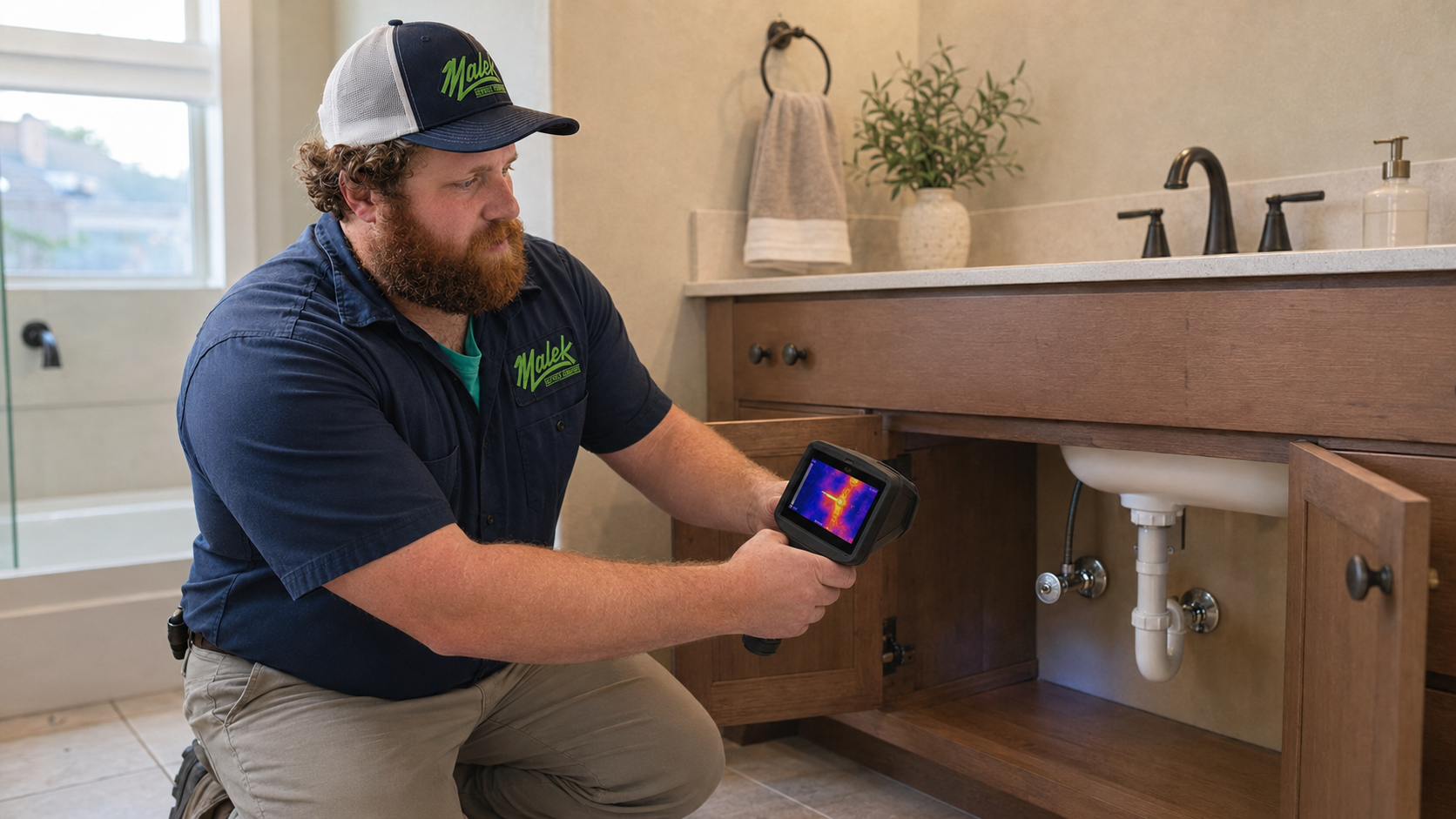
Malek can evaluate the existing line, explain whether replacement is necessary, and develop options based on the property’s actual access and installation conditions.
What to Expect
How Water Line Replacement Moves From Evaluation to Completion
Evaluate the Existing Line
The plumber reviews the symptoms, location, condition, material, repair history, and whether replacement appears to be the most dependable option.
Plan the Replacement Route
The route, pipe material, sizing, access method, utilities, structures, landscaping, and installation approach are considered.
Review the Scope and Estimate
The proposal should explain what will be replaced, what areas may be disturbed, what restoration is included, and which conditions could change the scope.
Prepare the Property
Required permits, utility markings, access, equipment staging, and work-area preparation are coordinated before installation begins.
Install the New Water Line
The approved route is opened or prepared, the new line is installed, and required connections, valves, and transitions are completed.
Connect, Test, and Review
The new line is pressure-tested and checked for proper operation. The completed work and any remaining restoration responsibilities are reviewed with the homeowner.
Payment Planning
Financing May Be Available for Qualifying Water Line Projects
Financing may be available for qualifying homeowners and plumbing projects. Available programs, approval requirements, rates, terms, available credit, and payment amounts are provided by the lender and may vary.
It is generally helpful to understand the recommended route, pipe, installation method, access requirements, and restoration responsibilities before choosing a financing path.
Explore Financing Options →Water Line Replacement Investment FAQs
Questions Homeowners Often Ask Before Replacing a Water Line
These answers explain why replacement prices vary, what may be included, and how to evaluate the proposed route and scope.
Why can two water line replacement estimates be so different?
The proposals may use different routes, pipe materials, installation methods, access plans, restoration allowances, permits, warranties, and testing. Confirm that both estimates address the same line and include comparable work.
Can an accurate replacement price be provided before the property is evaluated?
A broad planning range may be possible, but a reliable estimate usually requires confirming the line’s route, length, depth, material, access, utilities, installation method, and restoration needs.
Does the estimate include driveway, concrete, or landscaping restoration?
It depends on the proposal. Plumbing installation and property restoration may be separate scopes. Ask whether concrete, landscaping, irrigation, fencing, paving, or interior finishes are included before approving the work.
Can a water line be replaced without excavating the entire route?
Sometimes. Rerouting or an alternative installation method may reduce open trenching, depending on the property, soil, utilities, route, access, and pipe condition. Some access and restoration may still be required.
When is water line repair still a reasonable option?
Repair may make sense when the damage is isolated, the surrounding pipe remains in dependable condition, the line has not developed repeated leaks, and a targeted repair is expected to provide a lasting result.
When does full replacement make more sense than another repair?
Replacement may provide better value when the line has recurring leaks, widespread deterioration, brittle or corroded material, several failed sections, or an existing route or size that no longer serves the home reliably.
How long does water line replacement usually take?
Timing depends on the line’s length, depth, route, access, installation method, permit requirements, weather, and restoration. Straightforward projects may take a day or two, while complex work may require additional time.
Is financing available for water line replacement?
Financing may be available for qualifying homeowners and projects. Applications, approval, rates, terms, available credit, and payment amounts are handled by the selected third-party lender.
Make the Decision With Clear Information
A replacement plan should explain the route, disruption, and long-term value.
Malek evaluates the existing line, property conditions, repair history, and available routes before explaining the recommended replacement approach and project-specific estimate.