
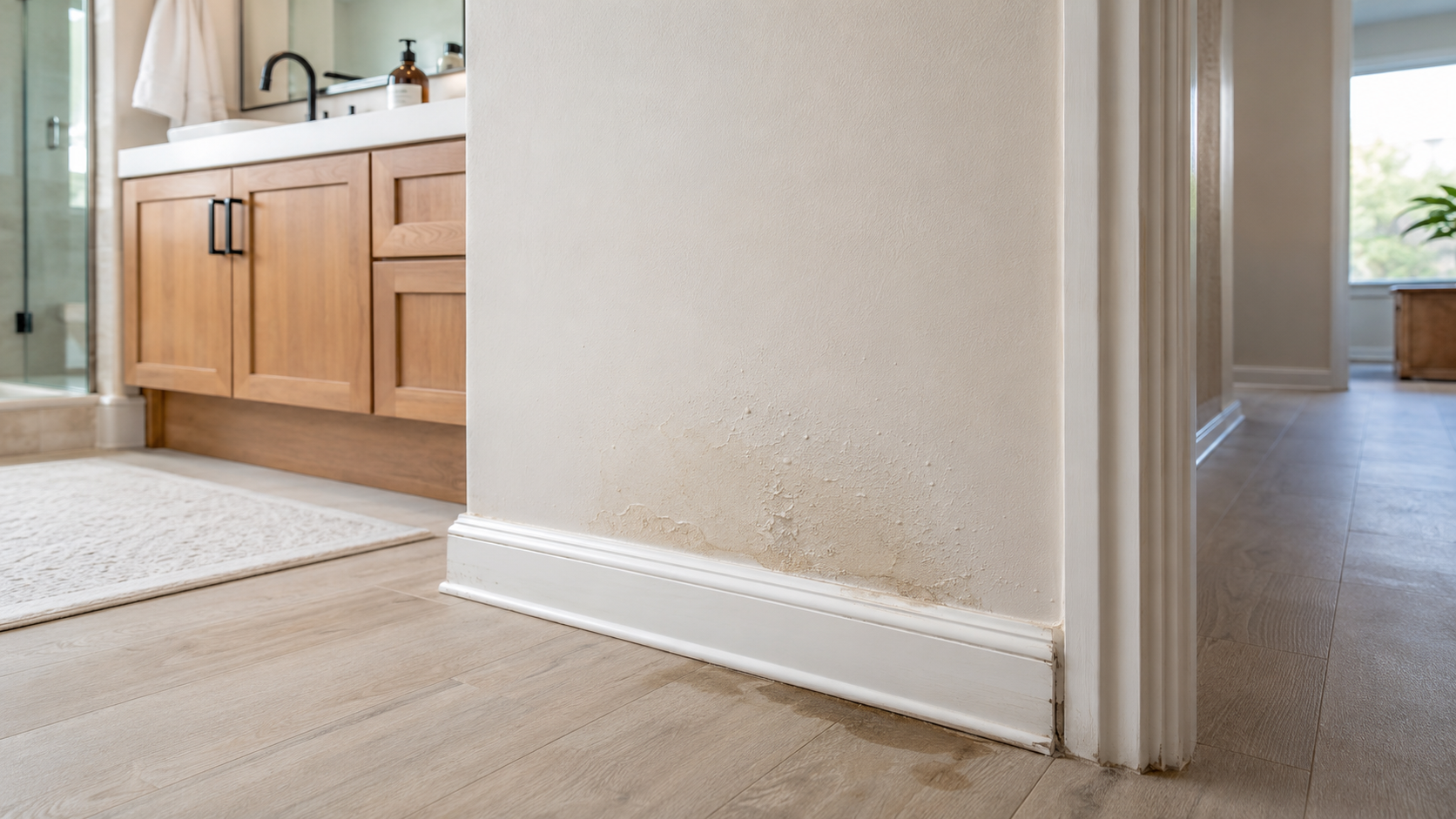
Hidden water leaks often show up through indirect signs: higher water bills, meter movement when fixtures are off, damp or discolored surfaces, musty odors, reduced water pressure, running-water sounds, or unusually wet areas in the yard.
Because water can travel through walls, floors, ceilings, soil, and building materials, the visible symptom is not always directly above the leak. Professional leak detection can help narrow down the source before unnecessary demolition begins.
Common Warning Signs
What a Hidden Water Leak May Look, Sound, or Feel Like
Higher Water Bills
An unexplained increase in measured water use can be one of the earliest signs of a concealed leak.
Meter Movement With Fixtures Off
If the meter continues registering flow when all known water use is stopped, water may still be escaping somewhere.
Damp or Discolored Surfaces
Water stains, bubbling paint, peeling wallpaper, soft drywall, or recurring dampness can point to concealed moisture.
Musty Odors
Persistent musty smells may indicate moisture collecting inside walls, under floors, or in enclosed spaces.
Warped Flooring or Cabinets
Wood, laminate, trim, and cabinetry may swell, buckle, separate, or become discolored when moisture is present.
Reduced Water Pressure
A meaningful leak in the supply system can reduce pressure or change how several fixtures perform.
Running-Water Sounds
You may hear hissing, dripping, or flowing water inside walls, beneath floors, or near the foundation when fixtures are off.
Warm Areas on the Floor
A new warm spot may be associated with a leaking hot-water line beneath the slab.
Soft or Wet Areas in the Yard
Unexplained pooling, soggy soil, sinking ground, or unusually green grass may point to an underground water-line leak.
Recurring Moisture After Cleanup
Water that returns after drying suggests the source is still active and has not been fully addressed.
Where Leaks Commonly Hide
The Source May Be Inside the Home, Beneath It, or Outside
Inside Walls
Supply lines, fixture connections, and appliance lines can leak behind drywall or cabinetry.
Above Ceilings
Leaks from upstairs bathrooms, supply lines, or nearby fixtures may appear as ceiling stains or sagging material.
Beneath Flooring
Water can move under tile, wood, laminate, carpet, or underlayment before it becomes visible.
Under the Foundation
Slab leaks can produce warm spots, meter movement, pressure changes, or moisture near the foundation edge.
In the Yard
Underground service lines may leak into soil and create soft ground, erosion, or unusually green areas.
Near the Water Heater
Connections, valves, drains, relief piping, or the tank itself may leak slowly before water spreads.
Behind Appliances
Refrigerator, washing machine, dishwasher, and ice-maker lines can leak in hidden or rarely inspected spaces.
Around Toilets and Tubs
Supply lines, seals, valves, and drains can leak beneath finishes without an obvious surface drip.
Safe Homeowner Checks
What You Can Check Before Scheduling Service
Review the Water Bill
Compare actual usage with prior months and the same season last year, not only the total amount due.
Check the Water Meter
Turn off known water use and see whether the meter continues registering flow.
Inspect Visible Plumbing
Look under sinks, around toilets, behind appliances, and near the water heater for moisture or staining.
Walk the Yard
Look for soft soil, standing water, erosion, sinking areas, or unusually green patches.
Listen With Fixtures Off
Notice whether you hear hissing, dripping, or running water in walls, floors, or ceilings.
Document the Pattern
Record where symptoms appear, when they worsen, and whether they change after water use stops.
Do Not Start Opening Walls or Flooring to Search for the Leak
Do not assume the visible stain marks the exact source. Water can travel along framing, pipes, and building materials.
Do not repeatedly turn the water back on. Each test can release more water and increase damage.
Do not ignore recurring moisture. Drying the surface does not stop the leak behind it.
Do not use a single symptom as proof of location. Detection should confirm the affected line and area before repair begins.
When to Schedule Leak Detection
Professional Testing Is the Right Next Step When the Source Is Not Visible
Schedule Service Promptly When
- The meter moves with all known water use off
- Moisture returns after cleanup
- Water pressure changes without explanation
- You hear water with fixtures off
- The water bill rises without a clear reason
Shut Off the Water First When
- Water is actively spreading
- Ceilings or walls are becoming saturated
- Pressure drops suddenly
- Standing water reaches electrical equipment
- Property damage is increasing quickly
Professional Leak Detection
How a Hidden Leak Can Be Narrowed Down Before Repair Work Begins
These checks help confirm whether water loss is occurring and whether the plumbing system can hold pressure.
Accessible plumbing, appliances, toilets, water heaters, and moisture patterns are reviewed first.
Specialized listening equipment may help identify the sound of water escaping from a concealed line.
Temperature differences may help identify moisture patterns or a leaking hot-water line.
Sections of the plumbing system may be tested separately to determine which line is affected.
Once the source is narrowed down, the plumber can explain the least disruptive practical repair path.
Find the Source First
Locate the Leak Before More of the Home Is Opened
Malek can evaluate the plumbing system, confirm whether concealed water loss is occurring, narrow down the source, and explain the repair options clearly.
After the Leak Is Found
The Repair Path Depends on the Location and Condition of the Plumbing
Fixture or Connection Repair
A localized leak near a fixture, valve, appliance, or exposed connection may require a direct repair.
Wall or Ceiling Access
A concealed interior line may require targeted access after the location is confirmed.
Slab Leak Repair or Reroute
A line beneath the foundation may be repaired directly, rerouted, or addressed through partial replacement.
Underground Water-Line Repair
A damaged service line may require excavation, rerouting, or replacement depending on the pipe condition.
Reducing Future Risk
Some Hidden Leaks Can Be Caught Earlier
Monitor Water Use
Review bills and meter behavior so unexplained changes are noticed sooner.
Check High-Risk Areas
Inspect under sinks, behind appliances, around toilets, and near the water heater regularly.
Pay Attention to Pressure Changes
Sudden or widespread pressure loss can be an early clue that the supply system needs attention.
Address Small Leaks Promptly
Minor fixture or connection leaks can worsen and may indicate broader plumbing wear.
Frequently Asked Questions
Hidden Water Leak Questions
What are the most common signs of a hidden water leak?
Common signs include higher water bills, meter movement, damp or discolored surfaces, musty odors, warped materials, reduced pressure, running-water sounds, warm flooring, and wet areas in the yard.
Can I have a leak even if I do not see water?
Yes. Water may be escaping inside a wall, beneath flooring, under the slab, or into the soil without becoming immediately visible.
How can I check the water meter for a leak?
Turn off all known water use and observe the meter. Continued movement may indicate that water is still flowing somewhere in the system.
Does a high water bill always mean there is a leak?
No. Irrigation, household changes, utility rates, billing periods, and estimated readings can also raise the bill. Compare actual usage before assuming a leak.
Can a hidden leak cause mold?
Persistent moisture can create conditions that support mold growth, especially inside walls, under flooring, and in enclosed spaces.
Should I shut off the water if I suspect a hidden leak?
If water is actively spreading, damage is increasing, or standing water is near electrical equipment, shut off the main supply when it is safe to do so.
How is a hidden leak found without opening the whole wall?
Plumbers may use pressure testing, acoustic equipment, thermal imaging, line isolation, meter readings, and moisture patterns to narrow down the location first.
How quickly should a hidden leak be checked?
Prompt inspection is recommended because concealed water loss can continue damaging materials and increasing water use even when the visible symptoms are minor.
Cookie Consent
We use cookies to improve your experience on our site. By using our site, you consent to cookies.
Cookie Preferences
Manage your cookie preferences below:
Essential cookies enable basic functions and are necessary for the proper function of the website.
These cookies are needed for adding comments on this website.
Google reCAPTCHA helps protect websites from spam and abuse by verifying user interactions through challenges.
Google Tag Manager simplifies the management of marketing tags on your website without code changes.
Statistics cookies collect information anonymously. This information helps us understand how visitors use our website.
Google Analytics is a powerful tool that tracks and analyzes website traffic for informed marketing decisions.
Service URL: policies.google.com (opens in a new window)
Marketing cookies are used to follow visitors to websites. The intention is to show ads that are relevant and engaging to the individual user.
Google Maps is a web mapping service providing satellite imagery, real-time navigation, and location-based information.
Service URL: policies.google.com (opens in a new window)
You can find more information in our Cookie Policy and Privacy Policy.