Electrical Homeowner Guide
Signs of Outdated Wiring
Older wiring does not automatically mean a home is unsafe. Plenty of electrical systems continue working dependably for years when they were installed correctly, protected from damage, and updated as the home changed.
The concern begins when age is combined with deterioration, loose connections, repeated modifications, limited capacity, damaged insulation, missing protection, or electrical demands the original system was never designed to support.
This guide explains the signs homeowners may notice, what those signs can suggest, and how a licensed electrician evaluates whether the wiring needs a focused repair, selective updating, or a broader electrical plan.
The Quick Answer
Outdated Wiring Usually Reveals Itself Through Repeated Patterns—not One Random Inconvenience
The System Struggles With Modern Use
Frequent breaker trips, limited outlet availability, heavy use of extension cords, or noticeable voltage changes may indicate that parts of the system are being asked to do more than originally intended.
Devices Show Heat or Wear
Warm outlets, loose plugs, discolored switches, buzzing devices, or cracked covers can point to worn components or unstable connections that deserve evaluation.
The Home Has Layers of Old Electrical Work
Additions, remodels, appliance changes, converted rooms, and decades of repairs may leave several generations of wiring and equipment operating together.
The age of the house is only a starting point. The actual condition, material, installation quality, repair history, panel capacity, and current electrical demand matter more than the year printed on the property record.
What the Signs May Mean
Everyday Electrical Annoyances Can Point to a Larger Wiring Story
Breakers Trip During Normal Household Use
A breaker that trips repeatedly may be responding to excessive load, damaged wiring, a short circuit, a ground fault, failing equipment, or an electrical layout that no longer fits how the home is being used.
Lights Flicker When Appliances Start
A small momentary change may occur with larger equipment, but strong or repeated flickering can point to loose connections, overloaded circuits, panel conditions, equipment issues, or service-capacity concerns.
There Are Too Few Outlets for the Way the Home Is Used
Older homes were often designed for fewer electronics and appliances. Heavy reliance on power strips, plug multipliers, and extension cords may signal that the electrical layout no longer supports daily use well.
Outlets Are Loose, Warm, or Discolored
Worn receptacles, weak internal contacts, loose terminals, heat damage, or aging connections can create unstable operation and may affect more than the visible outlet.
Some Areas Have Grounded Outlets and Others Do Not
Mixed outlet styles may indicate that portions of the home were updated at different times. A three-slot receptacle does not by itself confirm that grounding is present or connected correctly.
Electrical Problems Appear in More Than One Room
Dead outlets, flickering lights, repeated trips, unusual sounds, or intermittent power in several areas may suggest a shared circuit, panel, service, or broader wiring condition.
Common Wiring Concerns
What Can Make an Older Electrical System Less Dependable?
Deteriorated Insulation
Heat, age, moisture, movement, pests, and previous repairs can leave wire insulation brittle, cracked, damaged, or no longer protecting the conductors as intended.
Loose Connections
Terminals and splices can loosen or deteriorate over time, especially where heat, vibration, corrosion, overloading, or poor workmanship is present.
Limited Circuit Capacity
A system planned for fewer appliances may struggle after years of added electronics, HVAC equipment, kitchen loads, office equipment, workshops, chargers, and outdoor features.
Improper Previous Modifications
Unapproved additions, uncovered splices, mismatched materials, overcrowded boxes, unsupported wiring, or incorrectly connected devices may create problems long after the work was completed.
Missing Grounding or Bonding
Older portions of a home may not have the same grounding path, protective devices, or equipment connections expected in a newer installation.
Aging Electrical Devices
Receptacles, switches, dimmers, breakers, disconnects, and fixtures can wear out even when the wiring behind them remains serviceable.
Moisture or Corrosion
Roof leaks, plumbing leaks, outdoor exposure, condensation, and humid spaces can damage electrical boxes, wiring, devices, and panel components.
Panel Limitations
An older panel may have limited space, incompatible components, worn connections, outdated equipment, or insufficient capacity for additions the home now needs.
Does Home Age Matter?
An Older Home Deserves Context—not an Automatic Rewiring Recommendation
Age Alone
Old Does Not Automatically Mean Failed
- ✓ Some older wiring remains in acceptable condition.
- ✓ Previous updates may have improved important parts of the system.
- ✓ The home may have adequate capacity for its current use.
- ✓ Focused repairs may be more appropriate than broad replacement.
- ✓ Evaluation should be based on evidence—not assumptions.
Age Plus Warning Signs
Repeated Symptoms Change the Conversation
- ✓ Frequent trips, dead circuits, or unstable power
- ✓ Heat damage, brittle insulation, or visible deterioration
- ✓ Multiple generations of questionable modifications
- ✓ Insufficient capacity for planned appliances or equipment
- ✓ Panel, grounding, or protection concerns affecting several areas
Rewiring decisions should be based on the material, condition, accessibility, repair history, system capacity, and amount of the home affected—not simply the building’s age.
Safe Homeowner Observations
What Can You Notice Without Opening Electrical Equipment?
Which breakers trip and what is operating when they do
Whether flickering affects one fixture or several rooms
Which outlets feel loose, warm, or no longer grip plugs
Whether extension cords and power strips are used permanently
Where three-slot and two-slot outlets appear in the home
Whether electrical symptoms began after an addition or appliance change
Whether switches, outlets, fixtures, or panels make unusual sounds
Whether odors, discoloration, sparks, or heat are present
Do not remove the electrical panel cover, pull outlets or switches from their boxes, touch exposed wiring, or open junction boxes to inspect the system yourself. The safest homeowner contribution is a clear record of what the system is doing.
Urgent Warning Signs
Stop Using the Affected Area When the Electrical System Shows Heat, Arcing, or Shock Risk
Burning or melted-plastic odor
Buzzing, crackling, or popping sounds
Warm or hot outlets, switches, panels, or covers
Brown, black, scorched, or melted discoloration
Sparks or visible arcing
Electrical shock or tingling from a device or appliance
Repeated breaker trips after a single reset
Exposed conductors, damaged boxes, or visibly deteriorated wiring
Avoid touching visibly damaged components. Stop using affected outlets, switches, fixtures, or equipment when it can be done safely, and arrange professional electrical evaluation.
The Bottom Line
The Goal Is Not to Replace Everything Old. It Is to Understand What Is Still Dependable.
Some homes need a failed outlet, damaged connection, worn breaker, or isolated wiring section repaired. Others need circuits added, protection updated, panel concerns addressed, or larger portions of the wiring replaced.
A responsible recommendation separates what is currently unsafe, what no longer supports the home well, what can remain in service, and what may be planned for later.
We Don’t Just Fix It. We Explain It.
What Professional Evaluation Includes
Understanding the Condition of the Wiring Without Assuming the Whole Home Needs Replacement
An electrical evaluation should connect the symptoms you are seeing with the circuits, devices, wiring, panel, and equipment actually involved.
Home History
Review the Age, Additions, and Known Electrical Changes
The electrician may ask about remodels, room additions, appliance upgrades, panel work, repeated repairs, storm damage, water intrusion, and symptoms that have changed over time.
Visible Conditions
Examine Accessible Devices, Boxes, Wiring, and Connections
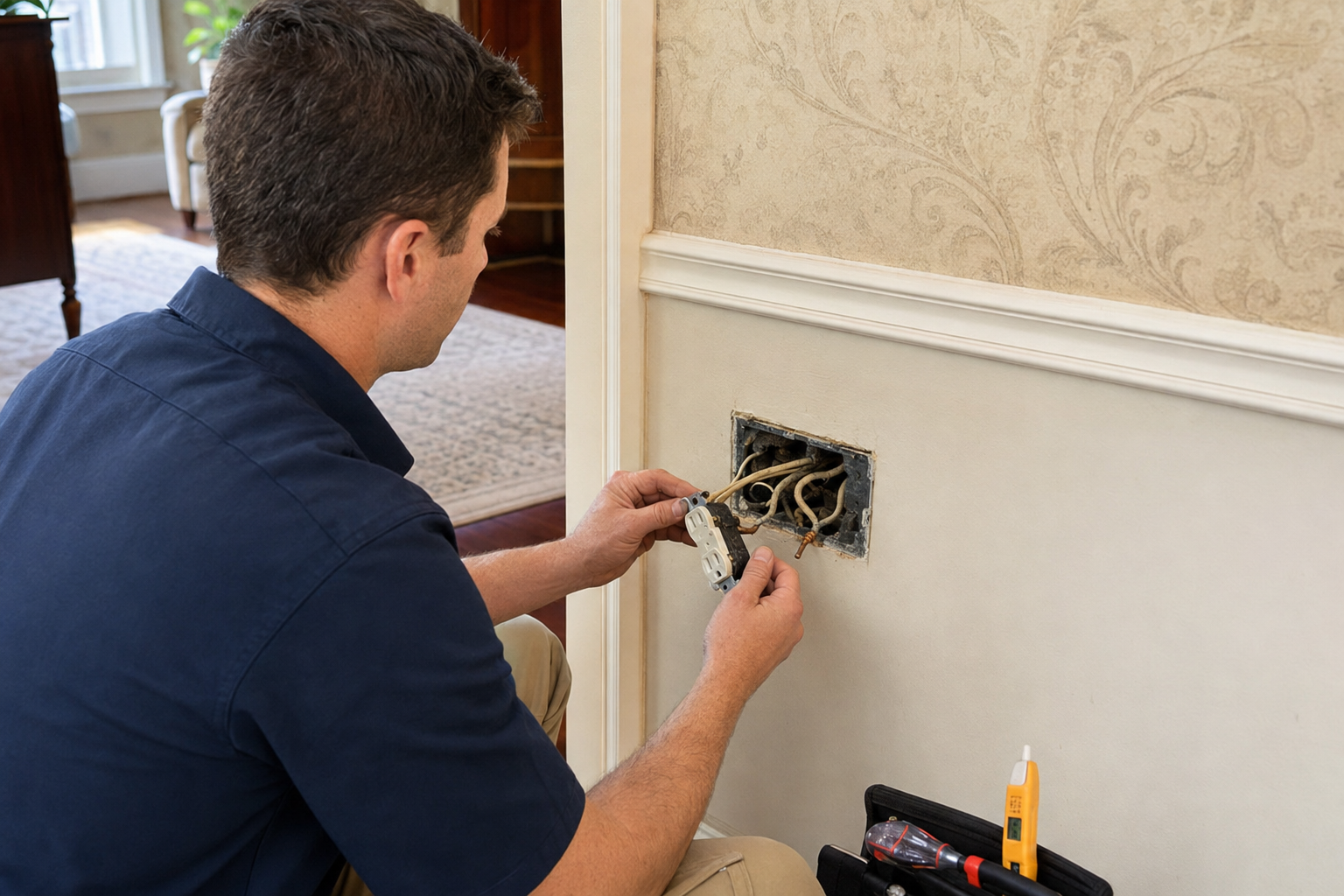
Accessible outlets, switches, fixtures, junctions, attic wiring, panel components, grounding, and visible modifications may be reviewed for wear, heat, damage, and installation quality.
Electrical Testing
Evaluate How the Affected Circuits Are Operating
Testing may review voltage, grounding, polarity, continuity, load, protective devices, breaker behavior, and circuit relationships based on the concern.
Scope of Concern
Determine Whether the Problem Is Isolated or Widespread
One damaged device may require a focused repair. Similar conditions across several rooms, circuits, or additions may justify a broader update plan.
Clear Recommendations
Separate Immediate Repairs From Planned Improvements
Malek explains what needs attention now, what may continue in service, what should be monitored, and which updates may make sense as future projects.
Frequently Asked Questions
Outdated Wiring FAQs
These answers explain how wiring age, condition, capacity, and repair history affect whether a home needs focused electrical work or a broader update.
How do I know whether my home has outdated wiring? +
Common clues include frequent breaker trips, flickering lights, loose or warm outlets, limited receptacle availability, mixed outlet styles, heavy extension-cord use, visible old wiring, and several generations of electrical modifications. An evaluation is needed to confirm the material and actual condition.
Does an older home automatically need rewiring? +
No. Age alone does not determine whether wiring must be replaced. The decision should consider the wiring material, condition, capacity, accessibility, repair history, panel equipment, and amount of the home affected.
Are two-prong outlets always unsafe? +
Two-prong outlets commonly indicate that an equipment-grounding path may not be present at that location. The circuit should be evaluated before outlets are changed so the available protection and appropriate options can be confirmed.
Can old wiring cause flickering lights? +
It can. Loose connections, deteriorated insulation, overloaded circuits, damaged conductors, worn breakers, panel conditions, and previous modifications may all contribute to flickering or unstable voltage.
Can outdated wiring cause breakers to trip? +
Yes, but age is not the only possible cause. Trips may result from excessive load, damaged wiring, short circuits, ground faults, loose connections, equipment problems, or a circuit that no longer fits the home’s electrical demand.
Can only part of a home be rewired? +
In some homes, selective rewiring or circuit updates are practical. The right scope depends on where the problem exists, whether nearby wiring is compatible and dependable, and how the affected circuits connect to the panel.
Should wiring be evaluated before remodeling? +
Yes. Remodeling can change appliance loads, lighting, outlet placement, room use, and access to concealed wiring. Evaluation before finishes are installed may make electrical planning clearer and reduce avoidable rework.
When is an older wiring problem urgent? +
Prompt evaluation is appropriate when there is burning odor, buzzing, crackling, sparks, visible damage, heat, discoloration, electrical shock, exposed conductors, or repeated breaker trips.
Get Clear Answers About Older Wiring
Find Out What Needs Repair, What Can Remain, and What Should Be Planned Next
Malek can evaluate the symptoms, accessible wiring, devices, connections, circuits, panel conditions, and electrical demand before explaining whether the home needs a focused repair, selective update, or broader electrical plan.