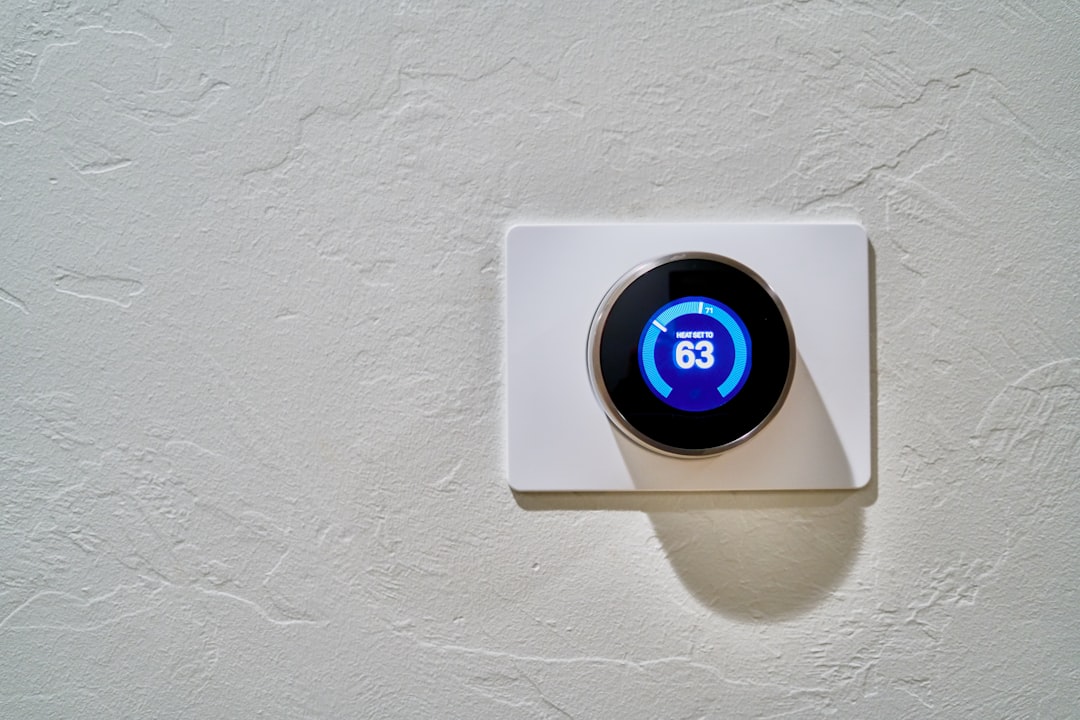
You may be able to install a smart thermostat even when there is no C-wire at the wall, but the right solution depends on the thermostat, the HVAC equipment, the existing cable, and how the system is controlled.
Common options include choosing a thermostat designed to operate without a dedicated common wire, using a manufacturer-approved power connector, installing an add-a-wire accessory, or running new thermostat cable. The safest choice is the one that preserves full equipment operation without creating power, cycling, or compatibility problems.
Understanding the C-Wire
What the C-Wire Does—and Why Smart Thermostats Often Need It
The C-wire, short for common wire, completes the low-voltage circuit that provides continuous power to the thermostat. Traditional thermostats often needed little or no continuous power. Smart thermostats use more because they may support Wi-Fi, illuminated displays, sensors, processors, apps, and ongoing communication with the HVAC equipment.
Supplies Low-Voltage Power
The R terminal typically carries 24-volt power from the HVAC transformer to the thermostat.
Completes the Power Path
The C terminal provides the return path that allows the thermostat to receive steady power.
Call for Heating, Cooling, and Fan
Other terminals send control signals based on the system type and thermostat setup.
Your Main Options
Ways to Power a Thermostat When No C-Wire Is Connected
Use a Thermostat Designed for No-C-Wire Operation
Some thermostats use batteries, internal energy storage, or limited power drawn through existing control circuits. Compatibility varies by model and HVAC system.
Best when:- The thermostat manufacturer specifically approves the configuration
- The HVAC system is compatible with the power method
- No symptoms of short cycling, delayed operation, or dropped connectivity appear
Install a Manufacturer-Approved Power Connector
Some thermostat brands offer an accessory installed near the furnace or air handler to provide a compatible power path without running new cable to the wall.
Best when:- The connector is approved for the thermostat and equipment
- The control board and wiring arrangement support it
- Professional access to the HVAC cabinet is available
Use an Add-a-Wire Accessory
An approved accessory can allow existing conductors to carry additional control functions. The exact method depends on the system and accessory design.
Best when:- Running new cable is difficult
- The accessory supports the equipment configuration
- The installation is completed and tested correctly
Run New Thermostat Cable
Installing new multi-conductor cable provides a dedicated common wire and can create the cleanest long-term wiring arrangement.
Best when:- The wall and equipment route are reasonably accessible
- Future equipment or accessory needs justify additional conductors
- A permanent, flexible solution is preferred
Avoid Improvised Wiring Workarounds
Do not assume an unused wire is a C-wire. It must be connected correctly at the HVAC equipment.
Do not repurpose the fan wire without understanding the consequences. That can remove independent fan control and may be inappropriate for the system.
Do not connect wires based only on color. Use terminal labels and proper verification.
Do not open HVAC control panels unless you are trained to work safely around electrical equipment.
Compatibility Matters
The Thermostat Must Match More Than the Number of Wires
Conventional Heating and Cooling
A basic furnace-and-AC system may be more straightforward, but staging and accessory controls still need to match.
Heat Pumps
Heat pumps require correct reversing-valve, auxiliary-heat, emergency-heat, and staging configuration.
Dual-Fuel Systems
Heat-pump and furnace combinations need proper balance-point and changeover control.
Multi-Stage Equipment
The thermostat must support the number of heating and cooling stages the system is designed to use.
Zoned Systems
The zone control panel—not only the equipment—may determine thermostat compatibility and wiring requirements.
Communicating or Variable-Capacity Systems
Some advanced systems use proprietary controls. Replacing them with a generic thermostat can reduce functionality or prevent proper operation.
HVAC Accessories
Whole-home dehumidifiers, humidifiers, ventilation systems, and sensors can require additional terminals and control logic.
Voltage Type
Most residential forced-air controls use low voltage, but line-voltage and millivolt systems require different thermostat types.
Safe Homeowner Checks
What You Can Review Before Buying a Thermostat
Identify the Current Thermostat Model
Record the brand and model number so you can review the existing wiring and equipment requirements.
Photograph the Terminal Labels
With HVAC power off, photograph the existing thermostat connections before removing any wires. Do not rely on colors alone.
Look for an Unused Conductor
An extra wire may be tucked behind the thermostat, but it is not usable as a C-wire until its connection at the HVAC equipment is confirmed.
Use the Manufacturer’s Compatibility Tool
Enter the exact terminals and system type. General marketing language is not a substitute for model-specific approval.
Check for Special Equipment
Heat pumps, zoning, dual fuel, variable-capacity equipment, and accessories should be identified before selection.
Plan for Professional Verification
When the wiring or system type is unclear, have a technician verify compatibility before purchase or installation.
When Professional Help Is the Better Choice
Some Thermostat Installations Are Simple. Others Can Affect the Entire HVAC System.
The System Is a Heat Pump or Dual Fuel
Incorrect setup can interfere with auxiliary heat, reversing-valve operation, or fuel changeover.
The Home Has Zoning
Thermostat wiring may terminate at a zone panel with its own compatibility requirements.
The Equipment Is Communicating
A standard smart thermostat may not preserve variable-capacity control, diagnostics, or manufacturer-specific features.
There Is No Clear Wiring Match
Unlabeled, spliced, repurposed, or incomplete wiring should be traced before anything is connected.
The Thermostat Causes Cycling or Power Problems
Frequent restarts, clicking, delayed calls, dropped Wi-Fi, or unexplained equipment operation can indicate an unstable power arrangement.
New Cable or an Equipment-Side Adapter Is Needed
Work inside the furnace or air-handler cabinet should be handled by someone trained to work around the equipment and electrical controls.
Choose the Right Setup
Verify Compatibility Before the Thermostat Goes on the Wall
Malek can identify the existing wiring, confirm the HVAC system type, explain the safest power options, and install and configure the thermostat so the equipment operates as designed.
Is a Smart Thermostat Worth It?
The Value Comes From How You Use It—not From the C-Wire Question Alone
A smart thermostat may provide remote control, scheduling, alerts, runtime history, occupancy features, and easier temperature management. It does not make an inefficient or malfunctioning HVAC system efficient by itself, and savings vary based on previous thermostat habits, home conditions, equipment performance, weather, and settings.
More Likely to Be Worth It
- Your household schedule changes frequently
- You want remote access while away
- You often forget temperature adjustments
- You will use alerts, reports, or room sensors
- The thermostat fully supports your HVAC equipment
May Add Less Value
- Your schedule and settings rarely change
- You prefer simple manual controls
- App and automation features would go unused
- The current thermostat already meets your needs
- The smart thermostat would reduce equipment functionality
After Installation
Signs the Thermostat Setup Should Be Rechecked
The thermostat repeatedly goes blank, reboots, or loses its network connection.
The furnace, air conditioner, heat pump, or fan starts and stops without a normal comfort call.
The system no longer uses all available stages or cannot maintain comfort as it did before.
A heat pump uses backup heat too often, not at all, or under the wrong conditions.
A wiring workaround may have removed the ability to run the indoor fan separately.
Communicating systems may report control faults when an incompatible thermostat is installed.
Frequently Asked Questions
Smart Thermostat and C-Wire Questions
Can I install a smart thermostat without a C-wire?
Possibly. Some thermostats support no-C-wire configurations, while others require an approved power connector, add-a-wire accessory, or new thermostat cable. Compatibility must be confirmed for the specific HVAC system.
How do I know whether I already have a hidden C-wire?
An unused conductor may be tucked behind the thermostat, but it must also be correctly connected at the furnace, air handler, zone panel, or other control point. A professional can trace and verify it.
Is the blue wire always the C-wire?
No. Blue and black are common colors for a C-wire, but wire color is not a reliable guarantee. Verify the terminal designation and the connection at the HVAC equipment.
Can I use the G-wire as a C-wire?
Repurposing the G-wire can remove independent fan control and may be inappropriate for certain systems. It should not be done without evaluating the equipment and control requirements.
Are no-C-wire thermostats reliable?
They can be reliable when the thermostat manufacturer approves the configuration and the HVAC system provides a stable, compatible power arrangement. Problems can occur when compatibility is assumed rather than verified.
Will a no-C-wire thermostat work with a heat pump?
Some will, but the thermostat must support the heat pump’s reversing valve, auxiliary heat, emergency heat, staging, and power requirements. Professional verification is strongly recommended.
Does a C-wire adapter work with every HVAC system?
No. Adapters and power connectors are model- and system-dependent. Zoning, communicating equipment, accessories, and control-board design can affect compatibility.
Is running a new C-wire the best long-term solution?
It can be the cleanest and most flexible solution, especially when the cable route is accessible or future equipment may need additional conductors. It is not the only appropriate option for every home.