Northwest Houston Water Heater Guide
When Does a Water Heater Problem Need Repair in Houston?
Water heater problems usually start with a symptom, not a diagnosis. Maybe the shower is suddenly going cold. Maybe the water is taking longer to heat. Maybe you hear new noises from the tank or notice moisture around the equipment.
The tricky part is that those symptoms do not all point to the same failure. Some problems can be repaired. Some are caused by another part of the plumbing or electrical system. And sometimes the condition of the water heater makes replacement the more practical conversation.
When our Northwest Houston plumbing team looks at a water heater problem, we want to understand what changed, how the equipment is operating, whether there is an active safety or leak concern, and whether the problem is isolated or part of a larger pattern.
Here is how homeowners can think through the situation before deciding what comes next.
The Quick Answer
Repair Usually Makes Sense When the Problem Is Isolated and the Overall Water Heater Is Still in Good Condition
Start With the Symptom
No hot water, inconsistent temperature, unusual noise, visible leakage, and discolored water can all have different causes.
Diagnose Before Replacing Parts
The useful question is not simply which component might be bad. It is what testing confirms is actually causing the problem.
Consider the Whole System
Equipment age, tank condition, repair history, water quality, installation condition, and the cost of the current repair can all affect whether repair or replacement makes more sense.
A water heater that needs a repair is not automatically a water heater that needs replacement. But repeated repairs on aging or deteriorating equipment deserve a different conversation than one isolated failure.
Common Water Heater Problems
What the Symptom May Be Telling You
No Hot Water
A complete loss of hot water can involve heating elements, ignition components, gas supply, electrical supply, controls, thermostats, or another system issue depending on the type of water heater.
Water Is Not Hot Enough
Inconsistent or lukewarm water may involve thermostat settings, heating components, tank capacity, mixing conditions, sediment, or household demand.
Water Runs Cold Too Quickly
A change in available hot water can point toward equipment performance, tank capacity, component failure, or a change in household usage.
New Popping or Rumbling Sounds
Noise from a tank-style water heater can sometimes be associated with sediment buildup or other operating conditions that deserve evaluation.
Water Around the Heater
Moisture may come from a connection, valve, drain component, condensation, or the tank itself. The source matters because a leaking fitting and a failing tank are very different repairs.
Discolored or Unusual-Smelling Water
Water quality symptoms may involve the water heater, plumbing, anode rod, water source, or another condition. The symptom should be evaluated before assuming the heater itself is the only cause.
What You Can Check First
A Few Simple Observations Can Help Before You Call
Is the Problem at One Fixture or Throughout the Home?
If one shower has a temperature problem but other fixtures have normal hot water, the issue may not be the water heater itself.
Did the Problem Start Suddenly or Gradually?
A sudden loss of hot water can point toward a different type of failure than a system that has slowly delivered less hot water over several months.
Is There Visible Water Around the Equipment?
Look carefully around accessible connections, valves, piping, and the base of the unit without opening or disassembling the equipment.
Has Household Hot-Water Demand Changed?
Guests, longer showers, new fixtures, or changing routines can make a system appear to be underperforming when the household is simply using more hot water than before.
Do not remove access panels, bypass safety devices, adjust gas components, or repeatedly reset electrical equipment to keep a malfunctioning water heater running. If you smell gas, see smoke, or suspect an immediate safety hazard, leave the area and contact the appropriate emergency or utility provider.
Repair or Replacement?
The Current Repair Is Only One Part of the Decision
Repair Often Makes Sense When
The Equipment Is Otherwise in Reasonable Condition
- ✓The failure is isolated
- ✓The tank or heat exchanger is in good condition
- ✓The unit has not developed a pattern of repeat failures
- ✓The repair cost is reasonable for the condition of the equipment
- ✓The water heater still fits the household's needs
Replacement Deserves Consideration When
The Repair Is Part of a Bigger Pattern
- ✓The tank itself is leaking
- ✓Repairs are becoming frequent
- ✓The unit is aging and condition is declining
- ✓The current repair is substantial relative to replacement
- ✓The system no longer meets household hot-water needs
The right answer is not automatically “repair the old one” or “replace anything over a certain age.” We want homeowners to understand the condition of the actual equipment and the tradeoffs before making that decision.
Northwest Houston Considerations
The Water Heater Does Not Operate in Isolation From the Home Around It
Water Quality Can Affect What We Find
Mineral content and other water conditions can contribute to scale, sediment, and buildup inside water-heating equipment. That does not mean every problem is caused by hard water, but it is part of the broader picture when appropriate.
Equipment Location Matters
Water heaters may be located in garages, closets, attics, or other areas depending on the home. A leak in an attic or finished interior space can create a very different risk than the same amount of water in a garage.
Household Demand Matters
Large households, multiple bathrooms, soaking tubs, high-flow fixtures, and back-to-back showers can all influence whether the current water heater still fits the way the home is actually being used.
Tank and Tankless Problems Are Not Diagnosed the Same Way
Tank-style and tankless systems operate differently and have different components, maintenance needs, and failure patterns. The diagnosis should match the equipment that is actually in the home.
The Bottom Line
Do Not Make a Replacement Decision Until You Know What Actually Failed
Some water heater problems are straightforward repairs. Others are signs that the equipment is reaching the point where continued repair may not be the best investment.
The important part is understanding which situation you are dealing with.
Start with the symptom. Diagnose the cause. Then look at the repair in the context of the equipment's overall condition, history, and ability to meet the home's needs.
We Don’t Just Fix It. We Explain It.
Professional Water Heater Diagnosis
What We Want to Know Before Recommending a Repair
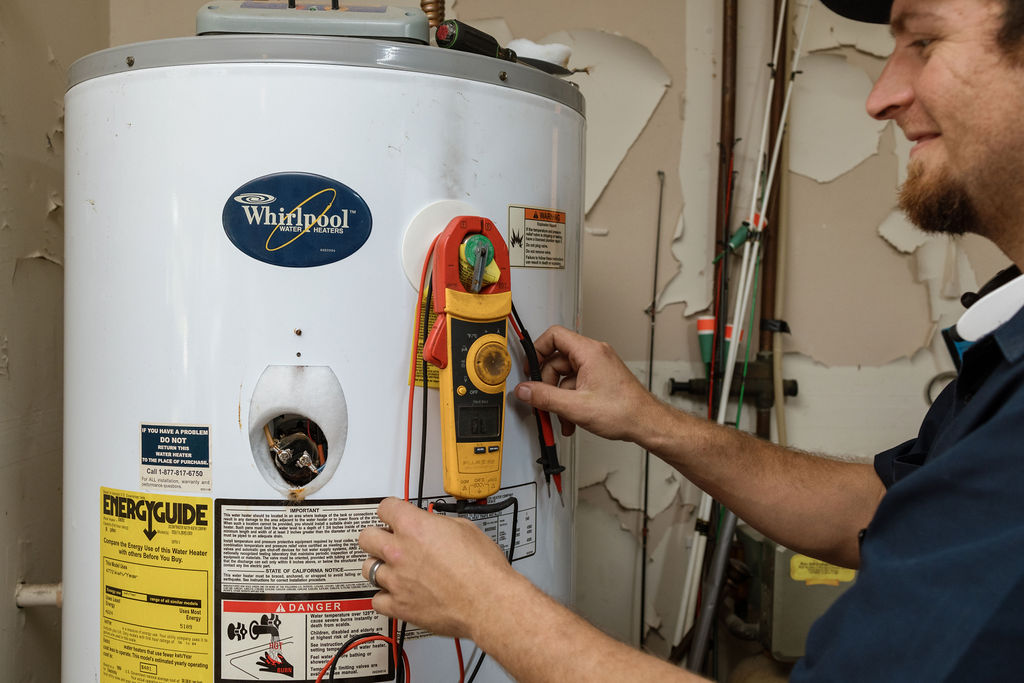
A water heater diagnosis should explain more than which part might be replaced. We want to understand the symptom, confirm the failure, look at the condition of the equipment, and make sure the recommendation makes sense for the homeowner.
Symptom
Start With What Changed
We want to know whether the problem is no hot water, inadequate hot water, leakage, noise, discoloration, or another change in normal operation.
Test
Check the Components Related to the Complaint
Depending on the equipment, diagnosis may involve electrical, gas, ignition, control, thermostat, heating, flow, pressure, or other operating conditions.
Condition
Look at the Water Heater as a Whole
Tank condition, visible corrosion, leakage, installation condition, maintenance history, and overall equipment health all help put the current repair into context.
Options
Explain Repair and Replacement Honestly
If the problem can reasonably be repaired, that should be clear. If replacement deserves consideration, the homeowner should understand why.
Decision
Choose Based on the Actual Condition
The final decision should account for repair cost, equipment condition, reliability, hot-water needs, and the homeowner's plans for the property.
Continue Learning
Learn More Before You Decide Whether to Repair or Replace
Water Heater Repair vs. Replacement
Compare equipment condition, repair cost, age, reliability, and household needs before deciding which path makes more sense.
→ Investment GuideWater Heater Repair Cost Guide
Learn what can affect water heater repair costs and why the actual diagnosis matters before estimating the scope of the work.
→ Decision GuideTank vs. Tankless Water Heaters
Compare the practical differences between traditional tank systems and tankless equipment before choosing a replacement.
→ Local ServiceHome Services in Northwest Houston
Learn more about Malek's plumbing, HVAC, electrical, and generator services throughout Northwest Houston.
→Malek Homeowner Learning Center
Want to understand the options before scheduling service?
Explore homeowner articles, decision guides, investment guides, and FAQs covering water heaters, plumbing repairs, water quality, and other whole-home decisions.
Frequently Asked Questions
Houston Water Heater Repair FAQs
These answers cover common questions about water heater problems, repair decisions, leaks, hot-water loss, and when replacement may deserve consideration.
Why did my water heater suddenly stop making hot water? +
A sudden loss of hot water can involve heating elements, thermostats, ignition components, electrical supply, gas supply, controls, or another equipment problem depending on the type of water heater. Diagnosis is needed to identify the actual cause.
Can a leaking water heater be repaired? +
Sometimes. Leaks from valves, connections, or other serviceable components may be repairable. A leaking tank itself is a different situation and usually requires replacement. The source of the water needs to be confirmed first.
Why is my water heater making popping or rumbling sounds? +
Tank-style water heaters can sometimes develop noise related to sediment or other operating conditions. A technician can evaluate the equipment and determine whether maintenance, repair, or another step is appropriate.
Should I repair or replace an older water heater? +
Age is one factor, but it should not be the only one. Consider equipment condition, repair history, current repair cost, reliability, tank condition, household hot-water needs, and how long you plan to remain in the home.
Why does my hot water run out faster than it used to? +
Reduced hot-water capacity can be related to heating components, sediment, thermostat conditions, equipment performance, tank capacity, or increased household demand. The pattern needs to be evaluated before assuming replacement is necessary.
Can Houston water quality affect a water heater? +
Water conditions can contribute to scale or sediment inside water-heating equipment, but water quality varies by location and supply. It should be considered as part of the diagnosis rather than assumed to be the cause of every water heater problem.
Does Malek provide water heater repair in Northwest Houston? +
Yes. Malek provides residential water heater repair and plumbing service throughout Northwest Houston and surrounding service communities.
Water Heater Acting Up?
Let’s Find Out What Failed Before You Decide What to Replace
Malek provides water heater repair and plumbing service throughout Northwest Houston. If you have no hot water, inconsistent temperatures, unusual noise, or a leak, our team can diagnose the problem and explain whether repair or replacement makes more sense.