A slab leak happens when a pressurized water line beneath a home’s concrete foundation develops a crack, hole, or failed connection.
Common causes include shifting Texas soil, corrosion, installation damage, abrasion, high water pressure, and aging pipe materials. Because the line is hidden, homeowners often notice indirect symptoms such as warm flooring, unexplained water use, reduced pressure, running-water sounds, or moisture near the foundation.
How Slab Leaks Develop
Water Can Escape Beneath the Home Long Before the Damage Is Obvious
A Pipe Weakens or Moves
Corrosion, soil movement, pressure, age, or installation damage places stress on the line.
The Line Begins Leaking
Water escapes into the soil or surrounding material beneath the concrete slab.
Symptoms Appear Elsewhere
Moisture, heat, sound, pressure loss, or a higher water bill may show up away from the actual break.
Common Causes
Why Water Lines Beneath a Slab Fail
Shifting or Expansive Soil
Texas soil expands when wet and contracts as it dries. Repeated movement can stress buried pipes and connections.
Pipe Corrosion
Water chemistry, soil conditions, and contact with surrounding materials can weaken certain pipe types over time.
Improper Installation
Pipes that were bent, nicked, poorly joined, or inadequately protected during construction may fail early.
Abrasion and Friction
Small amounts of movement can cause a line to rub against concrete, gravel, or nearby materials until the pipe wall wears through.
Excessive Water Pressure
Consistently high pressure places added strain on the line and can accelerate failure at weak points.
Aging Plumbing Materials
Older pipes may become brittle, corroded, or increasingly vulnerable to repeated leaks.
Warning Signs
What a Slab Leak May Look or Sound Like
Warm Flooring
A warm spot may point to a leaking hot-water line beneath the slab.
Higher Water Bills
Unexplained usage increases can occur when water escapes continuously below the home.
Running-Water Sounds
You may hear water beneath flooring or inside walls even when fixtures are off.
Reduced Water Pressure
A meaningful leak can reduce pressure or change how fixtures perform.
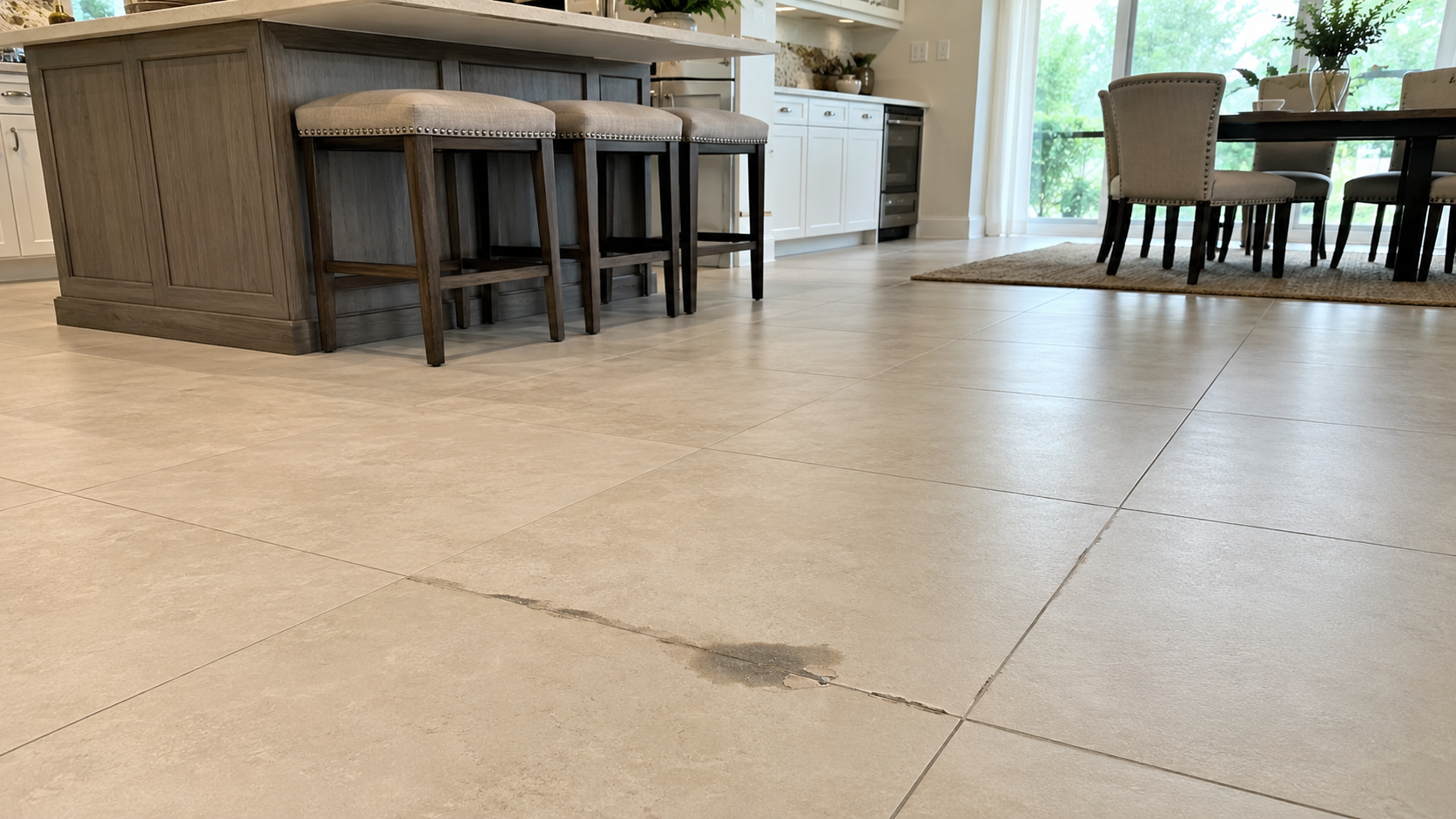
Damp or Damaged Flooring
Moisture may cause carpet dampness, warped materials, staining, or musty odors.
Moisture Near the Foundation
Water may appear at the slab edge, along exterior walls, or in nearby soil.
Meter Movement With Fixtures Off
Continued meter activity may confirm that water is still flowing somewhere in the plumbing system.
Recurring Leak Symptoms
Repeated moisture, pressure changes, or unexplained usage may point to a continuing underground problem.
What to Do Next
Safe Steps to Take if You Suspect a Slab Leak
Check the Water Meter
Turn off known water use and see whether the meter continues registering flow.
Document the Symptoms
Note warm areas, damp flooring, sounds, pressure changes, and when each symptom appears.
Review Recent Water Use
Compare recent usage with prior months, especially when household routines have not changed.
Protect Nearby Belongings
Move rugs, furniture, boxes, and other materials away from moisture.
Shut Off the Main Water if Damage Is Spreading
A shutoff may help limit water loss when moisture is increasing quickly or pressure has dropped suddenly.
Schedule Professional Detection
Have the source located before any flooring, concrete, or walls are opened.
Do Not Start Breaking Into the Floor
Do not drill into the slab. The visible symptom may not be directly above the leak.
Do not remove flooring without a location plan. Unnecessary demolition can increase the repair scope.
Do not ignore a moving meter. Continued water loss can increase damage and cost.
Do not assume every slab leak requires full water-line replacement. The repair path depends on the location and condition of the piping.
Professional Leak Detection
How a Slab Leak Can Be Located Before Repair Work Begins
The plumber can confirm ongoing water loss and determine whether the system is holding pressure.
Specialized listening equipment may help identify the sound of water escaping beneath the slab.
Temperature differences may help narrow the location of a leaking hot-water line.
Sections of the plumbing system may be tested separately to identify the affected line.
Flooring, foundation edges, fixtures, water pressure, and moisture patterns help support the diagnosis.
Once the leak is narrowed down, the plumber can explain the least disruptive practical repair path.
Find the Source First
Locate the Leak Before Repairing the Floor or Pipe
Malek can evaluate the plumbing system, narrow down the leak location, and explain whether a direct repair, reroute, or broader water-line solution makes the most sense.
Repair Options
The Best Repair Depends on the Leak Location and the Condition of the Piping
Direct Repair
A targeted repair may make sense when the leak is isolated and the surrounding line remains dependable.
Line Reroute
A damaged section may sometimes be bypassed by routing new piping through a more accessible path.
Partial Replacement
A larger section may be replaced when nearby piping is damaged or difficult to trust.
Broader Water-Line Replacement
Repeated leaks, aging material, or widespread deterioration may make another isolated repair less reliable.
Can Slab Leaks Be Prevented?
Not Every Failure Is Preventable, but Risk Can Be Reduced
Monitor Water Pressure
High pressure can place added strain on pipes and fittings throughout the home.
Address Plumbing Changes Early
Rising water use, pressure loss, fixture leaks, and unexplained sounds deserve attention.
Manage Drainage Around the Home
Direct water away from the foundation and avoid extreme moisture swings around the slab.
Know the Age and Material of the Piping
Older or repeatedly failing lines may need closer monitoring or replacement planning.
Frequently Asked Questions
Slab Leak Questions
What are the most common signs of a slab leak?
Common signs include warm flooring, unexplained water-bill increases, running-water sounds, reduced pressure, damp flooring, warped materials, meter movement, and moisture near the foundation.
Can a slab leak damage the foundation?
A slab leak does not automatically mean the foundation is failing, but continued water movement can affect nearby soil, flooring, and building materials.
Should I shut off the water if I suspect a slab leak?
If water is actively spreading, pressure has dropped suddenly, or damage is worsening, shutting off the main water supply may help limit additional water loss.
How is a slab leak located without tearing up the floor?
Plumbers may use pressure testing, acoustic equipment, thermal imaging, line isolation, and moisture patterns to narrow down the source before recommending access.
Can a slab leak be repaired without replacing the entire water line?
Yes. An isolated failure may be repaired directly, rerouted, or addressed through partial replacement. Full replacement is usually considered when deterioration is more widespread.
Does warm flooring always mean a slab leak?
No. Warm flooring can have other causes, but a new unexplained warm area—especially with higher water use or meter movement—should be investigated.
How quickly should a suspected slab leak be checked?
Prompt inspection is recommended because the leak may continue wasting water and spreading beneath the home even when visible damage is limited.
Can high water pressure contribute to slab leaks?
Yes. Consistently high pressure can increase strain on vulnerable pipes and connections, although it is rarely the only factor.