
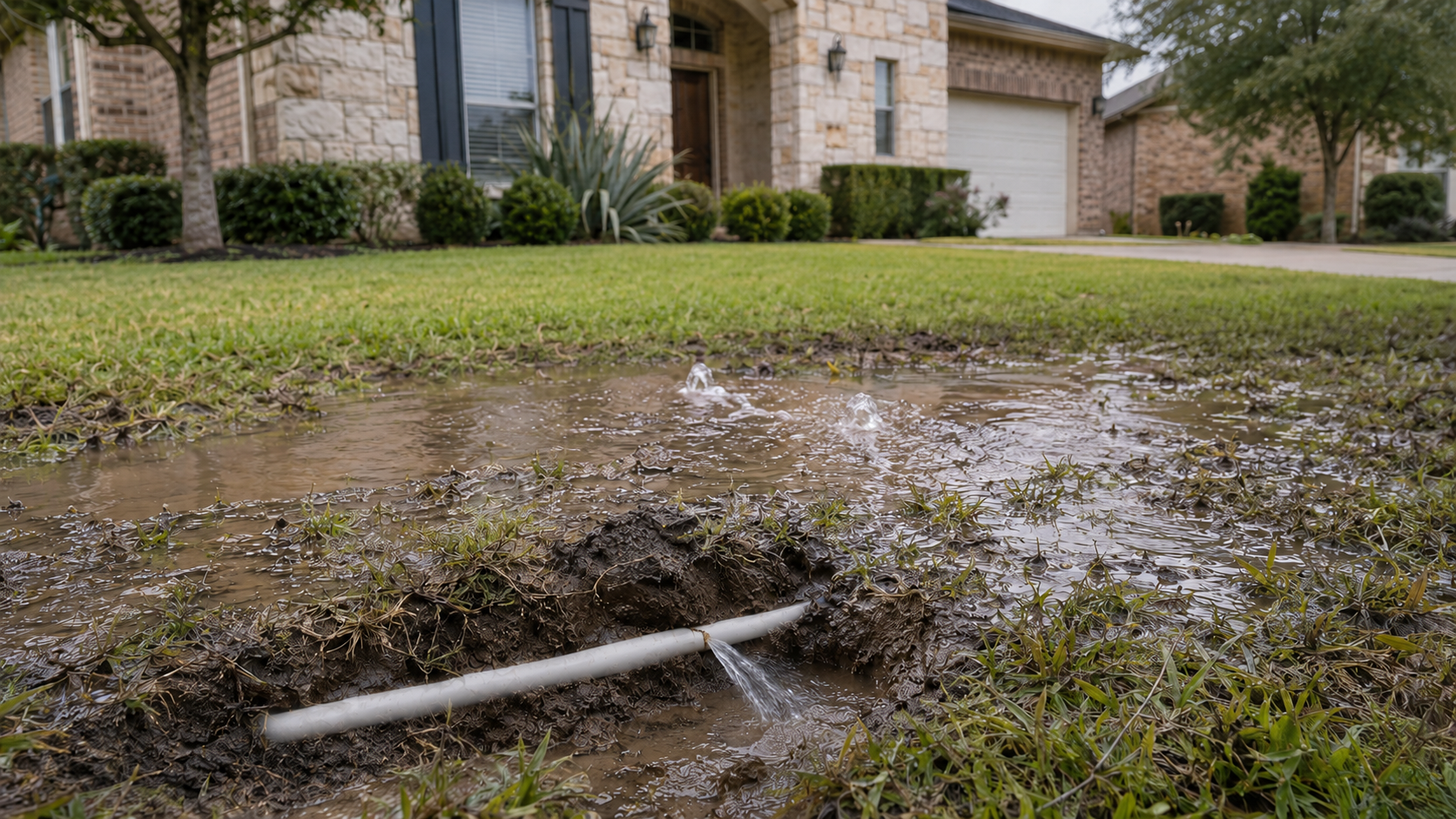
A water line can burst after freezing, corrosion, shifting soil, excessive pressure, root pressure, installation damage, or years of wear weaken the pipe.
Some breaks release water quickly and cause obvious flooding. Others begin as cracks, punctures, or separated joints that leak underground or beneath the home before the damage becomes visible.
Understanding the Problem
A Burst Water Line Does Not Always Split Completely Open
Pressurized water can escape through a crack, puncture, failed fitting, or separated joint. The symptoms depend on where the damaged line is located.
Water Escapes Into the Yard
- Pooling or unusually soft soil
- Erosion or sinking areas
- A sudden drop in pressure throughout the home
- Meter movement with fixtures off
Symptoms May Appear Inside
- Warm flooring
- Damp flooring or musty odors
- Running-water sounds
- An unexplained increase in water use
Damage Can Spread Quickly
- Water inside walls, ceilings, or cabinets
- Staining, bubbling paint, or wet drywall
- Damaged flooring or active flooding
- Sudden pressure loss
Common Causes
Why Water Lines Burst
Freezing Temperatures
Water expands as it freezes, creating pressure inside exposed, poorly insulated, or already weakened piping.
Aging or Corroded Pipes
Corrosion, mineral buildup, and deteriorating materials can weaken the pipe until it fails under normal pressure.
Shifting Texas Soil
Expansive soil swells when wet and contracts when dry, placing repeated stress on underground lines and joints.
Excessive Water Pressure
Consistently high pressure can strain fittings, valves, connections, and weak sections throughout the plumbing system.
Tree Root Pressure
Roots can shift surrounding soil or press against an already vulnerable line until the pipe cracks or separates.
Installation or Excavation Damage
Improper support, weak connections, accidental digging, or damage during construction may cause immediate or delayed failure.
Warning Signs
What a Burst or Broken Water Line May Look Like
Pooling Water
Water may collect in the yard, near the foundation, inside cabinets, or beneath flooring.
Sudden Pressure Loss
A large break can reduce pressure throughout the home or at several fixtures at once.
Meter Movement
The water meter may continue registering flow even when all known fixtures are off.
Soft or Muddy Soil
Underground leaks can create soggy patches, erosion, sinking areas, or unusually green grass.
Running-Water Sounds
You may hear water beneath flooring, inside walls, or near the foundation with fixtures off.
Higher Water Bills
A hidden break may waste water continuously before visible damage appears.
Water Damage Indoors
Staining, bubbling paint, warped flooring, damp drywall, and musty odors may signal concealed water loss.
Warm Areas on the Floor
A warm spot may point to a damaged hot-water line beneath the slab.
What to Do First
Take These Steps if a Water Line Breaks
Shut Off the Main Water Supply
Turn off the home’s main shutoff valve as quickly as possible when it is safe to reach.
Avoid Electrical Hazards
Stay away from standing water near outlets, appliances, panels, or exposed wiring.
Relieve Remaining Pressure
After the main supply is off, open a low accessible faucet to help drain remaining water.
Protect the Affected Area
Move furniture, rugs, boxes, and other belongings away from visible water when it is safe.
Document Visible Damage
Take photos or video before cleanup when practical, especially if insurance may be involved.
Call a Licensed Plumber
Have the damaged line located and the surrounding pipe evaluated before repair work begins.
Do Not Search for the Break by Digging or Opening the Home
Do not excavate around an underground line. You could damage other utilities or worsen the break.
Do not cut into walls or flooring without a location plan. Water can travel away from the actual failure.
Do not repeatedly turn the water back on. Each test can release more water and increase property damage.
Do not assume the entire line must be replaced. The right scope depends on the location and condition of the surrounding pipe.
Professional Evaluation
How a Plumber Locates and Assesses the Break
These checks help confirm water loss and whether the plumbing system can hold pressure.
Pooling, soil changes, moisture, pressure symptoms, and water-damage patterns help narrow the area.
Specialized equipment may help identify the sound or location of escaping water.
Sections of the plumbing system may be tested separately to determine which line is affected.
The plumber evaluates corrosion, age, prior repairs, and whether nearby piping remains dependable.
The location and installation conditions determine the least disruptive practical repair method.
Restore Water Service Safely
Locate the Break and Choose the Right Repair
Malek can find the damaged section, determine why it failed, and explain whether an isolated repair, reroute, partial replacement, or full water-line replacement is the better long-term solution.
Repair or Replace?
The Best Solution Depends on the Failure and the Remaining Pipe
Repair May Make Sense When
- The damage is isolated
- The surrounding pipe is in dependable condition
- The line has not experienced repeated failures
- Access allows a durable repair
Replacement Deserves Comparison When
- The pipe is heavily corroded or deteriorated
- Multiple leaks have occurred
- The material is aging or unreliable
- A repair would leave other weak sections in service
Reducing Future Risk
Some Water Line Failures Can Be Prevented or Caught Earlier
Protect Pipes During Freezes
Insulate exposed piping, disconnect hoses, and follow cold-weather precautions before temperatures drop.
Monitor Water Pressure
Consistently high pressure can increase strain on vulnerable pipes and fittings.
Call Before Digging
Have underground utilities marked before excavation or landscaping work begins.
Act on Early Warning Signs
Pressure changes, meter movement, soft soil, and unexplained usage deserve prompt investigation.
Frequently Asked Questions
Burst Water Line Questions
What are the signs of a burst water line?
Common signs include pooling water, soft or muddy soil, sudden pressure loss, running-water sounds, meter movement, higher water bills, or water entering the home.
What should I do first if a water line bursts?
Shut off the home’s main water supply if it is safe, avoid electrical hazards, protect belongings, document visible damage, and call a licensed plumber.
Can a water line burst during a Texas freeze?
Yes. Water expands as it freezes, placing pressure on exposed, poorly insulated, or already weakened piping.
Can shifting soil break an underground water line?
Yes. Expansive Texas soil can repeatedly move around buried piping, stressing joints and pipe walls over time.
Does a burst water line always cause flooding?
No. Smaller cracks and separated joints can leak underground or beneath the home without creating an immediate visible flood.
Can a burst water line be repaired?
An isolated break may be repairable when the surrounding pipe remains in good condition. More widespread deterioration may justify replacement.
Will homeowners insurance cover a burst water line?
Coverage depends on the policy, cause, and type of damage. Document visible conditions and contact your insurance provider for guidance.
How quickly should a burst line be repaired?
Prompt service is important because continued water loss can increase property damage, erosion, and restoration costs.
Cookie Consent
We use cookies to improve your experience on our site. By using our site, you consent to cookies.
Cookie Preferences
Manage your cookie preferences below:
Essential cookies enable basic functions and are necessary for the proper function of the website.
These cookies are needed for adding comments on this website.
Google reCAPTCHA helps protect websites from spam and abuse by verifying user interactions through challenges.
Google Tag Manager simplifies the management of marketing tags on your website without code changes.
Statistics cookies collect information anonymously. This information helps us understand how visitors use our website.
Google Analytics is a powerful tool that tracks and analyzes website traffic for informed marketing decisions.
Service URL: policies.google.com (opens in a new window)
Marketing cookies are used to follow visitors to websites. The intention is to show ads that are relevant and engaging to the individual user.
Google Maps is a web mapping service providing satellite imagery, real-time navigation, and location-based information.
Service URL: policies.google.com (opens in a new window)
You can find more information in our Cookie Policy and Privacy Policy.