
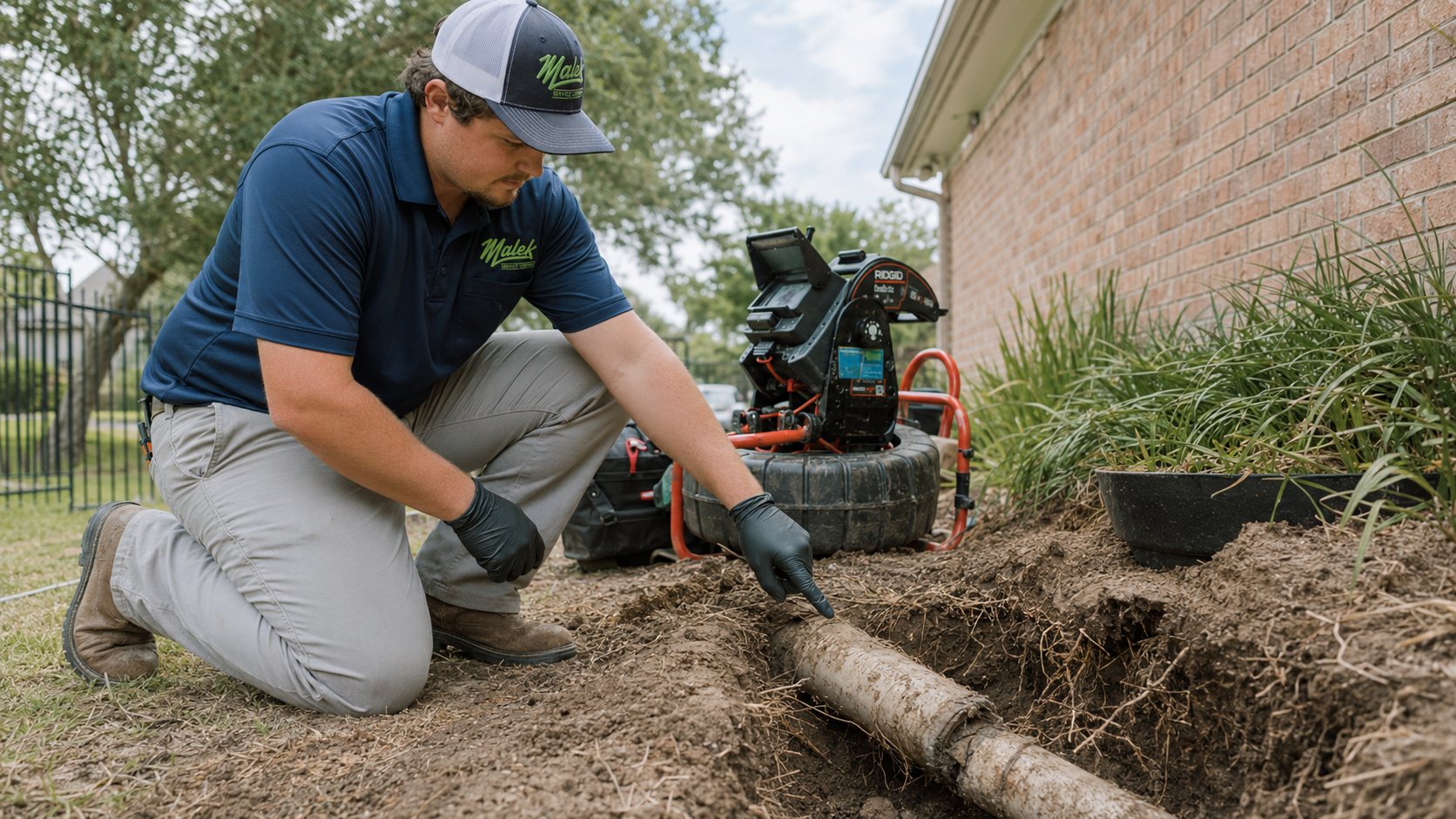
Sewer repair may be necessary when the main line is cracked, separated, corroded, bellied, infiltrated by roots, or otherwise unable to carry wastewater reliably.
A single slow drain usually points to a localized clog. Multiple slow drains, recurring backups, sewer odors, gurgling fixtures, or soggy areas in the yard are stronger signs that the main sewer line should be inspected.
Repair or Drain Cleaning?
Not Every Sewer Problem Means the Pipe Is Damaged
The symptoms may look similar, but a blockage and a structurally damaged sewer line require different solutions.
The Pipe Is Blocked but Still Intact
- One fixture or one branch drain is affected
- The problem is caused by grease, debris, or a localized clog
- The pipe is structurally sound
- Flow returns fully after professional cleaning
The Pipe Itself Is Damaged
- Cracks, separations, corrosion, or collapse are visible
- Roots repeatedly enter damaged joints
- The line has a severe belly or improper slope
- Backups return after the blockage is cleared
Warning Signs
Signs the Main Sewer Line May Need Repair
Multiple Drains Slow Down Together
When sinks, tubs, showers, and toilets are affected at the same time, the restriction may be in the main sewer line.
Backups Keep Returning
Recurring backups after plunging or cleaning can point to roots, pipe damage, or a persistent restriction.
Sewage Enters the Home
Wastewater backing up through tubs, showers, toilets, or floor drains requires prompt attention.
Persistent Sewer Odors
Odors near drains, the yard, or the foundation may be associated with a damaged line, dry trap, or venting problem.
Drains Gurgle Repeatedly
Recurring gurgling may indicate trapped air caused by a blockage or impaired sewer flow.
The Yard Has Soggy Areas
Wet soil, standing water, or unusually green grass may point to wastewater escaping underground.
The Ground Is Sinking
Soil loss around a damaged sewer line can contribute to depressions, erosion, or settlement.
Problems Return Soon After Cleaning
Fast recurrence may indicate that the underlying pipe condition—not only the blockage—needs attention.
Common Causes
Why Sewer Lines Become Damaged
Tree Root Intrusion
Roots can enter small cracks or loose joints, restrict flow, and enlarge existing damage as they grow.
Aging Pipe Materials
Older clay, cast iron, Orangeburg, and other materials can crack, corrode, deform, or lose structural strength.
Shifting Texas Soil
Expanding and contracting soil can place stress on buried pipes, joints, and connections.
Grease and Debris Buildup
Accumulated grease, wipes, paper products, and other debris can create recurring restrictions and expose weak pipe conditions.
Corrosion and Cracks
Pipe walls may weaken over time until wastewater begins escaping into the surrounding soil.
Improper Installation
Incorrect slope, poor bedding, weak joints, or older repair work can create recurring drainage problems.
Pipe Belly or Sagging
A low section can hold wastewater and debris instead of allowing the line to drain properly.
Accidental Damage
Excavation, construction, heavy equipment, or utility work can crush, puncture, or shift an underground line.
Avoid These Common Sewer-Line Mistakes
Do not keep using water during a backup. Additional wastewater can overflow into the home.
Do not rely on repeated chemical drain cleaner. It may not reach or correct a damaged main sewer line.
Do not dig before the line is inspected and utilities are marked. The visible yard symptom may not identify the exact location.
Do not approve full replacement without understanding the inspection findings. Some problems can be repaired more selectively.
Professional Inspection
What Happens Before Sewer Repair Is Recommended
Review the Symptoms
The plumber asks which fixtures are affected, how often the problem returns, and whether odors, yard changes, or backups are present.
Confirm the Drainage Pattern
Testing helps determine whether the problem is isolated to one branch or involves the main sewer line.
Clear Access When Needed
A severe blockage may need to be opened enough for the line to drain and for inspection equipment to pass.
Inspect the Pipe Interior
A sewer camera may reveal roots, cracks, corrosion, standing water, separated joints, buildup, or collapse.
Locate the Problem
The affected section can be mapped so the repair area and access requirements are understood.
Review the Options
The plumber explains whether cleaning, spot repair, trenchless work, rerouting, or replacement is appropriate.
Inspect Before You Repair
Find Out Whether the Sewer Line Is Blocked or Damaged
Malek can evaluate the drainage pattern, inspect the sewer line when appropriate, identify the cause, and explain the repair options before work begins.
Repair Options
The Right Solution Depends on the Pipe Condition and Location
Professional Drain Cleaning
Cleaning may restore reliable flow when the pipe remains structurally sound and the problem is buildup or a removable blockage.
Spot Repair
An isolated crack, separated joint, or damaged section may be repaired without replacing the entire line.
Trenchless Sewer Repair
Qualified lines may be repaired or replaced through methods that reduce the amount of open excavation required.
Traditional Replacement
Open excavation may be appropriate when the pipe has collapsed, the route must change, or trenchless methods are not suitable.
Partial Replacement
A longer damaged section may be replaced while dependable portions of the existing line remain in service.
Full Sewer-Line Replacement
Widespread deterioration, repeated failures, poor material condition, or multiple damaged sections may justify full replacement.
When the Problem Is Urgent
Some Sewer Symptoms Should Not Wait
Sewage Is Backing Up Indoors
Stop water use and keep people and pets away from contaminated areas.
Toilets and Drains Will Not Empty
A severe main-line blockage may cause wastewater to return through lower fixtures.
Wastewater Is Surfacing in the Yard
Standing wastewater or sewage odors outdoors may indicate a leaking or broken sewer line.
The Problem Is Spreading Quickly
Rapidly worsening backups, saturation, or property damage requires prompt professional attention.
Reducing Future Risk
Good Drain Habits Can Reduce Blockages, but They Cannot Prevent Every Pipe Failure
Keep Grease Out of Drains
Allow cooking grease to cool and place it in the trash instead of pouring it into the plumbing system.
Flush Only Toilet Paper
Wipes, paper towels, hygiene products, and other materials can create difficult sewer blockages.
Address Recurring Clogs
Repeated problems deserve inspection rather than a cycle of temporary clearing.
Know the Sewer Line’s Condition
Older materials, mature trees, prior repairs, and shifting soil may justify closer monitoring.
Frequently Asked Questions
Sewer Repair Questions
How do I know whether I need sewer repair or drain cleaning?
Drain cleaning may be enough when the line is blocked but structurally sound. Repair is more likely when inspection reveals cracks, corrosion, separated joints, collapse, severe sagging, or recurring root entry.
Can a damaged sewer line be repaired without replacing the whole pipe?
Yes. Isolated damage may qualify for a spot repair, partial replacement, or a trenchless solution depending on the pipe condition and location.
What causes sewer lines to fail?
Common causes include tree roots, aging materials, shifting soil, corrosion, improper slope, weak joints, repeated blockages, and accidental damage.
Does a sewer camera inspection require digging?
Usually not. A camera is typically inserted through an accessible cleanout or drain opening. Digging may be needed later if a damaged section requires direct access.
Is sewer repair an emergency?
It can be. Sewage backups, wastewater surfacing in the yard, widespread drainage failure, and rapidly worsening property damage need prompt attention.
Can tree roots be removed without repairing the line?
Roots may be cleared temporarily, but they can return when cracks or failed joints remain. The underlying pipe condition determines whether repair is needed.
When is trenchless sewer repair an option?
Trenchless methods may be possible when access, pipe route, damage type, and surrounding conditions are suitable. A professional inspection is needed to confirm qualification.
How can I help prevent future sewer problems?
Keep grease and non-flushable materials out of drains, address recurring clogs, and have older or repeatedly failing lines inspected before a complete backup occurs.
Cookie Consent
We use cookies to improve your experience on our site. By using our site, you consent to cookies.
Cookie Preferences
Manage your cookie preferences below:
Essential cookies enable basic functions and are necessary for the proper function of the website.
These cookies are needed for adding comments on this website.
Google reCAPTCHA helps protect websites from spam and abuse by verifying user interactions through challenges.
Google Tag Manager simplifies the management of marketing tags on your website without code changes.
Statistics cookies collect information anonymously. This information helps us understand how visitors use our website.
Google Analytics is a powerful tool that tracks and analyzes website traffic for informed marketing decisions.
Service URL: policies.google.com (opens in a new window)
Marketing cookies are used to follow visitors to websites. The intention is to show ads that are relevant and engaging to the individual user.
Google Maps is a web mapping service providing satellite imagery, real-time navigation, and location-based information.
Service URL: policies.google.com (opens in a new window)
You can find more information in our Cookie Policy and Privacy Policy.