
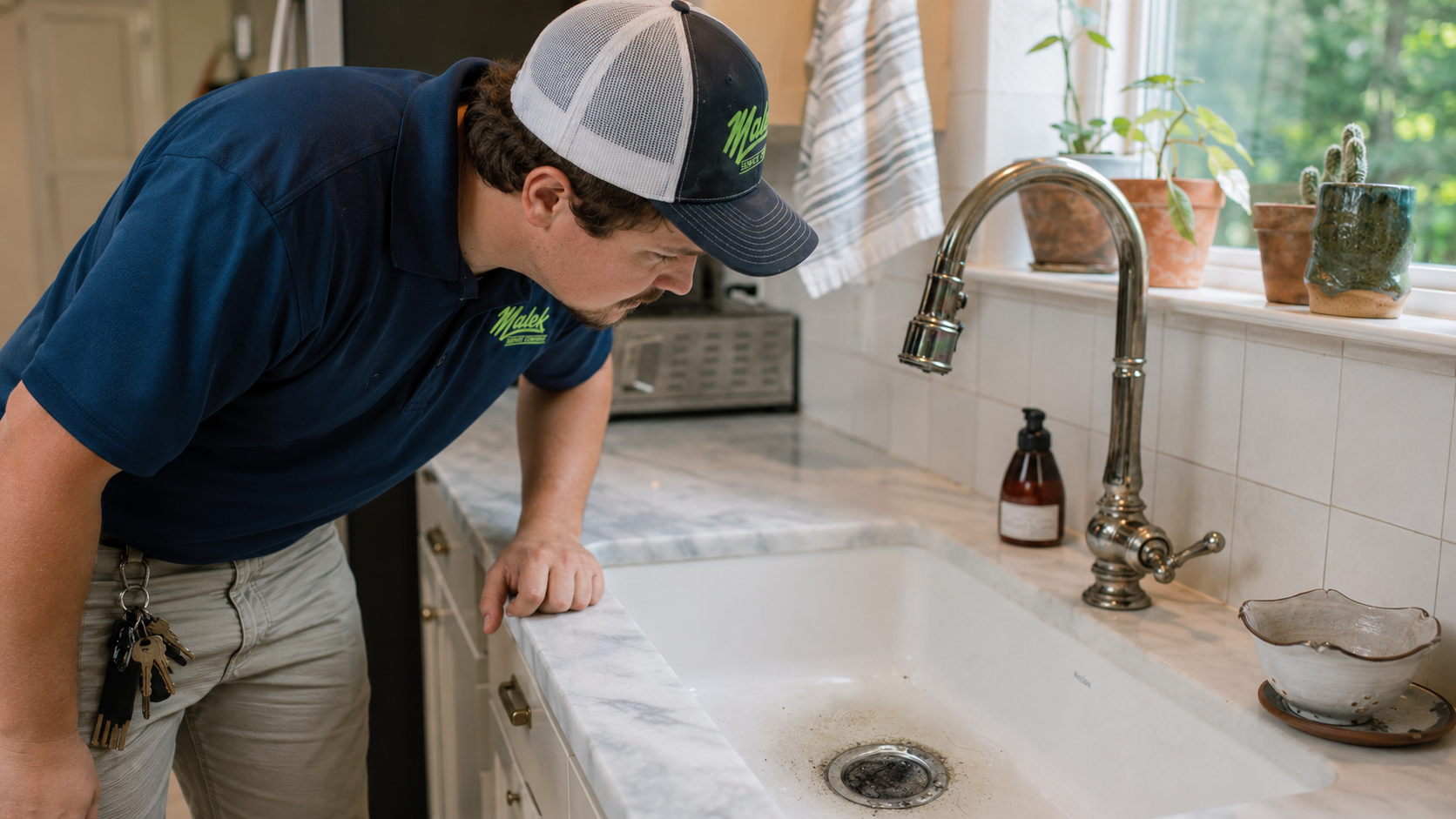
A drain that keeps clogging usually means the blockage was only partially cleared or the underlying cause was never addressed.
Common causes include grease, soap residue, hair, foreign objects, mineral buildup, roots, pipe damage, poor slope, or a deeper sewer-line restriction. The most useful clue is whether the same fixture keeps clogging or several drains are affected at once.
Why the Problem Returns
The Drain May Reopen Without the Full Blockage Being Removed
Buildup Narrows the Pipe
Grease, hair, soap residue, food, scale, or debris collects along the inside of the drain.
A Small Passage Opens
Plunging, hot water, or a chemical product may create enough space for water to move temporarily.
The Remaining Material Catches More Debris
The narrowed area collects additional waste until the drain slows or clogs again.
Start With the Pattern
Is One Drain Clogging—or Several?
Likely a Local Drain Problem
- Hair or soap buildup near a bathroom drain
- Food or grease in a kitchen branch line
- A foreign object near the fixture
- A localized pipe restriction
May Involve the Main Drain or Sewer
- Main-line buildup
- Tree root intrusion
- Damaged or collapsed pipe
- Standing water from poor slope or a pipe belly
Common Causes
Why the Same Drain Keeps Clogging
Grease and Food Buildup
Cooking grease coats the pipe and traps food particles, soap, and other debris over time.
Hair and Personal-Care Products
Hair can combine with soap, shaving products, and residue to form dense bathroom clogs.
Foreign Objects
Wipes, paper towels, hygiene products, toys, and other materials can lodge in drains and toilets.
Mineral or Scale Buildup
Hard-water minerals can reduce the inside diameter of older piping and create rough surfaces that catch debris.
Tree Root Intrusion
Roots can enter cracks or loose joints in underground sewer lines and repeatedly restrict flow.
Damaged or Corroded Pipe
Cracks, corrosion, separated joints, or collapsed sections can trap waste and cause recurring backups.
Pipe Belly or Poor Slope
A low section can hold water and debris instead of allowing the line to drain completely.
Improper Previous Clearing
A short cable, partial opening, or chemical treatment may not remove the full blockage or reach the affected area.
Safe Homeowner Checks
What You Can Check Before Scheduling Service
Check Other Fixtures
Determine whether the issue is limited to one drain or appears in several sinks, tubs, showers, toilets, or floor drains.
Remove Visible Debris
Clear accessible hair, food, or residue from the drain opening, stopper, or strainer.
Use a Plunger for One Simple Clog
Careful plunging may help a basic fixture-level clog when no chemical cleaner is present.
Listen for Gurgling
Gurgling from nearby fixtures may indicate trapped air and a deeper restriction.
Notice Where Water Backs Up
Water rising in another fixture helps identify whether the blockage is farther down the drain system.
Track How Quickly the Problem Returns
A clog that comes back within days or weeks is less likely to be a one-time obstruction.
Do Not Keep Repeating the Same Temporary Fix
Do not keep pouring chemical cleaner into the drain. Repeated use may damage vulnerable piping and create safety risks.
Do not keep forcing water through a complete blockage. The water may back up into another fixture or overflow.
Do not assume roots or pipe damage can be solved by plunging. Structural problems require inspection and repair.
Do not ignore several slow drains. Multiple affected fixtures can indicate a main sewer-line problem.
When to Call a Plumber
Recurring Clogs Deserve Professional Attention When the Pattern Points Deeper
The Clog Returns Soon After Clearing
Fast recurrence suggests buildup or damage remains in the line.
Several Drains Are Slow
Multiple affected fixtures may point to a main drain or sewer-line restriction.
Water Backs Up Elsewhere
Cross-fixture backup is a strong sign that the blockage is farther downstream.
There Are Sewer Odors
Persistent odors may be associated with trapped waste, venting trouble, or damaged piping.
The Drain Gurgles Repeatedly
Ongoing gurgling can signal restricted flow and trapped air in the system.
Chemical Cleaner Did Not Work
Tell the plumber exactly what was used and when so the line can be handled safely.
The Home Has Mature Trees
Roots may enter cracks or loose joints in older underground sewer lines.
The Problem Is Getting Worse
Increasingly frequent clogs, slower drainage, or sewage backup should be addressed before more damage occurs.
Professional Diagnosis
How a Plumber Finds the Cause of a Recurring Clog
The plumber determines whether the problem is one fixture, one branch line, or the main sewer line.
How quickly the clog returns, what triggers it, and what has already been tried all help narrow the cause.
The equipment and approach depend on the drain size, location, pipe condition, and type of blockage.
A camera may reveal roots, corrosion, standing water, separated joints, damaged pipe, or remaining buildup.
Testing after cleaning helps verify that the blockage has been removed and the line is draining as expected.
Cleaning cannot correct cracks, collapse, severe corrosion, poor slope, or repeated root entry.
Solve the Cause, Not Just the Symptom
Find Out Why the Drain Keeps Clogging
Malek can evaluate the affected drain, clear the blockage with the appropriate equipment, and determine whether roots, buildup, or damaged piping is causing the problem to return.
Possible Solutions
The Right Fix Depends on Whether the Pipe Is Blocked or Damaged
Professional Drain Cleaning
Cleaning may remove grease, hair, soap residue, food, and other routine buildup from an intact line.
Targeted Root Removal
Roots may be cleared to restore flow, but damaged joints or cracks may still need repair.
Drain Repair
An isolated cracked, corroded, or damaged section may require direct repair.
Sewer-Line Repair or Replacement
Widespread damage, collapse, severe sagging, or repeated root intrusion may require a larger solution.
Preventing Future Clogs
Good Drain Habits Can Reduce Buildup
Keep Grease Out of the Sink
Allow cooking grease to cool and place it in the trash instead of rinsing it down the drain.
Use Drain Screens
Catch hair, food, and debris before they enter sinks, tubs, and showers.
Flush Only Toilet Paper
Wipes, paper towels, hygiene products, and other materials can create serious blockages.
Address Slow Drains Early
A drain that is gradually slowing is easier to evaluate before it becomes fully blocked.
Frequently Asked Questions
Recurring Drain Clog Questions
Why does the same drain keep clogging?
The blockage may have been only partially cleared, or grease, hair, roots, pipe damage, mineral buildup, or poor slope may still be restricting the line.
Why does the drain work after plunging and then clog again?
Plunging may open a small passage without removing all of the material attached to the pipe, allowing the clog to rebuild.
What does it mean when several drains clog at once?
Multiple affected fixtures often point to a restriction in a shared branch drain or the main sewer line.
Can tree roots cause recurring drain clogs?
Yes. Roots can enter cracks or failed joints in underground sewer lines and continue growing back until the pipe condition is addressed.
Should I keep using chemical drain cleaner?
No. Repeated chemical use may damage vulnerable piping, create safety risks, and fail to correct the underlying cause.
When is a sewer camera inspection needed?
A camera may be recommended when clogs recur, several fixtures are affected, roots or pipe damage are suspected, or cleaning does not fully resolve the problem.
Can professional drain cleaning stop the clog from returning?
It can when buildup is the cause and the pipe remains intact. Structural damage, roots, collapse, or poor slope may require repair.
When should I call a plumber?
Call when the clog keeps returning, several drains are affected, water backs up into another fixture, chemical cleaner has failed, or sewer odors and gurgling are present.
Cookie Consent
We use cookies to improve your experience on our site. By using our site, you consent to cookies.
Cookie Preferences
Manage your cookie preferences below:
Essential cookies enable basic functions and are necessary for the proper function of the website.
These cookies are needed for adding comments on this website.
Google reCAPTCHA helps protect websites from spam and abuse by verifying user interactions through challenges.
Google Tag Manager simplifies the management of marketing tags on your website without code changes.
Statistics cookies collect information anonymously. This information helps us understand how visitors use our website.
Google Analytics is a powerful tool that tracks and analyzes website traffic for informed marketing decisions.
Service URL: policies.google.com (opens in a new window)
Marketing cookies are used to follow visitors to websites. The intention is to show ads that are relevant and engaging to the individual user.
Google Maps is a web mapping service providing satellite imagery, real-time navigation, and location-based information.
Service URL: policies.google.com (opens in a new window)
You can find more information in our Cookie Policy and Privacy Policy.