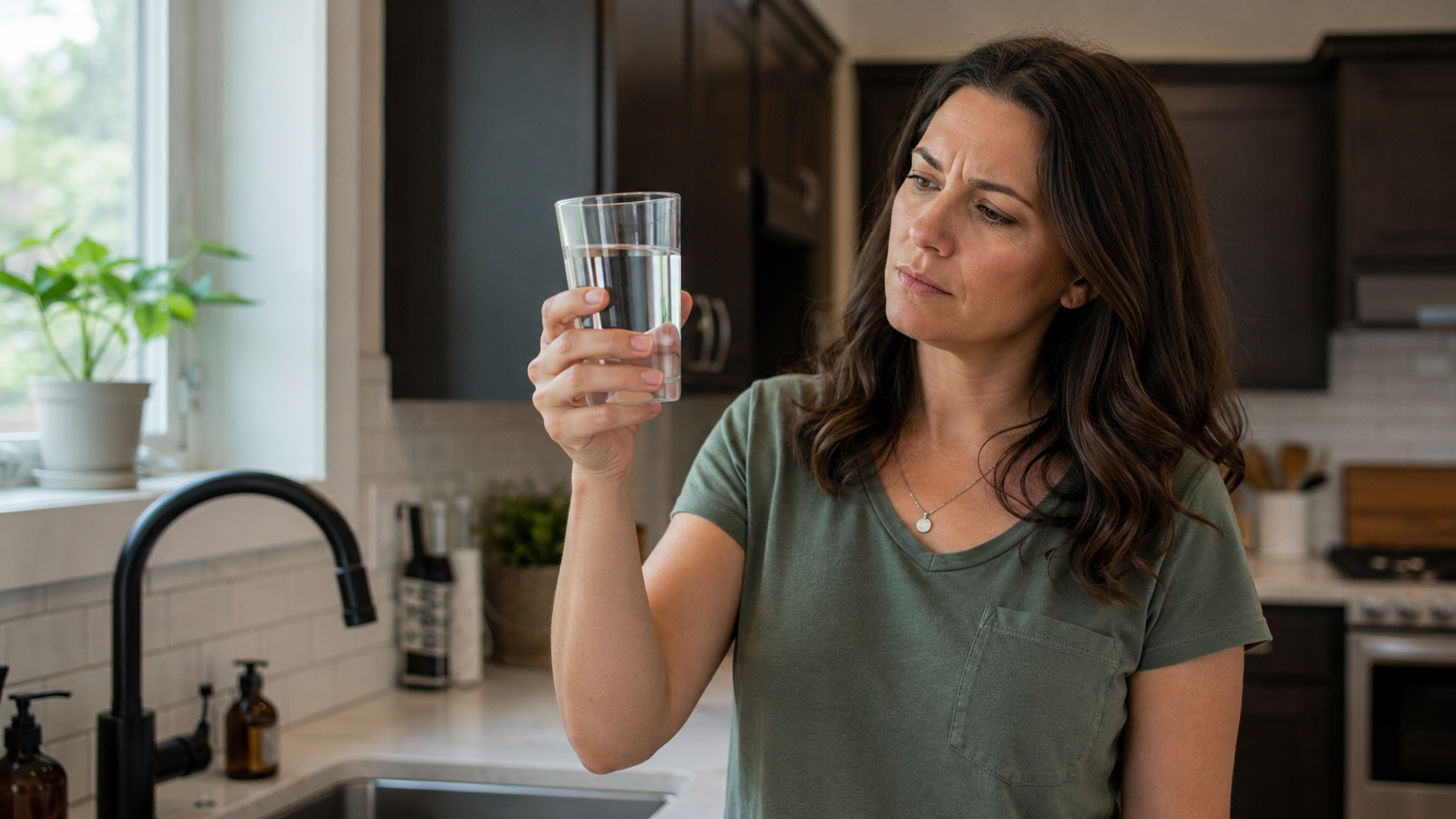
Water can taste unusual because of chlorine, minerals, plumbing materials, stagnant water, water-heater conditions, or changes in the water supply.
Taste alone does not prove that water is unsafe or identify the exact cause. The most useful clues are whether the change affects hot or cold water, one fixture or the whole home, and whether the taste appeared suddenly or has been present for a long time.
Start With the Flavor
Different Taste Changes Can Point Toward Different Causes
Chlorine or Pool-Like
Disinfectant residual in municipal water may create a noticeable chlorine taste, especially after supply changes or periods of low water use.
Metallic
Metallic taste may be associated with plumbing materials, corrosion, minerals, the water heater, or water that has remained in the pipes.
Earthy or Musty
Seasonal source-water changes, organic compounds, plumbing conditions, or a dirty faucet aerator may contribute to an earthy or musty taste.
Salty
A salty taste may be related to naturally occurring minerals, a softener problem, treatment equipment, or changes in the water source.
Bitter or Chemical-Like
Certain plumbing materials, treatment chemicals, stagnant water, or a localized fixture issue may create a bitter or chemical-like taste.
Rotten-Egg or Sulfur-Like
A sulfur-like taste or odor can be associated with the water source, bacterial activity, or water-heater conditions. A gas odor is different and requires immediate action.
Follow the Pattern
One Fixture and the Whole Home Point Toward Different Problems
Only One Faucet Tastes Different
- Dirty or aging faucet aerator
- Fixture supply line condition
- Localized plumbing material
- Under-sink filter overdue for replacement
- Water sitting in a rarely used branch line
Several Fixtures Taste the Same
- Municipal supply or source-water change
- Whole-home plumbing condition
- Existing softener or filter issue
- Mineral content or disinfectant residual
- Well-water or treatment-system condition
Compare Hot and Cold Water
A Taste Limited to Hot Water May Involve the Water Heater
If the cold side is normal but hot water tastes unusual, the water heater, hot-water piping, sediment, or anode-rod condition may be involved.
A whole-home source, treatment-equipment issue, or broader plumbing condition becomes more likely.
Water sitting in the plumbing overnight may pick up more noticeable taste from pipes, fittings, or stagnant sections.
If the taste fades after running the water, stagnation or localized plumbing may be contributing.
New materials, sealants, filters, softeners, or disturbed sediment may temporarily affect taste and should be evaluated if the change persists.
A supply change, utility work, treatment-system problem, or water-source condition may be involved.
What You Can Safely Check Before Scheduling Service
Compare several fixtures. Check the kitchen, bathroom, and an outdoor faucet if available.
Compare hot and cold water. A hot-only change may point toward the water heater or hot-water piping.
Flush a rarely used faucet. Run the cold water briefly and see whether the taste improves.
Remove and clean the aerator. Debris or buildup at one fixture may affect taste.
Check filter dates. An overdue refrigerator, under-sink, or whole-home filter can affect water quality.
Review recent changes. Note plumbing work, utility notices, treatment maintenance, or neighborhood supply changes.
When to Take the Change More Seriously
Stop Using the Water as Directed When There Is a Clear Safety Concern
Contact the Water Provider or Public-Health Authority When
- An official boil-water or do-not-use advisory is issued
- Neighbors are reporting the same sudden change
- The water changes after utility work or a main break
- There is visible contamination or unusual discoloration
- You receive a notice about a confirmed supply problem
Schedule Plumbing or Water-Quality Service When
- The taste is limited to one fixture
- Only hot water is affected
- The change started after plumbing or equipment work
- An existing filter or softener may not be working
- The taste persists without a utility explanation
Why Testing Matters
Testing Helps Separate Taste Complaints From the Actual Water Condition
A useful evaluation begins with the pattern: where the taste occurs, whether hot or cold water is affected, how long the issue has been present, and whether the home uses municipal or well water. Testing can then target the most likely causes instead of relying on guesswork.
Water Source
Municipal and private-well systems can have different treatment needs, maintenance concerns, and testing priorities.
Fixture Pattern
One-fixture complaints often point toward localized plumbing, while whole-home changes may involve the supply or treatment equipment.
Hot-Water Pattern
Hot-only taste changes can shift the evaluation toward the water heater, anode rod, sediment, or hot-water piping.
Treatment Goals
Whole-home taste concerns and drinking-water-only concerns may call for different systems and different levels of treatment.
Find the Source of the Change
Know Why the Water Tastes Different Before Choosing a System
Malek can review the pattern, inspect relevant plumbing and treatment equipment, evaluate the water source, and explain whether filtration, reverse osmosis, water-heater service, or another next step makes sense.
Possible Solutions
The Right Treatment Depends on Where the Taste Comes From
Filtration May Be Considered When
- The taste affects several fixtures
- Chlorine taste or odor is a recurring concern
- Sediment or broader household treatment is needed
- The goal is to treat water entering the home
- Testing supports a whole-home treatment approach
Reverse Osmosis May Be Considered When
- The concern is mainly at the kitchen sink
- The goal is drinking and cooking water
- Point-of-use treatment is preferred
- Testing identifies substances suited to the system
- Filter and membrane maintenance is acceptable
What a Professional Evaluates
A Good Evaluation Should Identify the Source Before Recommending Treatment
The pattern across fixtures, water temperatures, and times of day helps narrow the source.
Municipal notices, well conditions, plumbing work, and treatment maintenance are reviewed.
Aerators, supply lines, localized materials, corrosion, and stagnant branches may be inspected.
Hot-only complaints may require evaluation of sediment, corrosion, anode-rod condition, and hot-water piping.
Filters, softeners, reverse-osmosis systems, bypass settings, and maintenance history are checked.
The recommendation should match the water condition, the location of the concern, and the homeowner’s actual goals.
Frequently Asked Questions
Common Questions About Water Taste
Why does my tap water taste like chlorine?
Municipal water often contains a disinfectant residual. The taste may become more noticeable after supply changes, low water use, or seasonal treatment adjustments.
Why does my water taste metallic?
Metallic taste may be associated with plumbing materials, corrosion, minerals, the water heater, or water that has remained in the pipes. The fixture pattern helps narrow the cause.
Why does only my hot water taste bad?
A hot-only taste change may involve the water heater, sediment, anode-rod condition, corrosion, or hot-water piping rather than the incoming supply.
Can an old filter make water taste worse?
Yes. An overdue, clogged, or poorly maintained filter can affect taste and flow. Filters should be replaced according to the system and water conditions.
Will a water softener improve bad-tasting water?
Not necessarily. A softener primarily reduces hardness minerals. Taste concerns may require filtration, reverse osmosis, water-heater service, or another solution.
Should I use whole-home filtration or reverse osmosis?
Whole-home filtration treats water entering the home, while reverse osmosis is usually installed at a specific drinking-water fixture. The right choice depends on the source of the taste and the treatment goal.
Does bad-tasting water mean it is unsafe?
No. Taste alone does not confirm safety or identify a contaminant. Testing and official water-provider guidance are more reliable than taste.
When should I have the water tested?
Testing makes sense when the taste is persistent, sudden, unexplained, affects several fixtures, or is accompanied by odor, discoloration, sediment, or a change in the water source.