AC Problem Guide
Why Is My AC Leaking Water?
Air conditioners naturally remove moisture from indoor air. That moisture should collect at the indoor coil and drain safely away through the condensate system.
When water begins leaking around the air handler, furnace, ceiling, drain line, or nearby floor, the problem may involve a clogged condensate drain, damaged drain pan, frozen evaporator coil, condensate pump failure, installation issue, or another drainage or cooling-system condition.
This guide explains why AC systems leak water, which observations homeowners can safely make, when the equipment should be turned off, and how the location of the water can help narrow the cause.
The Quick Answer
Most AC Water Leaks Begin With Condensate Drainage or a Frozen Indoor Coil
The Condensate Drain May Be Blocked
Dirt, biological buildup, debris, or another restriction can prevent condensation from draining normally. Water may back up into the pan or overflow near the indoor equipment.
The Indoor Coil May Have Frozen
Restricted airflow, low refrigerant, or another cooling problem can cause ice to form. As that ice melts, the amount of water may exceed what the drain system can handle.
A Drainage Component May Have Failed
A cracked drain pan, failed condensate pump, loose drain connection, or improperly sloped line can allow water to escape before it reaches the intended drain.
Water near HVAC equipment should not be ignored. Even a small leak can damage ceilings, flooring, insulation, drywall, or nearby electrical components if it continues.
Common Causes
Why an Air Conditioner May Leak Water
Clogged Condensate Drain
Moisture collected at the indoor coil normally travels through the condensate drain line. A blockage can cause water to back up and overflow around the indoor equipment.
Damaged or Rusted Drain Pan
A cracked, rusted, shifted, or damaged drain pan may no longer contain condensation properly before it enters the drain line.
Frozen Evaporator Coil
Ice can form on the indoor coil because of airflow, refrigerant, blower, or other cooling-system problems. When that ice melts, excess water may appear around the unit.
Dirty Air Filter or Restricted Airflow
A heavily clogged filter can reduce airflow across the indoor coil and contribute to freezing. The resulting meltwater may then show up as an apparent AC leak.
Condensate Pump Failure
Some systems rely on a condensate pump when water cannot drain by gravity. A failed pump or float control can allow water to accumulate and overflow.
Loose or Damaged Drain Connection
A drain fitting, coupling, trap, or section of PVC can become loose, cracked, or damaged and allow condensation to leak before it reaches the final drain point.
Improper Drain Slope or Installation
Condensate lines must be arranged so water can move away from the equipment properly. Drainage or installation issues can contribute to standing water or repeated backups.
High Humidity and Heavy Condensate Production
During humid Texas weather, an air conditioner may remove a significant amount of moisture. A marginal drain system may become more noticeable when condensate volume increases.
Secondary Drain or Safety Switch Problem
Many systems use secondary drainage or overflow safety devices. If these components are blocked, damaged, disconnected, or not functioning correctly, water may appear where it should not.
What Homeowners Can Check
A Few Safe Observations Can Help Identify the Pattern
Note exactly where the water first appears
Check whether the air filter is visibly dirty
Look for visible ice on accessible refrigerant lines
Notice whether airflow has become unusually weak
Check whether the AC is still cooling normally
Look for water stains around ceilings or attic equipment
Note whether the leak happens only while cooling runs
Watch for repeated shutoffs from an overflow safety switch
Avoid opening HVAC cabinets or electrical compartments to find the source. Water can travel away from the original leak point before becoming visible.
When to Turn the System Off
Some AC Water Leaks Should Not Wait
Water is near electrical wiring, controls, outlets, or equipment
The indoor coil or refrigerant line is covered in ice
Water is leaking through a ceiling or attic area
The drain pan is overflowing faster than water can be contained
The system repeatedly shuts down because of an overflow switch
Cooling performance has dropped while water leakage increases
You notice burning odors, electrical sounds, or breaker problems
The leak is causing active damage to walls, flooring, or ceilings
If water may have reached electrical equipment, avoid touching the affected area or attempting to open the HVAC system. Turn cooling off from a safe location when possible and arrange professional service.
What the Location May Mean
Where You See Water Can Help Narrow the Cause
Water Near the Indoor Unit
The Condensate System May Be Involved
- ✓Blocked condensate drain
- ✓Cracked or overflowing drain pan
- ✓Loose drain connection
- ✓Condensate pump problem
- ✓Water from a thawing frozen coil
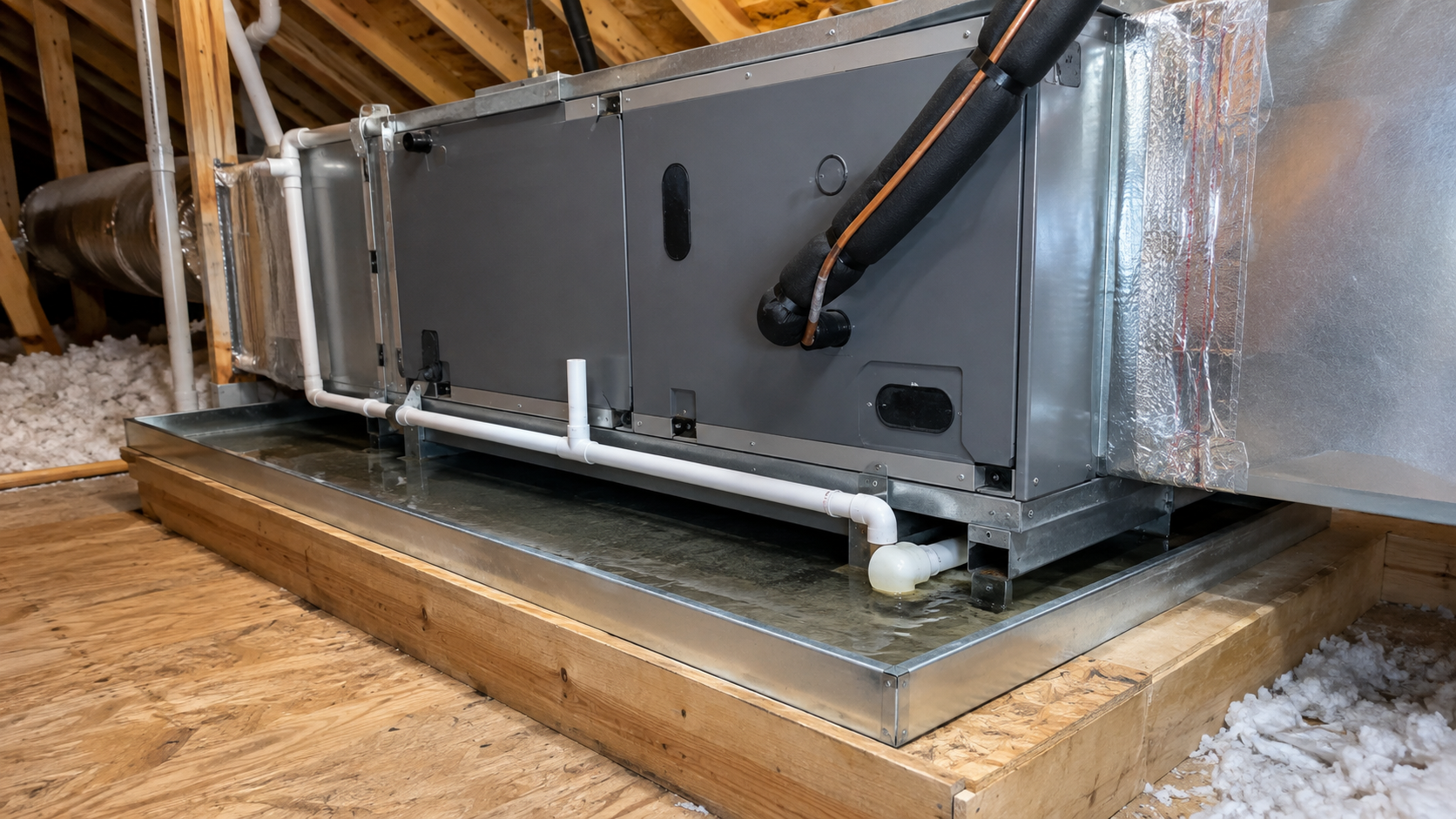
Water From a Ceiling or Attic Area
Overflow Can Travel Before You Notice It
- ✓Attic-mounted equipment overflow
- ✓Secondary drain problem
- ✓Damaged auxiliary pan
- ✓Blocked condensate line
- ✓Condensation reaching insulation or drywall
The Bottom Line
AC Water Leaks Usually Have a Drainage or Cooling-System Cause
A blocked drain, damaged pan, frozen coil, failed condensate pump, drainage installation problem, or another HVAC condition can allow normal condensation to end up where it does not belong.
The right repair starts by finding where the moisture originated and why the normal condensate path stopped working.
We Don’t Just Fix It. We Explain It.
What Professional Evaluation Includes
Finding Out Why Condensation Is No Longer Draining Where It Should
A useful diagnosis should identify whether the problem begins with the drain line, pan, condensate pump, frozen coil, airflow, refrigerant conditions, equipment installation, or another part of the HVAC system.
Leak Pattern
Identify Where the Water Is Appearing
The technician reviews whether water is forming at the indoor unit, drain connection, attic pan, ceiling, floor, or another location and whether the leak occurs only during cooling.
Condensate Drainage
Evaluate the Drain Line, Trap, Pan, and Overflow Protection
The condensate path can be checked for restrictions, standing water, damaged components, poor drainage, pump problems, or other conditions that prevent moisture from leaving normally.
Coil & Airflow
Determine Whether Ice or Airflow Problems Are Creating Excess Water
Filter condition, blower operation, evaporator-coil condition, airflow, and signs of freezing can help determine whether the leak is secondary to another cooling problem.
Cooling Performance
Check for Refrigerant or System Conditions When Needed
When icing or poor cooling is involved, refrigerant performance, temperatures, controls, and other system conditions may need to be evaluated.
Clear Next Step
Explain the Source Before Recommending the Repair
Malek explains whether the leak comes from a drain restriction, failed component, frozen coil, installation issue, or another condition—and what should be corrected to restore normal drainage.
Continue Learning
Continue Learning About AC Drainage and Cooling Problems
Why Is My AC Freezing Up?
Learn how airflow, refrigerant, coil, blower, and control problems can cause ice—and why melting ice may lead to water around the indoor unit.
→ Problem GuideWhy Is My AC Blowing Warm Air?
Review the airflow, refrigerant, electrical, and mechanical problems that can reduce cooling performance.
→ ServiceAC Repair
Learn how drainage problems, frozen coils, airflow concerns, electrical failures, and other cooling issues are diagnosed and repaired.
→ ServiceAC Maintenance & Tune-Ups
See how seasonal AC maintenance evaluates drainage, airflow, coils, electrical components, and other operating conditions.
→Frequently Asked Questions
AC Water Leak FAQs
These answers explain why AC systems leak water, what homeowners can safely check, and when the leak may point to a larger cooling or drainage problem.
Why is my AC leaking water? +
Common causes include a clogged condensate drain, damaged drain pan, frozen evaporator coil, condensate pump failure, loose drain connection, drainage installation problem, or another condition preventing condensation from draining normally.
Should I turn my AC off if it is leaking water? +
Turn cooling off when water is actively overflowing, leaking through ceilings, appearing near electrical components, or accompanied by visible ice or another significant system problem.
Can a clogged AC drain line cause water to leak inside? +
Yes. If the condensate drain becomes blocked, water can back up into the drain pan and eventually overflow around the indoor equipment or nearby building materials.
Can a frozen AC coil cause a water leak? +
Yes. When a frozen evaporator coil thaws, a large amount of water can enter the drain pan at once. If the drainage system cannot handle it or is already restricted, water may overflow.
Why is water leaking from my AC into the ceiling? +
With attic-mounted HVAC equipment, a blocked primary drain, overflowing drain pan, failed secondary drain, frozen coil, or another condensate problem can allow water to reach insulation, drywall, and the ceiling below.
Why does my AC drain line keep clogging? +
Condensate lines can accumulate biological growth, dirt, debris, or other buildup over time. Drain configuration and environmental conditions can also contribute to recurring restrictions.
Can a dirty air filter cause my AC to leak water? +
Indirectly, yes. A heavily restricted filter can reduce airflow enough to contribute to evaporator-coil icing. When the ice melts, the additional water may overflow the condensate system.
When should I call for AC repair because of a water leak? +
Arrange professional service when the leak continues, water is damaging the home, the drain repeatedly backs up, the system freezes, cooling performance declines, or water appears near electrical equipment.
AC Leaking Water?
Find the Source Before the Leak Causes More Damage
Malek can evaluate the condensate drain, drain pans, overflow protection, coil condition, airflow, refrigerant performance, and other HVAC factors before explaining why water is appearing around the system.