A sudden increase in your water bill may come from higher household use, seasonal irrigation, a longer billing cycle, utility-rate changes, a running toilet, a dripping fixture, or a hidden plumbing leak.
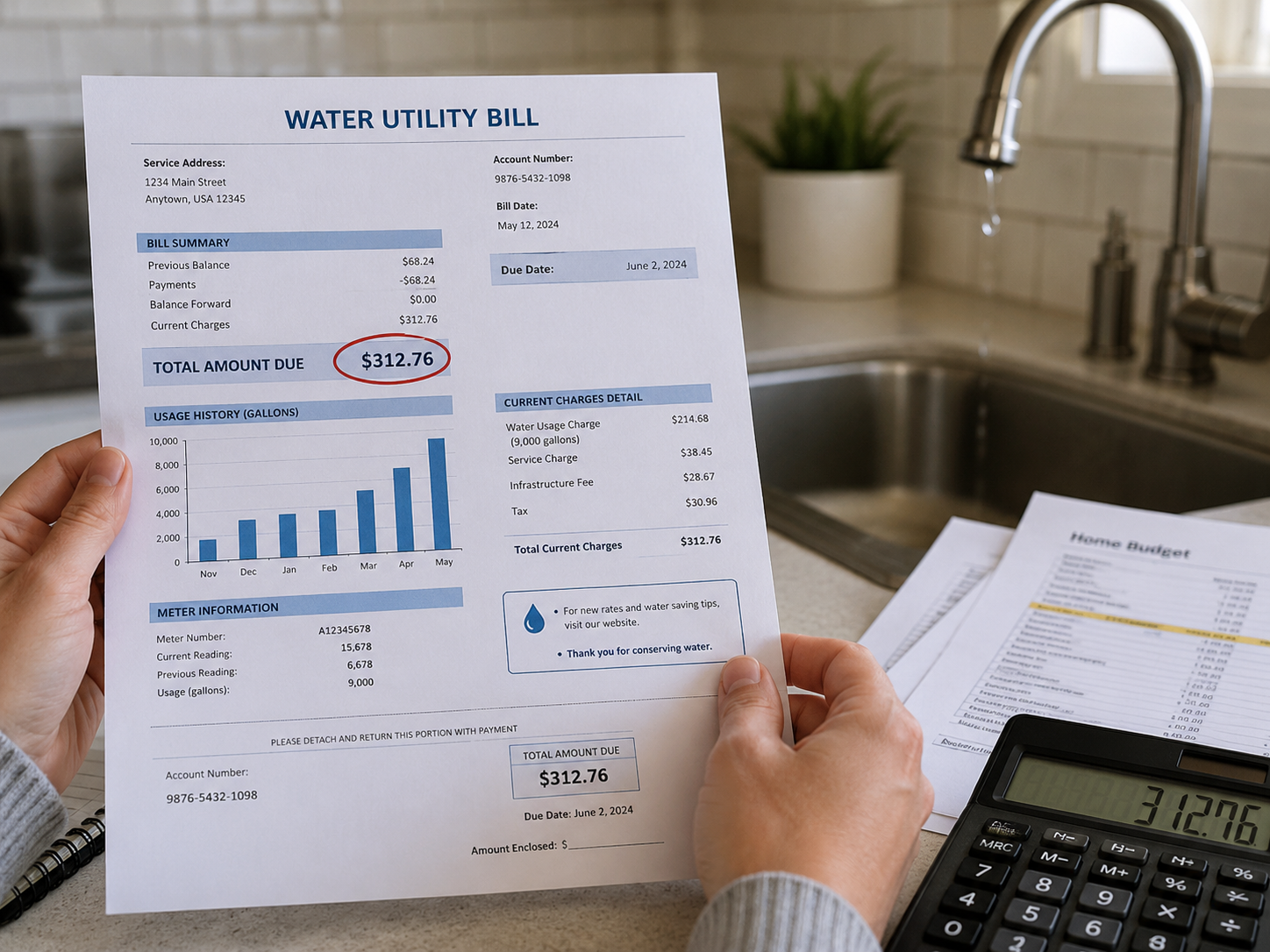
Start by comparing the number of gallons used—not only the dollar amount. If your usage increased without a clear explanation, check toilets, fixtures, irrigation, the water heater, and the meter before scheduling professional leak detection.
Start With the Bill
Compare Water Usage Before You Start Troubleshooting
Gallons or Units Used
Compare the current bill with previous months and the same season last year. A real increase in measured usage points toward household demand or water loss.
Billing Details
Look for rate changes, service fees, estimated readings, billing-cycle length, sewer charges, and other utility adjustments.
Common Causes
Why Your Water Bill May Have Increased
Seasonal Irrigation
Longer sprinkler cycles and more frequent watering during hot, dry weather can raise usage quickly.
Irrigation Leak
Broken sprinkler heads, damaged valves, underground leaks, and zones that run too long may waste water outside.
Running Toilet
A toilet can leak quietly through the flapper, fill valve, overflow tube, or another tank component.
Dripping Fixture
Faucets, showerheads, hose bibs, appliance connections, and exposed plumbing can leak continuously.
Pool or Outdoor Projects
Pool filling, pressure washing, landscaping, and construction-related water use can create a temporary increase.
Household Routine Changes
Guests, added occupants, more laundry, more frequent showers, or working from home can increase daily demand.
Water Heater Leak
Moisture may escape from the tank, nearby piping, drain valve, relief valve, or another component.
Hidden Water-Line Leak
A leak inside a wall, beneath flooring, under the foundation, or in the yard may waste water without an obvious puddle.
Utility or Meter Issue
An estimated reading, billing mistake, meter problem, or rate adjustment may explain the change.
Longer Billing Period
A bill covering more days than usual may appear unusually high even when average daily use has not changed.
Safe Homeowner Checks
What You Can Check Before Calling a Plumber
Review Recent Changes
Think about guests, irrigation, pool use, laundry, outdoor cleaning, new appliances, and longer billing periods.
Listen for Running Toilets
Check whether a toilet continues running, refills unexpectedly, or makes water noise when nobody has used it.
Inspect Visible Fixtures
Look under sinks and around faucets, showerheads, hose bibs, appliance connections, and exposed piping.
Check the Water Heater Area
Look for recurring moisture, corrosion, staining, or water around the tank and nearby connections.
Walk the Yard
Look for soft soil, unusual green patches, pooling water, wet spots, or irrigation zones that stay damp.
Check the Water Meter
With all known water use stopped, see whether the meter still registers flow.
Meter Check
How to Check Whether Water Is Still Flowing
Turn Off Known Water Use
Stop faucets, showers, toilets, appliances, irrigation, pool equipment, and other water-using fixtures.
Locate the Meter
Open the meter box carefully and identify the usage display or leak indicator without disturbing utility equipment.
Watch for Movement
If the display or indicator continues changing while everything is off, water may still be flowing somewhere.
Wait and Recheck
Record the reading, avoid using water for a set period, and compare the second reading with the first.
Hidden Leak Warning Signs
A High Bill Is More Concerning When Other Symptoms Appear
The Meter Moves With Everything Off
This suggests water may be flowing somewhere outside normal household use.
The Increase Continues
Usage that stays high after seasonal or household changes end deserves further investigation.
Water Pressure Changes
A noticeable pressure drop may be associated with a supply-line leak, restriction, or another plumbing issue.
You Hear Running Water
Water sounds inside walls, floors, or ceilings when fixtures are off can indicate concealed flow.
You Notice Dampness or Damage
Wet flooring, stains, musty odors, warped materials, or recurring moisture may point to hidden water loss.
The Yard Has Soft or Wet Areas
Unexplained wet soil, sinking spots, or unusually green patches can signal an underground leak.
Warm Areas Develop on the Floor
A warm spot may be associated with a hot-water slab leak, although other explanations are possible.
The Increase Has No Clear Explanation
Higher measured usage without changes in routine, irrigation, pool use, or billing details makes a leak more likely.
Find the Source
Stop Guessing Where the Extra Water Is Going
Malek can inspect visible plumbing, evaluate the water meter, test for concealed water loss, and narrow down the source before unnecessary walls, flooring, or landscaping are disturbed.
When to Schedule Service
Call a Plumber When the Usage Increase Remains Unexplained
Contact the Utility First When
- The meter reading appears incorrect
- The bill is based on an estimate
- Rates, fees, or billing dates are unclear
- The amount due increased but measured usage did not
Contact a Plumber When
- Measured usage increased without a clear reason
- The meter moves while all known water use is off
- You notice moisture, pressure changes, or running-water sounds
- The increase continues across multiple billing cycles
What Professional Leak Detection Can Do
The Goal Is to Locate the Water Loss Before Repair Work Begins
The plumber can compare meter activity, fixture conditions, pressure behavior, and visible symptoms.
Toilets, irrigation, water heaters, exposed plumbing, and concealed lines are evaluated differently.
Testing methods may help identify whether the source is inside the home, in the yard, beneath the slab, or near a specific fixture.
The next step may involve a fixture repair, water-line repair, slab-leak solution, irrigation contractor, or utility involvement.
Frequently Asked Questions
High Water Bill Questions
Why did my water bill suddenly increase?
A sudden increase may come from seasonal watering, guests, pool use, a longer billing cycle, higher utility rates, a running fixture, irrigation trouble, or a hidden plumbing leak.
Can a running toilet cause a high water bill?
Yes. A toilet can leak continuously or refill intermittently without being obvious, raising measured water use over the billing period.
How can I check for a hidden water leak?
Turn off all known water use and check the meter. Continued movement may indicate water is flowing somewhere in the plumbing system.
Can an underground leak raise the bill without visible water?
Yes. Water may escape into soil or beneath the foundation without producing a visible puddle. Soft ground, pressure changes, or meter movement may provide clues.
Should I call the utility company or a plumber first?
Call the utility when billing details, meter readings, rates, or fees appear incorrect. Call a plumber when measured usage has increased and the source is unclear.
Why is my bill high only during summer?
Irrigation, pool use, outdoor cleaning, evaporation, and higher household demand often raise summer usage. Irrigation leaks can also become more noticeable during heavy seasonal use.
Does a moving meter always mean there is a major leak?
No. It confirms water use, but the source may be a toilet, fixture, irrigation system, appliance, water heater, or concealed line. The size and location still need to be determined.
When should I schedule professional leak detection?
Schedule service when usage remains elevated without explanation, the meter moves with everything off, or you notice pressure loss, moisture, unusual sounds, or yard changes.