
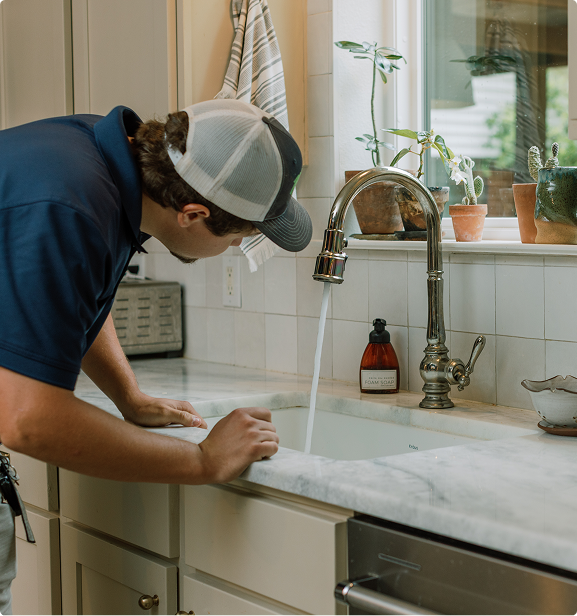
Low water pressure can come from one clogged fixture, a partially closed valve, a failing pressure regulator, restricted piping, a hidden leak, or a problem with the home’s main water supply.
The pattern matters. Pressure that is low at one faucet usually has a different cause than pressure that drops throughout the entire home. Start by identifying where and when the problem occurs before assuming the main water line is failing.
Start With the Pattern
Where Is the Water Pressure Low?
Likely a Local Restriction
- Clogged faucet aerator
- Mineral buildup in a showerhead
- Faulty cartridge
- Partially closed fixture valve
May Involve a Branch Line
- Localized valve problem
- Branch-line restriction
- Pipe damage or corrosion
- Multiple fixtures sharing the same supply
Look at the Main Supply
- Main shutoff valve
- Pressure regulator
- Municipal supply
- Hidden leak or damaged water line
Common Causes
Why Water Pressure May Be Low
Clogged Aerator or Showerhead
Mineral deposits and sediment can restrict water at a single faucet or shower.
Partially Closed Valve
A fixture valve, main shutoff, or meter-side valve may be limiting water flow after service or maintenance.
Pressure Regulator Problem
A failing or incorrectly adjusted regulator can cause low, high, or inconsistent pressure throughout the home.
Hidden Water Leak
A leaking pipe can divert water before it reaches the fixtures, especially when pressure loss appears suddenly.
Corroded or Restricted Pipes
Older piping can narrow internally as corrosion or mineral buildup develops over time.
Damaged Main Water Line
Underground leaks, crushed pipe, shifting soil, or deteriorated materials can reduce the available supply.
Municipal Supply Issue
Utility work, neighborhood demand, meter problems, or temporary supply conditions can affect incoming pressure.
Water Heater or Hot-Side Restriction
If only the hot water is affected, the water heater, hot-side valve, or hot-water piping may be involved.
Safe Homeowner Checks
What You Can Check Before Scheduling Service
Compare Several Fixtures
Check whether the problem affects one fixture, one area, only the hot side, or the entire home.
Remove Visible Aerator Buildup
When one fixture is affected, inspect the aerator or showerhead for visible mineral buildup.
Check Accessible Fixture Valves
Confirm the shutoff valves beneath the affected sink or fixture are open. Do not force a stuck valve.
Look for Leak Signs
Check for meter movement, higher water bills, damp areas, running-water sounds, or wet soil.
Ask Whether Neighbors Are Affected
If several nearby homes have the same issue, the utility supply may be involved.
Note When It Happens
Record whether pressure is always low, changes suddenly, or drops only when multiple fixtures run.
Do Not Adjust the Pressure Regulator by Guessing
Do not increase pressure without measuring it first. Excessive pressure can damage fixtures, valves, and piping.
Do not force old shutoff valves. A seized or deteriorated valve can begin leaking when disturbed.
Do not ignore a sudden whole-home pressure drop. It can indicate a supply interruption or active water-line leak.
Do not assume the city is responsible. The problem may be inside the home or between the meter and the house.
When to Call a Plumber
Professional Testing Is Needed When the Pressure Problem Is Broad or Sudden
Pressure Is Low Throughout the Home
A whole-home problem may involve the regulator, main valve, supply line, utility source, or a hidden leak.
The Change Happened Suddenly
A sudden pressure loss deserves prompt attention, especially if no utility interruption has been reported.
The Water Bill Increased
Low pressure paired with higher usage can indicate water escaping before it reaches the fixtures.
The Meter Moves With Fixtures Off
Continued meter activity may confirm an active plumbing leak.
Pressure Is Unstable
Pressure that swings between low and high can point to a regulator or supply-control problem.
Only Hot Water Has Low Pressure
The restriction may be related to the water heater, a hot-side valve, or the hot-water piping.
Professional Diagnosis
How a Plumber Identifies the Cause
The plumber will compare affected fixtures, timing, recent changes, and whether the problem is hot-side, cold-side, local, or whole-home.
Testing shows the pressure at rest and how much it changes when water is being used.
Accessible shutoffs, aerators, cartridges, and supply connections are checked for restrictions or incomplete opening.
If the home has one, the regulator can be tested for proper adjustment and stable operation.
Meter behavior, pressure loss, moisture, sound, and water-use patterns help determine whether leak detection is needed.
Underground pipe condition, corrosion, soil movement, and prior repairs may be considered when the supply line is suspected.
Get a Clear Answer
Find Out What Is Restricting the Water Supply
Malek can test the home’s pressure, inspect the fixtures and valves, evaluate the regulator, and determine whether a leak or main water-line problem is involved.
Possible Solutions
The Right Fix Depends on Where the Restriction Begins
Clean or Replace a Fixture Component
A clogged aerator, showerhead, cartridge, or supply line may be the only problem.
Open or Replace a Valve
A partially closed, damaged, or failing valve may need adjustment or replacement.
Repair or Replace the Regulator
A faulty pressure regulator can be corrected after the incoming pressure is measured.
Repair a Hidden Leak
Leak detection can help locate water loss before walls, flooring, or landscaping are disturbed.
Repair the Main Water Line
An isolated damaged section may be repairable when the surrounding pipe remains dependable.
Replace Deteriorated Piping
Widespread corrosion, repeated leaks, or severe restriction may require a broader replacement plan.
Frequently Asked Questions
Low Water Pressure Questions
Why is my water pressure suddenly low throughout the house?
Possible causes include a partially closed main valve, failing regulator, municipal supply issue, hidden leak, or damaged main water line.
Why is the pressure low at only one faucet or shower?
A local restriction such as a clogged aerator, mineral buildup, faulty cartridge, or partially closed fixture valve is more likely.
Can a hidden water leak cause low pressure?
Yes. A leaking supply line can reduce the water reaching fixtures, especially when the leak is significant.
Can a pressure regulator cause low water pressure?
Yes. A failing or incorrectly adjusted regulator can cause low, high, or inconsistent pressure throughout the home.
Why does pressure drop when two fixtures run at once?
This can point to a supply limitation, restricted piping, undersized branch line, partially closed valve, or regulator problem.
Why is only my hot-water pressure low?
The restriction may involve the water heater, hot-side shutoff, flexible connector, or hot-water piping.
Should I adjust the pressure regulator myself?
Pressure should be measured before adjustment. Incorrect settings can create excessive pressure and damage plumbing components.
When should I call a plumber?
Call when low pressure affects the whole home, changes suddenly, remains after fixture checks, or appears with leak signs, higher water use, or unstable pressure.
Cookie Consent
We use cookies to improve your experience on our site. By using our site, you consent to cookies.
Cookie Preferences
Manage your cookie preferences below:
Essential cookies enable basic functions and are necessary for the proper function of the website.
These cookies are needed for adding comments on this website.
Google reCAPTCHA helps protect websites from spam and abuse by verifying user interactions through challenges.
Google Tag Manager simplifies the management of marketing tags on your website without code changes.
Statistics cookies collect information anonymously. This information helps us understand how visitors use our website.
Google Analytics is a powerful tool that tracks and analyzes website traffic for informed marketing decisions.
Service URL: policies.google.com (opens in a new window)
Marketing cookies are used to follow visitors to websites. The intention is to show ads that are relevant and engaging to the individual user.
Google Maps is a web mapping service providing satellite imagery, real-time navigation, and location-based information.
Service URL: policies.google.com (opens in a new window)
You can find more information in our Cookie Policy and Privacy Policy.