Whole-Home Generator Homeowner Guide
Does a Generator Turn On Automatically?
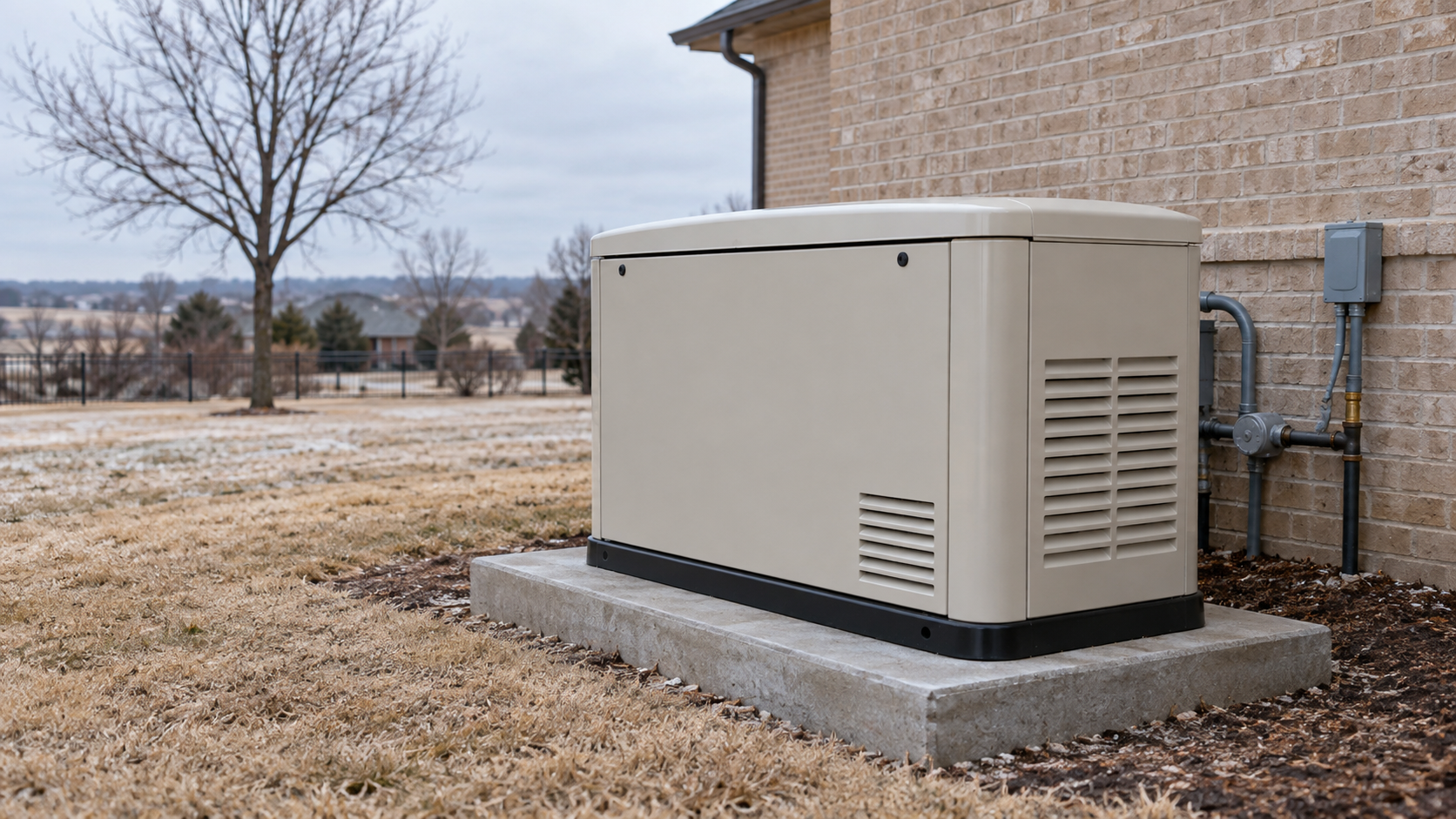
A permanently installed standby generator is designed to start automatically when the system detects a loss of utility power. Under normal operating conditions, homeowners do not need to go outside, connect extension cords, or manually start the generator during an outage.
The automatic process depends on more than the generator itself. Transfer equipment monitors utility power, signals the generator to start, moves designated electrical loads to generator power, and later transfers the home back when utility service returns.
This guide explains how automatic generator starting works, what can prevent a standby generator from starting, what exercise cycles actually tell you, and what homeowners should expect before, during, and after an outage.
The Quick Answer
Yes. A Standby Generator Is Designed to Start Automatically When Utility Power Is Lost
Utility Power Is Monitored
The transfer equipment watches the incoming utility supply and recognizes when voltage is lost or falls outside the expected operating range.
The Generator Receives a Start Signal
Once an outage is detected, the standby generator starts automatically and prepares to produce backup electricity.
The Home Transfers to Generator Power
After generator output stabilizes, the automatic transfer switch connects the planned household loads to the generator.
Automatic does not mean instantaneous. The system must first detect the outage, start the generator, allow it to reach stable operating conditions, and then transfer the home's planned loads.
How Automatic Starting Works
The Generator and Transfer Equipment Work Together During an Outage
The System Monitors Utility Power
Automatic transfer equipment continually monitors the electrical service coming into the home.
An Outage or Voltage Problem Is Detected
When the utility source falls outside the system's acceptable operating range, the automatic standby sequence begins.
The Generator Starts
The battery, starter, engine, fuel system, and controls work together to bring the generator online.
Generator Output Stabilizes
The system allows the generator to reach the proper operating condition before household loads are transferred.
The Automatic Transfer Switch Changes Power Sources
The home is separated from the utility source and the planned circuits or loads are connected to generator power.
The Generator Carries the Backup Loads
The generator continues operating while utility service remains unavailable, subject to available capacity and fuel supply.
Utility Power Returns
The transfer equipment monitors the utility source and confirms that normal service has returned.
The System Transfers Back Automatically
Once utility power is stable, the home returns to utility service and the generator completes its shutdown sequence.
What Can Prevent Starting
A Standby Generator Can Be Automatic and Still Fail to Start if Part of the System Is Not Ready
Weak or failed starting battery
Fuel supply or fuel-pressure problem
Generator left in an incorrect operating mode
Active fault or shutdown condition
Charging-system problem
Control or sensor fault
Deferred maintenance or mechanical condition
Transfer or electrical system problem
If a standby generator fails to start during an outage, avoid repeatedly forcing resets without understanding the fault. The underlying problem may involve fuel, battery, controls, electrical equipment, or a safety shutdown that requires diagnosis.
Exercise Cycles
Automatic Exercise Cycles Help Confirm Starting—but They Do Not Prove the Entire Backup System Is Ready
Confirms the engine can start under exercise conditions
Helps circulate fluids and operate engine components
Can reveal certain battery or starting problems
May reveal active alarms or control faults
Does not replace scheduled maintenance
Does not guarantee successful operation during a real outage
Does not always confirm full transfer under household load
Should be monitored for missed or abnormal cycles
If the generator normally exercises but suddenly misses a scheduled cycle, displays a fault, or sounds different than usual, that change is worth investigating before the next outage.
After the Outage
Automatic Operation Continues When Utility Power Returns
During the Outage
The Generator Carries the Planned Electrical Loads
- ✓Generator continues operating automatically
- ✓Transfer equipment remains on generator power
- ✓Load management may control selected equipment
- ✓Fuel supply and generator capacity still matter
- ✓Faults or shutdowns should be addressed promptly
When Utility Power Returns
The System Transfers the Home Back Automatically
- ✓Utility power is monitored for stability
- ✓The transfer switch reconnects utility service
- ✓The generator is unloaded
- ✓The generator completes its shutdown sequence
- ✓The system returns to standby mode
The Bottom Line
Automatic Starting Is One of the Main Advantages of a Standby Generator
A properly operating standby system can detect an outage, start the generator, transfer planned loads, and return the home to utility power without the homeowner manually managing each step.
That automatic operation still depends on a healthy battery, adequate fuel supply, functioning controls, transfer equipment, correct operating mode, and regular maintenance.
We Don’t Just Fix It. We Explain It.
What Professional Evaluation Includes
Checking Why a Standby Generator Is Not Starting Automatically
A useful diagnosis should determine whether the issue begins with the generator, battery, fuel supply, controls, automatic transfer equipment, or another part of the standby system.
History Review
Review What Happened When the Generator Failed to Start
Recent outages, missed exercise cycles, alarms, fault codes, maintenance history, and previous starting problems provide useful diagnostic clues.
Battery and Controls
Check Starting Power, Charging, and Operating Mode
The battery, charging system, controller, operating mode, fault history, and visible connections are reviewed.
Fuel and Engine
Confirm the Generator Can Start and Run Properly
Fuel availability, visible fuel-system conditions, engine operation, scheduled maintenance, and mechanical concerns may be evaluated.
Transfer System
Determine Whether the Automatic Start and Transfer Sequence Is Working
The relationship between utility sensing, generator controls, transfer equipment, and the home's electrical system is reviewed.
Clear Next Step
Explain the Cause and the Appropriate Repair or Maintenance
Malek explains what prevented automatic operation, what work is needed, and whether the issue is maintenance-related, a failed component, or part of a larger system concern.
Continue Learning
Continue Learning About Standby Generator Operation
How Does a Whole-Home Generator Work?
Learn how outage detection, generator startup, automatic transfer, fuel supply, and utility restoration work together.
→ ServiceGenerator Repair
Learn how starting failures, fault codes, transfer problems, charging concerns, and other generator issues are evaluated.
→ ServiceGenerator Maintenance
Learn how scheduled service helps keep batteries, fluids, filters, controls, and other maintenance items current.
→ Investment GuideGenerator Maintenance Cost Guide
Review typical maintenance planning ranges and the factors that can affect ongoing standby-generator service costs.
→Frequently Asked Questions
Automatic Generator Start FAQs
These answers explain how standby generators detect outages, start automatically, exercise, transfer power, and return to standby mode.
Does a whole-home generator turn on automatically? +
Yes. A properly installed standby generator is designed to start automatically when the system detects a loss of utility power under normal operating conditions.
How does a generator know the power went out? +
Automatic transfer equipment monitors the incoming utility supply. When voltage is lost or falls outside the expected operating range, the standby sequence begins.
Does a standby generator turn on immediately? +
Not usually. The system detects the outage, starts the generator, allows output to stabilize, and then transfers the planned loads. Exact timing depends on the equipment and settings.
Why would an automatic generator fail to start? +
Common causes can include a weak battery, fuel problems, active fault conditions, charging issues, control problems, deferred maintenance, incorrect operating mode, or another generator or transfer-system failure.
What is a generator exercise cycle? +
An exercise cycle is a scheduled automatic run that allows the generator to start and operate periodically. It helps confirm certain operating functions but does not replace maintenance or guarantee successful operation during an outage.
Does the transfer switch also work automatically? +
Yes, in an automatic standby system. The transfer equipment monitors utility power, coordinates generator startup, connects the planned loads to generator power, and transfers the home back when utility service is restored.
What happens when the power comes back on? +
The system monitors the returning utility source. Once utility power is stable, the home transfers back to utility service and the generator completes its shutdown sequence.
Should I test my generator before storm season? +
Review the generator's status, recent exercise history, visible fault indicators, maintenance schedule, battery condition, and fuel availability before periods when outages are more likely. Arrange service if anything appears abnormal.
Generator Not Starting Automatically?
Find Out What Is Interrupting the Automatic Standby Sequence
Malek can evaluate the generator, battery, charging system, controls, fuel conditions, transfer equipment, recent fault history, and maintenance needs before explaining why the system did not start as expected.