AC Maintenance Guide
How Often Should I Service My AC?
For most residential air conditioning systems, having the AC professionally checked about once a year is a practical maintenance schedule. In Texas, that service is often completed before the heaviest cooling season begins.
Annual service is not an expiration rule. Equipment age, operating hours, filter condition, household conditions, recent repairs, and changes in system performance can all affect when the AC deserves attention.
This guide explains how often AC systems are typically serviced, when seasonal maintenance makes the most sense, which conditions may justify an earlier check, and how to separate routine maintenance from a problem that really needs repair.
The Quick Answer
Once a Year Is a Practical Starting Point for Most AC Systems
Annual Service Works for Most Homes
A yearly professional check gives the system a regular point for evaluating airflow, coils, drainage, electrical components, controls, and overall cooling operation.
Timing Matters
Many Texas homeowners schedule AC maintenance before peak summer demand so developing concerns can be identified before the system begins operating for long periods every day.
Problems Should Not Wait for the Next Tune-Up
Warm air, weak airflow, unusual cycling, leaking water, ice, electrical symptoms, or declining comfort should be evaluated when they appear instead of waiting for the next routine service.
A maintenance schedule is meant to create consistency—not delay a repair. If the AC is already behaving differently, the symptom should be diagnosed separately.
Best Time to Service Your AC
Before Peak Cooling Season Is Usually the Most Practical Window
Late Winter or Spring
Servicing the AC before sustained summer heat gives homeowners a chance to address maintenance concerns before cooling demand becomes much heavier.
Before the System Begins Running for Long Periods
A system that has spent months operating lightly may behave differently once daily runtime increases. A pre-season check provides a baseline before that heavier use begins.
After a Long Cooling Season
In some homes, a later-season check may also make sense when the AC has accumulated unusually heavy runtime or the homeowner has noticed performance changes during summer.
Around a Consistent Annual Schedule
Consistency is often more useful than finding one exact date. Scheduling service around the same general time each year makes it easier to avoid unintentionally skipping a season.
What Affects Service Frequency
Some AC Systems Deserve Attention More Often Than Others
Older equipment with a growing repair history
Homes with especially long or heavy cooling seasons
Systems that accumulate significant daily runtime
Homes with recurring airflow or filtration concerns
Equipment exposed to debris, vegetation, or harsh outdoor conditions
Recent repairs that deserve follow-up observation
Households with pets, dust, or other conditions affecting filtration
Systems that have shown changes in cooling performance
More frequent professional service is not automatically better. The goal is a schedule that makes sense for the equipment, the home, and how the system is actually operating.
When to Check the AC Sooner
A New Symptom Matters More Than the Date on the Calendar
The AC is blowing warmer air than it used to
Airflow has become noticeably weaker
The system is running much longer than usual
The AC is turning on and off repeatedly
You see ice on the coil or refrigerant line
Water is leaking around the indoor equipment
New noises, odors, or electrical symptoms appear
The home no longer reaches the thermostat setting consistently
Routine maintenance is not a substitute for diagnosis. If the AC is already showing a clear symptom or safety concern, the more useful next step is to identify what changed rather than waiting for the next planned maintenance visit.
Maintenance or Repair?
The Difference Is Whether the System Is Being Checked—or a Specific Problem Needs to Be Fixed
Routine Maintenance
The System Is Operating Normally
- ✓Cooling performance is stable
- ✓No new symptoms are present
- ✓Airflow feels normal
- ✓The home reaches the thermostat setting
- ✓You are following a regular service schedule
Repair Evaluation
Something About the System Has Changed
- ✓Cooling has declined
- ✓The AC is freezing or leaking water
- ✓Runtime or cycling has changed
- ✓Electrical or mechanical symptoms are present
- ✓The home is no longer staying comfortable
The Bottom Line
Annual AC Service Is a Good Baseline—But the System’s Behavior Still Matters
For many homes, servicing the AC about once a year before peak cooling season creates a practical routine for checking equipment condition and performance.
If the system begins cooling differently, running differently, or showing a new symptom, do not wait for the annual schedule to come around. The change itself is the reason to have it evaluated.
We Don’t Just Fix It. We Explain It.
What Professional AC Maintenance Includes
A Routine Check Should Build a Clear Picture of How the System Is Operating
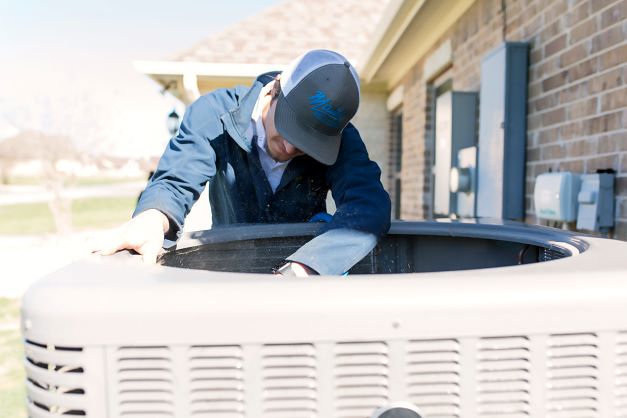
Maintenance is most useful when it goes beyond a quick visual check and evaluates the operating conditions that influence comfort, reliability, and cooling performance.
System Review
Look at Recent Performance and Any Changes
The technician can review how the system has been cooling, whether runtime has changed, and whether the homeowner has noticed new comfort or operating concerns.
Airflow
Evaluate How Air Is Moving Through the System
Filter condition, blower operation, supply airflow, return airflow, and accessible coil or duct conditions may be reviewed.
Electrical & Mechanical
Check Components That Support Normal Operation
Electrical connections, motors, capacitors, controls, drainage, coils, and other relevant equipment conditions can be evaluated.
Cooling Performance
Confirm the System Is Operating as Expected
Temperatures, cycling behavior, refrigerant-system performance, thermostat response, and other operating measurements can help establish whether cooling performance is normal.
Clear Next Step
Explain What Was Found and What Actually Needs Attention
Malek explains which conditions are normal, which maintenance items deserve attention, and whether anything found should be addressed as a separate repair.
Continue Learning
Continue Learning About AC Maintenance and Reliability
AC Tune-Up Cost Guide
Learn what affects the cost of an AC tune-up and what homeowners should understand before scheduling seasonal maintenance.
→ Problem GuideSigns Your AC May Fail Before Summer
Review the performance and reliability changes that may indicate an AC deserves attention before peak cooling demand.
→ Problem GuideHow Long Does an AC System Last?
Learn how maintenance, installation, runtime, climate, and equipment condition can influence AC lifespan.
→ ServiceAC Maintenance & Tune-Ups
Learn how professional AC maintenance evaluates system condition, airflow, coils, drainage, electrical components, controls, and cooling performance.
→Frequently Asked Questions
AC Service Frequency FAQs
These answers explain how often AC systems are typically serviced, when seasonal maintenance makes sense, and when a new symptom should be checked before the next scheduled visit.
How often should I service my AC? +
For many residential systems, professional AC service about once a year is a practical maintenance schedule. Equipment condition, operating hours, age, household conditions, and recent performance changes can affect whether an earlier check makes sense.
What is the best time of year to service my AC? +
Many homeowners schedule AC maintenance before the hottest part of the cooling season, often in late winter or spring. The goal is to evaluate the system before long daily run times become common.
Does my AC really need service every year? +
Annual service is a practical baseline for many systems because it creates a consistent opportunity to evaluate airflow, coils, drainage, electrical components, controls, and cooling performance. The appropriate schedule can still vary by system and operating conditions.
Should I service my AC twice a year? +
Some systems may benefit from more frequent attention because of equipment age, unusually heavy runtime, recurring problems, environmental conditions, or manufacturer requirements. More frequent service is not automatically necessary for every home.
How often should I change my AC filter? +
Filter replacement frequency depends on the filter type, household conditions, pets, dust, system runtime, and the manufacturer's recommendations. Inspect the filter regularly and replace it before it becomes heavily restricted.
Should I wait for my annual service if the AC is not cooling properly? +
No. Warm air, weak airflow, icing, leaking water, unusual cycling, electrical symptoms, or declining comfort should be evaluated when they appear rather than waiting for the next routine maintenance visit.
Does regular AC maintenance prevent every breakdown? +
No. Maintenance cannot guarantee that components will never fail. It can help identify developing operating concerns and keep routine system conditions from being overlooked.
What happens if I skip AC maintenance for a year? +
Skipping one maintenance visit does not automatically mean the AC will fail, but it removes an opportunity to review airflow, drainage, electrical components, coils, and other operating conditions before the next cooling season.
Time for Your Annual AC Check?
Keep a Consistent Maintenance Schedule Without Guessing What the System Needs
Malek can evaluate airflow, coils, drainage, electrical components, thermostat operation, cooling performance, and other system conditions before explaining what looks normal and what deserves attention.