Holiday Electrical Planning Guide
Holiday Light Safety: Outdoor Outlets, Cords, and Electrical Loads
By Malek Service Company · Serving Bryan–College Station & Northwest Houston
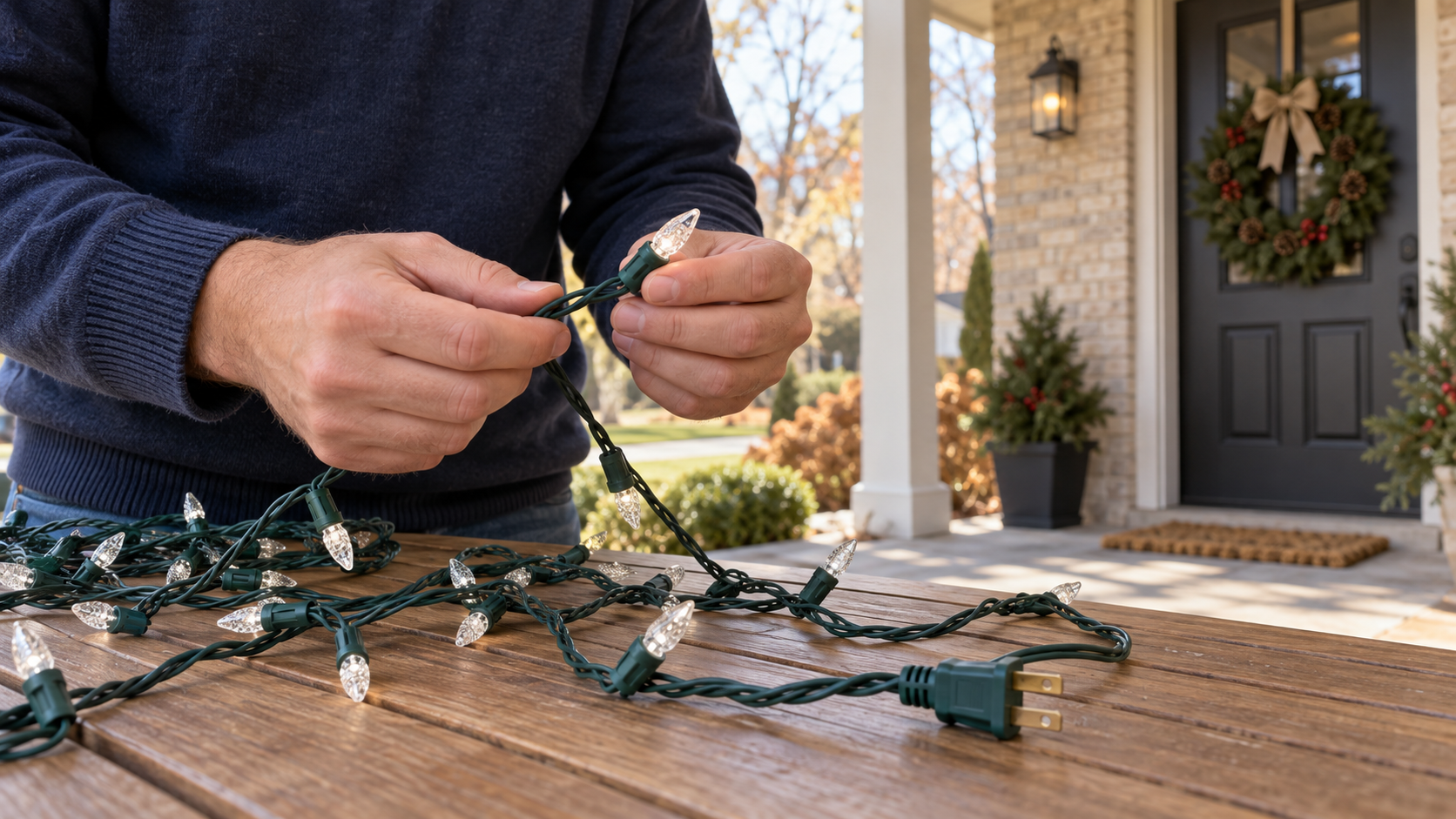
The first strand looks fine. Then you add roofline lights, yard decorations, a timer, and a few more cords to reach everything. The display has grown, but the outlet and circuit supplying it have not.
A safer holiday-lighting plan starts with outdoor-rated equipment, GFCI-protected power, undamaged cords, and the load limits of every part of the setup. A timer or extra plug does not create more electrical capacity.
For Bryan–College Station and Northwest Houston homeowners, outdoor moisture and exposed connections deserve attention even when the weather is mild. This guide covers temporary seasonal lighting; recurring outdoor-outlet problems or permanent power needs belong in an electrical evaluation.
At Malek, we consider the outlet, protection, and shared load together. If a display only stays on after protection is bypassed or a connection is improvised, the setup needs a different plan.
The Quick Answer
Plan the Power Before Hanging the Lights
Use Outdoor-Rated Equipment
Lights, cords, timers, and connection accessories need ratings suitable for their location and conditions.
Use GFCI-Protected Power
GFCI protection helps address shock risks. It does not make a damaged, overloaded, or waterlogged setup acceptable.
Follow the Limiting Rating
Light-string connection limits, cord ratings, accessories, and the supplying circuit all constrain the display.
Do not use a universal number of connected strands. Product instructions vary, especially between LED and incandescent sets. The manufacturer’s connection limit still applies even when total wattage looks low.
Build a Safer Setup
Check the Whole Route From Outlet to Decoration
Start at the Power Source
Use an appropriate GFCI-protected outdoor supply. Test the protective device according to its instructions before connecting the display; stop if it fails to test or reset normally.
Match Ratings to the Location
Indoor-only lights and cords should stay indoors. Outdoor ratings do not mean every connection can sit in standing water; follow each product’s permitted exposure.
Keep Connections Protected and Accessible
Use listed, compatible outdoor accessories as directed. Keep cord junctions away from puddles, sprinkler spray, and locations that can trap water. Improvised wrapping is not a substitute for appropriate equipment.
Route Cords Without Damage
Keep cords away from walkways where possible and prevent pinching in doors or windows. Use appropriate clips rather than fastening through wire insulation.
Load Planning
Count the Electrical Demand, Not Just the Decorations
Read Product Labels
Record wattage or amperage and connection limits. Decorations that look small may contain motors, lamps, or heaters.
Consider Shared Loads
The outdoor outlet may share a circuit with other equipment. Multiple receptacles do not establish separate capacity.
Review the Cord Rating
Match cord ratings and length to the product instructions and connected load. An outdoor label alone does not determine load suitability.
Include Timers and Accessories
A timer, adapter, or connector has its own limits. The weakest suitable rated component constrains the setup.
Treat LEDs as Lower Demand, Not Unlimited Demand
LED lights often reduce consumption, but damaged wiring, wet connections, and connection limits still matter.
Avoid Adding Outlet Multipliers
Additional sockets do not increase branch-circuit capacity. Do not daisy-chain extension cords or power strips to keep expanding a display.
Warning Signs
Changes That Deserve Attention
A GFCI or breaker repeatedly trips
A plug, timer, or receptacle becomes hot
Lights or cords show cracked, frayed, or pinched insulation
A connection is exposed to standing water
An outlet buzzes, sparks, or shows discoloration
A plug fits loosely or outdoor equipment is damaged
Stop using a display with repeated trips, heat, damage, or wet connections. Disconnect power only when safe; do not touch energized cords or equipment in standing water. Never bypass GFCI protection or install a larger breaker to keep the lights on. For smoke or fire, leave and call 911.
Before and After Installation
Inspect Once Before Hanging and Recheck After Weather Changes
Before Installation
Confirm Equipment and Power
- ✓Inspect cords, sockets, and plugs
- ✓Verify outdoor ratings and product instructions
- ✓Check GFCI operation as instructed
- ✓Plan connections and loads before expanding
While the Display Is Up
Watch for Changes
- ✓Recheck after rain or wind when safe
- ✓Keep junctions out of water
- ✓Remove damaged equipment from service
- ✓Turn decorations off before sleeping or leaving
What You Can Check
What to Do When the Lights Keep Tripping
Stop Repeated Resets
A recurring trip is a reason to investigate. GFCIs and breakers serve different protective functions; either device can be responding to a genuine problem.
Notice When It Happens
Record whether trips follow rain, an added decoration, or another appliance starting. That helps narrow the evaluation without opening electrical equipment.
Inspect Disconnected Equipment
With equipment safely unplugged, look for damaged cords or connections. Do not repair insulation with a quick tape patch and return it to outdoor service.
Evaluate Ongoing Power Needs
If the same shortage or outlet problem returns every year, discuss a properly evaluated outdoor-power improvement. Do not assume the answer is automatically a new panel or a dedicated circuit.
A Practical Next Step
A Better Display Starts With Suitable Power
Use the right equipment, respect product and circuit limits, and treat trips or heat as useful warning signs. Holiday lighting should not depend on defeating protection or stretching damaged cords across the yard. Plan permanent improvements around the actual need and the home’s electrical condition.
We Don’t Just Fix It. We Explain It.
Professional Electrical Evaluation
Find Out Why the Outdoor Power Is Not Working as Expected
Malek can evaluate outdoor receptacles, protective devices, circuit loading, and electrical warning signs. The goal is to identify a needed correction before recommending new circuits or larger upgrades.
History
Review the Display and Trip Pattern
Discuss connected equipment and whether symptoms follow rain or added loads.
Outdoor Connection
Check Receptacle and Weather Exposure
Evaluate visible damage, connections, and the suitability of the installation.
Protection
Review GFCI and Breaker Operation
Identify the protection involved and investigate recurring trips.
Capacity
Evaluate Actual Circuit Loading
Determine shared demand and whether the current supply fits the intended use.
Options
Explain Repair or Power Improvements
Match recommendations to verified conditions and future needs.
Continue Learning
Related Guidance for Your Home
Breaker Keeps Tripping?
Understand repeated trips beyond the holiday display.
→Homeowner ArticleHome Electrical Safety Checklist
Review the home’s broader electrical warning signs.
→Seasonal GuideSpace Heater Safety
Plan another common winter electrical load.
→ServiceElectrical Troubleshooting
Explore professional diagnosis for outlet and circuit concerns.
→Malek Homeowner Learning Center
Have another home-system question?
Explore homeowner articles, decision guides, investment guides, and FAQs to understand your options before deciding what comes next.
Sources & Further Reading
For manufacturer explanations and safety guidance, see the resources below. Your equipment’s instructions determine the requirements for its use, installation, and service.
Frequently Asked Questions
Electrical Questions, Answered
Clear answers to help you understand the concern, recognize warning signs, and choose a practical next step.
Can I use indoor holiday lights outside?+
No. Use lights and accessories marked for outdoor use in outdoor locations. Follow the product’s permitted exposure and connection instructions.
Do outdoor holiday lights need GFCI protection?+
Use GFCI-protected power for outdoor electric lights and decorations. Have the existing supply evaluated if you are unsure of its protection or suitability.
How many strands can I connect together?+
Follow the specific manufacturer’s limit. There is no single safe number for every light set, especially across LED and incandescent products.
Why do my lights trip the GFCI after rain?+
Moisture, damaged insulation, or another fault may be involved. Do not assume every rain-related trip has the same cause or bypass protection; stop use and investigate safely.
Can LED lights overload a circuit?+
They often use less power, but the total display and shared loads still matter. Product connection limits and accessory ratings also apply.
Can I plug one extension cord into another?+
Do not daisy-chain cords or strips to extend a growing display. Plan a suitable outdoor power route and follow equipment instructions.
Does moving to another outdoor outlet solve an overload?+
Not necessarily. The outlets may share the same circuit. Actual circuit demand and the reason for the trip need to be understood.
Should I leave holiday lights on overnight?+
Turn electrical decorations off before sleeping or leaving home. Follow product instructions and do not rely on timers to compensate for a damaged or unsuitable setup.
Get Clear Answers With Malek
Resolve Outdoor Electrical Concerns Before Decorating
Malek can help Bryan–College Station and Northwest Houston homeowners understand outdoor-outlet problems, circuit demand, and appropriate electrical corrections.