Seasonal Electrical Safety Guide
Space Heater Safety: Outlets, Extension Cords, and Tripping Breakers
By Malek Service Company · Serving Bryan–College Station & Northwest Houston
A cold bedroom, a chilly home office, or an early Texas cold front can make a portable heater feel like the simplest answer. The trouble often starts when the nearest outlet is inconvenient, another appliance is already running, or the breaker trips after the heater turns on.
For portable electric space heaters, the basic rule is direct connection to a suitable wall outlet—never an extension cord or power strip. Clearance, cord condition, outlet condition, and the other loads sharing that circuit also matter.
This guide covers portable electric heaters and the electrical concerns they can reveal. A heater that trips a breaker or makes a plug hot is giving you information to act on, not an inconvenience to work around.
At Malek, we look beyond the heater to the connection and the circuit supplying it. The homeowner’s description of what else was running can be just as useful as knowing which breaker tripped.
The Quick Answer
Choose the Outlet, Placement, and Circuit Before Turning It On
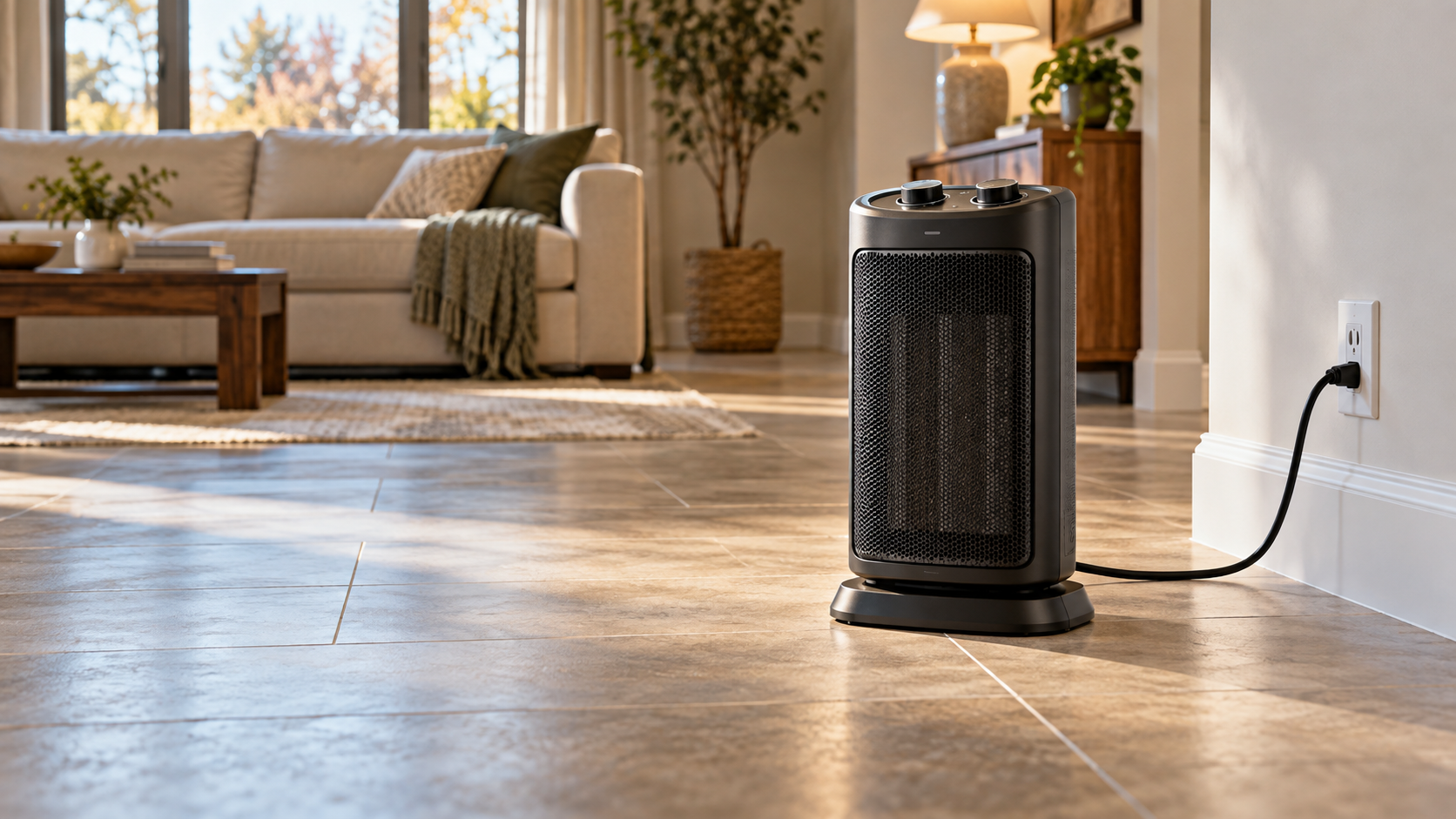
Plug Directly Into the Wall
Use a suitable wall outlet and follow the heater instructions. Do not add a power strip, extension cord, or plug-in accessory not approved for that heater.
Give It Clear Space
Keep combustible items at least three feet away, or farther if the manufacturer requires it.
Turn It Off When Unattended
Switch it off before leaving the room or sleeping. Automatic safety features do not replace supervision.
A wall outlet is not automatically suitable just because the plug fits. Loose contacts, heat damage, or an overloaded shared circuit still require attention.
Why Electrical Load Matters
Two Outlets Can Still Be on the Same Circuit
The Heater Adds More Than a Small Electronic Device
For an illustrative 1,500-watt heater on a nominal 120-volt supply, watts divided by volts equals about 12.5 amps. Read your heater’s label; this example is not permission to load a circuit to its limit.
Nearby Rooms May Share Power
An office heater, bathroom appliance, and other outlets may share a branch circuit. Moving the heater to a different receptacle does not prove it is on a different circuit.
A Breaker Trip Calls for Evaluation of the Load
Overload is one possibility, but damaged equipment, wiring problems, or another fault can also cause trips. Do not repeatedly reset the breaker or replace it with a higher-rated breaker.
A Hot Connection Can Exist Without a Trip
A loose plug or damaged receptacle can overheat locally. A breaker staying on does not establish that the plug and outlet are safe.
Common Setup Mistakes
Avoid These Workarounds for a Cold Room
Using an Extension Cord
Move the heater to an appropriate location with a suitable wall outlet rather than extending its cord.
Using a Power Strip
A surge-protection label does not make a strip appropriate for a space heater.
Sharing With Another Large Load
Avoid running other high-demand appliances on the same circuit. Have circuit capacity evaluated if you are unsure.
Hiding the Cord
Do not run it beneath rugs, through doors, or where furniture can pinch it.
Using a Loose or Damaged Outlet
Stop if the plug does not fit securely, the faceplate is damaged, or the connection shows heat damage.
Running While Sleeping
A timer, tip-over switch, or thermostat does not make unattended overnight operation an appropriate shortcut.
Warning Signs
Changes That Deserve Attention
The plug, cord, outlet, or faceplate becomes hot
You notice a burning odor or discoloration
The breaker trips during heater operation
The plug fits loosely or falls out
Sparking, buzzing, or crackling occurs
The cord or heater housing is damaged
Stop using the heater if heat, damage, odors, or electrical faults appear. Turn it off and unplug it only if you can do so safely; do not touch a smoking, melting, or damaged connection. If there is smoke or fire, leave and call 911. Keep the affected outlet out of use until it has been evaluated.
Practical Use
Safe Placement and Electrical Warning Signs Need Equal Attention
Before Use
Set Up for Supervised Heating
- ✓Inspect the heater, cord, and plug
- ✓Use a stable surface and required clearances
- ✓Keep children and pets away
- ✓Follow the heater’s placement and power instructions
Stop and Investigate
Do Not Work Around a Warning
- ✓A plug or outlet becomes hot
- ✓A breaker repeatedly trips
- ✓The heater or receptacle is damaged
- ✓A connection makes an unusual sound or odor
What You Can Check
What to Check Without Opening Electrical Equipment
Read the Rating and Instructions
Identify the heater’s wattage, supply requirements, and permitted location. An indoor heater is not automatically suitable for a damp area or outdoor use.
Consider What Else Is Running
Note which appliances lose power when the breaker trips. This gives an electrician a useful starting point without removing panel covers.
Check the Area Around the Heater
Keep bedding, curtains, papers, furniture, and stored items clear. Avoid traffic paths where the heater can be knocked over.
Address the Cold Room Itself
If one room regularly needs supplemental heat, ask whether airflow, ductwork, insulation, or the main heating system is contributing. A portable heater need not become the permanent solution.
A Practical Next Step
Do Not Solve a Heating Problem by Creating an Electrical One
Use an electric space heater only with suitable power, clear space, and supervision. A breaker trip, hot outlet, or damaged connection should lead to a correction, not a different adapter or a larger breaker. When the room stays cold, evaluate the comfort problem as well as the electrical load.
We Don’t Just Fix It. We Explain It.
Professional Electrical Evaluation
Find Out Whether the Problem Is the Heater, Connection, or Circuit
Malek can evaluate outlet condition, circuit loading, and relevant electrical concerns in Bryan–College Station and Northwest Houston. If the need for supplemental heat points to an HVAC issue, that concern can be addressed separately.
History
Review When the Problem Occurs
Note the heater setting and other appliances operating when heat or trips appear.
Connection
Evaluate the Receptacle and Plug Condition
Check for damage, poor contact, and other conditions requiring correction.
Circuit
Review the Shared Electrical Load
Determine what the circuit supplies rather than assuming a nearby outlet has separate capacity.
Protection
Investigate Tripping or Fault Concerns
Evaluate the reason for protective-device operation instead of bypassing it.
Correction
Explain the Appropriate Work
Identify whether the issue needs equipment replacement, connection repair, or an evaluated circuit improvement.
Continue Learning
Related Guidance for Your Home
Breaker Keeps Tripping?
Explore other causes of repeated protective-device operation.
→Homeowner ArticleHome Electrical Safety Checklist
Review broader electrical observations around the home.
→Comfort GuideWhy Is One Room Hotter or Colder Than the Rest?
Consider the source of a persistent cold-room problem.
→ServiceElectrical Troubleshooting
Learn about professional electrical diagnosis.
→Malek Homeowner Learning Center
Have another home-system question?
Explore homeowner articles, decision guides, investment guides, and FAQs to understand your options before deciding what comes next.
Sources & Further Reading
For manufacturer explanations and safety guidance, see the resources below. Your equipment’s instructions determine the requirements for its use, installation, and service.
Frequently Asked Questions
Electrical Questions, Answered
Clear answers to help you understand the concern, recognize warning signs, and choose a practical next step.
Can I plug a space heater into an extension cord?+
No. Plug a portable electric space heater directly into a suitable wall outlet and follow the manufacturer’s instructions. Do not use an extension cord or power strip.
Is a surge protector safe for a space heater?+
A surge-protection label does not make a power strip suitable for a heater. Use an appropriate wall outlet directly; do not add unapproved plug-in accessories.
Why does my space heater trip the breaker?+
The circuit may be overloaded, or the heater, wiring, connection, or protective device may have a fault. Repeated trips need evaluation rather than repeated resets.
How many amps does a 1,500-watt heater use?+
On a nominal 120-volt supply, 1,500 watts divided by 120 volts is about 12.5 amps. Read the actual heater rating. Circuit suitability also depends on wiring, other loads, and operating conditions.
What if the outlet gets hot but the breaker does not trip?+
Stop using that connection. Local overheating can occur without a breaker trip. A hot, discolored, loose, or damaged receptacle should be evaluated before further use.
Can I leave a space heater on while sleeping?+
Turn it off before sleeping or leaving it unattended. Automatic shutoff or tip-over protection does not replace supervised use.
Can I use a different outlet if the breaker trips?+
A different outlet may share the same circuit. Do not keep moving or resetting the heater to work around recurring trips; determine the cause and whether the circuit is suitable.
Does a cold room mean I need a new circuit?+
Not necessarily. First consider why the room is cold and whether the heater is a temporary need. Electrical work should follow an evaluation of actual load and circuit condition.
Get Clear Answers With Malek
Get Answers Before Using a Problem Outlet Again
Malek can evaluate electrical warning signs and explain the correction that fits your home’s circuit and equipment.