Home Comfort Guide
What Temperature Should I Set My Thermostat?
There is no single thermostat setting that is right for every home. The best temperature depends on your comfort preferences, humidity, insulation, sun exposure, occupancy, equipment performance, and how much cooling demand you want to place on the system.
During Texas summers, many homeowners are comfortable somewhere in the mid-to-upper 70s, while others prefer a cooler indoor temperature. The important part is finding a setting your home can maintain consistently without creating unnecessary cooling demand.
This guide explains how to choose a practical thermostat setting, when small temperature adjustments make sense, why humidity matters, and when difficulty maintaining the setting may point to an AC problem instead of a thermostat preference.
The Quick Answer
Choose the Warmest Setting That Still Feels Comfortable and Stable
Comfort Comes First
A thermostat setting only works if the home feels comfortable. Start with a reasonable temperature and adjust in small steps rather than making large changes all at once.
Smaller Adjustments Usually Work Better
Moving the thermostat one or two degrees at a time makes it easier to judge comfort and understand how the AC responds under changing outdoor conditions.
The System Should Be Able to Maintain the Setting
If the AC cannot hold a reasonable indoor temperature during normal conditions, the problem may involve system performance, airflow, insulation, heat gain, or another issue.
A lower thermostat setting does not make the AC cool faster. It simply tells the system to keep running until the lower temperature is reached.
Summer Thermostat Settings
A Practical Summer Setting Balances Comfort With Cooling Demand
Start in the Mid-to-Upper 70s
Many homeowners find a comfortable summer setting somewhere around the mid-to-upper 70s. From there, adjust based on humidity, personal comfort, and how well the home maintains the temperature.
Adjust One or Two Degrees at a Time
Small changes make it easier to find a comfortable balance without creating a large jump in cooling demand or making it difficult to tell which setting actually feels best.
Consider Outdoor Conditions
During extreme Texas heat, the system may run much longer than it does on a milder day. A larger difference between outdoor and indoor temperatures generally means more cooling demand.
Humidity Can Change How the Same Temperature Feels
A home at 76 degrees with lower indoor humidity may feel more comfortable than a home at the same temperature with higher humidity.
Avoid Treating 68 Degrees as a Cooling Shortcut
Dropping the thermostat dramatically does not create colder air or make most residential AC systems cool the home faster. It simply extends the cooling call.
Watch How the Home Responds
A reasonable setting should produce relatively stable comfort. If the thermostat says one temperature while certain rooms stay much warmer, the issue may involve airflow, ductwork, heat gain, or system performance.
Different Times of Day
Your Thermostat Does Not Have to Stay at One Temperature All Day
Use your normal comfort setting while the home is occupied
Consider a slightly warmer setting when the home is empty
Use smaller setbacks rather than extreme temperature changes
Account for overnight comfort and humidity
Watch how long recovery takes after an away setting
Avoid constantly changing the thermostat throughout the day
Use schedules if they make comfort more consistent
Adjust seasonally as outdoor temperatures change
If a large setback causes the AC to spend hours recovering during peak afternoon heat, a smaller setback may provide a better balance between comfort and cooling demand.
What Affects Comfort
Thermostat Temperature Is Only One Part of How the Home Feels
Indoor humidity can make the same temperature feel warmer or cooler
Airflow affects how evenly conditioned air reaches each room
Direct sunlight can make certain rooms feel warmer
Insulation and air leakage affect how quickly heat enters the home
Ceiling fans can improve how moving air feels without changing room temperature
Thermostat location affects which temperature the system responds to
Duct problems can create uneven comfort between rooms
AC performance affects whether the home can actually maintain the setting
If you keep lowering the thermostat because the home still feels warm, the more useful question may be why comfort is not improving. Temperature settings cannot correct restricted airflow, high humidity, duct leakage, or a cooling-system problem.
When the Setting Is Not the Problem
If the AC Cannot Maintain a Reasonable Temperature, Look Beyond the Thermostat
The Setting May Need Adjustment
The System Is Cooling Normally
- ✓The home reaches the thermostat setting
- ✓Airflow feels normal
- ✓Cooling is relatively even
- ✓No new system symptoms are present
- ✓You are simply balancing comfort and energy use
The AC May Need Evaluation
Lowering the Setting Is Not Improving Comfort
- ✓The home cannot reach a reasonable temperature
- ✓The AC runs constantly without catching up
- ✓Airflow has become noticeably weaker
- ✓Some rooms remain much warmer than others
- ✓Warm air, ice, water, or unusual cycling has appeared
The Bottom Line
The Best Thermostat Setting Is One Your Home Can Maintain Comfortably
There is no universal number that works for every household. Start with a practical summer setting, make small adjustments, and pay attention to humidity, comfort, runtime, and how evenly the home cools.
If you have to keep lowering the thermostat just to stay comfortable, the next step may be understanding what is happening with the home or AC system rather than changing the setting again.
We Don’t Just Fix It. We Explain It.
What Professional Evaluation Includes
Finding Out Why the Home Is Not Reaching or Holding the Thermostat Setting
If comfort does not improve even at reasonable thermostat settings, a useful evaluation should determine whether the issue involves the thermostat, airflow, cooling performance, humidity, ductwork, or another condition.
Thermostat
Confirm the Temperature Reading and Cooling Call
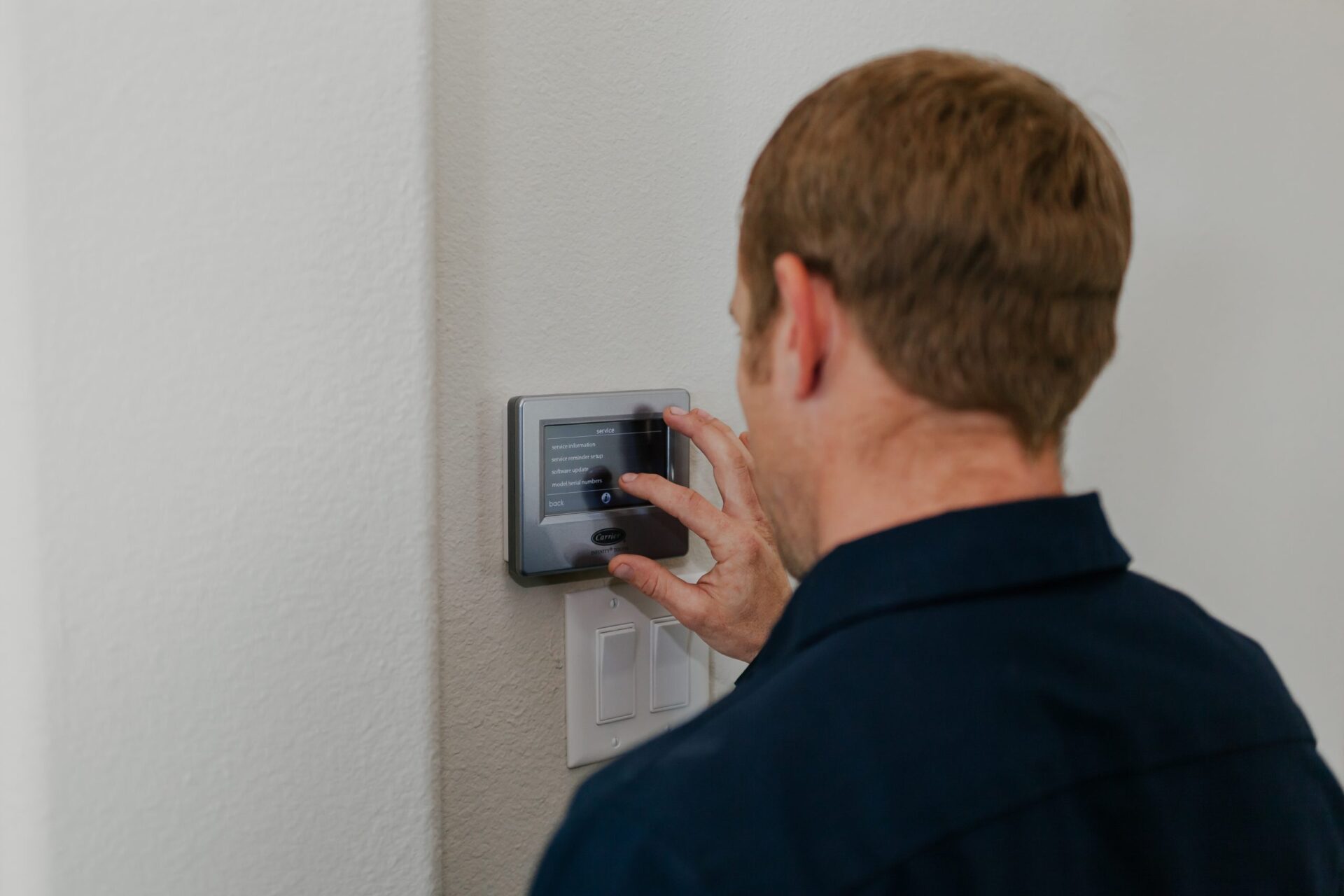
Thermostat settings, location, sensor behavior, schedules, control signals, and other relevant conditions can be reviewed.
Airflow
Check Whether Conditioned Air Is Reaching the Home Properly
Filter condition, blower operation, supply airflow, return airflow, coil condition, and accessible duct concerns can affect comfort throughout the home.
Cooling Performance
Determine Whether the AC Is Removing Heat Normally
Temperatures, equipment operation, refrigerant performance, coil conditions, and other cooling-system measurements can help show whether the AC is producing normal cooling.
Comfort Conditions
Look at Humidity and Room-to-Room Differences
Indoor humidity, uneven temperatures, sun exposure, airflow patterns, and other home conditions may help explain why the thermostat reading does not match how the space feels.
Clear Next Step
Explain Whether the Issue Is the Setting or the System
Malek explains what the evaluation found and whether the next step is a thermostat adjustment, maintenance, AC repair, or another comfort-related correction.
Continue Learning
Continue Learning About Comfort and AC Performance
Why Is My Energy Bill So High in Summer?
Learn how thermostat settings, cooling demand, airflow, weather, utility rates, and AC performance can affect summer electricity use.
→ Problem GuideWhy Is My AC Running Constantly?
Learn why an AC may run for long periods and when extended runtime points to a thermostat, airflow, cooling, or system-performance issue.
→ Decision GuideIs a Smart Thermostat Worth It?
Compare convenience, scheduling, compatibility, comfort features, and practical reasons homeowners consider a smart thermostat.
→ ServiceAC Maintenance & Tune-Ups
Learn how seasonal maintenance evaluates thermostat operation, airflow, coils, electrical components, drainage, and overall cooling performance.
→Frequently Asked Questions
Thermostat Temperature FAQs
These answers explain how to choose a practical thermostat setting, how temperature affects cooling demand, and when comfort problems may point to more than the thermostat itself.
What temperature should I set my thermostat in summer? +
There is no single ideal setting for every home. Many homeowners are comfortable somewhere in the mid-to-upper 70s during summer. Start with a practical temperature and adjust one or two degrees at a time based on comfort, humidity, and system performance.
Is 78 degrees a good thermostat setting for summer? +
It can be a comfortable and practical setting for some households, while others prefer cooler temperatures. The best setting is one that provides acceptable comfort and that the AC can maintain consistently.
Does setting the thermostat lower cool the house faster? +
Usually not. Most residential AC systems cool at their normal operating capacity regardless of whether the thermostat is set a few degrees lower. A lower setting generally makes the system run longer rather than cool faster.
Should I raise the thermostat when I leave home? +
A somewhat warmer setting can reduce cooling demand while the home is empty. Large setbacks may create long recovery periods during peak heat, so many homeowners prefer smaller adjustments.
What temperature should I set my thermostat at night? +
Nighttime settings are largely a comfort preference. Some people sleep more comfortably at cooler temperatures, while others keep the same setting throughout the day. Humidity and airflow also influence overnight comfort.
Why does my house still feel hot when the thermostat says 75? +
Indoor humidity, uneven airflow, thermostat location, direct sunlight, insulation, duct problems, or cooling-system performance can make the home feel warmer even when the thermostat displays the expected temperature.
Why can't my AC reach the thermostat setting? +
Extreme outdoor heat can increase cooling demand, but persistent inability to reach a reasonable setting may also involve restricted airflow, dirty components, refrigerant problems, ductwork, thermostat issues, home heat gain, or another cooling problem.
When should I have my AC checked because it cannot maintain temperature? +
Consider professional evaluation when the AC consistently cannot maintain a reasonable thermostat setting, runs continuously without catching up, develops weak airflow, creates uneven temperatures, or shows other symptoms such as warm air, ice, water, unusual cycling, or new noises.
Home Still Uncomfortable?
Find Out Whether the Problem Is the Setting or the Cooling System
Malek can evaluate thermostat operation, airflow, cooling performance, coil conditions, refrigerant operation, humidity, and other system factors before explaining why the home is struggling to maintain comfort.